
Black, Green or Natural Aluminium: Choosing Greenhouse Colour
Greenhouse design guide
Black, green or natural aluminium: choose a greenhouse colour that belongs in your garden.
The best greenhouse colour is rarely chosen in isolation. It should respond to the house, boundaries, paving, planting and the way you want the structure to feel through every season.
A greenhouse is both a working garden building and a highly visible design element. Its frame colour affects the apparent scale of the glazing, the crispness of its outline and the relationship it has with nearby materials. A finish that looks compelling in a showroom image can feel too assertive, too recessive or simply disconnected once it is placed among fences, brickwork and established shrubs.
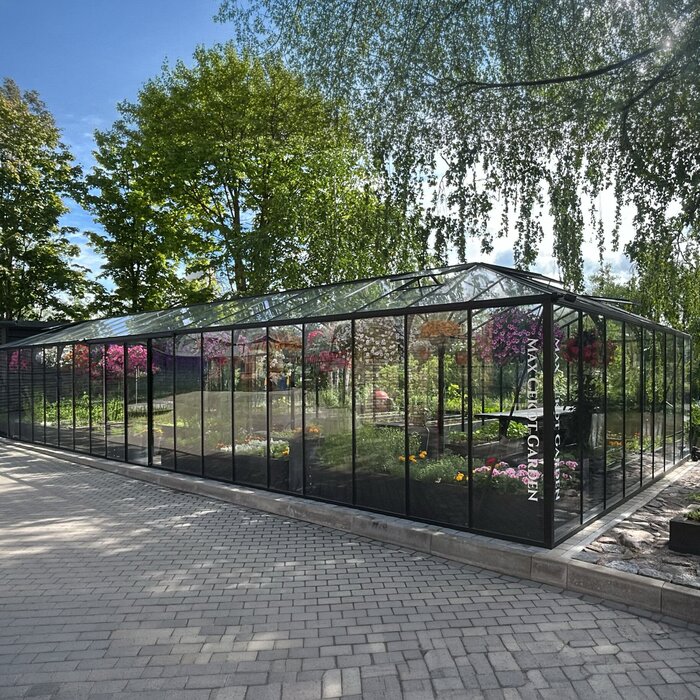
Black, green and natural aluminium each offer a distinct visual language. Black gives definition and contemporary contrast; green has a long association with cultivated gardens; natural aluminium reads light, practical and quietly modern. None is universally right. The most successful choice follows the character of the site rather than a passing preference for a single colour.
Start by looking at what remains visible when summer planting has died back: roof tiles, window frames, garden walls, paths and boundary treatments. Then consider the greenhouse at close range, from indoors and from the far end of the garden. This guide helps British homeowners compare the finishes with confidence, without confusing colour choice with decisions about size, position or structure.
01 · Start with the setting
Read the garden before choosing colour
Before focusing on a favourite finish, take stock of the elements that will frame the greenhouse every day. Brick, render, timber, stone and paving each carry their own undertones, while fences and mature evergreen planting can dramatically change the apparent depth of a colour. Photograph the proposed position in morning, afternoon and low winter light. This reveals whether the site asks for crisp contrast, a softened transition or a frame that almost disappears.
Distance matters as much as material. From a kitchen window, a dark frame may read as a deliberate architectural line; from the end of a long lawn, the same finish can make a small structure appear more emphatic. Stand where visitors arrive, where you sit outside and where you will work at the greenhouse door. Those viewpoints help you choose a colour that supports the garden’s hierarchy.
- List permanent colours first: roof, brickwork, boundary panels, paving and exterior joinery will influence the finish far longer than seasonal flowers.
- View samples beside the intended base and wall materials, rather than judging them against an indoor screen or neutral showroom backdrop.
For a freestanding focal point, explore a standard Classic greenhouse in a finish that suits the wider garden composition.
02 · Black frames
Choose black for definition and drama
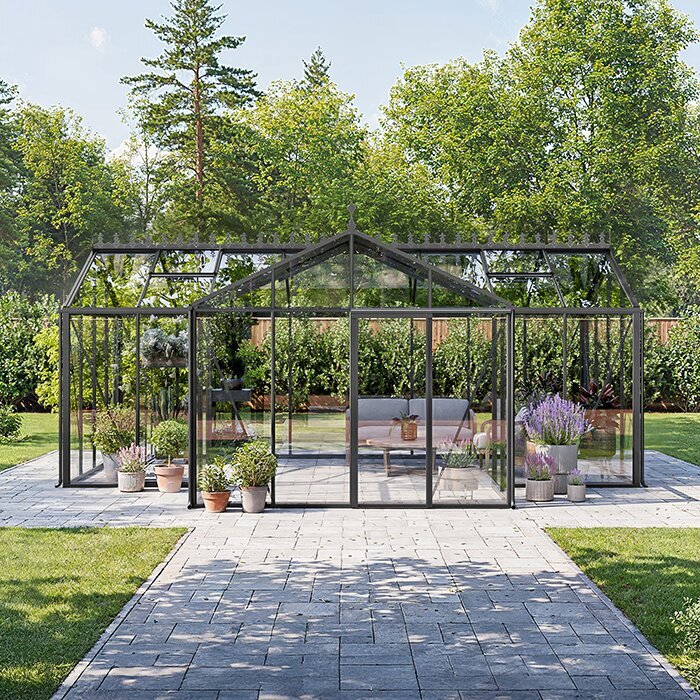
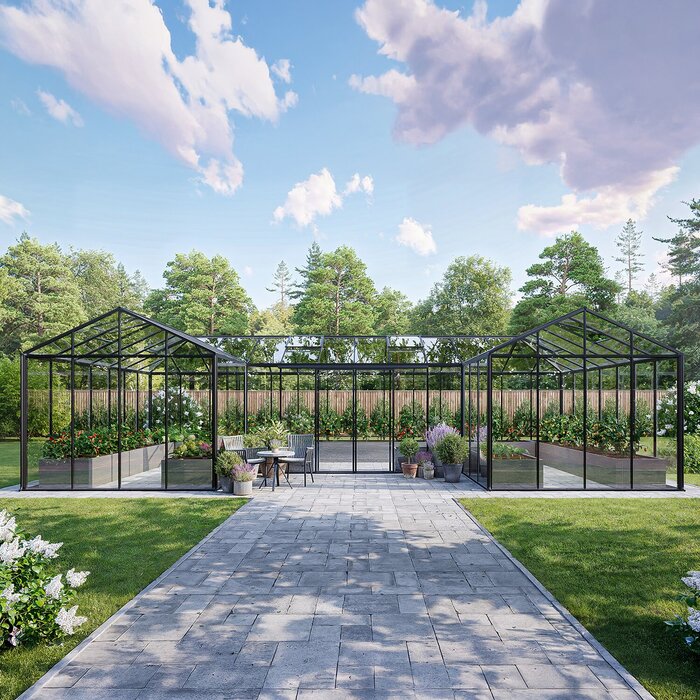
A black greenhouse has a confident, precise quality. The dark frame sets out the geometry of roof, panes and doors, making the building feel intentional even in a spare winter garden. It often works especially well beside black-painted window frames, dark-stained timber, slate-toned paving or contemporary garden furniture. Against pale render or gravel, it creates a readable silhouette that can anchor an open, minimally planted space.
That clarity deserves careful handling in a cottage-style garden. Black can still be effective among roses and dense borders, but it will remain visible when foliage is bare. Soften its impact with generous planting at the base, weathered pots and materials with texture rather than trying to disguise it entirely. If the house has strongly contrasting features, black can create a useful visual conversation between the garden building and the architecture.
- Use black to echo existing dark details, such as door furniture, railings, planters or slim external window frames.
- Allow breathing room around a black frame; crowded hard landscaping can make its strong outline feel visually busy.
Along a darker façade, consider a full-size regular Lean-To greenhouse whose frame can echo the building’s existing lines.
03 · Green frames
Let green settle into planting
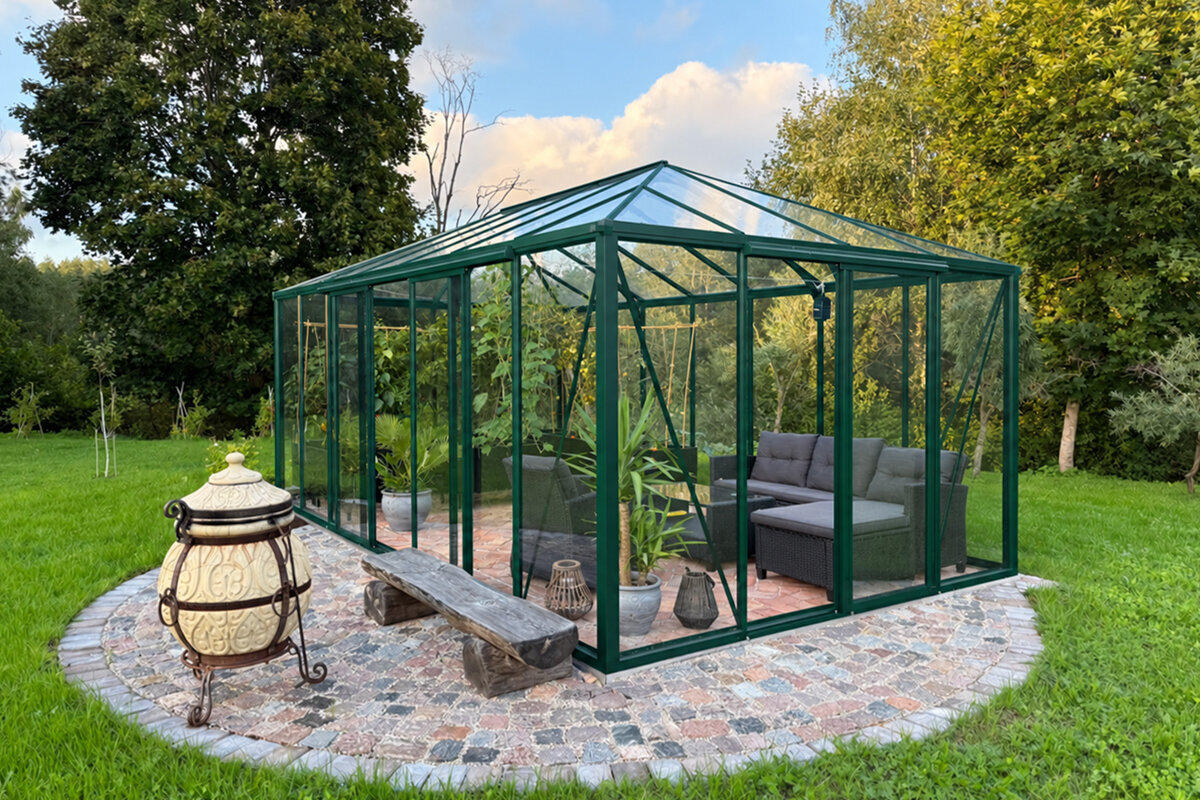
Green is the classic choice for a greenhouse that feels established within a planted garden. It sits comfortably against lawns, hedges, fruit trees and mixed borders because it belongs to the same broad visual family without copying every leaf. In a traditional setting, green can make a new structure feel less abrupt, particularly when paired with brick edging, timber benches or softly weathered garden accessories.
Green is not automatically invisible. A deep hedge may make a similar dark green frame appear flatter, while pale foliage can bring it forward. Look for contrast in texture and tone rather than assuming matching is always best. The finish is particularly appealing where the greenhouse will be viewed through planting, because stems and leaves can overlap its frame without creating the sharp graphic effect associated with black.
- Choose green when planting, lawn and old boundary vegetation should remain the dominant visual story around the greenhouse.
- Balance green with nearby materials: warm brick and timber add character, while cool grey paving gives a more restrained garden mood.
A garden-led scheme often suits a standard Classic greenhouse in green positioned as a calm destination among borders.
04 · Natural aluminium
Keep the frame light and unobtrusive
Natural aluminium has an honest, pared-back appearance that puts emphasis on glass, reflection and the plants within. In bright conditions it can feel airy rather than decorative, which makes it an attractive option for gardeners who do not want a heavy outline. It works well beside pale stone, silvery foliage, light timber and restrained contemporary landscaping, but can also bring welcome crispness to a simple productive plot.
Because natural aluminium reflects its surroundings, it changes character with weather and season. On a grey day it may appear quiet and cool; surrounded by greenery it can pick up softer tones from the garden. This adaptability is useful, although it should not be mistaken for invisibility. Consider whether the lighter frame complements nearby metalwork and window details, particularly if the greenhouse will be closely seen from the house.
- Natural aluminium is a thoughtful choice where you want glazing and planting to lead, rather than a strongly coloured frame.
- Compare it with nearby pale materials in daylight, since reflected sky and foliage affect its appearance more than an interior sample suggests.
For a discreet addition beside pale finishes, look at a full-size regular Lean-To greenhouse in natural aluminium to keep the elevation feeling light.
05 · House and garden together
Connect the greenhouse to the architecture
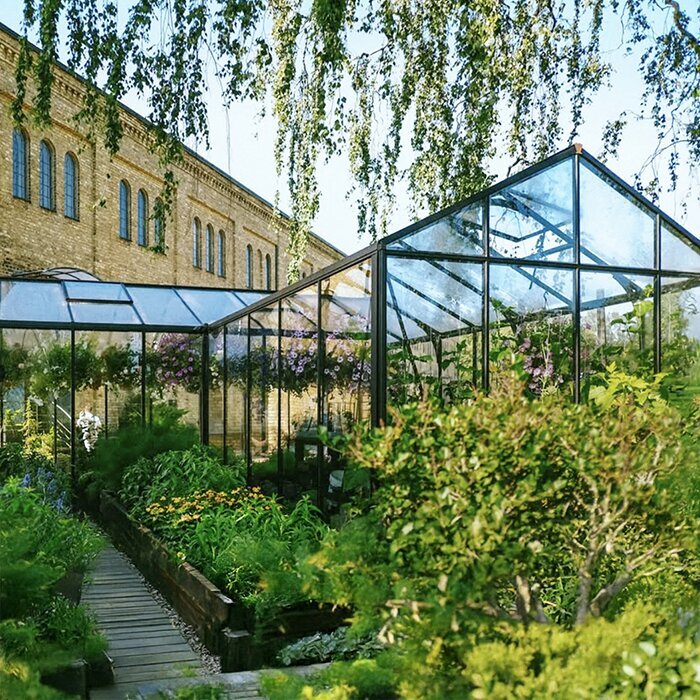
A greenhouse need not match the house exactly to look resolved. Often, repeating one supporting note is enough: a dark frame might answer black guttering, while green can pick up painted gates or mature planting rather than the façade itself. Look beyond the main wall colour to joinery, roof edging, external lights and thresholds. These smaller details usually create a more convincing connection than forcing a literal colour match.
Consider the age and language of the house as well. A formal brick property may welcome green’s garden tradition; a modern extension can carry black’s sharper profile; a modest rear elevation may benefit from natural aluminium’s visual lightness. The goal is not to make the greenhouse disappear into the architecture, but to give both structures a shared rhythm. Glazing bars and roof lines will remain visible, whatever finish you select.
- Pick one or two architectural cues to repeat, avoiding a scheme where every garden element is painted the same colour.
- Assess the view from principal rooms after dusk too, when interior light can make the greenhouse outline more noticeable.
Where the greenhouse becomes a garden feature, a standard Classic greenhouse with a considered frame colour can link planting and architecture without imitation.
06 · Scale and position
Use colour to manage visual weight
Frame colour alters how substantial a greenhouse appears, but it cannot correct an awkward position. Darker finishes generally emphasise edges and can make the form seem more defined; a lighter aluminium frame can reduce visual weight in a tight corner or beside a low boundary. First establish practical access, sunlight, working space and the relationship to doors and paths. Then use colour to refine the effect of that well-chosen position.
A structure close to the house will usually be read as part of the elevation, so its frame deserves particular attention. Further down the garden, it may become a destination framed by planting and views. Black can create a useful stopping point, green can make the route feel softer, and natural aluminium can leave the eye on surrounding textures. Check the proposal from each level of the garden, not only from the patio.
- Use planting and clear paths to integrate a greenhouse; frame colour works best as one part of the composition.
- Avoid choosing a dark finish solely to make a structure seem smaller, as its strong outline may instead draw the eye.
For a close-to-house layout, a full-size regular Lean-To greenhouse by the house deserves a finish chosen in direct conversation with the wall behind it.
07 · Seasonal change
Judge colour beyond the summer garden
Summer can make almost any greenhouse colour look harmonious because foliage softens edges and fills the view with life. The truer test comes in late autumn and winter, when bare branches, wet paving and pale skies expose the frame more clearly. Revisit the proposed location at different times of year if possible. This will help you decide whether you want a deliberate dark outline, a traditional green presence or a lighter metallic note.
Think, too, about the colour of what you plan to grow and display. Terracotta pots, timber staging, seed trays and leafy crops add warmth and activity behind the glass, while winter tools and empty beds create a simpler scene. Black provides a strong enclosing line; green continues the garden palette; natural aluminium allows changing interior colours to be more visible. Choose the effect you would enjoy during routine garden work, not just in photographs.
- Photograph the area after rain and on an overcast day, when reflective surfaces and darker boundaries can alter colour perception.
- Plan border planting for seasonal structure, using evergreen forms or stems rather than relying only on summer flowers to soften the frame.
To create a year-round garden landmark, choose a standard Classic greenhouse for seasonal planting and let the finish support the view in every month.
08 · A confident final choice
Turn preferences into a clear brief
Once you have narrowed the palette, write a short colour brief before requesting a quotation. Name the key materials to relate to, the views that matter most and the level of contrast you want. Include practical preferences too, such as whether the greenhouse should feel like an extension of the house or a separate garden room. This simple exercise prevents colour becoming a last-minute decision made after larger choices are fixed.
Planning, property restrictions and insurer expectations can vary by site and circumstance, so check relevant requirements with the local authority and your insurer where they may apply. Colour itself may be only one part of the overall proposal, especially near sensitive boundaries or listed settings. Review current product information and written terms carefully before ordering. A considered finish is most rewarding when it sits within an equally considered project.
- Keep samples, photographs and notes together when comparing options, so decisions remain tied to the actual site rather than memory.
- Ask for the current quotation to reflect your chosen finish and configuration, then review all details before committing.
When your brief centres on an existing wall, a full-size regular Lean-To greenhouse for your home can make the colour relationship especially clear.
Comparison
Black, green and natural aluminium at a glance
Use this comparison as a design prompt, not a rigid rule. The surrounding house, planting and hard landscaping determine whether a finish feels calm, characterful or conspicuous in your own garden.
| Finish | Visual character | Works especially well with |
|---|---|---|
| Black | Crisp, graphic and architectural | Dark joinery, pale render, slate and contemporary paving |
| Green | Traditional, planted and settled | Lawns, hedges, brick, timber and cottage borders |
| Natural aluminium | Light, quiet and adaptable | Pale stone, light timber, silver planting and simple schemes |
| Any finish | Most successful when site-led | Permanent materials, key views and year-round garden character |
| Final choice | A matter of visual balance | The frame, greenhouse position and intended garden mood |
A practical colour-selection process
Treat frame colour as a site decision. This short process keeps the choice connected to the garden’s permanent features and the way you will use the greenhouse.
01
Map the key views
Identify views from main rooms, the patio, entrances and the far end of the garden. Note whether the greenhouse should become a feature or sit quietly in the background.
02
Gather real materials
Place colour references beside brick, paving, timber and boundary finishes. Outdoor daylight reveals undertones and contrast more reliably than a screen or indoor lighting.
03
Study seasonal conditions
Look at the proposed position in bright sun, cloud and low light. Include the stripped-back winter garden, when the frame will be most clearly visible.
04
Choose the visual role
Decide whether you want architectural definition, planted softness or a lighter neutral presence. This decision makes black, green or natural aluminium easier to assess.
05
Confirm the whole proposal
Check the selected finish alongside greenhouse type, position and surrounding works. Seek current project details and make any local planning or insurance enquiries relevant to your site.
Greenhouse colour checklist
Before settling on a finish, use these checks to make sure the colour supports both the working greenhouse and the wider garden composition.
01. Have I considered the view from indoors, not just from the garden path?
02. Does the finish relate to permanent materials rather than only temporary planting or furniture?
03. Will the frame still look appropriate against bare branches and winter skies?
04. Do I want the greenhouse to be a defined focal point or a quieter backdrop?
05. Have I compared black against existing dark architectural details, not simply against greenery?
06. Will green contrast sufficiently with hedges and evergreen planting behind the greenhouse?
07. Does natural aluminium suit the lightness or metallic details already present near the site?
08. Have I checked relevant local authority and insurer considerations for the complete proposal?
Frequently asked questions
What is the best greenhouse colour for most gardens?
There is no single best greenhouse colour for every garden. Green is often comfortable in leafy, traditional settings, black suits schemes needing stronger definition, and natural aluminium gives a lighter, quieter effect. Base the choice on permanent materials, key views and how the site looks in winter, rather than on planting at its summer peak.
Will a black greenhouse look too modern?
Not necessarily. A black frame can feel elegant in an older garden when it relates to dark architectural details and is softened by planting, brick or weathered timber. It will remain visually distinct, however, so it is best for homeowners who welcome a defined outline rather than expecting the greenhouse to blend completely into vegetation.
Is green always the most traditional choice?
Green has a familiar association with classic productive gardens, but the result depends on its context. It can feel deeply traditional beside brick, lawns and clipped hedges, yet it can also suit a simpler contemporary garden if the rest of the palette is restrained. Judge the whole composition rather than relying on colour labels alone.
Does natural aluminium need to match other metalwork?
It does not need to be an exact match. Natural aluminium can sit well near pale stone, light timber and neutral finishes because it reads as a modest, reflective frame. Still, compare it with nearby railings, lights and window details, especially where the greenhouse will be close to the house or clearly visible from indoors.
Should the greenhouse frame match the house windows?
Exact matching is optional and can sometimes look forced. A more natural approach is to repeat one supporting element, such as dark joinery, a green gate or a pale metal detail. The greenhouse should relate to the house while retaining its own garden character, particularly when it stands away from the main elevation.
Can colour affect planning or insurance considerations?
Requirements and insurer expectations depend on the property, location and complete project rather than a general rule about frame colour. If your proposal may raise planning, conservation, boundary or insurance questions, check directly with the relevant local authority and insurer. Keep records of the chosen configuration and review current written information before proceeding.
Explore greenhouse styles
Choose the colour that makes sense on site
Black, green and natural aluminium each bring a valuable design quality to a greenhouse. Black gives presence, green lends planted continuity, and natural aluminium keeps the composition light. The most rewarding choice comes from observing your own house and garden carefully: its permanent materials, its best views and its less forgiving winter face.
Let colour complete a sound garden plan rather than carry it alone. Once position, access and the desired visual role are clear, the right finish becomes much easier to recognise. Bloomcabin can help you explore greenhouse options while you build a brief that feels appropriate to the way you live and garden.
Find a greenhouse form that gives your chosen colour a natural place in the garden.
