
Buying a Bioclimatic Pergola: How to Evaluate Its Adjustable Roof
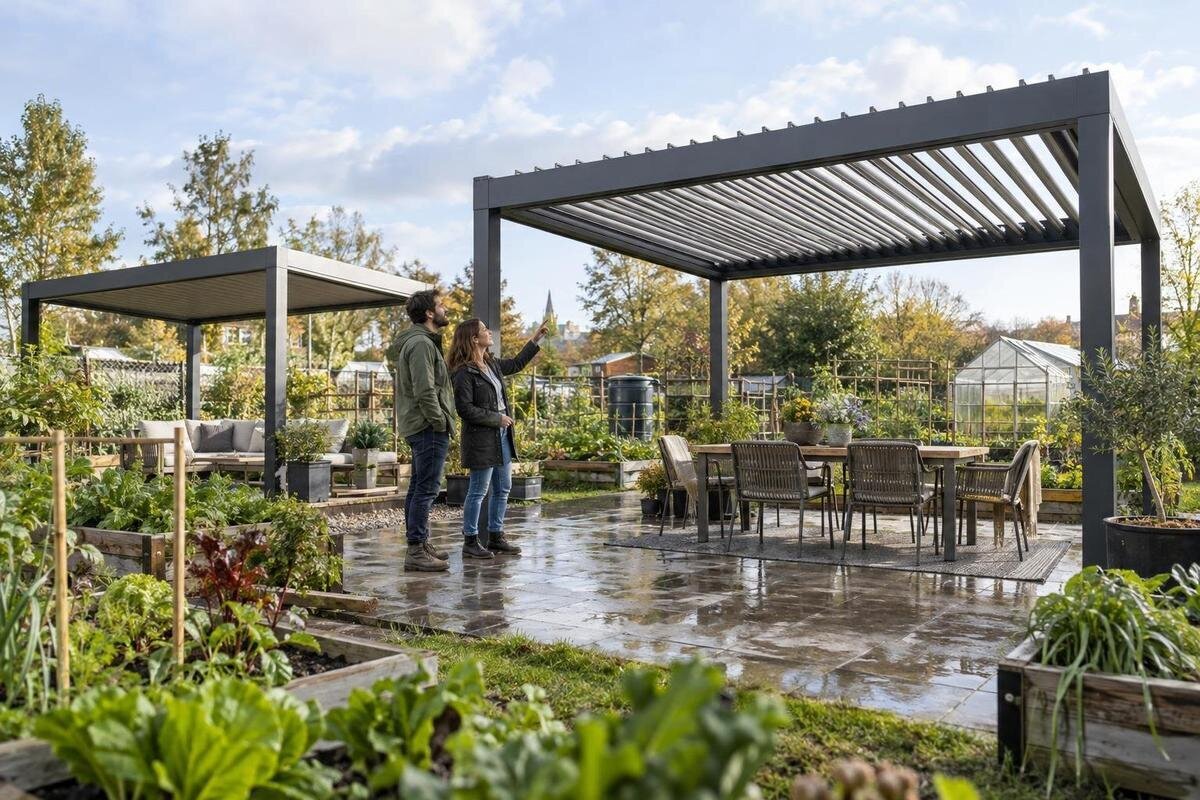
Pergola buying guide
An adjustable roof can change how a pergola works through the day, but the word “bioclimatic” does not tell you how far it moves, how it is operated or what “closed” means in rain. When you buy a bioclimatic pergola, compare the roof mechanism and controls as closely as the overall design. The useful questions are practical: which positions are available, how easily you can select them, and whether the roof’s documented limits match your expectations for shade, daylight and shelter. This guide focuses on those checks before you choose a model or place an order.
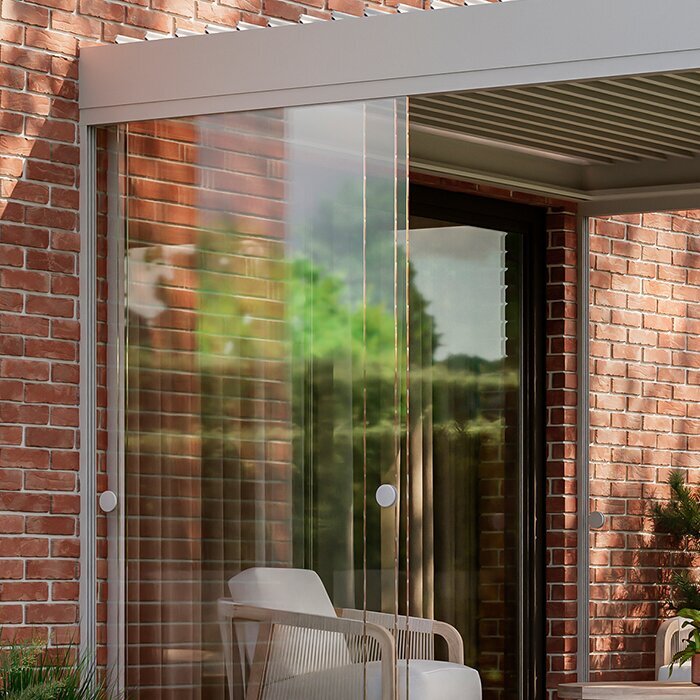
How an adjustable louvred roof moves
A bioclimatic pergola generally has a roof made from adjustable louvres: the slats pivot to alter how much sky the roof blocks and how much daylight and air can pass between them. That is different from a roof that slides or retracts away. With a turning louvred roof, slats may remain above the frame even at its most open setting; another mechanism may move differently. Do not treat “open roof” as a precise description. Ask for a diagram or demonstration that shows the exact mechanism from above and below, including the positions the seller calls open and closed. Find out whether the roof ever clears the opening altogether.
Then establish what happens between those endpoints. Can the roof stop at intermediate angles, or does it move through a limited set of positions? Does the whole roof move together, and can its movement be stopped when you want? These details affect how finely you can alter shade and sky view during the day. A photograph of one position cannot answer them, and a product name is not a mechanism specification. Include a pergola product page in your comparison as a listing to check: note the movement it actually documents and ask about anything left unclear.
Compare the opening range and stopping positions
Ask for the roof’s actual opening range, not just a phrase such as “wide opening”. Product descriptions may use open and closed as relative labels, while the visible gap depends on the louvre angle and roof layout. Look for a stated rotation range, a drawing at several positions or a demonstration from underneath. If a figure is provided, check whether it describes louvre rotation, the gap between slats or the proportion of roof exposed; these are related but not interchangeable. A single maximum-angle figure also does not show how useful the rest of the range will be for your patio. Ask to see the roof at its lowest, middle and widest settings, ideally from the same viewpoint. This makes it easier to see how much sky remains visible, whether the slats overlap in your line of sight and how the positions would feel above a dining table or seating area.
Intermediate settings matter if you want to adjust the roof as the sun moves or change the balance between shade and open sky. For a table, for example, a partly open position may be more useful than switching only between the two extremes; what works depends on your layout and routine. Ask whether the roof can pause at a chosen point, whether it uses set positions and how easily you can repeat one. For a specific candidate, record what the product listing says about its positions rather than assuming that wording matches another pergola.
Choose controls that suit how you use the patio
Ease of use depends on the operating method as well as the roof’s range. Check what the exact configuration uses to move the louvres and how the user starts, pauses and stops that movement. Do not assume that a remote, wall control, app or sensor is included just because the roof is adjustable. If the product description lists different configurations, make sure you are comparing the same one. When this information is missing, ask for an explanation or demonstration before deciding; a short video can help show the movement, but it should match the model and controls you intend to order.
Picture the people who will operate the roof and where they will be when they do so. A control that requires you to leave the table or reach around furniture may be less convenient in everyday use than one placed where you naturally pass. Consider whether everyone who uses the pergola can operate it comfortably and understand its response. Check how long ordinary movement takes and whether there are any operating sounds you should expect, rather than assuming it will be instant or silent. Use one candidate’s product details to check the stated control arrangement, not to infer features that are not listed.
Match louvre movement to the sun
The same roof position can cast a different shadow as the sun changes direction during the day and across the seasons. Before choosing, note when you usually use the patio and where direct sun reaches the seating at those times. A roof can shade from above, but it cannot block low-angle sunlight coming through an open side. Nearby buildings, trees and the house itself may also change the pattern. This simple observation helps you judge which roof positions matter most, instead of treating maximum opening or maximum closure as the only useful measure. Take notes on several days if possible, rather than relying on one sunny afternoon. Include breakfast, lunch and evening use if those are important, and note whether the issue is glare, direct heat or simply a preference for shade. That record gives you a more useful basis for judging the louvres than a general promise of sun control.
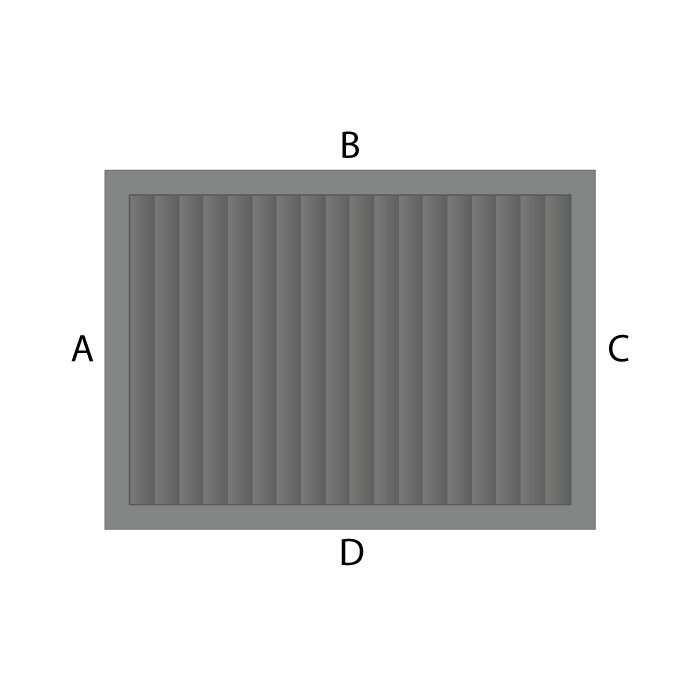
Ask for a plan or drawing that shows the direction of the louvres and how they pivot in the exact configuration you are considering. Their orientation relative to the seating and the sun’s path may affect which parts of the space are shaded at a given time. If a listing does not show that information, ask for it before comparing the roof with another model. Apply the same questions to a separate pergola listing without assuming its layout or movement from the product name or a perspective photograph.
Balance shade, daylight and airflow
Each louvre position involves a balance between blocking direct sun and leaving more of the roof open to the sky. Turning the slats changes the amount of overhead cover, while gaps can allow daylight and air through. Neither an open nor a partly closed setting guarantees a particular temperature or level of comfort: side exposure, breeze, surrounding surfaces and the weather all play a part. Decide what you most want to control. You might prioritise shade over a dining area at a particular time, or prefer to retain a view of the sky when direct sun is not a problem.
Compare candidates against those priorities rather than assuming that the widest range is automatically best. Ask what a typical part-open position looks like from underneath and how it changes the shadow on the area you plan to use. If you need broad shade, find out what the roof can cover when closed and what remains exposed at the sides; if you value open sky, establish whether the slats still sit overhead at the most open setting. Read the product description for one option for its actual movement details, and ask rather than filling gaps in the description with assumptions.
Check rain handling and drainage
Rain changes what you expect from the roof. Water can pass through gaps when louvres are open or partly tilted. A closed position may be designed to direct water away, but sealing and drainage arrangements vary. Do not assume that “closed” means watertight unless the product information defines its weather performance. Ask how water leaves the roof, where any channels or outlets discharge, whether the roof needs to be fully closed for drainage, and what the instructions say about changing the position when the weather turns.
Think about where runoff would go in relation to your seating, doors and usual route across the patio. Request a drawing or a clear explanation of the drainage path for the exact model; a photograph alone may not show it. Also check any stated limits for wind-driven rain or use in changing weather, since an intermediate roof position may not offer the shelter you expect. Use this pergola listing as a prompt to seek roof-specific rain and drainage information, not as evidence of performance in itself.
Allow for moving parts and overhead obstructions
The roof has to move within the space above the pergola, so check whether its louvres, mechanism or controls need clearance from nearby features. Existing lights, branches, a wall, an open door or other overhead fittings may affect the available space. Do not estimate clearances from a wide-angle product photo: ask for a drawing of the moving parts and any clearances required for the exact configuration. If the site has an unusual obstruction, have the relevant measurements assessed by a qualified installer rather than trying to infer compatibility from an illustration.
Consider the area beneath the roof too. Think about where people sit, where they walk and whether furniture is likely to be moved as the roof changes position. A roof may provide overhead shade while leaving a side exposed to low sun or wind, so check the full layout rather than focusing only on the centre of the seating area. Where a light or other fitting is planned, confirm that it will not conflict with the roof’s movement. Mark fixed items on a simple plan, including doors that open onto the patio, existing wall lights and tall planting. Also consider access needed later for ordinary cleaning or inspection, without assuming that every part can be reached from the ground. Apply these checks to another listing in your comparison using its own drawings and stated clearances.
Confirm power, operation and routine care
If the chosen roof is powered, confirm the power and control requirements for that exact configuration before ordering. Ask what happens if power is unavailable and whether the system has a manual way to move the roof; do not assume that an override is provided. If you are unsure what the site or supply needs, ask a qualified electrical professional or installer to assess it. Keep this to a pre-purchase check: never rely on a product photograph or a general category description to establish electrical requirements.
Maintenance matters because the roof has moving parts and, depending on its design, places where debris or water may collect. Ask what the owner is expected to clean, how drainage is kept clear and whether the instructions specify routine checks or servicing. Find out which tasks are suitable for the owner and when the supplier recommends professional attention. Keep the operating manual with the order documents so that care and weather guidance are available later. Check the selected product page for its stated operating and care information, and request any details that are not shown.
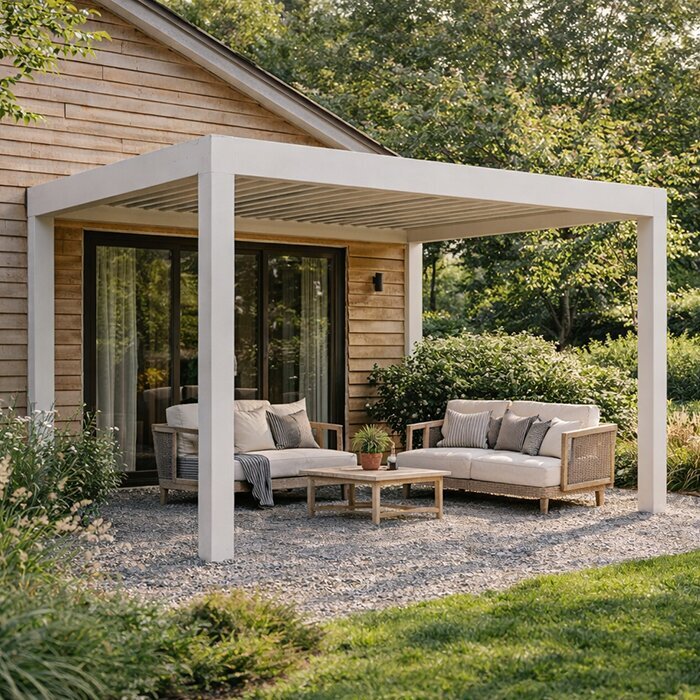
Check the exact configuration before ordering
A product page has limited space, and terms such as adjustable, louvred or bioclimatic do not answer every buying question. Read the full description and look for the exact roof mechanism, movement range, operating method and any stated weather or drainage limits. Distinguish features included in the displayed configuration from optional extras. If a diagram, measurement or control detail is absent, ask before you order rather than treating the omission as confirmation that a feature is included or that a particular performance is guaranteed.
For a like-for-like comparison, write down the model or configuration, roof positions, control type, drainage information and any stated operating restrictions for each candidate. Ask for unclear answers in writing and keep them with the order confirmation, so the selected roof is unambiguous. If an answer changes when you select a different size or control option, make sure it refers to the configuration you are actually buying. This is especially important when comparing photographs or marketing descriptions, which may show a different setting or arrangement from the one you have chosen.
Compare candidates against your daily routine
A simple comparison record can turn general impressions into a clear choice. For each pergola, note what the roof does when fully open, partly open and closed; whether it can stop where you want; how you operate it; and what the product information says about rain and drainage. Then compare those details with the times you use the patio, the position of your seating and how much direct sun reaches it. Mark the features you need separately from those that would merely be convenient, so a polished photograph does not outweigh an important practical difference. Keep each entry tied to the exact configuration rather than a general model name. A side-by-side list can also show where you have evidence, where you need clarification and where a claimed feature is only visible in an image. This prevents a missing detail from being mistaken for a confirmed capability when you narrow the shortlist.
Finally, picture a normal day from the user’s point of view: where you are sitting, when the sun changes, who adjusts the roof and what you expect it to do if the weather shifts. If the candidate’s movement or limitations remain unclear, keep it off the shortlist until you have a specific answer. The best fit is the pergola whose documented roof positions and controls suit your routine, with rain performance and care expectations understood—not simply the one whose listing uses the most appealing description.
Frequently asked questions
What does “bioclimatic pergola” mean?
It commonly refers to a pergola with an adjustable louvred roof, but the term alone does not specify how the louvres move, how many positions are available or how the roof is operated. Check the details for the exact model rather than relying on the category label.
Does a closed louvred roof keep out all rain?
Not necessarily. Sealing, roof design and drainage differ between models, and wind-driven rain may behave differently from rain falling vertically. Look for written information about weather performance, drainage and any operating restrictions; do not assume that “closed” means watertight.
How many roof positions should I look for?
There is no universal number that suits every patio. What matters is whether the available positions give you the shade and open sky you want, and whether you can select them easily. Ask whether the roof can pause at intermediate angles or only uses preset positions.
Can I move the roof during rain or windy weather?
Follow the instructions and operating limits for the exact pergola. Do not assume the roof should be moved or left in a particular position in changing weather. Ask the supplier to explain the stated limits and where to find the operating guidance.
What should I confirm before ordering?
Confirm the roof mechanism and movement range, how it is operated, and what the open and closed positions mean. Check the model-specific information on drainage, weather limits, power if applicable, and routine care. Make sure the order records the exact roof and control configuration you chose.
A bioclimatic pergola is easier to choose when you know exactly what its adjustable roof can do and what it cannot. Compare the documented positions, controls, sunlight patterns and rain-handling details against the way you use your patio. Confirm the exact configuration and its operating limits before ordering. That gives you a clearer basis for deciding whether the roof’s everyday movement—not just its description—fits your outdoor space.
