
Buying a Freestanding Pergola: Position, Foundations and Access
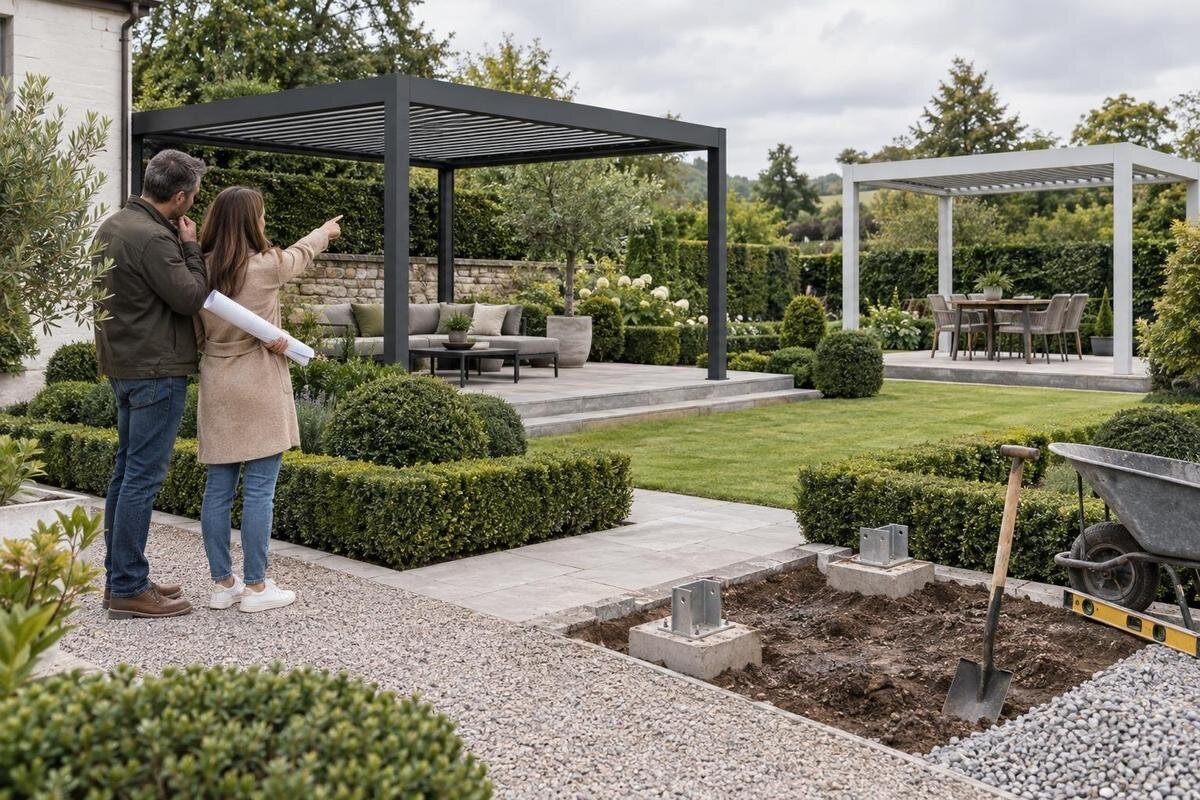
Freestanding pergola buying guide
Buying a freestanding pergola is as much a site-planning decision as a style choice. Its supports need suitable ground, the full footprint must work with how the garden is used, and the delivery and assembly route has to be practical. Before comparing finishes or roof types, map the intended position, note what lies above and below it, and find out what the exact model requires. These checks can help rule out an unsuitable location before a purchase becomes difficult to change.

Why a freestanding pergola needs its own site plan
A freestanding pergola is planned as an independent feature in the garden, rather than one that relies on a building for its position. That puts its own support points and the ground beneath them at the centre of the buying decision. A patio may look wide enough until posts coincide with a path, drain or the space needed to move chairs. Sketch the intended location and mark both the outside edge of the structure and every support position, using a drawing for the exact model if one is available. These are different measurements: a roof outline that fits does not prove that the posts can stand in workable places.
Treat product terminology as a starting point, not a complete installation description. A listing labelled lean-to pergola listing refers to a different configuration; it is not evidence that it can be installed as a freestanding structure. For each freestanding candidate, look for the drawing and instructions for that exact model, then confirm where the supports go and what the ground must provide. If the arrangement is unclear, request the relevant information rather than inferring it from a photograph, a general category page or another model’s instructions. Products with a shared name may still have different dimensions or fixing requirements.
Measure the whole footprint and the support positions
Measure the outside of the roof or frame using dimensions supplied for the exact model, then record the spacing and location of its supports separately. Note any projection or base that extends beyond the main posts, but do not guess at these from a photograph. The usable area is not just the nominal footprint: consider the clearance needed for paths, furniture and maintenance. If the product information does not show a dimensioned plan, ask for one before deciding that the pergola fits. Write your site measurements in the same units as the drawing and check them twice, especially if the garden has an irregular boundary.
Test the measurements on the ground, not just on a screen. Mark the proposed corners and support positions with temporary markers or a scaled sketch, then compare them with the clear area available. Include space to walk around the structure and use nearby furniture, rather than measuring only between fences. Where a particular page is on your shortlist, use the Bloomcabin pergola product page only to check figures stated for that exact model; if its support layout is not documented, ask for it instead of estimating from the image. Keep confirmed measurements separate from anything you still need to verify.
Fit the pergola around how you use the garden
Think about how you reach and use the proposed area before settling on a position. A pergola may fit in a clear corner but interrupt the route from the house to a gate, shed or seating area. Include the door swing, window access and the space needed to move chairs in and out. If the area is already used for dining, play or gardening, sketch those activities as well. The aim is not to leave an arbitrary empty margin, but to avoid making everyday routes awkward once the posts are in place.
Mark the routes on your plan and consider how they work when the garden is occupied, not only when it is empty. Check whether someone can pass behind pulled-out chairs, whether a gate still opens fully and whether tools or bins remain reachable. If you are comparing the bioclimatic aluminium pergola listing, use confirmed dimensions for that exact model against your sketch, not its proportions in a staged photograph. If the usable space works only by blocking a regular path, consider another position or footprint before ordering rather than relying on rearranging everything later.
Assess sunlight, shade and nearby features
Observe the proposed position at different times of day and, where practical, in more than one season. Shade from a roof and its supports moves with the sun; nearby buildings, fences and trees affect the light too. A spot that feels bright in the morning may be shaded later, while a position chosen for afternoon shade could darken a window or an area you want to keep sunny. Note your priorities, such as shade over seating, daylight indoors or an open view, and compare possible positions against them rather than relying on a single impression.
Keep expectations about shade and shelter tied to the exact design information. A pergola’s name or image does not establish how much shade it gives, when that shade falls or whether it protects against rain. The aluminium pergola product page is useful for this decision only if it identifies the exact design and explains its roof; ask for missing details rather than filling gaps with assumptions. Also note branches, neighbouring structures and how exposed the site feels. These observations can help you frame questions, but they do not prove how a particular product will perform in wind or weather.
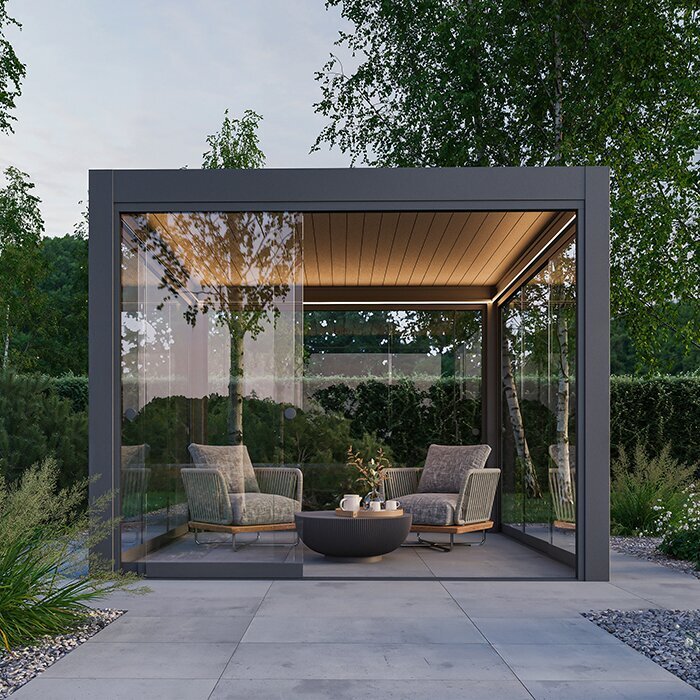
Foundation requirements depend on the model and site
Foundation choice cannot be made from the word freestanding alone. The required support depends on the exact product’s installation instructions and the conditions where it will stand. Ground that looks firm may include fill, tree roots, changes in level or drainage features that are not obvious from the surface. Before buying, note what you know about the ground and ask the manufacturer or a competent installer what assessment is needed. Do not assume that the same base used for another pergola, or for a neighbour’s garden, will apply to this model.
Seek a model-specific answer that covers the proposed support points and the actual surface beneath them. If the product information states a foundation requirement, ask an installer to confirm whether the site can meet it; if the requirement is unclear, request clarification before committing. A page such as the Bloomcabin pergola listing can identify which model you mean, but its name is not a foundation specification. Make sure any advice relates to the exact product and position, especially if the ground is sloped, recently filled or otherwise uncertain. Leave structural decisions to an appropriately qualified professional rather than improvising a base from general examples.
Check whether existing paving is suitable
Existing paving is a surface, not proof of a suitable foundation. Its visible finish may not show how it is supported, whether it is level or whether it can take the fixing method required by a particular model. Even a sound-looking patio should be checked against the product instructions and assessed by an installer or another suitably qualified person. Do not assume that a pergola can be fixed through every slab or that placing a post on top of the paving resolves a mismatch. Ask what information is needed about the surface and what lies beneath it before treating the patio as ready.
Slopes and drainage need the same careful review. Note where water collects or runs after rain, and mark channels, drains and inspection covers that need to remain accessible. Show these details to the installer and ask whether the proposed position and surface meet the exact model’s requirements. The bioclimatic pergola page identifies a product, but does not establish whether your paving, slope or drainage arrangement is suitable. That requires the model information and an assessment of the site. Avoid altering the paving or changing support positions on the strength of a guess.
Check boundaries, buried services and overhead clearance
Check what sits around and below the proposed footprint before ordering. Note fences and property boundaries, nearby windows, eaves, gutters, branches and overhead obstructions, as well as buried pipes, cables or drains. A freestanding structure needs room for its full extent, not just its posts. Before ground is disturbed, have buried service routes identified safely by a competent person; do not assume that a clear-looking lawn is free of services. If property arrangements or local planning controls may affect the project, check the relevant documents and official local guidance, and seek appropriate advice if the position is unclear.
Put these details on the same plan as the proposed support positions. Mark anything that must remain accessible, such as a drain cover, and note any uncertainty about services or clearance for the installer to review. When describing the product, an exact reference such as the product entry for the Bloomcabin pergola helps an installer identify the relevant model instructions. If those instructions do not address a nearby feature, get a clear answer before proceeding; do not move posts or alter the structure on the strength of an assumption. A neighbour’s arrangement is not a reliable guide to your site.
Measure delivery and installation access
Access has two parts: getting the delivery from its unloading point to the garden, and making room for assembly at the chosen spot. Walk the route and measure the narrowest gate or passage, tight turns, steps, slopes and overhead clearance. Note loose gravel, soft ground, low branches or stored items that could obstruct movement. Distance alone is not enough: a short route with a narrow turn may be less practical than a longer, clear path. Take photographs as well as measurements so you can describe awkward sections accurately to the delivery provider and installer.
Ask the retailer or delivery provider for the package dimensions and number of packages, and where delivery will be made. Confirm separately what access an installation team needs and whether carrying items through the garden, assembly and packaging removal are included or arranged independently. Do not assume that delivery to the address means delivery to the final position, or that a product will pass through a gate simply because its finished footprint fits in the garden. If access is tight, ask for a route check before ordering and mention steps, slopes and restricted turning space.
Get site-specific questions answered before ordering
Use professional advice to resolve questions that cannot be answered from your measurements. The manufacturer can identify which instructions apply to a particular model; an installer can assess the proposed location and what work the site may need. If soil, a paved base, a slope or nearby services are uncertain, ask which appropriately qualified person should assess them instead of seeking a generic foundation size. Where planning or property restrictions are unclear, consult the relevant authority or a property professional. These are separate questions: confirmation of product dimensions does not settle ground suitability or other site constraints.
Before requesting advice, gather a simple site plan, measurements, photographs, notes on the ground and a measured route from the unloading point to the installation area. Identify the exact model and ask focused questions: what support arrangement is specified, what further site information is needed, and what access must be available? Keep important clarifications with the product documents. If the supplier cannot confirm a detail, do not turn an assumption into a purchase condition; wait for the matching guidance or compare a candidate whose requirements can be assessed.
Compare candidates against one site plan
Compare candidates on the same site plan so you are not judging one from a photograph and another from technical information. For each model, record its confirmed outer dimensions, support positions, installation requirements, any ground assessment still needed and access issues. Note which questions the product information answers and which still need written clarification. Keep your intended use, shade preferences and everyday routes in view, but do not treat a roof label or material name as proof of weather performance. A useful shortlist makes unknowns visible rather than quietly treating them as settled.
If no position can accommodate a freestanding footprint and its independently supported posts, do not try to make the design fit by changing the foundation or moving supports without approval. Reconsider the location or project type, and assess any alternative by its own instructions. The lean-to pergola product page represents a different configuration, not a shortcut around freestanding requirements; it is relevant only if you deliberately reassess how that design is supported and whether it suits the site. Before ordering, align the exact model, dimensions, foundation questions and delivery route in one record.
Frequently asked questions
Does a freestanding pergola always need a foundation?
Its support requirements depend on the exact model and the site. Check the product’s installation instructions and ask the manufacturer or a competent installer what is required for your ground. Do not assume that every model needs the same type of base, or that a base used elsewhere will suit your garden.
Can I put a freestanding pergola on an existing patio?
Possibly, but the paving’s appearance alone cannot establish whether it is suitable. The surface, what supports it and the fixing requirements for the exact model all matter. Ask an installer to assess the proposed position and confirm whether it meets the product’s requirements before ordering.
What should I measure for delivery access?
Measure the route from the unloading point to the installation area, including its narrowest openings, tight turns, steps, slopes and overhead clearance. Ask the delivery provider for package dimensions and confirm where delivery ends. Check separately what access an installation team needs.
How should I choose a position for shade?
Observe the spot at different times of day and, where practical, in different seasons. Consider nearby trees and buildings, the light reaching windows and where you want shade. Check what the exact product information says about its roof; a name or photograph alone does not establish how much shade or rain protection it provides.
Can I assume a freestanding pergola does not need planning permission?
No. The freestanding label alone does not answer site-specific planning or property questions. Check current official local guidance and any relevant property restrictions before ordering. If the position or applicable requirements are unclear, ask the appropriate authority or a property professional.
The right freestanding pergola is one whose exact support layout, site requirements and delivery route can all be reconciled with your garden. A plan of the footprint, ground, surroundings and access narrows the shortlist more reliably than appearance alone. If a dimension, foundation requirement or delivery detail remains unknown, treat it as an open question rather than an assumption, and resolve it before ordering. That makes it easier to choose a model that fits the space you actually have and the way you intend to use it.
