
Buying a pergola: a guide to choosing the right type
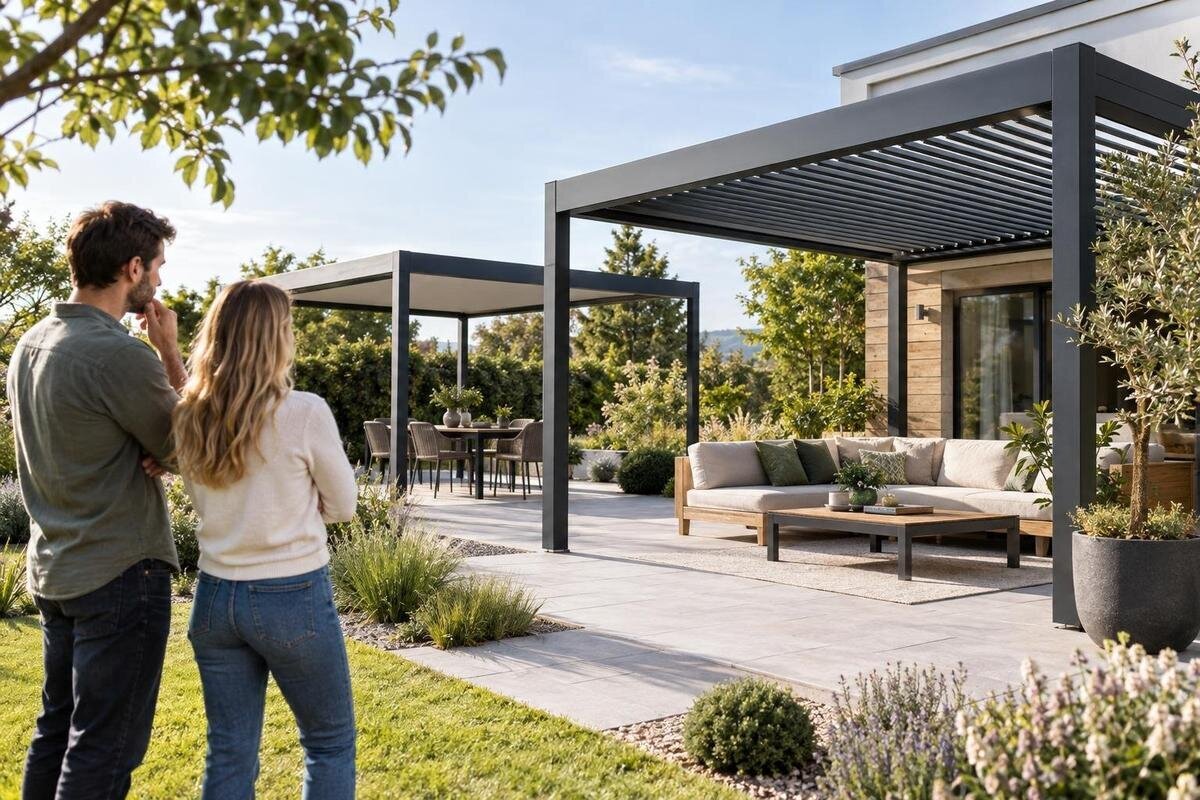
Pergola buying guide
Choosing a pergola is less about finding a universally best style than matching the structure to the way you want to use the garden. The main decisions are where it will stand, how much overhead cover you want, how the roof behaves in changing weather, and how much maintenance and installation work you can take on. A freestanding frame, an attached design and different roof treatments serve different priorities; their labels alone do not tell you whether a particular model suits your site. This guide focuses on those buying choices, so you can define your brief, compare like with like and avoid paying for features that do not solve a real problem.
Begin with the way you will use the space
Write down the activity the pergola must accommodate before comparing styles: dining outdoors, a quiet seating area, a frame for climbing plants or a focal point that gives an open patio definition. Each use changes what matters. Dining calls for a clear route around chairs and space to pull them back; a lounge set needs a comfortable relationship to its boundaries and views. If you want to grow plants over the structure, check that the particular design is suitable rather than assuming its appearance tells you what it can support. Choose one main purpose and, at most, a couple of secondary ones. This gives you a basis for rejecting features that add complexity without improving how you use the garden.
Think about frequency, time of day and who will use the area. An occasional setting for two may not justify buying the most elaborate roof; a dining space used in changeable weather may call for more control than a decorative frame. Consider whether the pergola should connect with an existing patio or create a separate destination, and whether you want the space to feel open to the garden. If you are weighing the bloomcabin pergola listing alongside other designs, note your priorities before opening the specification. That stops attractive photographs from setting the brief and gives you a consistent way to compare options. Include practical limits too, such as keeping a route clear or avoiding disruption to a frequently used part of the patio.
Choose between a freestanding or attached position
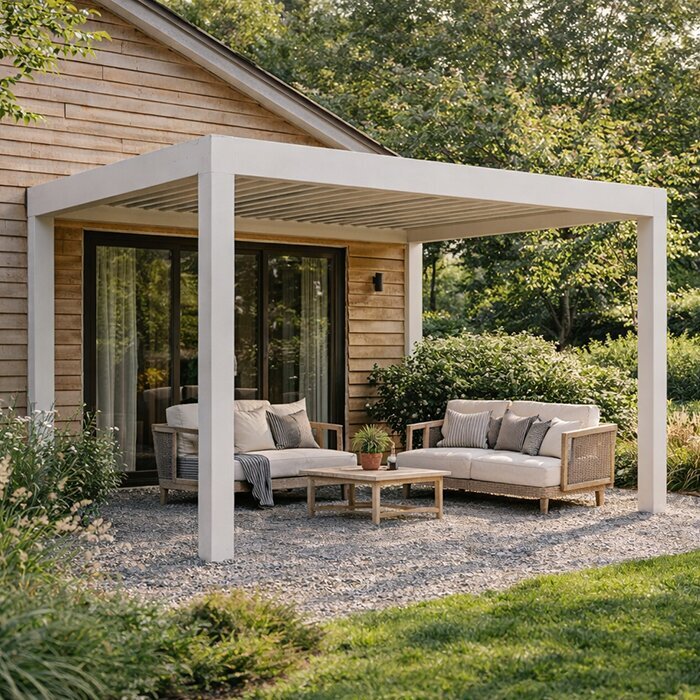
Freestanding and attached designs solve different siting problems. A freestanding pergola can stand over a patio or another usable part of the garden without relying on the house as its location; it can define a separate outdoor area, but needs a suitable place for its own supports. An attached design sits beside a building and can make the route between indoors and outdoors more direct. That convenience does not automatically make the space sheltered or remove the need for supports. Consider how it relates to the wall, doors, windows, gutters and exterior services, as well as the effect on access and the appearance of the house.
Choose the arrangement after considering the building and garden together, rather than treating attachment as a simple upgrade. Check whether the specified design is freestanding or wall-mounted, what support and fixing arrangement it requires, and whether the surface and wall can accommodate it. Do not infer those details from a photograph. For this pergola product page, look for a clear description of the intended siting and installation, then ask the seller or a qualified installer if it does not answer your site-specific questions. A type is a poor match if its required position blocks a door, conflicts with a route or cannot be supported as specified.
Choose a roof style for the cover you want
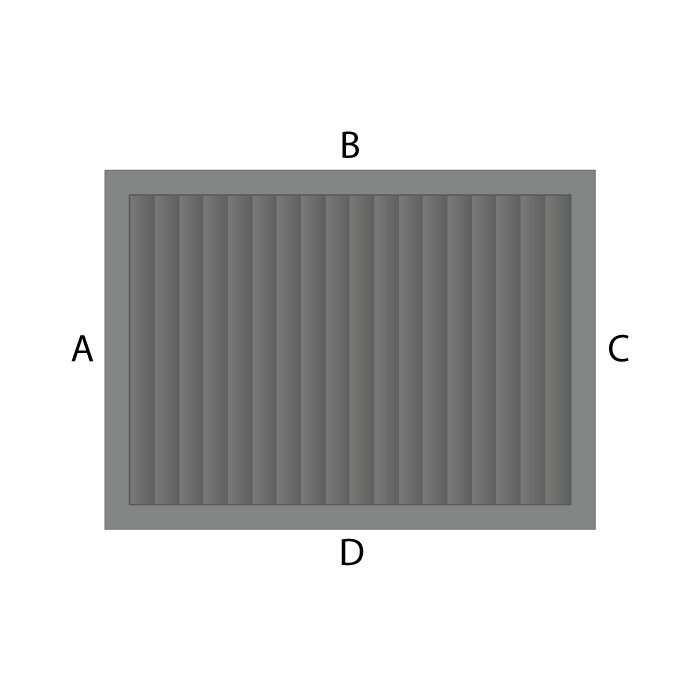
Roof design has a major bearing on how a pergola feels and what it does. An open framework leaves the sky visible and suits a buyer who wants definition rather than continuous overhead cover. A fixed top provides a permanent roof surface, but its actual protection depends on its design and specification. Adjustable louvres can be positioned to alter how much of the sky is open; a retractable canopy can be drawn back or extended if the model is designed for that. Each system has limits. Labels such as ‘all-weather’ or ‘bioclimatic’ should not replace details about operation, drainage, exposure and care.
Before choosing a roof, decide whether you value open air, adjustable shade or more consistent cover most. Consider the operation too: the control method, where it can be reached and what happens when the roof is open or closed are model-specific details to verify. When reviewing the bloomcabin product listing, read the stated roof type and operating method rather than treating a product name or image as a promise of rain protection. If the information does not explain performance limits or maintenance, ask for the relevant details. A roof that looks versatile may not be the right choice if its operation does not fit your routine.
Check the proportions against the garden and furniture
Think about proportions, not just the area a structure occupies. A pergola that looks balanced on a broad lawn may dominate a small paved courtyard; a modest frame can seem lost beside a large house or dining set. Consider the height and openness of the design as well as its width and depth. Look at the proposed position from inside the house, the garden entrance and nearby seating areas. A tall, open frame and a visually heavier roof create different impressions even if their footprints are similar. The chosen type should frame the space without obscuring useful views or making the rest of the garden feel cramped.
Relate the footprint to furniture and movement around it, rather than choosing a size from a product photograph. Leave room for chairs to move, a route to stay clear and doors or gates to operate; include planters or other items only if they are genuinely part of the intended layout. On the product page you are comparing, use stated overall dimensions if available, then compare them with your own plan and any notes about clearances. If dimensions or clearances are not clear, ask before ordering. Slopes, paving edges and overhead obstructions can affect what is workable, so resolve a close fit before delivery rather than relying on an image to judge scale.
Consider sun, rain, wind and exposure
Look at the garden’s exposure at the times you expect to use it. The sun moves, and shade from the house, trees or neighbouring buildings changes through the day and across seasons. A pergola that provides welcome shade at one hour may leave a dining spot exposed later; an open roof may preserve a bright, airy feel but offer little overhead cover. Rain and wind matter as well. The shelter a structure provides depends on its actual roof and position, so a general type name cannot guarantee comfort. Observe the intended spot at relevant times and decide which conditions you most want to manage, rather than expecting one design to provide protection in every kind of weather.
Make the supplier’s stated limits part of your choice. Check whether the roof is intended to deal with rain, where water is directed and what exposure or operating conditions the manufacturer specifies. Do not assume that a roof which closes is watertight or that a pergola can remain in every position during adverse weather. If you are considering this product listing, look for model-specific information on weather use and ask for clarification if it is absent. The same care applies to wind: a sheltered courtyard and an exposed site raise different questions, but suitability depends on the product information and a competent site assessment. If you need dependable shelter, compare documented performance rather than marketing language.
Compare materials, finishes and upkeep
Material and finish affect appearance, care and how the structure relates to the house. Timber may suit a garden with natural finishes, while metal or other manufactured finishes create a different visual effect; the material category alone says little about an individual product’s construction or upkeep. Ask what the frame and roof are made from, how exposed surfaces are finished, and whether fittings and fixings are specified for the design. Care depends on the stated finish and setting, so avoid relying on broad claims such as ‘maintenance-free’. Think about cleaning access, likely wear and whether you are willing to refresh a finish when the manufacturer’s guidance calls for it.
Match the upkeep to your habits and location. A garden exposed to salt air, persistent damp, tree debris or strong sun may call for careful material and finish choices, but a material name alone does not establish how a particular pergola will cope. Read the cleaning and care instructions, including any advice about damage to the finish, and ask which replacement parts or touch-up products are appropriate. The candidate in your shortlist should be judged by its own specification, not by assumptions drawn from a category label. If care information is unclear, treat that as an unanswered purchase question. A finish you cannot maintain may lose its intended appearance even if the design suits the garden.
Plan the support and installation
Installation is part of choosing a type, not a job to leave until after ordering. The required support can depend on whether the design stands independently or connects to a wall, and existing paving is not automatically suitable just because it is already in place. Consider drainage, levels, access for installers and materials, underground services and the condition of the proposed fixing surface. Do not choose a pergola solely because its drawing fits: a qualified installer needs the manufacturer’s instructions and details of the site to assess what is practical. If the project involves a wall, an unusual base or a difficult location, resolve the question with a competent professional first. Check any relevant planning or property restrictions with the appropriate authority or professional.
Ask what preparation is required, whether the package includes the specified supports and fixings, and whether installation is offered or must be arranged separately. These are questions about a particular order, not features to infer from a product photograph. For the selected pergola listing, find the manufacturer’s installation guidance and make sure its requirements can be met at your chosen position; if the wording is unclear, ask the supplier before purchase. Also confirm who is responsible for assessing the site, disposing of packaging and arranging any work needed to prepare the area. Settling those points helps prevent a mismatch between the design you select and the installation you can actually arrange.
Compare the full package and ordering terms
Compare like-for-like packages rather than headline prices. A product may be sold with a particular roof, controls, posts, fixings or drainage parts, while screens, lighting and other additions may be optional or unavailable; the exact contents vary and must be checked for each model. Write down what you need for the intended use, then note which items are included, which cost extra and which are not offered. Check whether the selected finish, roof operation or accessories change the total order. The aim is not to buy the longest list of components, but to understand the complete configuration and total cost before deciding between types.
Read the order information for the exact configuration, including delivery arrangements, access requirements, payment terms, cancellations or returns and the applicable warranty terms. Verify the model name and chosen options on the order summary, not just on a category page or image. For the listing for this option, use any product details as a starting point and confirm essential points in the current written order information before paying. Do not assume that a photographed accessory or service is included. If quotes differ, compare the parts, installation scope and delivery charges as well as the pergola itself; a lower initial figure may not represent the same purchase.
Decide whether accessories are worth including
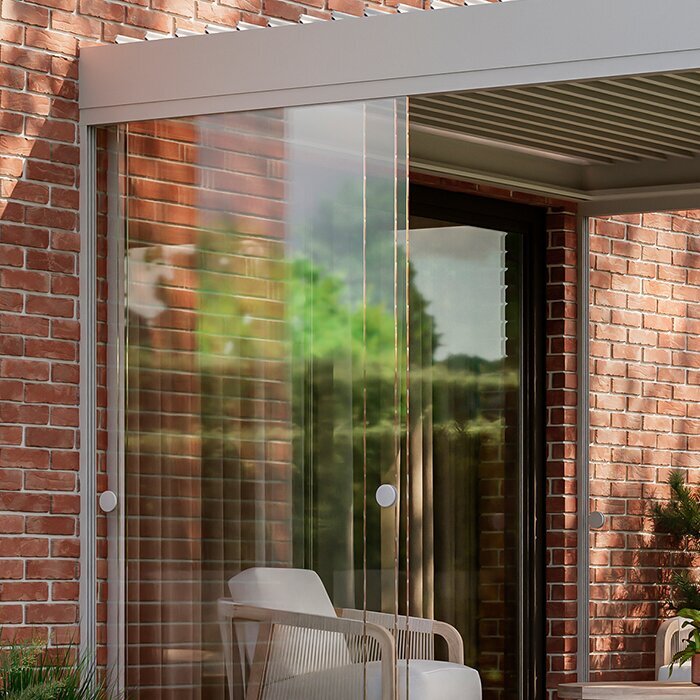
Accessories are useful only if they address a real need. Side screens, blinds or curtains can make a seating area feel more private, while lighting can extend its use after dark; neither should be assumed to come with the main structure. Think about which sides need screening, whether views and access should remain open, and how an accessory will affect the appearance and everyday use of the space. Add-ons also raise compatibility questions: attachment points, dimensions and approved combinations are specific to the model. Check the manufacturer’s options for the exact pergola rather than assuming a generic panel, heater or light will fit.
Keep electrical equipment and heating separate from the basic structure decision unless they are genuinely important to your plan. If you want either, confirm that the selected pergola and accessory are expressly suitable together, what is included and what installation is required; consult a qualified professional for specialist work. Do not treat a product image as confirmation that a light or heater is part of the package. Also decide whether a screen should be permanent or removable and whether you will use it often enough to justify the extra cost. A simpler configuration can be the better purchase when it suits your routine and leaves future choices open.
Compare a shortlist against your priorities
Turn your priorities into a short comparison rather than trying to rank every pergola type in the abstract. For each candidate, record the intended position, roof style, amount of cover, materials and care, installation arrangement and confirmed package. Mark each point as suitable, unsuitable or still unverified. A candidate with an unknown requirement is not yet comparable with one whose details are clear. Give non-negotiables—such as a particular siting arrangement or an operating method you can manage—more weight than preferences about appearance. This makes it easier to see whether you are choosing between genuine alternatives or simply responding to different product descriptions.
If two types remain, picture an ordinary day rather than an ideal one: moving furniture, opening the roof if applicable, going between the house and garden and caring for the finish. Ask whether the advantages of a more adjustable or enclosed design solve a problem that an open frame would leave, and whether that complexity is worthwhile for you. Revisit any unanswered installation or weather question before placing an order. The strongest choice is the one whose documented form, use and requirements fit the site and your habits, not necessarily the model with the most features or the most persuasive name.
Pergola buying questions
Is a freestanding pergola better than an attached one?
Neither is automatically better. A freestanding design gives you more choice about where to create a separate garden area, while an attached one sits beside the house and makes the wall and nearby openings part of the siting decision. Choose according to your space and the installation requirements.
Which roof type should I choose?
Choose according to how much cover and control you want. An open frame leaves the sky exposed; fixed, adjustable and retractable roofs work differently. Check the operation, weather limitations and care instructions for the specific model rather than relying on its name.
Will a pergola keep rain off?
Not necessarily. Roof designs vary, and a roof that can close is not automatically watertight. Check the product information for stated weather performance, drainage and operating limits. If the details are unclear and reliable rain cover matters to you, ask the seller before ordering.
Can I put a pergola on an existing patio?
Do not assume that paving is suitable just because it is already in place. Check the manufacturer's support and installation requirements against the surface and site, and ask a qualified installer to assess any uncertainty before you commit.
Should I buy a pergola with accessories?
Only if they meet a need in your garden. Check whether screens, lighting or other additions are included, compatible with the exact model and suitable for the intended installation. Comparing the complete configuration helps you understand the cost without paying for unused features.
A pergola purchase becomes easier when you decide how the space will be used, then choose the position and roof form that answer that need. Materials, upkeep and installation determine whether the type remains practical; a product label or attractive image cannot settle those questions. Compare a small number of options against your brief and commit only when the exact configuration and site requirements are clear. That keeps the decision centred on the garden you have and the way you expect to use it, rather than on a feature list.
