
Buying the Right Pergola for Your Hot Tub Area
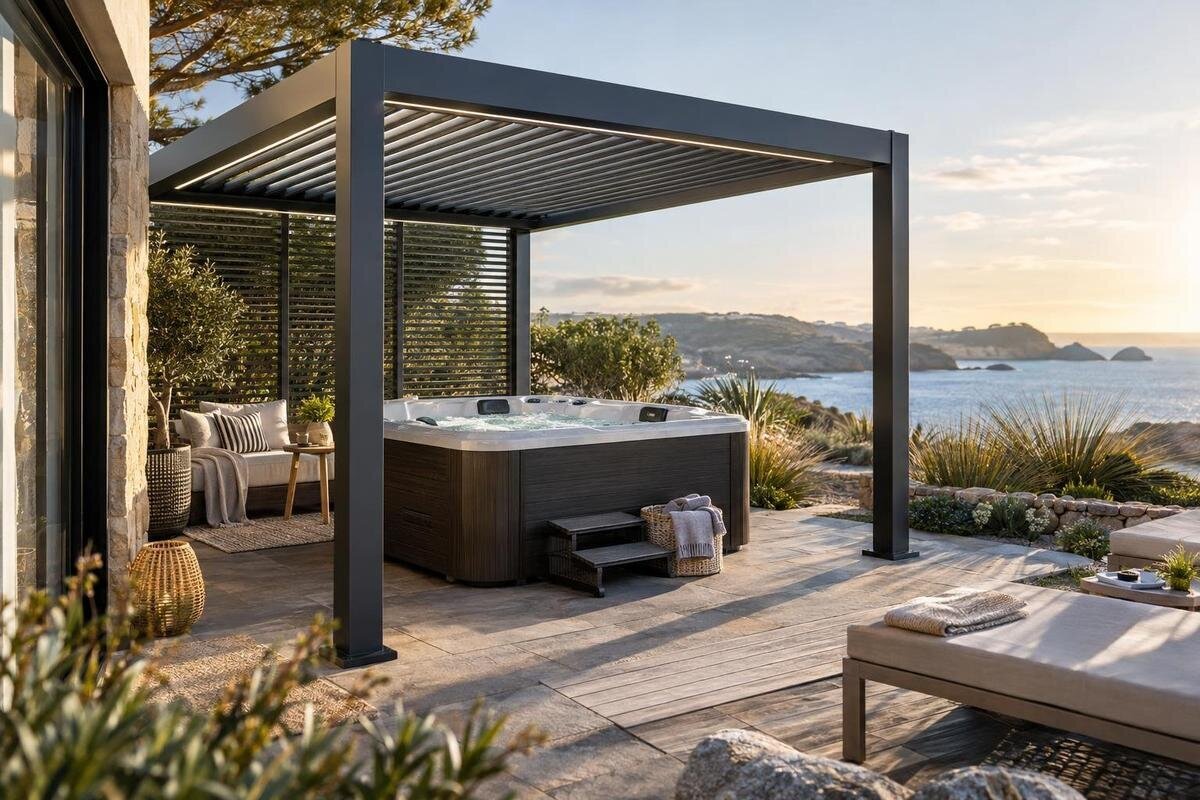
Pergola buying guide
A pergola beside a hot tub can make the area more comfortable to use, but the tub creates practical constraints that a general patio plan can miss. The frame must fit without blocking the cover, steps, service access or route in and out; its roof must also match the shade and rain protection you expect. When buying a pergola for a hot tub area, measure the whole working space rather than the tub’s outline alone. Then compare the proposed footprint, care requirements, support needs and installation arrangements with the way the tub is used.
01
Decide what the pergola needs to provide
Decide what you want the structure to change before choosing a shape. You may want overhead shade, some cover from rain, a more defined place to relax or a degree of screening from neighbouring views. Those aims overlap, but they are not interchangeable: an open top can define a space without providing the same shelter as a roof, while side screens are a separate choice from overhead cover. Write down the main purpose and one or two secondary preferences. This gives you a useful basis for comparing products instead of relying on a photograph that shows only one angle or set of conditions.
Consider how the tub is used and what happens around each visit: where its cover goes, whether steps need space and whether you want to sit nearby as well as use the water. A compact frame might leave too little room for those routines; a much larger one could dominate a small garden or shade an area you hoped to keep sunny. If you also want dry changing space or a seat, include that area in the plan rather than expecting the pergola to create it automatically. If reliable rain shelter is essential, make clearly stated roof performance a requirement rather than assuming every pergola supplies it.
Measure the tub, frame and working space
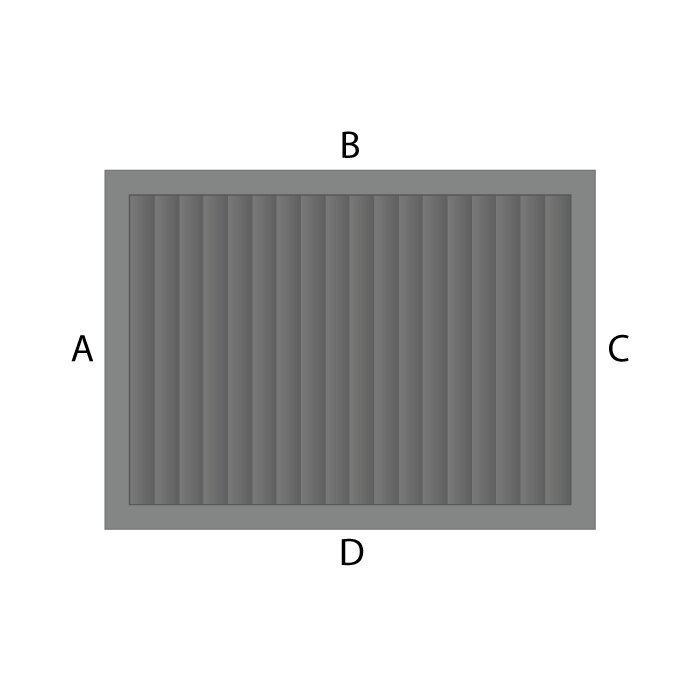
Measure the tub’s outside dimensions and mark the proposed frame position on the ground. Include roof projections, beams and support-post locations, not just the area shaded from above. Published width and depth can describe the outside of a frame or a different reference point, so check what each figure means and compare it with the clear opening between supports. Height matters too: note the lowest beam or roof point over the tub and nearby access routes. If a drawing distinguishes roof edges or gutters from post positions, record each measurement separately. When checking the Bloomcabin pergola product page, look for a dimensioned plan or clear definitions; ask for them if they are not provided.
Add the space the tub needs while it is in use and being maintained. A hinged or lifting cover may occupy more room than the closed tub, and entry steps, access panels, controls or service points must remain reachable. The required clearances depend on the tub, so follow its maker’s instructions rather than applying a generic gap from another installation. If you plan to use a cover lifter, mark its path and parked position as well. A sketch showing the tub, pergola supports, cover movement and maintenance access can expose a clash before you order.
02
Keep access clear for everyday use and maintenance
Think beyond the final footprint to the route through the garden. People need to approach the tub, step in and out, and move around it without squeezing past posts or furniture. Check the path from the house, gate or changing area, and note doors, low branches, taps and other fixed features that might narrow the way. If more than one person will use the tub at once, allow the layout to work for those ordinary movements rather than planning around a single ideal position. Consider whether the route would still be clear if you later added a seat or storage. A frame that fits on a drawing may still feel awkward if a post interrupts the natural path.
If the hot tub is already installed, confirm how pergola parts will reach the site and how installers can work around the tub. If it is a new installation, coordinate both products’ delivery and fitting plans so that access is not blocked too early. Measure gates, passageways, turns and overhead restrictions for packaged components, and check whether assembly needs more room than the finished structure. For a separate pergola page, look for stated package or installation information; if the listing does not answer the question, ask before placing an order. Think about future service work too: the area should remain accessible after the pergola is in place.
Choose a roof for the shelter you actually want
Pergola roofs range from open frameworks to slatted, adjustable, retractable or fixed arrangements, depending on the product. An open top can create a defined setting but should not be treated as rain cover. Adjustable louvres may offer control over light when the design allows, yet a closed position is not automatically watertight. A canopy or solid covering has its own limits and drainage arrangements. Match the format to the weather protection you want, and check the exact product description for what the roof does in each position. When assessing this Bloomcabin listing, rely on explicit roof details rather than assuming performance from a name or photograph.
Think about the sun’s path across the garden as well as the direction from which rain reaches the tub. A roof that shades it in the morning might leave it exposed later, while a deep projection can shade nearby windows or planting. Ask how rainwater is managed and where it will discharge; runoff should not be directed into a route, the tub’s access area or a spot where it will collect. Consider which roof position you would actually use, and whether you are comfortable with any adjustment it requires. If the garden is particularly exposed, ask the supplier or installer what site limits apply. Do not infer wind, rain or snow performance from the word pergola; use the stated limits for that model.
03
Compare materials and care requirements
Material and finish affect appearance, maintenance and how the structure copes with regular outdoor use. Timber, aluminium, steel and other constructions have different care instructions, but the category name alone is not enough to judge upkeep. In a hot tub area, repeated splashes, humid air and cleaning products used nearby make it sensible to ask whether the finish is intended for that exposure. Do not assume a surface is compatible with spa products simply because a frame is sold for outdoor use. For this pergola listing, look for explicit maintenance and cleaning guidance; if it is not supplied, ask before deciding.
Compare the work involved over time, not only the look of a new frame. Check whether the maker recommends periodic treatment, which cleaning methods are suitable, and whether fasteners or moving roof parts, if present, have particular inspection requirements. Keep enough access to wipe splashes and clean around supports without shifting the tub or dismantling the layout. Also consider how the pergola will look against the tub, paving and existing garden materials; a finish that suits those surroundings is easier to live with than one chosen from a catalogue image alone. Maintenance should be possible within the space you leave around the structure.
Place the pergola with privacy and surroundings in mind
Choose a position that works for privacy as well as sun and access. Check sightlines from neighbouring windows, paths and seating at the height where the tub will be used; a view blocked while standing may feel open when seated. Consider whether the frame will shade doors, windows, planting or an area where you want winter light. A pergola can define a zone, but its posts and open sides do not automatically screen neighbouring views. Mark the proposed position and look from several points in the garden, including the tub’s approach route, before settling on it. This also shows whether the tub and pergola feel connected to the rest of the outdoor space.
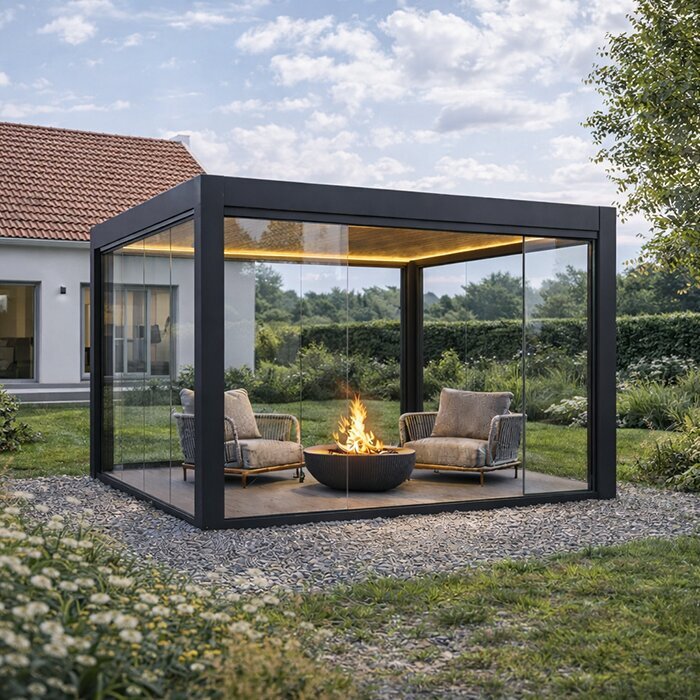
Privacy may need to come from planting, a fence or a compatible screen rather than the pergola itself. Treat these as separate design choices: added sides can alter light and airflow, as well as the way wind reaches the structure, and not every frame is intended to carry add-ons. Ask whether any proposed screen is compatible with the product and whether it changes the installation requirements. Compare one of the pergola listings with the position you have marked, but do not assume a listing includes panels or suits a particular boundary. Leave access for cleaning and service even if you add screening later, and consider how planting will change as it grows.
04
Check the surface, drainage and installation plan
Separate the pergola’s support requirements from the tub’s. The posts and fixings need a base suitable for the exact product and site; the surface that holds a tub is not automatically suitable for anchoring a frame, or vice versa. Assess the tub’s supporting needs against its own installation guidance, particularly where a deck, raised terrace or unusual surface is involved. Do not rely on a visual guess or try to resolve structural questions by adapting a product plan. Have a qualified installer or other appropriate professional assess the surface and fixing approach where needed, and make the intended positions clear before ordering.
Plan water movement around the tub and pergola together. Rain falling from a roof, splashes, emptying or cleaning water should not leave the route wet or create standing water at a post, service point or doorway. Check how the chosen design handles roof runoff and whether it needs a drainage route; the details must come from product information and the installer, not guesswork. On another product page, look for any stated base, fixing and water-management requirements. If the information is missing, ask for it and have the arrangement checked before work starts. This helps avoid choosing a frame whose position conflicts with the way the area drains.
Compare product information rather than photographs
Compare specifications side by side rather than asking which image looks most attractive. Note the outside footprint, usable opening, height, roof format, material and finish, plus any stated fixing method, drainage details and compatible accessories. Check whether the listed dimensions relate to the frame alone or include projections. Keep the listed Bloomcabin pergola as one row in that comparison, using only details actually published for the product. If a key item is not stated, mark it as unknown and seek clarification rather than filling the gap from a category label, photograph or assumption about another model.
Then compare what the purchase includes and what still has to be arranged. Check the exact configuration, any optional parts, delivery and assembly arrangements, surface preparation and the terms that apply to returns or warranty, where offered. A headline price is not a like-for-like comparison if one option includes work or accessories that another quotes separately; use the supplier’s written scope. Also confirm the dimensions of delivered components and whether an installer can reach the site. If you need to clarify missing information, record the answer so you can compare alternatives on the same basis rather than relying on different assumptions.
05
Choose a freestanding or wall-mounted layout carefully
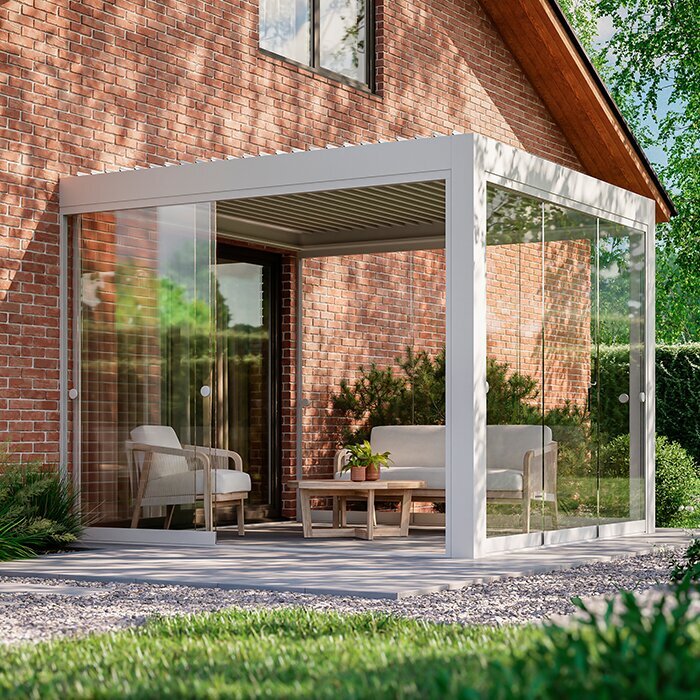
Decide whether a freestanding layout or a wall-mounted arrangement makes more sense for the site. A freestanding frame needs its supports in the right positions, while an attached design depends on the wall and on how the roof meets the building. Neither layout is automatically better: a wall may be absent, unsuitable or crossed by openings; supports may conflict with the tub, paving or access route. Check the proposed structure’s drawings and fixing requirements, and do not assume a wall-mounted label means it can attach to any wall. Where the choice involves a building or unusual surface, ask a qualified professional to assess suitability.
Check nearby doors, windows, vents and service routes before finalising an attached position. Roof projection and runoff could affect how an opening works or where water falls, while a post may obstruct a door or tub service panel. Use this listed pergola page to verify the layout and fixing information it actually gives; an image or short model label is not enough to establish the installation method. If the product’s configuration is unclear, confirm it before comparing dimensions or arranging the tub position. The right choice is the one the site can accommodate with the required access intact.
Make the final shortlist and ordering checks
Before ordering, reduce the choice to the requirements that matter most: a footprint that leaves the tub’s operating and maintenance space clear, a roof whose stated performance matches your expectations, and a material whose care guidance you can follow. Add the site’s privacy, drainage and fixing needs to that list. This makes the decision more objective than choosing by colour alone, without pretending that every feature can be maximised at once. If two products seem equally suitable, compare the compromises that will affect everyday use—such as lost sunlight, reduced walking space or extra maintenance—rather than giving too much weight to a minor visual difference.
Record the final measurements and mark the support positions on a simple plan, then check them against the exact product configuration and the tub maker’s clearance instructions. Before paying, confirm what is included, how the parts will reach the garden, who will prepare the surface and install the structure, and whether any professional assessment remains outstanding. Keep the tub’s service points, cover movement and route in and out visible on the plan. If installation needs to fit around the tub’s delivery or placement, agree the sequence in advance. If the practical checks do not fit together, revise the position or shortlist rather than hoping to resolve a clash after delivery.
Frequently asked questions
What size pergola should I choose for a hot tub?
There is no single size that suits every tub. Measure the tub, its cover movement, steps and service access, then add the pergola supports and any roof projections. Check the clear space between the supports as well as the overall footprint, and follow the tub maker’s guidance on operating and maintenance clearances.
Will a pergola keep rain off a hot tub?
That depends on the roof design and its stated performance. An open top is not rain cover, and a movable roof should not be assumed watertight when closed. Check the product information for rain protection and runoff arrangements, and ask the supplier if these details are not clear.
Can a pergola be installed over an existing hot tub?
It depends on the space available and how the pergola is designed to be assembled. Check whether parts and installers can reach the area, and whether the finished frame would leave the cover, service points and access routes clear. Confirm the arrangement with the product supplier, tub maker and installer before ordering.
Is a wall-mounted or freestanding pergola better beside a hot tub?
Neither is automatically better. A wall-mounted design depends on a suitable fixing surface and the position of doors, windows and roof runoff; a freestanding design needs space for its supports. Compare the product’s fixing requirements with the site, and get a qualified professional to assess any structural questions.
What should I confirm before ordering a hot tub pergola?
Confirm the exact footprint and configuration, roof details, care guidance, fixing requirements and any information you need about drainage. Check what the purchase includes, how components will reach the garden, and who is responsible for assembly and surface preparation. Resolve missing details before committing to a position or installation plan.
The right pergola is the one that fits the tub’s day-to-day use as well as the garden. Its footprint should leave the cover, service points and route in and out clear; its roof should suit the shelter you expect; and its care and installation requirements should work for the site. Confirm those practical details first, then choose the appearance and finish that sit comfortably with the rest of the outdoor space.
