
Buying a Pergola for Your Existing Paved Patio
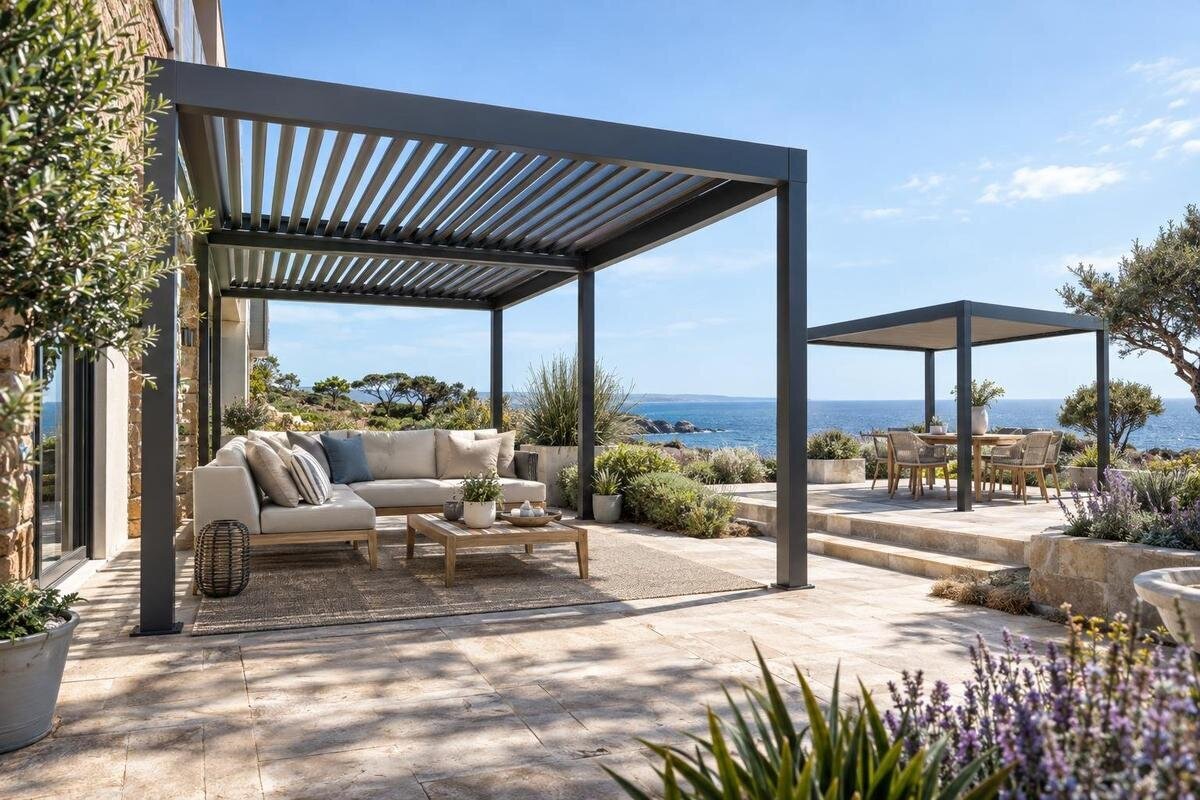
Pergola buying guide
Buying a pergola for an existing paved patio is not simply a matter of matching its width to the visible paving. The posts need positions that work with the patio layout, and the surface you see may not reveal what lies beneath it or whether it is suitable for the proposed fixing method. Doors, drains, levels and access can also affect where a frame can go. A useful buying decision combines a measured plan with information about the exact pergola and the patio’s construction. First establish the usable space; then compare footprints, fixing requirements, coverage and appearance. Where the base or connection needs technical assessment, have a qualified installer or other suitable professional confirm it before you place an order.
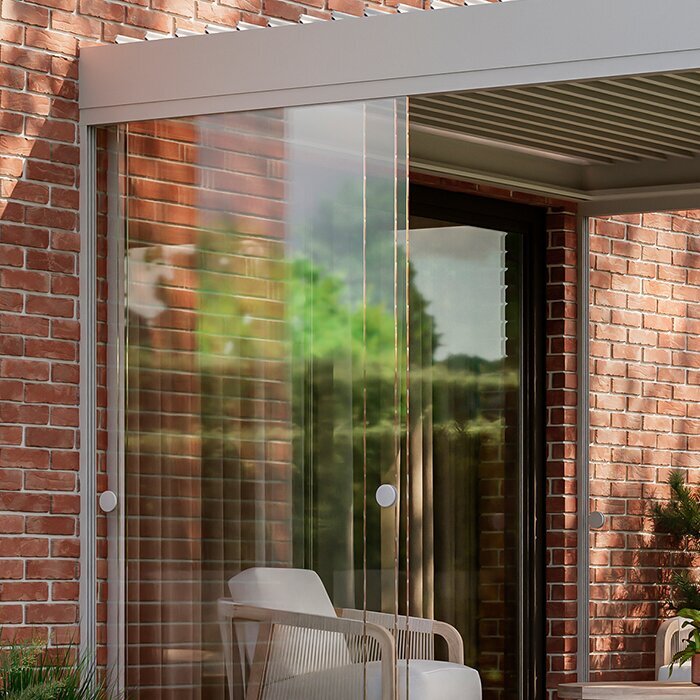
Before you buy 1
Measure the patio as usable space
Measure the area that can actually take the pergola, not just the patio’s outside edge. Record the clear width and depth, noting any sections narrowed by a wall return, step, planter, drain or permanent furniture. If the paving changes direction, sketch each part instead of reducing the whole space to one approximate rectangle. Mark the house wall, patio edges, door openings and fixed obstacles on the same plan. Keep the units consistent and note where each measurement was taken. Where boundaries are not parallel, measure at more than one point. This gives you a more useful comparison with a product drawing and makes clear which paved areas are genuinely available for the frame and its supports.
Allow for movement as well as the space beneath the pergola. Posts can occupy corners that might otherwise seem clear, and furniture changes how much room is comfortable to use. Mark the proposed footprint on the paving with string or a removable marker, including the support positions shown on the relevant drawing. Walk from the house towards the garden and check the route past the marked area. Imagine pulling out a chair, carrying food to the table or making room for someone to pass. If the outline leaves only a narrow route or makes the seating area awkward, reconsider the size or position before comparing finishes. A simple plan on the patio can reveal that problem sooner than a product photograph.
Check the post positions, not just the overall footprint
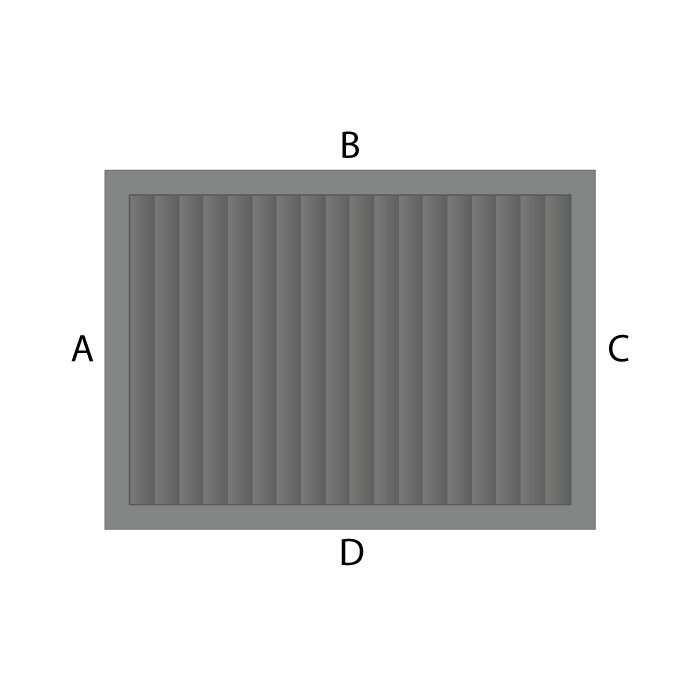
An overall width and depth may not tell you exactly where the supports will land. Look for the distances between post centres and, if they are provided, the outside dimensions of the posts or their feet. Those measurements help you compare the proposed frame with the patio’s usable area. A drawing may also show an overhang beyond the supports, so keep the roof outline separate from the space taken up at ground level. If a listing does not make the post layout clear, ask for the drawing that applies to the exact pergola you are considering rather than estimating from an image.
On your plan, mark the intended support points against the actual paving joints, cut edges and changes in the pattern. A post near a joint is a point to ask about; its position alone does not establish whether a proposed fixing is suitable. Avoid assuming that a slab can simply be moved, cut or bridged to make a layout work. Use the pergola product listing to identify the item you are comparing, then obtain or check the relevant dimensions and support layout. If the proposed positions conflict with the patio pattern, ask the installer or supplier about an alternative arrangement before committing to a size.
Before you buy 2
Find out what lies beneath the paving
The paving slabs are the visible finish, but they may not be the part that can take a pergola’s fixings. Depending on how the patio was built, slabs may rest on bedding or other layers, and later repairs may have changed the construction in one area. Appearance, age and thickness alone do not tell you what lies beneath a proposed support point. If you have information about the original patio work or repairs, keep it with your measurements. If the construction is unknown, arrange for a competent installer or other suitable professional to assess the proposed locations before you order.
Check the fixing requirements for the exact design, rather than relying on a general suggestion about securing pergolas to patios. Useful questions include what the proposed fixing connects to, whether the paving needs to be altered or lifted, and who will confirm that the method is appropriate for this patio. The relevant product page can help identify the item whose instructions you need; it does not establish that your particular surface is suitable. A photograph or a product name is not a substitute for site-specific advice. If no suitable fixing approach has been confirmed, pause the purchase or compare a different layout instead of assuming that a broad post foot will solve the issue.
Inspect the paving condition and levels
Look closely at the areas where the supports are being considered, not just the centre of the patio. Loose or rocking slabs, cracks, open joints, repaired patches and signs of settlement are reasons to investigate the surface before ordering. None of these observations, by itself, determines whether a pergola can be installed, but they may affect what an installer needs to assess. Note where the patio has changed over time and whether any work is already planned. Also mark drainage channels, gullies and access covers so that a proposed post does not block them or make routine access difficult.
Outdoor paving may have a deliberate fall to help water drain, so do not assume that an existing patio is level or that every pergola can accommodate its slope. Ask what surface conditions and level allowances apply to the exact design. If the patio is uneven, settled or has areas where water collects, have the proposed support locations reviewed rather than trying to correct the layout by guesswork. Use the product page to identify the relevant pergola, then check the applicable installation information or ask for it. This keeps the decision focused on the patio you have, rather than on a general image of a frame standing on a smooth surface.
Before you buy 3
Choose a freestanding or attached layout
A freestanding pergola and an attached, or lean-to-style, arrangement affect a patio in different ways. A freestanding layout places its supports across the footprint, which can influence routes and furniture positions. An attached design relates the structure to the house wall and may change how the patio edge is used. Compare both against your plan: note where the supports would go, how much of the paved area would remain open and whether the position works with the way you use the doors and seating. The name of a layout does not tell you whether it suits the dimensions or construction of your particular patio.
A nearby wall does not automatically make an attached design suitable. The connection needs to be appropriate for the actual wall, including its finish and any features that could affect the proposed position. Ask who will assess that connection and what information they need before you place an order. A freestanding design avoids that particular wall question, but it still needs an approved method for securing its supports to the patio or suitable base beneath it. Compare the fixing requirements alongside the visual layout. If either arrangement depends on an unconfirmed wall or patio condition, resolve that point before treating the pergola as a straightforward fit.
Decide what kind of overhead cover you need
Be clear about what you want from the top of the pergola. The word pergola does not, by itself, tell you how much shade a design provides, whether its overhead area is open or covered, or whether it keeps rain out. If shade is the priority, notice how sunlight reaches the patio at the times you usually sit there; the house, trees and nearby buildings can all affect it. If you want protection from rain, check the product’s stated coverage and water-management information instead of inferring performance from its appearance. These preferences can narrow your choice before you compare colours or other visual details.
Compare the details that matter for your use, such as whether the top is fixed or adjustable, how it is operated if it moves, and what care or operating conditions are stated. Check whether the information addresses rainwater and any performance limits relevant to your setting. The product details are a starting point for identifying what has been described for that item; ask for clarification where a feature or its limitations are not clear. Do not assume that two pergolas with a similar outline provide the same kind of cover. The right comparison is between stated features and what you need the patio to do, not between product photographs alone.
Before you buy 4
Allow for doors and garden routes
Check how the pergola’s position relates to every door that opens onto the patio. A hinged door needs room for its opening arc, while sliding doors still need clear access to their handles and full opening. Include windows that open outwards, outside taps, downpipes, lights and other fixed features on your plan. A support can interfere with access even when the overall roof outline appears to fit. Also consider the route from the house to the lawn, gate or storage area. The aim is to keep ordinary movement possible without forcing people to weave between a post, a table and the edge of the paving.
Add the furniture you actually use, including the space needed to pull chairs back and walk around a table. If the patio serves several purposes, sketch those arrangements separately rather than assuming every item will stay in one position. Compare your plan with the dimensions published for the product listing, if they are available, and check that they relate to the exact configuration under consideration. A photograph may help you picture the general appearance, but it cannot confirm clearances at your doors or along your garden route. If the pergola only fits when furniture or access points are ignored, test a different position or size before ordering.
Match the pergola’s appearance to the house and garden
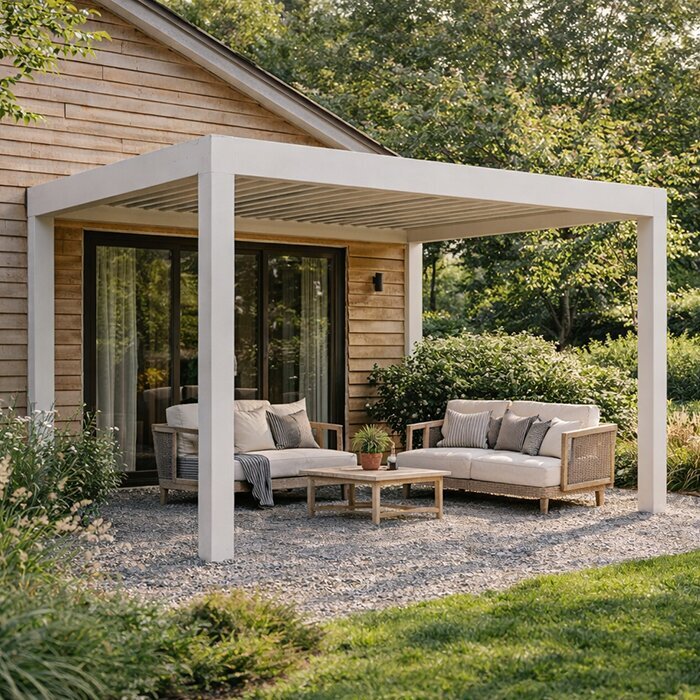
Once the footprint and fixing questions are understood, consider how the pergola will look from both the house and the garden. Compare its proportions with the patio, nearby walls, fencing and existing furniture. A frame can feel visually heavy if it occupies most of a small paved area, while a very small-looking structure may not define the seating space you have in mind. Look at the lines of the house and paving, and consider whether a simple or more prominent design would sit comfortably alongside them. Style is easier to judge when you view it in relation to the actual patio rather than as an isolated product image.
Check the exact finish and materials described for the pergola you are considering; do not infer them from a model name or a photograph on a screen. Ask whether finish samples or fuller images are available if colour is important, and find out what care the stated materials require. Think about the view from inside the house as well as the view across the garden: the structure may frame a sitting area but also alter what you see through a window. When reviewing the listing for this pergola, treat its appearance as a visual reference and confirm any detail that matters to your choice. This keeps a style preference from outweighing practical fit.
Before you buy 5
Check product details and installation arrangements
Before ordering, check the information for the exact item rather than relying on a category name or a similar-looking image. Look for the overall dimensions, support positions, relevant clearances, stated surface requirements and installation instructions. Confirm what is included, which fixings or other components may be needed, and whether the design is intended to be freestanding or attached. If a drawing or an installation detail is missing, ask for it. Use the selected pergola page to identify the item you mean, but do not assume that its listing answers every question about your patio. Keep written replies with your plan so you can compare options on the same basis.
If someone else will assess or install the pergola, discuss the patio before the order is placed. Ask whether they need to inspect the paving or wall, what preparation may be required, and who is responsible for confirming the fixing method. Clarify the installation scope and any exclusions in a written quotation, rather than assuming that assembly or surface preparation is included. Measure the route from the delivery point to the patio, including gates, narrow passages, steps and turns, and check package information if it is available. Access can affect how a purchase is received and handled, even when the chosen footprint fits the patio.
Plan around drainage and future patio work
Consider how the pergola will affect routine care of the patio. Keep gullies, channels and access covers reachable, and think about whether the proposed position will make it harder to sweep leaves or maintain plants nearby. If a design has a covered top, check how its instructions describe rainwater management; do not assume water will fall in the same way as it does from an open frame. Note where runoff already goes and ask whether the proposed arrangement changes what needs to be considered. This is especially useful when the patio includes a drain close to a likely support position or a route that you need to keep clear.
Think ahead if you expect to replace or repair the paving. Ask whether the proposed fixing would require slabs to be lifted or altered, and what that could mean for future access to the patio surface. The answer depends on the design and the site, so include it in the questions for the installer rather than assuming every pergola can be removed or repositioned easily. A final comparison can bring together the patio plan, confirmed fixing approach, cover requirements and preferred appearance. If a key site condition is still uncertain, treat it as an open question rather than a reason to rush the order. The pergola details can identify the item you are comparing while you confirm what remains to be checked.
Frequently asked questions
Can a pergola be fixed directly to paving slabs?
There is no universal answer. Slabs may be only the visible surface, with a different base beneath them, so their appearance does not confirm that they are suitable for a particular fixing. Check the pergola’s stated requirements and ask a qualified installer to assess the proposed fixing points.
How much space should I allow on a paved patio?
Use the exact product dimensions and support positions, then leave enough room for doors, walking routes and furniture in use. There is no single clearance that suits every patio: the layout, access points and the pergola’s own instructions all matter.
Does an existing patio have to be completely level?
Not necessarily. Outdoor paving may have a fall to help manage water, but you should not assume that every pergola can accommodate it. Check the requirements for the exact design and have the proposed locations assessed if the surface is uneven or settled.
Should I choose a freestanding or attached pergola?
Compare how each arrangement affects the patio and what it needs to connect to. An attached design needs to be suitable for the particular wall; a freestanding design still needs an approved way to secure its supports. Neither is automatically suitable just because the patio is paved.
What should I check before placing an order?
Confirm the exact footprint and post positions, the permitted fixing method for your patio, any surface or wall requirements, and the coverage and finish you want. Also check the relevant instructions, installation arrangements and whether the product can be brought to the patio along your access route.
A paved patio gives you clear reference points for planning, but it is not automatic proof that a pergola will fit or can be secured as intended. Measure the usable area, mark the likely support positions and consider doors, drainage and everyday routes before choosing a size or style. Then confirm the fixing requirements against the construction of the patio, with professional advice where needed. The strongest buying decision is based on the actual site as well as the product information: its footprint, intended cover and appearance should all work together without relying on assumptions about the paving.
