
Buying a Pergola on a Fixed Budget: Which Features Come First?
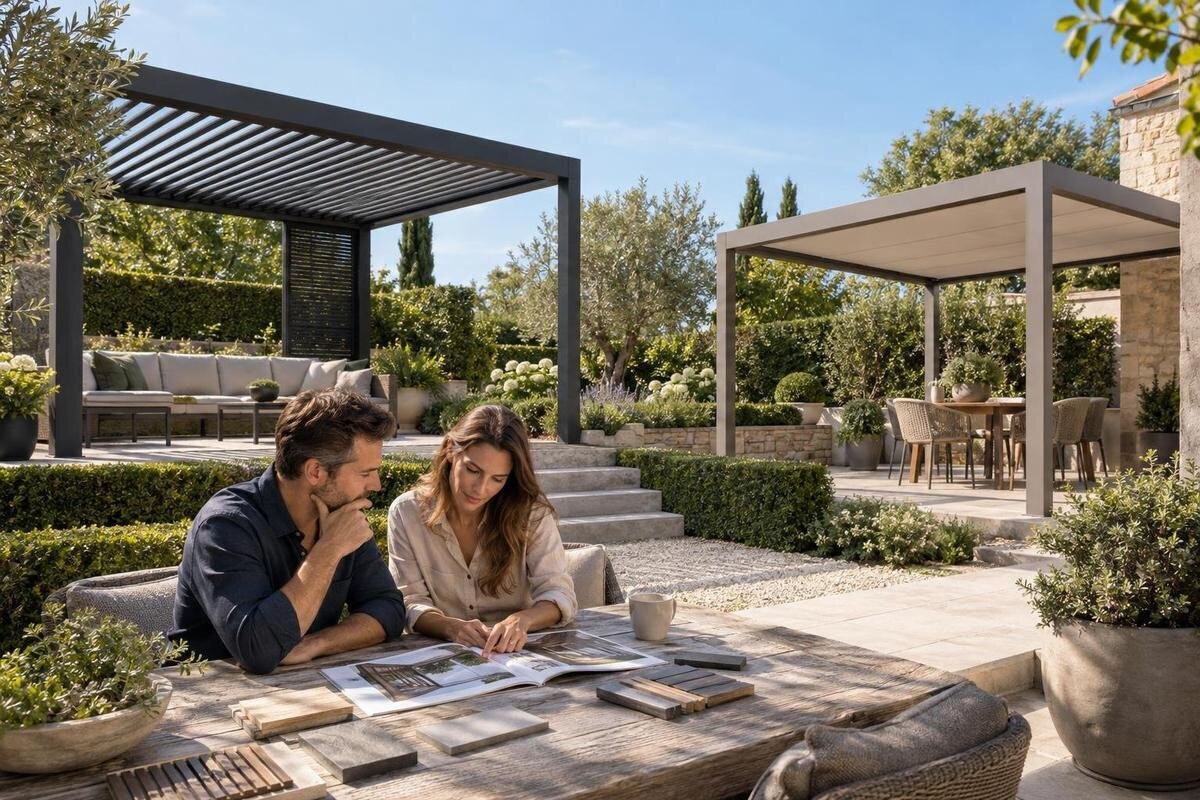
Pergola buying guide
Buying a pergola on a fixed budget is a prioritisation exercise: size, frame material and shade provision matter more than a long list of extras, but only if the total project cost is clear. Decide what the structure needs to do in your garden, then compare candidates against the same requirements. Delivery, ground preparation and installation can affect what remains for the product, so a headline price alone is not a reliable guide to what fits your budget.
01
Set an all-in pergola budget
Set an upper figure for the complete project and decide what it has to cover before browsing. Separate the pergola itself from shade provision, delivery, ground preparation, any required base or foundation, installation and accessories. These items may be bundled or may not apply to your site, but listing them prevents a product-only price from using money needed for practical work. Keep an allowance uncommitted while you confirm uncertain costs. If your budget also covers other garden improvements, state which work shares the limit; otherwise a pergola comparison can absorb money intended for something else. Mark each figure as quoted, estimated or still unknown.
Make three priority groups: essential for regular use, useful if affordable and easy to postpone. An essential might be enough room for furniture you already own or a particular level of shade; a decorative finish or extra fitting may sit lower. Write the reason beside each choice rather than collecting features without a purpose. Then decide in advance what you would remove if the total exceeds the ceiling. This is more useful than choosing the lowest advertised price and later discovering it leaves out something you consider necessary. Treat an unconfirmed future upgrade as no part of today's buying plan.
Measure the space the pergola must serve
Measure the area you can genuinely give to the pergola, not just the largest rectangle that might fit on a plan. Mark the intended footprint and allow for the table, chairs and people moving around them. Include room to open nearby doors and gates, walk to the rest of the garden and reach features you still need. Trees, walls and changes in level can affect where a structure can sit, even though they are not part of the pergola. If you already own outdoor furniture, measure it too. A quick sketch with key dimensions can rule out sizes that would block normal access or make everyday seating awkward.
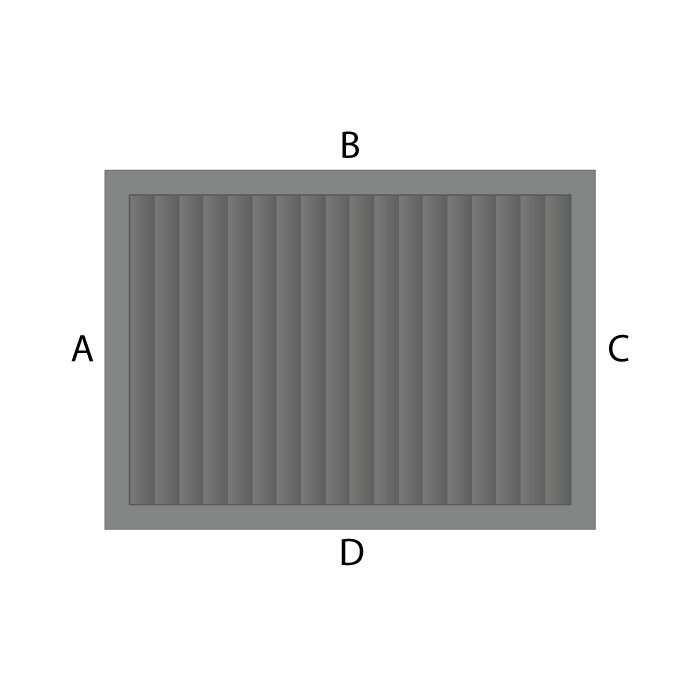
Compare your sketch with the stated outside dimensions, not a rendered image or a label such as large or compact. Check what the measurements include and where the supports sit if that information is given; the space inside a frame may be less than its overall footprint. Use the Bloomcabin pergola listing to practise checking written details rather than estimating from a photo. If the page does not make a measurement clear, ask before ordering. A structure that leaves a usable route may be a better fit than a larger one that takes up the space you need to move around.
02
Compare frame materials and care requirements
Treat the frame material as a fact to confirm, not an assumption based on colour, finish or product wording. Ask for the material of the main frame and, where relevant, the material and finish of other structural parts. A product title may identify a design but does not necessarily give a complete specification. When reviewing this Bloomcabin pergola product page, rely on the written details; if the material is absent or ambiguous, ask the seller before comparing it with an alternative. Record the answer against the exact product option, so you are not weighing a confirmed specification against an assumption drawn from a photograph.
Different materials and finishes can call for different care, so compare the instructions for each candidate rather than assuming one option is maintenance-free or inherently cheaper to own. Ask what routine cleaning is recommended, whether protective treatment is expected and how repairs or replacement components are handled. These answers affect both the time you are willing to spend and the ownership budget. Check that guidance applies to the finish and configuration you are considering, not just a broad product family. Avoid assigning a cost to future care without evidence; use supplier information or a written estimate where relevant.
Choose shade provision for the hours you use the garden
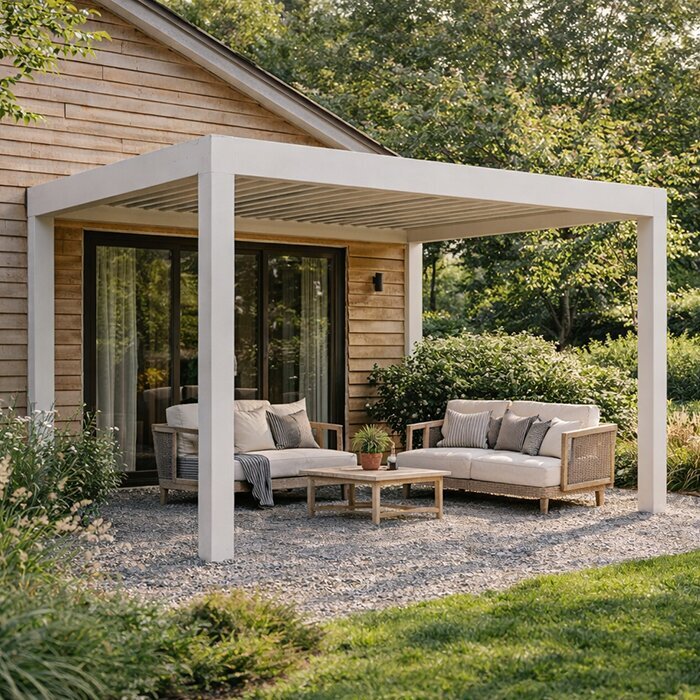
Before paying for a shade solution, describe the job it needs to do. Do you want shade over a dining spot at a particular time, a way to adjust the light during the day, or cover across a larger part of the footprint? Notice how the sun reaches the intended seating area at the times you use it; a shaded patch in the morning may be in sun later. Pergola designs can offer different shade arrangements, and a cover may be a separate purchase. Check the written inclusions on the separate pergola listing rather than assuming a canopy or adjustable element comes with a structure. A photograph cannot establish what is supplied.
Separate shade from rain protection when you set your priorities. If you expect the structure to shelter you from rain as well as sun, check that the product information explicitly describes that use; shade alone does not confirm weather protection. Also consider whether you need shade across the whole footprint or only above a specific seating area. A smaller coverage requirement may let you avoid paying for a feature you would rarely use, while a shade option that does not reach the main activity area may fail your brief. Confirm the exact arrangement and how it is operated, if applicable, before comparing costs.
03
Keep optional extras behind the essentials
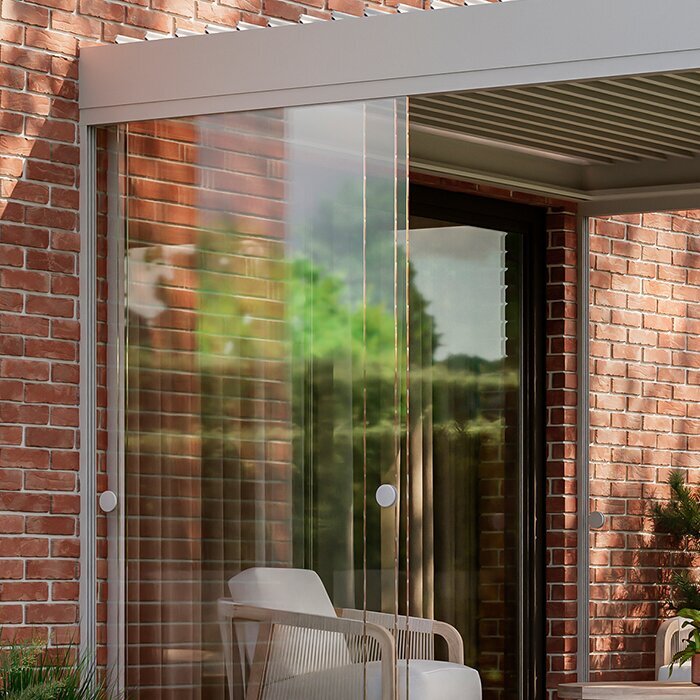
List additions separately from the pergola itself. Depending on what is offered for a particular model, these might include side screens, lighting, heating, decorative details or extra shade components. For each one, note whether it is included, available at extra cost or not specified. A feature belongs in the essential group only if it solves a real problem in your garden; otherwise, it can wait until the footprint, frame details and shade provision are settled. Use a Bloomcabin pergola product page to check what its written details actually state, not to infer included accessories from an image.
Do not assume that an accessory can be fitted later just because it appears to be a simple addition. Ask whether it is compatible with the exact pergola, whether additional parts or work would be needed and what the likely extra cost is. If the answer is unclear, count it as unavailable for your current plan rather than building your budget around it. When comparing two options, remove or add extras one at a time so you can see what each change does to the total. This helps keep a useful feature from being confused with an attractive but non-essential upgrade.
Include site preparation, delivery and installation
The site and the pergola’s stated requirements affect what you need to budget beyond the product. Check the supplier’s information about the base or foundation required and whether any ground preparation is expected. A paved area or an existing base does not automatically confirm that it is suitable for a particular structure. If you are uncertain about the site or the required base, ask an appropriately qualified professional to assess it; do not try to decide from a catalogue image or a general description. Find out early whether this work is included in a quotation or needs to be arranged separately.
Check how the product will reach its intended position as well as whether it can be installed there. Ask whether delivery, unloading and assembly are included, and what access information the supplier or installer needs. Note narrow gates, steps, tight turns or other restrictions on the route, then provide those details when requesting a quote. Use a pergola product listing to identify the exact candidate, but confirm delivery and installation arrangements directly rather than assuming they are covered by the product page. Comparing these practical costs early can prevent a suitable-looking product from exceeding your project limit.
04
Compare quotations on the same basis
A fair comparison needs more than two headline prices. For each candidate, record the exact product and configuration, stated dimensions, frame material, shade provision and included accessories. Add separate lines for delivery, site preparation, any base or foundation work and installation. If a quotation bundles several items, ask what the bundle covers; if an item is missing, mark it as unknown rather than treating it as free. You can use a separate Bloomcabin pergola listing as a reference point for checking written product information, while confirming every detail that matters for the specific option you are considering.
Ask for answers to important questions in writing so you can compare like with like. Useful points include what is supplied, what the dimensions refer to, which shade components are included, what preparation is expected and what care information is available. A quotation with more items may have a higher total but cover work another leaves out; conversely, an add-on you do not need may inflate the comparison. Do not subtract a cost simply because it is not listed. First establish whether the work is unnecessary, included elsewhere or still awaiting a price.
Make budget cuts without losing the purpose
If the full project exceeds your ceiling, revisit your priority list rather than cutting costs at random. First consider features that are useful but not essential, such as a decorative option or an extra fitting. Then test whether a different footprint would still accommodate the furniture and routes you need. Keep the requirement for a suitable base and the shade you identified as essential in view; removing a necessary part of the plan can make a lower initial price misleading. The right compromise depends on how you use the garden, not on a universal rule that one feature should always come first.
Apply the same test to each candidate: does the feature you would pay extra for solve a regular problem, or is it only appealing on the product page? Use one candidate pergola listing to compare the written details against your must-have list, then review the total with optional items removed. Avoid choosing a product with missing information merely because it appears to fit the budget, and do not count on adding an essential component later until compatibility and cost are confirmed. If the figures still do not work, reconsider the brief before committing.
05
Verify the exact product and order details
Before placing an order, check the precise product and configuration against the requirements you recorded. Confirm the stated dimensions, frame material and finish, shade provision, included accessories, care information and any installation requirements that matter to your garden. Check that the option selected on the order matches the details you compared; a similar image or general product title is not enough to establish that. If the page does not answer a material question, ask the seller for clarification. Keep the written response with your notes so you can compare the confirmed specification with the full project cost.
Review the amount and terms for the order you are actually placing, including delivery and any installation arrangements. Read the relevant delivery, return and cancellation conditions, and check whether you need to prepare the site or arrange separate work. the relevant product page can help identify the candidate, but the order confirmation should match the chosen product and any options agreed with the seller. If a detail changes the total or the way you plan to use the pergola, update your comparison before committing rather than letting a small assumption become a budget gap.
Consider ownership costs as well as the purchase price
The initial purchase is only one part of a fixed-budget decision. Where relevant, consider future care supplies, renewal work, repairs or replacement components, but do not assign a generic annual figure without information to support it. Ask what maintenance the supplier recommends and whether replacement parts or servicing information are available for the exact product. Mark any unanswered cost as unknown, not as zero. This gives you a more realistic picture of what you are taking on and helps avoid choosing a pergola whose upkeep does not fit the time or money you are prepared to spend.
Finally, test the choice against a normal week in your garden, not only an occasional gathering. Think about who will use the space, where people will sit or pass through, when shade matters and what care you can realistically manage. Put those answers beside the confirmed project total, including site work and delivery. The strongest option is the one that meets your regular needs within the limit, with no essential feature left to guesswork. If none does, revisit the size or optional extras rather than stretching the budget for features that do not improve everyday use.
Frequently asked questions
Should I prioritise pergola size or shade?
First decide how much space you need for your regular use, including furniture and clear routes around it. Then consider whether shade is essential and where you need it. The right balance depends on your garden and routine, so compare actual dimensions and written shade details rather than relying on a photograph.
Is a cheaper frame material always the best way to stay on budget?
Not necessarily. Compare the stated material, finish and care instructions for the exact product, as well as its purchase cost. Avoid assuming that a material is maintenance-free or cheaper to own over time unless the supplier’s information supports that conclusion.
Can I add a shade cover later?
Only if a compatible option is available for the pergola you choose. Ask whether the cover is included, sold separately or unavailable, and confirm the added cost and fitting requirements before ordering. Do not base your decision on an assumed future upgrade.
Does the pergola price include installation and ground preparation?
The quoted scope can vary, so ask what the amount includes. Check separately for delivery, assembly, site preparation and any required base or foundation. If you are unsure whether your site is suitable, ask an appropriately qualified professional to assess it.
What should I do if my preferred pergola is over budget?
Review optional extras first, then check whether a different footprint would still suit your usual needs. Recalculate the full cost, including delivery and site work, rather than comparing product prices alone. Do not rely on a future upgrade to supply a feature that is essential from the outset.
The best budget choice is not necessarily the largest pergola or the one with the most options. It is the one whose stated size, frame details and shade provision meet your regular needs, with delivery and site costs understood before you commit. Keep the essentials in view, defer extras that do not solve a real problem and make the decision on the cost of the complete project, not just the product-page price.
