
Buying a pergola with lighting: planning for evening use
Pergola buying guide
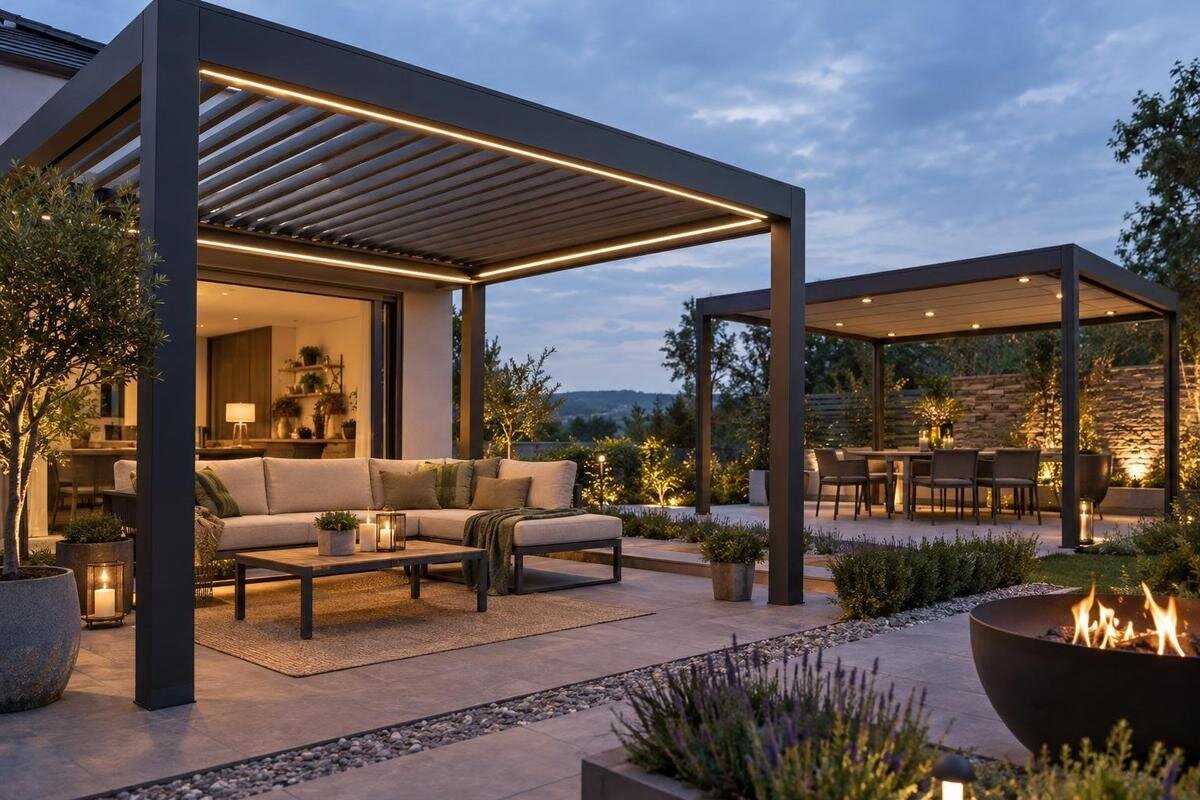
Evening use should shape your pergola choice, rather than being an afterthought to its appearance. Decide what you want to do beneath it after dark, where useful light needs to fall and how you expect to power and control it. Dining, reading, conversation and moving between the house and garden call for different lighting arrangements. The guidance below helps you compare product information, garden layout and installation requirements as one buying decision.
How you use the pergola after dark
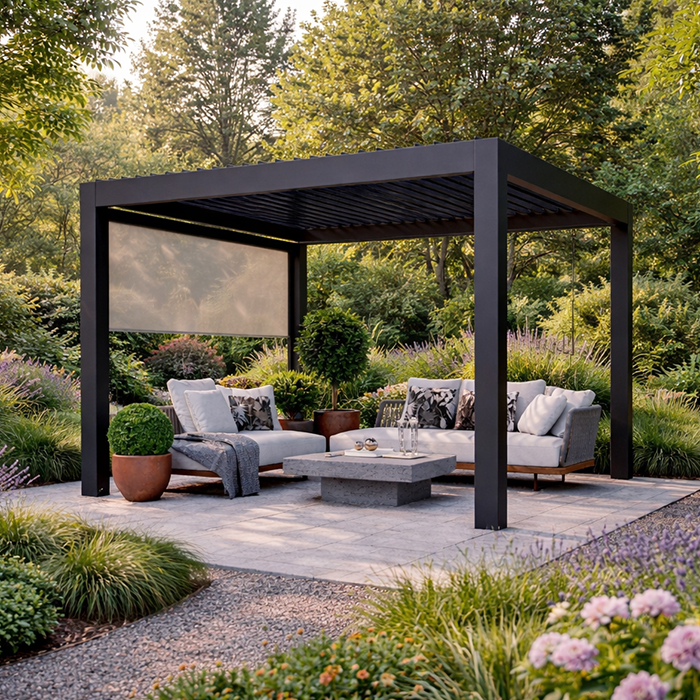
Before comparing pergolas, picture a typical evening rather than an idealised gathering. Note whether you usually eat beneath the structure, sit and talk, read, or pass through on the way to another part of the garden. Each activity calls for a different pattern: a table needs useful light across its surface, reading needs a suitable pool near the seat, and conversation can be uncomfortable if a bright source sits in everyone's direct line of sight. List the activities you expect to repeat most often, then treat occasional entertaining as a secondary requirement. This gives you a practical basis for judging a lighting layout rather than choosing by appearance alone.
Think about how long you use the area, who needs to operate the lights and whether the same arrangement has to serve different routines. A short meal may need a clear pool over the table, while a longer evening outside may call for more than one level of light. Note when people arrive, move between the house and pergola, or put things away. A written priority such as 'light the table and make the route back visible' helps you compare models consistently and prevents decorative extras from distracting from the useful light you actually need.
Mapping the areas that need light
Sketch the pergola's footprint in relation to the house, doors and the rest of the garden. Use dimensions given in product information only when they are explicitly stated; otherwise, obtain them before deciding where furniture and lighting will fit. Mark the table, seats, the route people take to enter and leave, and anything that could block a fitting or cast a shadow. Include the space needed to pull chairs out. A layout that appears roomy on an empty plan can feel crowded once people, furniture and a clear route through it are all included.
Then mark the points where light matters: the table, a reading seat, steps or changes of level, and the route back to the house. Consider where someone sitting will look; a light directly above or opposite a seat can cause glare even if it illuminates the area. Compare your drawing with any published measurements and fitting information on one of the supplied pergola pages, and ask for details that are missing. Do not use a product photograph as a scale drawing or assume that a fitting shown in a styled image has an available mounting point.
A balance of task and ambient light
Think in layers rather than expecting one fitting to do every job. Task lighting gives useful visibility for a particular activity, such as serving a meal or reading; broader ambient light makes the seating area feel usable; a small accent source can define an edge or feature. You do not necessarily need all three. Decide which layer matters first, then ask whether the proposed arrangement can provide it without leaving the rest of the pergola in deep shadow. Where there is only one lighting position, a carefully directed fitting may be more useful than a bright source aimed indiscriminately across the whole space.
Check stated light output, beam direction and colour appearance rather than relying on descriptions such as bright or warm. The same output can feel different when concentrated on a table or spread across a seating area, and a bare source in the sightline can be distracting. Dimming is useful only if it is included or compatible and you expect to use it. Compare your plan with another pergola product page, but do not infer from the name or an evening photograph whether a fitting is built in, how much light it gives or where it can be mounted.
What the pergola listing includes
Treat the product description as the authority on what comes with the pergola, and separate confirmed contents from items shown for illustration or sold separately. For the Bloomcabin pergola listing, record only lighting details explicitly stated on the page; the product name and image do not establish whether lights, a power supply or controls are included. If lighting is not mentioned, do not assume the pergola has integrated fittings. Ask the seller to clarify the package contents and what is optional before comparing it with another arrangement.
Look for specifics that affect your plan: how many lights are included, where they can be fitted, whether the light source is replaceable, what power components and controls are supplied, and whether a dimmer, remote or extension is an extra. Check whether the lighting option is a separate variant or accessory and whether it must be ordered at the same time. Keep a short list of unanswered points. That avoids a common buying error: choosing the pergola on the assumption that a complete, ready-to-use lighting kit is part of the package when the listing has not confirmed it.
Choosing a power source for the garden
Choose a power approach early because it affects both the position of the pergola and the type of lighting you can use. Mains-powered lighting may suit regular, longer use where a suitable supply can be provided; battery options avoid a fixed supply but need charging or replacement; solar depends on a suitable place for its panel and the available daylight. These are trade-offs, not guarantees of performance. Compare the product's stated power requirements and the manufacturer's instructions with your intended use, and do not assume a pergola page includes a power supply simply because lighting appears in a photograph.
Before ordering, note where power is available and whether the lighting arrangement calls for fixed electrical work, a separate driver or other components. A qualified electrician can assess the site, the proposed products and a suitable way to provide any fixed supply; do not plan wiring from a picture or a guessed route. If considering this pergola product entry, check whether its information confirms a lighting option and its power details. If it does not, ask before budgeting or reserving installation work. Include professional costs in your comparison rather than treating them as an afterthought.
Lighting controls and everyday use
Consider how you want to operate the lights on an ordinary evening. Options to check may include a simple on-off control, dimming, separate lighting groups, a timer or remote operation. More controls add value only when they solve a real need: separate task and ambient lighting may be useful if you expect to switch between them, whereas an app-controlled feature may be unnecessary if everyone simply needs a wall switch. Check whether controls are part of the lighting package, sold as an extra or merely described as compatible. Do not assume that dimming, scheduling or independent operation is available because a fitting is shown in the pergola.
Think about where the controls will be used and who needs to reach them. Ask whether a switch should be accessible from the entrance, whether you would want to adjust the light from your seat and whether a timer would genuinely simplify your routine. If an app or wireless remote is proposed, verify any required hub, connection, phone or compatible device, and check what happens if a connection is unavailable. For a fixed control, ask an installer about a suitable position and outdoor use. The aim is a control arrangement you will use, not a list of features on a page.
The pergola's position and fitting layout
Position can change how well light reaches the place you need it. Note any wall, planting, boundary, overhang, existing garden lamp or nearby window that could block, reflect or compete with the light. If the pergola is beside the house, consider light spilling through windows; if seats face outwards, check that fittings will not shine straight into people's eyes. Think about views from inside the pergola and from the house, not just from the lawn. A lighting plan that is comfortable from one viewpoint can still create glare or unwanted spill from another.
Match the proposed fittings to the pergola's dimensions and stated fixing information. Confirm any mounting positions the manufacturer allows and whether a separate light is approved for the structure; do not assume a beam, roof panel or trim can take a fitting just because it looks substantial. Compare any dimensions and fitting details actually provided on a further pergola product page with your sketch, and request missing information before purchase. If a fixed fitting or modification is needed, have the supplier or a qualified installer confirm feasibility rather than relying on a guess.
Outdoor suitability and system compatibility
Outdoor exposure is as important as brightness. Depending on the installation, pergola lighting may face rain, wind-blown moisture, condensation, dust and changes in temperature. Check that the manufacturer identifies the luminaire, power supply, connectors and controls as suitable for the conditions at your site; a weather-resistant bulb alone does not prove that the complete system is appropriate. If an IP rating is stated, compare the full specification and the manufacturer's conditions of use. When the rating or exposure is unclear, ask a qualified professional rather than guessing from an appearance or product photo.
Check compatibility across the entire system before mixing fittings from different makers. Voltage, driver, connector, dimmer and control requirements can limit which parts work together; a matching appearance is not evidence of electrical compatibility. Also confirm that the pergola maker's guidance allows the proposed fitting and that access for servicing is practical. The associated pergola page may be a starting point for checking published information, but a general product name does not confirm that a separate light is suitable. Get written confirmation for any pairing not clearly specified.

The full cost and ongoing upkeep
Compare the complete setup rather than just the pergola's headline price. Add any separately listed lighting kit, power components, controls, professional electrical work and necessary installation to your own budget; availability and cost depend on the selected arrangement, so seek clear figures before committing. A low-cost portable light can still be the wrong choice if its output or routine does not suit your use, while a more complex system is not automatically better. Compare like with like: the same areas to illuminate, a similar level of control and the same assumptions about power and installation. For one listed pergola option, record only confirmed inclusions before making that comparison.
Ask what continuing care the chosen system needs. Some lights may need periodic cleaning, a replaceable source or battery service; any maintenance schedule should come from the manufacturer's instructions, not guesswork. Think about whether a fitting can be reached for cleaning or replacement once the pergola and furniture are in place, and whether a control or power component can be accessed without disrupting normal use. If the lighting is integrated, ask how repairs or replacements are handled. Do not assume that an integrated fitting has a particular service life or can be changed by the owner.
Details to confirm before ordering
Before choosing, check your plan against five answers: what activities the light must support; which spots need task or ambient light; what source will power it; which fittings and controls are included; and what outdoor suitability and compatibility are stated. Add the pergola dimensions and any fitting locations that are confirmed, then make sure doors, chairs and the route through the garden still work in the arrangement. The point is not to produce an elaborate technical drawing. It is to expose a mismatch before you buy, such as a light positioned over an empty corner while the table remains dim.
Use the same questions for every product page and note gaps rather than filling them with assumptions. With the product listing open, check the exact selected variant, confirmed lighting contents, separate accessories, power requirements, control details and installation information; request written clarification where a point affects cost or suitability. Review any professional advice against the specific pergola and light combination you intend to order. Once those details agree with your evening-use plan, you can compare alternatives on what they will actually provide, not on an image or an unverified feature.
Frequently asked questions
Do I need a pergola with built-in lighting?
Not necessarily. Built-in fittings may suit your plan if their stated positions, output and controls meet your needs, while separate outdoor lights can offer other options. Compare what is included, how each arrangement is powered and whether separate fittings are explicitly compatible. A styled image or product name does not confirm that lights come with the pergola.
How many lights should I plan for?
There is no useful universal number. It depends on the pergola's dimensions, what you do beneath it, the light output and how it is distributed. Mark the areas that need task lighting and any routes you want to see clearly, then compare the stated lighting details with that plan. Ask for missing output or fitting information rather than estimating it from a photograph.
Is solar lighting a good choice for a pergola?
It may suit your routine if the panel can be placed where it receives enough daylight for the intended use, but performance depends on the specific product and conditions. Check the manufacturer's stated output, charging requirements and panel-position guidance. Compare solar with battery or mains-powered options according to how often and how long you use the pergola after dark.
Can I add lights after buying the pergola?
Possibly, but check that the fittings, power supply and proposed mounting method are compatible with the specific pergola and its outdoor conditions. Consult the manufacturer's guidance and ask the supplier or a qualified electrician about anything unclear. Do not assume a fitting can be attached to a beam or panel simply because it appears suitable.
What should I confirm before placing an order?
Confirm the selected pergola's dimensions and any stated fitting positions, what lighting and controls are included, the power requirements, outdoor suitability and compatibility. Check which accessories are separate and whether professional electrical work is needed. Ask for written clarification on any missing detail that could affect cost, installation or how the lighting works for your routine.
A useful pergola lighting plan begins with the activities you want to enjoy after dark, then accounts for light placement, power, controls and outdoor suitability. When you can identify what needs illuminating and which product details are confirmed, it becomes easier to compare options on practical grounds. The right choice is the one whose stated contents and requirements fit your garden and evening routine, rather than one selected on the strength of a night-time image.
