
Buying a Sauna for a Coastal Garden: Key Considerations
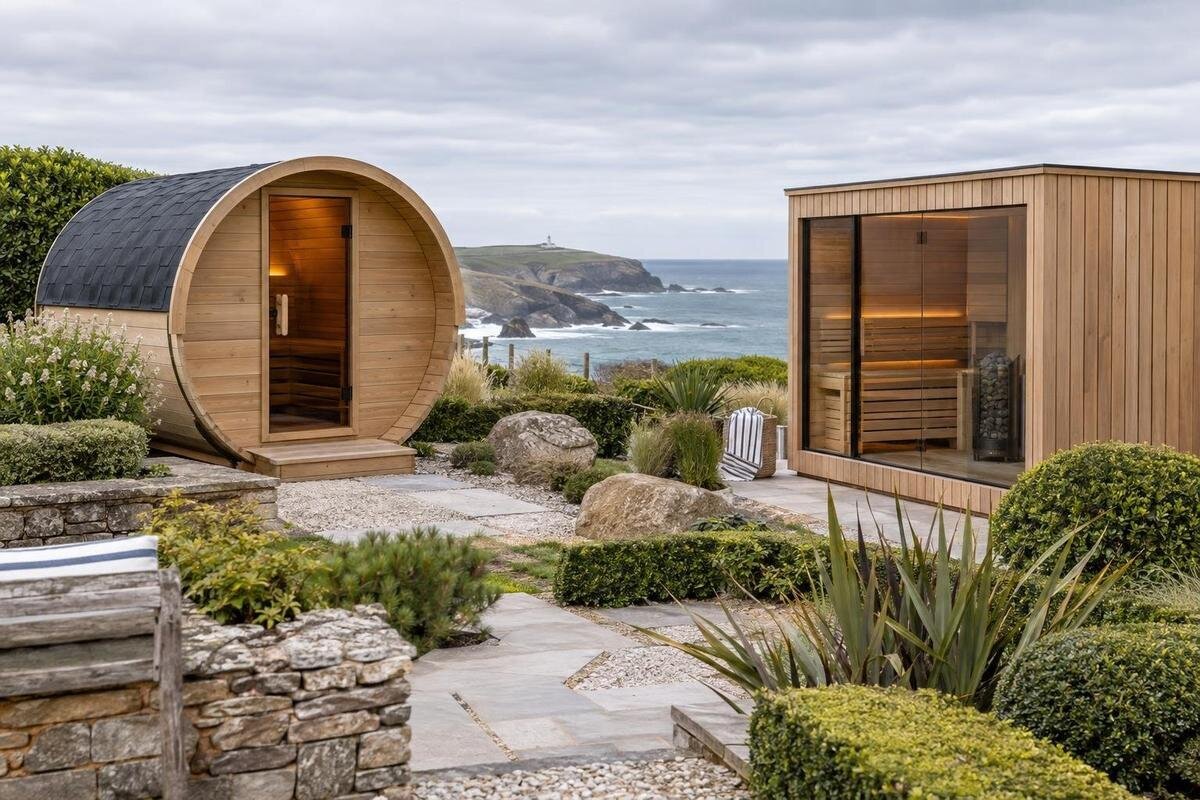
Outdoor sauna buying guide
Buying a sauna for a coastal garden calls for more than checking its footprint. Wind can carry salt and rain into parts of a plot that seem sheltered, while drainage, delivery access and future maintenance may differ from one corner to another. Assess the proposed position, then ask for product-specific information about exposed materials, installation requirements and care. That gives you a sounder basis for comparison than appearance or a model name alone.
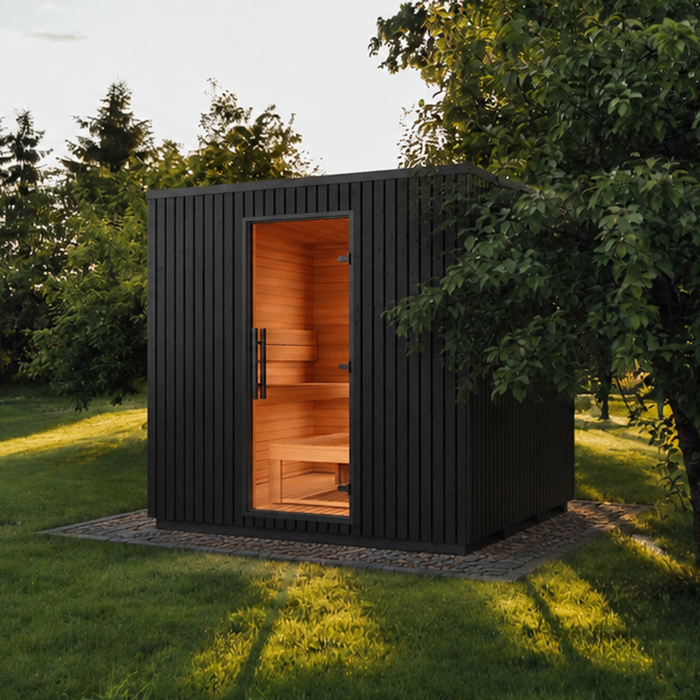
Assess exposure at the exact sauna position
Sea air is not a single, uniform condition. A plot may be protected by the house, a boundary wall or planting, while an open side faces wind and driving rain. Even within one garden, a sheltered courtyard can have different exposure from an exposed lawn edge. Distance from the coast helps describe a site, but it does not tell you how much salt-laden air or rain reaches the proposed position. Treat the garden's actual microclimate as the starting point for a purchase decision, rather than relying on a broad label such as coastal or seaside.
Before shortlisting, note the direction of the strongest winds, where rain strikes, how quickly the ground dries and whether salt deposits appear on nearby surfaces. Consider seasonal changes too: a spot screened by foliage in summer may be more open when plants lose their leaves. These observations are not a product test; they help you describe the site when asking about materials, fixings, siting limits and care. If the position is particularly exposed, request a written answer for the exact model rather than relying on a general assurance that it is suitable for outdoor use.
Choose a position that balances shelter and access
Look for a position that limits avoidable exposure without creating new problems. A fence or wall may shelter one direction, but do not assume that screening makes a sauna suitable for every condition or that a narrow gap beside a building is acceptable. Check the product instructions for required clearances, airflow and access, and ask how the proposed surroundings affect installation. Consider branches that may shed leaves or debris, as well as roof runoff that could reach the structure. If a site feature raises a concern, ask a qualified installer to assess it rather than trying to resolve it from a catalogue plan.
Draw the sauna, entrance and approach route using confirmed external dimensions, then mark the layout on the ground. Allow for the door to open as specified, space to approach and maintain the exterior, and a path that remains usable in wet weather. Check privacy from neighbouring windows without making service access awkward. If you include Thermowood Barrel Sauna S 140 in a shortlist, ask the seller for that model's dimensions, clearances and siting guidance; its listing name alone establishes none of these details.
Plan for drainage and a suitable base
A level-looking patch of ground is not proof that a site meets a sauna's installation requirements. Walk the area after rain and look for standing water, soft ground, runoff from a roof or water likely to collect near the entrance. Note slopes and nearby drains too, since site changes can affect where water flows. Ask the supplier what base is required, what tolerances the installation allows and whether a professional site assessment is advisable. If the ground is uncertain, have a competent installer assess it before ordering instead of choosing a base by guesswork.
Plan the drainage around the sauna as well as beneath it. The approach should not become waterlogged, and site work should follow the product's installation guidance. Keep enough space to inspect lower edges and clean around the structure; a tightly planted border may look neat but make routine care difficult. Ask whether roof runoff needs separate consideration and who is responsible for preparing the site. When comparing HC 150 Thermowood Barrel Sauna, request its stated base and ground-preparation requirements rather than assuming another sauna's arrangement will suit.
Check every exposed material, not just the frame
Ask for a description of each part exposed outdoors, not only the main body. This may include external cladding, roof covering, door and window frames, seals, hinges, handles and other metal fittings. Salt can contribute to corrosion of susceptible metals, while damp and repeated wetting place demands on exterior finishes. Ask what has been specified for the full assembly and what the supplier expects in a coastal setting. Find out which parts need periodic treatment, which care products are approved and whether a finish is applied during manufacture or needs attention after assembly. A photograph cannot answer these questions.
Distinguish a product name from a complete specification. A timber-related term in a model title does not establish the species, treatment, finish, roof composition or grade of every component. Request the technical information and care instructions for the configuration being offered, including any optional accessories that may change exposed parts. If the retailer cannot answer detailed questions, ask them to refer them to the manufacturer. Thermowood Barrel Sauna HC 225 can be compared like any other named model, but its coastal suitability must be supported by product-specific information, not inferred from its name.
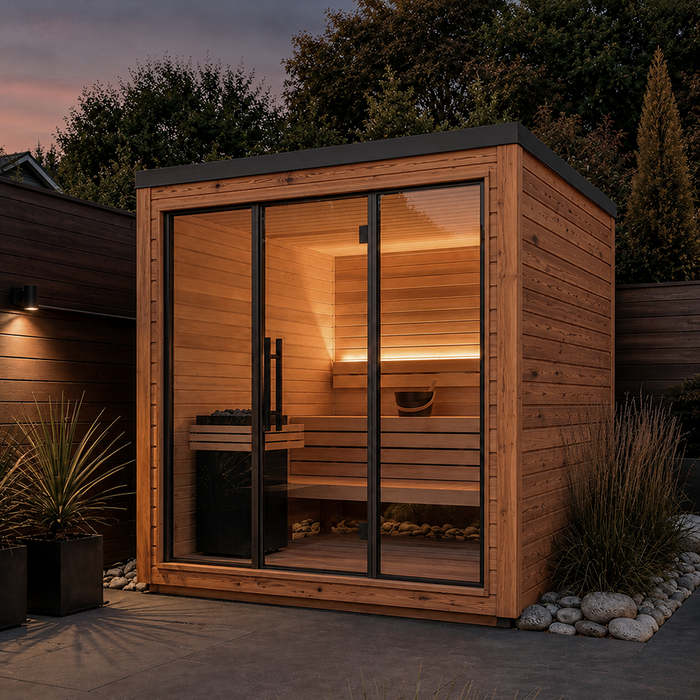
Understand the maintenance routine before buying
Maintenance is part of the purchase decision, not an afterthought. Ask the manufacturer for the cleaning and inspection routine for interior and exterior surfaces, including how to deal with salt deposits, rain marks or finish wear if these occur. Avoid applying a cleaner, coating or treatment simply because it is commonly used on garden timber; the product may have its own approved care requirements. Request the schedule in writing, including any conditions that call for more frequent checks. You can then judge whether the work is realistic for the time you want to spend maintaining the sauna.
Consider whether the checks described by the supplier are practical at the proposed position. Is there room to clean around the structure, inspect the lower exterior and reach the areas the maker says need attention? Would a particular inspection require a professional? Ask whether replacement parts are available and whether care requirements change after assembly or repair. Include the time and likely cost of upkeep in your comparison, but do not assume a treatment or interval from an image. For Thermowood Barrel Sauna N 210, request care instructions for its actual finish and exposed fittings, as you would for any shortlisted model.
Measure the sauna and the space around it
Work backwards from how people will use the sauna, then check the documented dimensions. Compare the external footprint with internal seating space, stated capacity, headroom and the room needed for entry and circulation. A capacity figure is not a substitute for checking whether the interior suits your usual group; compare the manufacturer's stated layout with how you expect people to sit. Include paths, any changing area and the space needed for routine care in your garden plan. A sauna may fit on paper but still leave an awkward approach or block a route you use every day.
Measure gates, corners, steps and the route from the delivery point to the proposed base, as well as the final footprint. Check whether published measurements describe the exterior or usable interior, and whether a door, roof projection or base changes the space required. Use the clearances specified for the exact model rather than borrowing figures from another design. If N 250 Thermowood Barrel Sauna is on your list, request its full drawing and capacity information alongside equivalent documents for alternatives. A numbered model name is not reliable evidence of size or occupancy.
Confirm heater and service requirements
Confirm how the sauna is heated before deciding where it can go. Different heater options can involve different service, fuel, flue, storage and operating considerations, and you should not assume that every option is available for every model. Ask which heater is included or optional, what site services and clearances its instructions require, and who is responsible for assessing and installing them. Do not plan electrical work, flue routes or fire-related clearances from a photograph or generic diagram. Have a suitably qualified professional assess the site-specific requirements for the chosen equipment before committing to an order.
Sea exposure may affect where you plan service equipment, stored fuel or a flue route, while wind and neighbouring properties can influence the practical layout. Resolve these questions against the heater's instructions, the garden plan and professional advice; coastal exposure alone does not point to one heating type. Ask for the equipment specification and a clear division of responsibilities between the retailer, installer, electrician or other specialist. Thermowood Barrel Sauna LC 260 is one product name to compare, but its title does not confirm a heater, supply requirement or coastal installation detail.
Check delivery access and installation responsibilities
Delivery can rule out an otherwise suitable position, so investigate access before placing an order. Measure the narrowest gate and route, check turns, steps, gradients and overhead obstructions, and ask how the sauna will arrive: in sections, as a kit or in another format. Request the delivery dimensions and weights that apply to the package, plus any access restrictions and equipment expected on site. A product photograph shows none of this. If moving the components requires specialist handling, clarify who arranges it and whether the quoted service includes carrying them to the intended base.
Ask who assembles the sauna, whether site preparation and assembly are included, and what needs to be ready beforehand. Confirm what happens if access differs from what was described, where packaging goes and how the installer checks the base and siting requirements. Discuss exposure directly: the installer should identify any fixing or positioning requirements for the exact model, and a qualified professional should handle work outside their remit. For the item listed as 6 89 M, obtain delivery and assembly details from its seller; do not assume a similarly pictured sauna uses the same packaging or installation process.
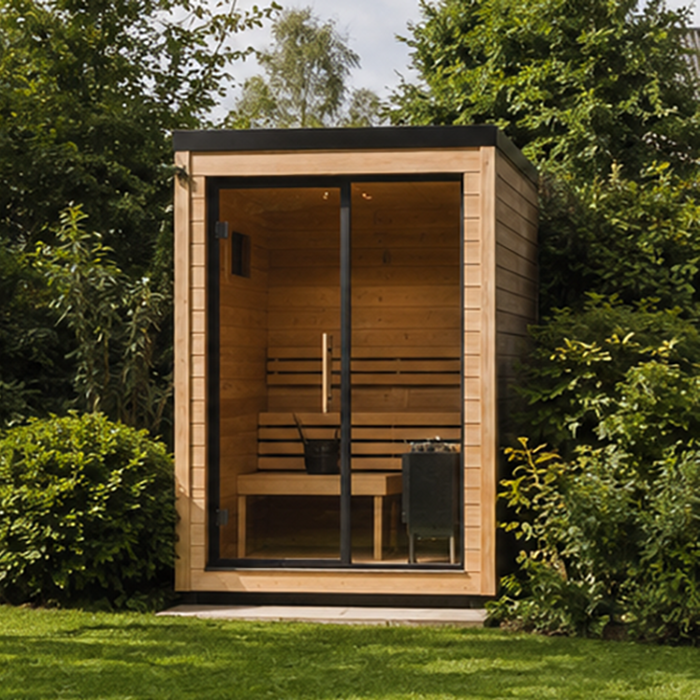
Compare the full cost and written terms
Compare the complete cost of getting the sauna ready to use, not just the product price. Ask for an itemised quote showing what is supplied and what is not, such as the heater, transport, assembly, base preparation, electrical work, other site services and optional accessories. These are items to clarify, not assumed extras; inclusions vary and must be confirmed for the specific order. Add the care routine and likely energy or fuel costs to your household budget. For running-cost estimates, request the assumptions behind them, including heater details and expected use, rather than relying on a figure detached from your circumstances.
Read the warranty and after-sales terms before ordering. Look for the exact conditions on outdoor exposure, corrosion, finish care, assembly, modifications and maintenance. Do not presume that coastal conditions are either covered or excluded; obtain an answer that applies to the product and its proposed location. Ask who handles replacement parts, how to report a fault and what records to retain for installation and maintenance. Thermowood Barrel Sauna HCF 225 can be included in a comparison, but only the seller's written terms and product documents can establish the relevant coverage and ongoing obligations.
Build a shortlist around documented answers
Put the answers into a side-by-side comparison rather than relying on a single headline feature. Record the exposure at the proposed site, verified dimensions, materials and finishes for exposed parts, base requirements, heater and service needs, delivery method, care routine, included components and full installed cost. Mark each point as confirmed, unanswered or dependent on a site visit. This makes it easier to see where models genuinely differ and where a decision still lacks evidence. Give greater weight to written technical documents than to broad descriptions such as weather-resistant or suitable for outdoors.
Before ordering, send the supplier a brief description of the garden position and ask for written confirmation of exposure-related limits, clearances and maintenance conditions for the exact configuration. Confirm dimensions, accessories, installation scope, delivery access and what you are expected to prepare. If answers conflict or leave an important gap, ask the manufacturer or a qualified installer rather than guessing. The right choice is the sauna whose documented requirements, upkeep and installation plan fit the coastal garden you actually have, not simply the model that looks appealing in a photograph.
Frequently asked questions
Is a sauna beside the sea automatically suitable for outdoor use?
Not necessarily. Outdoor use does not mean a model is specified for every combination of salt, wind and rain exposure. Describe the proposed position and ask the manufacturer to confirm the product's limits, exposed materials and maintenance requirements. Do not infer suitability from a model name or photograph.
Will a fence or screen protect a sauna from salt air?
Screening can change how wind reaches a position, but it does not establish coastal suitability or remove salt carried through the air. It can also affect access, airflow, drainage and maintenance. Check the siting instructions and ask whether the proposed surroundings are acceptable for the exact model.
What should I check about the base?
Ask for the manufacturer's base and ground-preparation instructions, including any requirements relating to slope, drainage or supporting surface. If the site is uncertain, ask a qualified installer to assess it. Do not choose a base from a photograph or another sauna's installation.
How do I compare exterior materials for a coastal garden?
Request details for exposed cladding, finishes, roof elements and metal fittings, along with approved care instructions. Ask how salt exposure affects maintenance and which conditions apply to the finish or warranty. A product name is not a complete material specification.
Should I decide on the heater before buying?
Confirm the available heater options early because each can affect services, clearances, storage and installation responsibilities. Get requirements for the chosen configuration and have qualified professionals assess site-specific electrical or flue work. Do not assume a heater is included unless the quote says so.
There is no single sauna specification that suits every coastal garden. The useful choice is the one whose documented requirements match the exposure, ground, access and upkeep your site can support. Confirm the details for the exact model and installation, and compare those answers alongside size and cost. That way, the decision rests on how the sauna will work in your garden, not on assumptions about seaside conditions.
