
Cheap raised beds: what to check before buying second-hand

Bloomcabin · Raised-bed guides
Cheap raised beds: what to check before buying second-hand
When buying cheap raised beds second-hand, check that the frame is sound, complete enough to use and possible to get home before you pay. A bargain can stop being one at the first rotten corner or the first part you can’t replace.
Screen the listing
Ask for actual measurements, close-ups and a parts list before travelling to view cheap raised beds.
Inspect where damage hides
Check the empty frame, especially its bottom edges and corners. Reject structural damage you haven’t priced a sound remedy for.
Check its history
For edible planting, establish what the bed is made of and what it previously held.
Price the usable frame
Add collection and confirmed parts costs before comparing it with a complete, usable alternative.
The best time to turn down a used raised bed is before you’ve hired a van or paid a deposit. With cheap raised beds, a few good questions can tell you whether a listing is worth a visit. Then an inspection can settle what photos can’t: whether the joints are sound, the panels still fit and the pieces will come apart without damage.
Use the checks below in order. By the end, you should be able to say what you’re getting, what it will cost to put into use and what, if anything, still needs confirming. A missing answer isn’t always a reason to walk away, but it is a reason not to pay yet.
01
1. Write down what has to fit before you browse
Decide what you’ll grow and where the bed will stand before saving any adverts. If it’s for herbs or salad leaves, put ‘material and previous use must be known’ on your list. Decide whether you need an open-bottom frame for a garden-soil site or a planter with its own base for a different position. A frame without a floor isn’t a substitute for a planter. Cheap raised beds are easier to rule out once you know which features you can’t compromise on.
Mark out the space and write down the maximum assembled length, width and height in centimetres. Measure the footprint you can actually give the bed, not the whole patch including the path. Stand on the side you’ll work from and see whether you can reach the planting area without stepping into it. Check room to turn and carry a watering can, and assess the working height separately from the footprint. Among cheap raised beds of similar size, the one you can tend comfortably is the better fit.
Finally, decide whether the frame must come apart. Measure the narrowest gate, awkward turn or other pinch point on the way to the garden, as well as the space in your vehicle. Keep two sets of limits: one for the assembled bed, one for the largest piece you can move. That stops you shortlisting cheap raised beds that would fit the garden but can’t get there.

02
2. Ask the seller for what the advert doesn’t show
A single photo of a planted bed tells you little about the surfaces against the soil or whether all the parts are there. When several cheap raised beds look similar on screen, send one short message asking for the details below. Ask for current photos rather than a catalogue picture, and find out whether the seller will empty the bed before you view it.
Read replies as evidence, not reassurance. ‘Comes apart’ is useful only if you know which joints undo and what size the pieces will be. ‘All there’ is hard to judge if an entire corner is cropped out. If a seller of cheap raised beds can’t answer everything, separate what you can check in person from what only they can tell you. You can measure the frame yourself; a visit won’t recover an unknown treatment history.
- Photos: the whole frame as it stands now, both faces of the panels where visible, the bottom edges, all corners and any damage. If it’s dismantled, ask for a photo of the pieces laid out.
- Measurements: assembled outside length and width, wall height, and the longest and widest pieces as they’ll be collected. If planting space is tight, ask for the clear inside measurements as well.
- Parts: what’s included, what’s missing and whether there’s a model label or assembly sheet. Ask specifically about joining pieces, fixings and any braces shown in the photos.
- History: what it’s made from, whether any treatments or coatings are known, what it previously held, and whether any boards or panels were replaced.

03
3. Inspect the empty frame from the bottom up
Bring a tape measure, a torch and the listing photos. The most useful viewing is of an empty frame: soil can conceal the lower boards and the inside of the corners. Work round it in the same order each time so a tidy front doesn’t distract you from a poor back. For cheap raised beds that are still filled, ask for a second viewing once emptied if you can’t see the critical areas. Don’t pull at walls or undo fixings on a filled bed.
Separate cosmetic wear from faults that affect use or assembly. A scuffed panel that fits, has no sharp edges and joins correctly is different from a distorted one that has to be forced into place. Some cheap raised beds are worth buying with a minor part missing, but only if you can identify and source the right part and the piece it attaches to is sound. An empty-frame check helps uncover obvious defects; it doesn’t prove what the bed will hold.
- Timber: look along the bottom edges and around the fixings for crumbling wood, softness or splits through fixing holes. With permission, press a suspect patch lightly; don’t gouge it. Walk away if a board or post is soft where the joint needs to hold.
- Panels and edges: sight along the sides for bows, twists and creases. Reject a panel that won’t meet its corner properly or has a torn edge or exposed sharp metal you can’t address with a confirmed replacement. Don’t run your fingers along an edge to test it.
- Joints: look for open seams, cracked corner pieces, enlarged holes and fixings pulling through. A light check of an empty, stable frame may reveal movement; don’t force it. A joint that visibly shifts or no longer seats properly is a reason to pass, not to assume tightening will fix it.
- Missing pieces: count the parts against the instructions where available. Check both ends of each panel for intact joining points. A missing fastener is a different proposition from a missing brace or shaped corner connector; don’t assume a generic fitting will do the same job.

04
4. Establish what the frame has been in contact with
A bed can look sturdy and still be the wrong choice for growing food. When assessing cheap raised beds for edible planting, ask about both the frame and its previous use. A maker’s description might identify the original panels but tell you nothing about a replacement board, a later coating or what was stored in the bed. If the seller doesn’t know the history, you can’t settle that question by looking at the colour of the wood.
Useful evidence could be the original label or order details matched to the actual frame, instructions that describe its intended use, or an identifiable treatment or coating label. For a homemade frame, ask where the seller got the boards, whether they added a finish and whether any pieces came from another job. Ask what the bed held and whether any of the old fill comes with it. ‘It grew vegetables’ tells you how someone used it, not what the materials were.
If the answers leave a significant gap, skip that listing for edible planting and compare cheap raised beds with a clearer history. Don’t price a liner, coat of paint or fresh fill as if it resolves the unknown. Nor should a report of a spill or unidentified residue be treated as a simple reason to switch the frame to flowers. Leave it behind if you can’t establish what you’d be bringing home.

05
5. Check that it will come apart and get home intact
Agree who will empty and dismantle the bed before collection. If the seller says the fixings undo, ask whether they’ve actually taken the frame apart before. With permission and only when it’s empty and supported, have the seller show how a representative joint releases, or ask to see the pieces after dismantling. On cheap raised beds, seized fixings or screws that spin without releasing can turn a quick collection into a damaged frame. If removal means levering panels apart, don’t assume they’ll go back together.
Measure the longest loose piece and any bulky part that won’t lie flat. Compare those measurements with the vehicle opening and usable space inside, not just the vehicle’s overall length. Walk the route from the bed to where you can park. Ask about steps, narrow gates, parking and collection times, and check who will be there to help lift. Don’t commit to moving a heavy or awkward frame alone on the strength of a seller saying it’s ‘not far’.
When collecting cheap raised beds that have been taken apart, photograph the layout before moving anything if you can, and keep the fixings from each joint together. Check the pile against the agreed parts list before loading, including any piece set aside for you in a shed or garage. If the condition, dimensions or help on the day differ from what was agreed, pause before paying or loading.

06
6. Compare the cost of a complete, usable frame
Compare cheap raised beds at the point where you’d have a complete frame ready to install. Add the asking price, the extra cost of viewing and collecting it, and the cost of confirmed compatible replacements, including any postage. If viewing and collection are one trip, count it once. Add any tool hire or paid help you actually need. Leave unconfirmed costs open: an unavailable connector can stop the purchase altogether, however small you imagine the bill might be.
Use an alternative that does the same job, such as a complete used frame with a known history and a manageable collection, or a suitable new one with a confirmed checkout price. If both options need the same fill and site preparation, those costs don’t change which frame is cheaper. If one needs different site work, more fill or specific upkeep purchases you can identify, price the difference separately. Don’t make cheap raised beds look better by assigning the new option costs the used one would also incur.
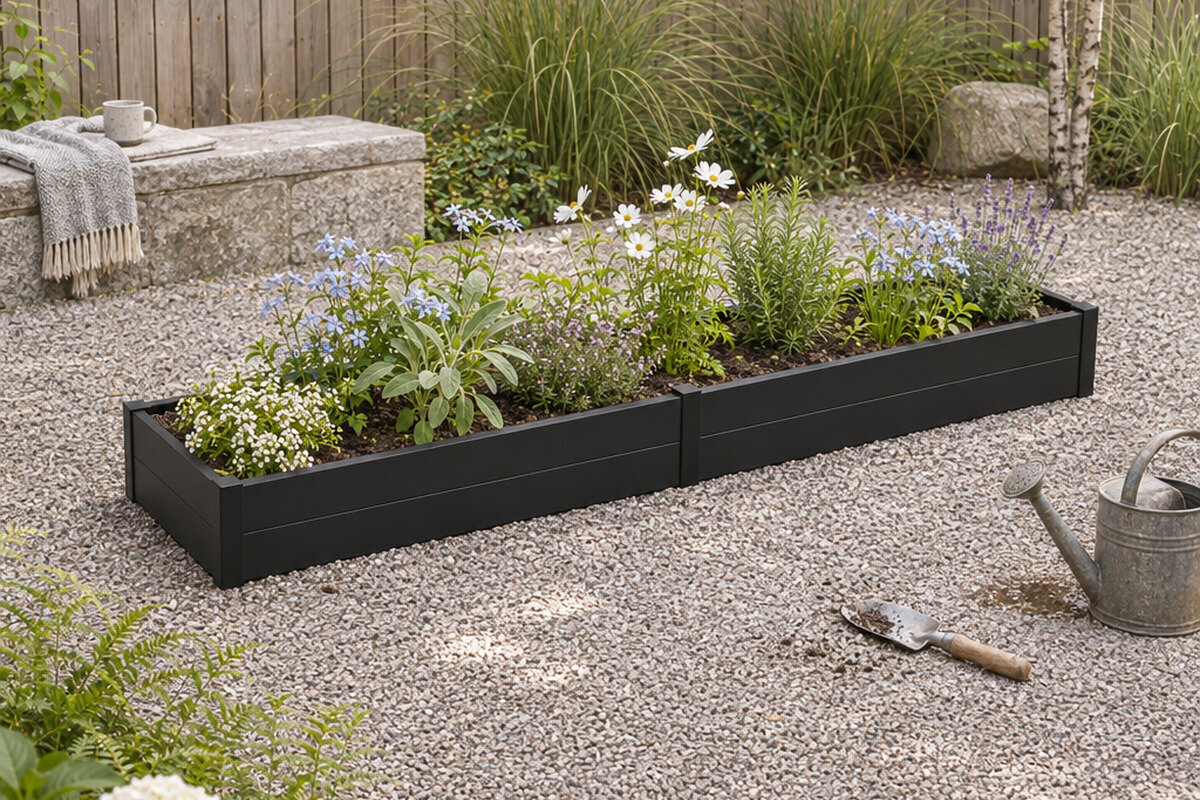
The gallery shows new, ground-standing Bloomcabin alternatives, not the used frames described here. For a new-frame reference, the public listing for the Narrow Aluminium Raised Bed 100×50×20cm was checked on 22 November 2026 at £184.40. That’s a listed price, not a delivered quote. Verify availability, delivery, tax inclusion and checkout terms separately; fill and accessories aren’t verified in that figure. A wide gap between a used asking price and a new list price still doesn’t make a damaged or incomplete frame good value.

07
7. Work through a £25 listing before deciding
Hypothetical worked example: a gardener viewing cheap raised beds for salad leaves finds a £25 advert for an open-bottom kit measuring 110 × 55 cm outside, with 25 cm walls. The seller originally bought it for growing vegetables, identifies the kit from the order details and confirms it has no replacement panels or later coatings and has held only growing medium. The photos show one missing fastener. The gardener asks for the assembly sheet, matches the fastener to it and prices a compatible replacement at £4 including postage. One combined viewing and collection trip would cost £9. All these prices are hypothetical, not market quotes.
At the viewing, the empty frame has scuffs but no visible distortion or damaged joints. The seller demonstrates that the panels come apart, the gardener checks the packed pieces fit the vehicle, and the two agree on lifting help. The total is £25 + £4 + £9 = £38. A complete local frame that meets the same brief would be £45 plus £5 to collect, or £50. With the same fill and ground preparation for both, buying the £25 frame saves £12 under these assumptions.
Now change one finding. If the missing piece is actually a shaped corner connector and neither its compatibility nor supply is confirmed, ask for more information: £25 + £9 = £34 is only a subtotal, not a usable-frame price. There’s £16 of headroom before matching the £50 alternative. If the viewing instead reveals that the panel is torn at the corner and won’t seat in the joint, walk away rather than buying a connector for a damaged attachment point. That’s the point of inspecting cheap raised beds: what you see at the joint can matter more than the saving on paper.

Questions readers ask
Are cheap raised beds worth collecting if they’re free?
Only if you can use them and move them without taking on a repair or disposal job you don’t want. Run the same condition, material and parts checks as you would for a paid listing. A free frame can still cost more to collect and put right than a complete local one.
Is a black liner enough if the seller can’t identify the timber?
No. The presence of a liner doesn’t tell you what the timber was treated with, what the bed previously held or whether the liner is intact. For edible planting, choose a frame with a history you can establish rather than buying an uncertain one and relying on the liner.
What if the bed is already dismantled when I arrive?
Lay out the parts with the seller’s permission. Match panels, corners, braces and fixings to the original instructions or a clear photo taken before dismantling. Inspect the joining points now that they’re exposed. If you can’t establish how a critical joint goes together or whether its parts are all there, pause rather than paying on the assumption it will fit.
Make the decision before you load
Buy when the frame fits the job, the condition and history are acceptable, and you know how it will get home. Ask again if a specific missing answer could change the decision. If cheap raised beds fail a check you can’t resolve, leave them where they are rather than paying to take on the problem.
Find a raised bed for your plan
Compare layouts and check the dimensions on the product page.
