
Choosing Between ZIP Screens and Pergola Curtains
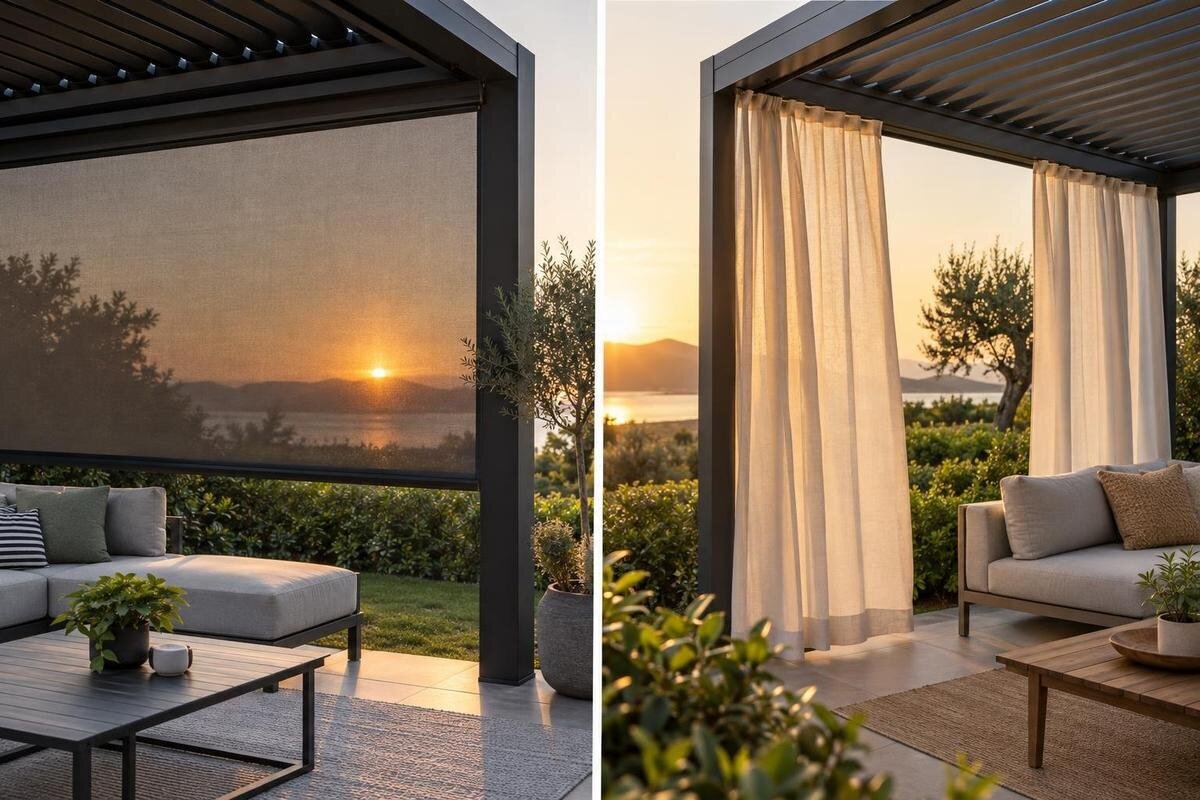
Pergola screens and curtains
Choosing between ZIP screens and outdoor curtains for a pergola is less about which looks more finished and more about what happens when the side is open or closed. A guided screen normally travels within side channels; a curtain hangs from a rail and gathers into folds. That changes the shape of the opening, the route air takes, how clearly people can see through the fabric and what needs cleaning. Both depend on their exact fabric and fixing system. Compare a real accessory for your pergola model, not just a generic photograph or the name of the mechanism.

How ZIP screens and outdoor curtains are arranged
A ZIP screen normally travels vertically, with its edges retained in side guides by a zip-style arrangement. That gives the fabric a defined path across the bay instead of letting it hang freely. The name does not specify the cloth, visibility through it, operating method or how fully the edges close; systems differ, and a screen is not automatically a sealed wall. Ask for a section drawing that shows the top housing, side guides, bottom edge and how the panel meets posts or a wall. It should also show clearances around other fittings and the bottom rail’s position when the screen is raised.
Outdoor curtains usually run horizontally along a rail, track or rod. When drawn aside, the material gathers into folds at one end or both; when closed, it hangs with pleats and may leave gaps at the sides or between panels. Hangers, tie-backs, fastenings and removability vary, so do not assume a particular way of operating or storing the curtain. Mark the open and closed positions on the same bay drawing before comparing choices. The Bloomcabin Bioclimatic Aluminum Pergola product page identifies the base model. The supplied catalogue evidence does not establish that screens or curtains are included, available or approved accessories for it.
Privacy depends on fabric, gaps and lighting
When deployed, a guided screen can sit more evenly across an opening than loose fabric, but the guides do not determine how much you can see through it. Mesh openness, weave, colour and the contrast between the two sides affect the view. A curtain may be made from translucent or opaque fabric; fullness, lining and pleats alter what can be seen through or around it. Treat privacy as a property of the specified textile and layout, not a guaranteed result of calling an item a screen or a curtain. If privacy matters, examine a large fabric sample from both sides; a small indoor swatch can give a misleading impression.
Test it in the conditions in which you will use the space. By day, a bright outdoor background can make the covered seating area seem less visible; after dusk, lights inside can make people or furnishings easier to see from outside. Check the sample from the actual viewing angle and identify whether privacy is needed from an upstairs window, a path or someone seated nearby. For an enquiry about the Bloomcabin Lean-To Pergola, include a sketch showing that viewpoint and the proposed covered bay. Ask how the specified fabric and gaps would affect that view, rather than accepting a general description such as ‘privacy screen’.
Opening, closing and clear access
How the system operates is distinct from how it looks. A ZIP screen typically moves within its guides using the operating arrangement supplied for that system; manual and powered options should not be assumed interchangeable. Check where the control is reached, what access it needs and how the screen can be positioned. Curtains are usually moved along their rail, but tracks and draw arrangements differ. Consider who will use the pergola and whether the opening can be reached without leaning over furniture or stepping into the panel’s path. Ask to see the actual operating method rather than relying on a photograph of a closed screen.
Space in the open position matters as much as the covered area. A raised screen may leave its housing at the top; a drawn curtain needs room for its gathered fabric at the side, which could narrow a doorway, overlap a post or cover part of the view. Measure the clear walk-through width and mark chairs, table edges and door swings on the plan. If enquiring about the Bloomcabin Pergola model, request an accessory drawing showing the remaining clear opening. Check both height and width, and whether the curtain gathers on the side you need to keep free for access.
Airflow depends on the fabric and the open sides
Do not read ZIP as a measure of ventilation. It describes the way an edge is guided; the fabric may be a relatively open mesh or a denser textile, depending on the product. A mesh may pass air while still changing how a breeze reaches people and plants, but the result depends on its specification and the wind direction. Ask for the fabric description or air-permeability information if supplied, and compare it with your priorities: some breeze, visual screening or shade. An image of perforated cloth is not evidence of how much air will pass through it.
An outdoor curtain’s effect also depends on its material, fullness and how far it is drawn. A fully open curtain can clear most of the bay, although its folded fabric remains; a closed panel may allow air around its edges or through the weave. Look at the whole pergola: which sides can stay open, whether opposite openings align, and where people sit. In an enquiry for the bioclimatic pergola model, show the intended seating arrangement and the sides you want to cover. Ask for fabric information for any compatible option, distinguishing measured air permeability from a general description such as ‘breathable’.

Side shading, daylight and low-angle sun
Choose the side covering in relation to when the sun reaches the seating area, not solely by compass direction. Note the sun’s position at the time you use the pergola and which opening it crosses; a side panel can reduce low-angle glare only when it is on the relevant side and closed. A roof and a vertical screen do different jobs. For each proposed fabric, ask what information the supplier provides about light transmission or solar shading. Colour and weave affect its appearance, so a product name alone is not a performance figure. A sample viewed outdoors is more useful than relying on a small swatch under indoor lighting.
Privacy and shade do not always require the same opacity. A more open cloth may preserve a view and some daylight but provide less screening than a dense curtain. Check the covered bay and the light entering adjacent rooms, and decide whether the panel should stay open except during particular hours. When discussing the lean-to pergola model, include the position of nearby windows and doors in your sketch. Compare samples from inside the room as well as from the seating area. This helps reveal whether a fabric that feels comfortable outdoors makes the indoor view noticeably darker when the side is closed.
Wind limits apply to a specific system
Do not assume that a screen or curtain can stay deployed in any particular wind merely because it is sold for outdoor use. Ask the accessory maker or supplier for written instructions for the exact model and fabric: the permitted deployed position, when to retract or secure it, and any stated wind limits and conditions. Check whether the guidance applies to gusts, orientation or a specific installation, rather than treating one figure as a general guarantee. If instructions are not available, there is no sound basis for inventing a safe threshold from appearance, fabric weight or the word ZIP.
Pergola-frame guidance and side-accessory guidance are separate questions. A fabric panel can change how wind acts on a structure, so approval and limits must apply to the particular combination, not be inferred from a roof or frame description alone. For the Bloomcabin Pergola, ask for instructions covering the proposed accessory, bay dimensions and number of covered sides. Check whether they address a partly open panel as well as a fully deployed one. If the documents cover only the frame, the accessory’s operating limits remain unanswered. Refer questions about the suitability of fixings or structural changes to the pergola manufacturer or a qualified installer.
Cleaning and maintaining the fabric and tracks
Screen care involves more than wiping the visible cloth. Dust, pollen and debris can collect on panel edges or in guides, where buildup may affect movement. Find out whether the fabric is intended to be cleaned in place, whether access to the guides is needed, and which cleaning products or tools are allowed. Follow the accessory’s own care instructions; do not assume a method used on another mesh is suitable for its coating, colour or mechanism. Ask whether the screen should be dry before it is raised or stored, as instructions can differ by construction.
Curtains may be simple to take down only if their rail and fastenings are designed for removal. Confirm whether the fabric can be machine washed, hand washed or only surface cleaned; appearance alone is not a care label. A curtain left outdoors may collect dust or become damp, so the supplier’s drying and storage directions matter. Consider the work involved: can the panel be removed without specialist help, is the track reachable, and can it be rehung without changing its alignment? Choose a care routine you can follow rather than assuming that every outdoor textile is washable.
Check the exact pergola and accessory compatibility
Compatibility starts with the exact model and bay, not with the general word pergola. Record the model name, version if known, width and height of the opening, post positions and any wall connection. Ask whether the side accessory is designed for those dimensions and where its tracks, guides or rail attach. A fit in one bay does not establish fit at a corner or across a second side. If mounting could affect the frame or require drilling, do not treat a generic accessory as approved; get confirmation from the manufacturer or a qualified installer.
Then verify what is actually offered for that model and what the order contains. For the Bloomcabin Bioclimatic Aluminum Pergola, request the accessory name or reference, available sizes and fabric choices, rather than relying on a photograph of a finished installation. Establish whether the option can be ordered with a new pergola, retrofitted to an existing one, or neither. Ask about availability of replacement fabric and operating parts separately from availability of the complete system. The response should distinguish an item currently offered for your model from a possible custom solution that still needs assessment, and identify who supplies and fits it.
Planning each side for everyday use
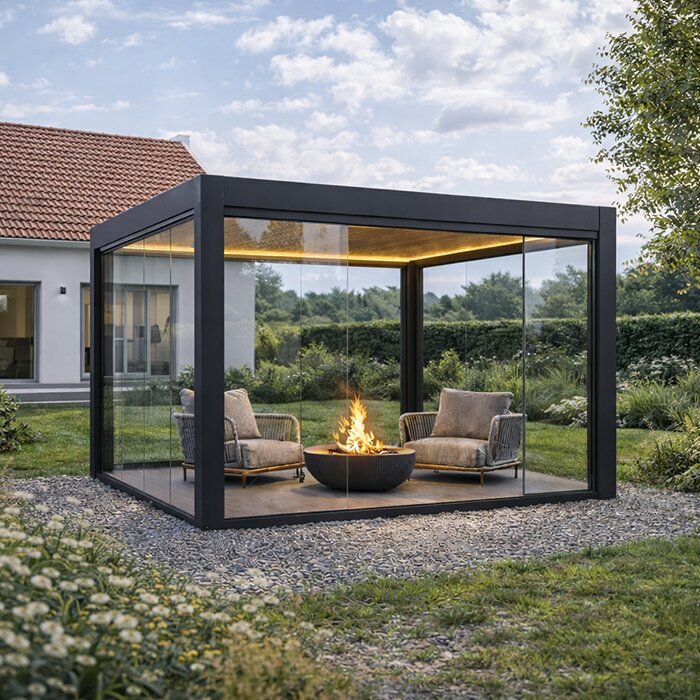
Prioritise the reason you want a side covering: reduce low sun, soften a breeze, screen a particular sightline or make the seating area feel more enclosed. Map that need to one bay rather than starting with the idea of closing every side. Mark the usual positions of chairs, outdoor dining, doors and the view you want to retain. Then consider how often the panel will be moved. If you expect to open it several times a day, the operating method and open stack may matter more than its appearance when closed. If it will usually stay deployed, give more attention to fabric care, airflow and documented wind guidance.
Different sides might have different needs for shade, privacy and access. On your drawing, label the side used for walking through, the side facing the view and the side needing occasional screening. For a Bloomcabin Lean-To Pergola configuration enquiry, explain whether those coverings would normally be open or closed together. Ask how adjoining panels meet at a corner and whether their gathered fabric, guides or controls would interfere with one another. A mixed screen-and-curtain arrangement needs confirmation as a complete configuration; matching colours do not establish compatible fittings. Also consider where you would stand to operate each panel without moving chairs or opening another covering first.
Comparing specifications before ordering
Keep a comparison record that separates confirmed details from unanswered questions. For each option, note the accessory reference, fabric sample reference, drawing revision and date of the supplier’s response. If a claim is tested or quantified, record the supporting document and its conditions; do not treat it as equivalent to a vague description in another quotation. Mark anything demonstrated on a different size or fabric as needing confirmation for your order. This is particularly useful when a showroom sample, brochure and quotation describe slightly different configurations. Keep the pergola-frame documents separate from the accessory documents so their specifications cannot be mistaken for one another.
Before committing, check the written specification against what is pictured and named in the order: base pergola, side accessory, fabric or colour, operating method, fixings and any required controls. Confirm which components are included and which must be bought separately; ask whether the accessory is currently offered for your exact model and dimensions. If an answer depends on a drawing or installation review, wait for that confirmation rather than judging by a showroom sample alone. A side-by-side record makes it easier to see whether you are choosing for the open state, the closed state or both.
Frequently asked questions
Does ZIP mean a screen is windproof?
No. ZIP refers to the way the screen’s edges are guided, not to a universal wind rating. Ask for the instructions and any stated limits for the exact accessory and deployed position. Do not infer them from the pergola frame or a product photograph.
Will a ZIP screen or curtain provide privacy after dark?
Neither name guarantees privacy. Visibility depends on the fabric, folds, gaps, viewing angle and lighting. Check a sample from outside after dark with the pergola lit as you expect to use it, and ask about the opacity of the exact fabric.
Which option allows more air through?
The category name alone cannot answer that. Check the screen fabric’s air-permeability information if available, and compare it with the curtain material, fullness and gaps. Also consider which other sides will remain open, because the layout affects the route air takes.
Can I leave a curtain or ZIP screen deployed in wind?
Follow the written guidance for the exact accessory and fitted configuration. Ask when to retract or secure it and whether the instructions differ by position or conditions. Pergola-frame advice does not automatically establish how a side covering should be used.
Are side screens or curtains included with a pergola?
Do not assume so from a lifestyle image or a base-model page. Ask for written confirmation naming the pergola, side accessory, fabric, fittings and operating method, and stating which items are included, optional or supplied separately.
If a guided, vertically moving panel suits the way you use the pergola, assess ZIP screens first; if a sideways opening and gathered fabric fit the space better, assess curtains. Neither label settles privacy, airflow or weather use. Make the choice by comparing the closed state you want with the clear access and open position you need, then check the actual fabric, care instructions, wind guidance and compatibility for the exact pergola.
