
How to Remove Algae from Pergola Posts and Paving
Pergola care
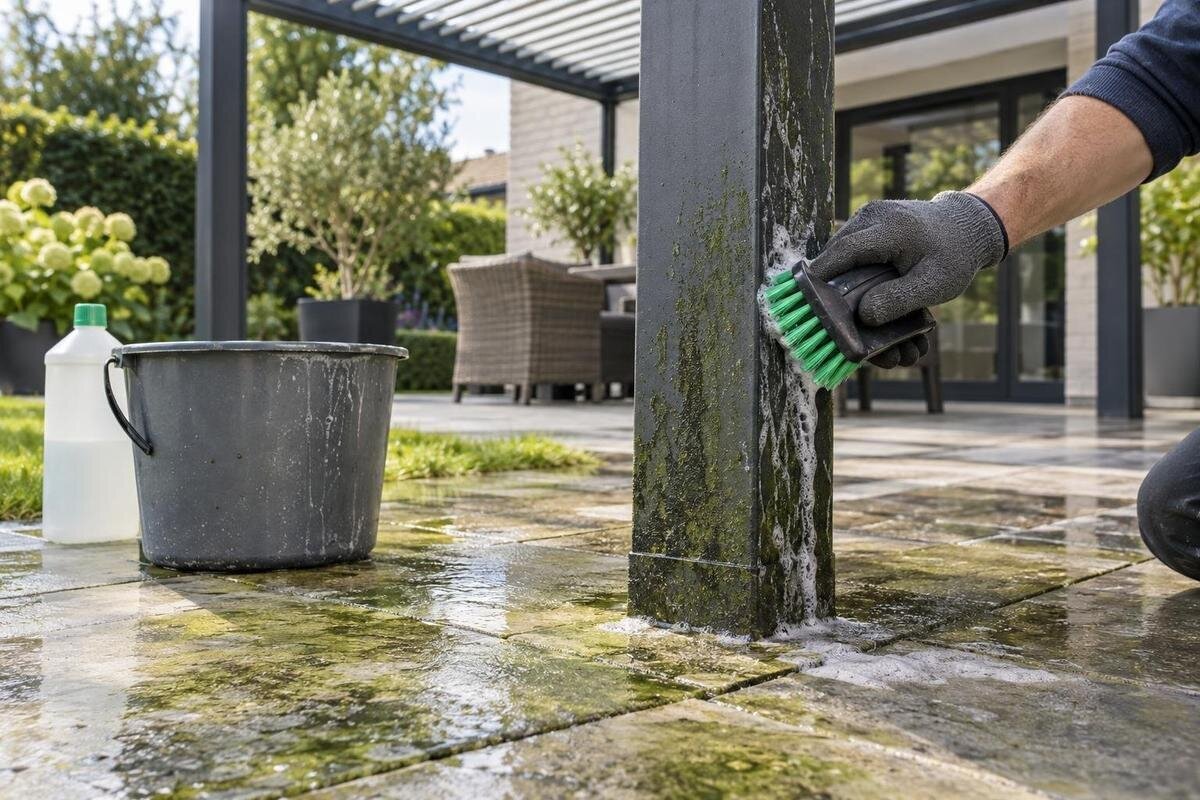
Green algae on a pergola post and green film on the paving below may look like one cleaning job, but they involve different materials and different risks. Paving can become slippery, while an aggressive patio treatment may mark a coated aluminium finish. Identify both surfaces first, clean the frame according to its finish-specific care instructions and choose a paving product only when its label includes that exact paving type. Keeping the treatments separate also helps stop unsuitable cleaner or dirty runoff reaching the pergola.
Before you clean 1
Why posts and paving need different cleaning methods
Algae tends to settle where moisture lingers, especially if leaves or soil remain on a surface. On paving, a green film can reduce grip, so keep people off the area while you clean and until it is dry. On a pergola post, preserving the finish matters: a patio product made for stone, concrete or grout is not automatically suitable for coated aluminium. Treat the frame and paving as separate jobs, applying only the method intended for each and using separate brushes where practical. This also limits the chance of carrying paving grit or an unsuitable cleaner onto the coating.
Check the marks before you scrub. A green film that softens or lifts during a permitted gentle wash may be surface growth, but colour alone cannot confirm what a mark is. A dark stain, pale streak or patch with a different gloss might have another cause, including a change to the finish. If gentle cleaning does not shift it, do not keep increasing the pressure or strength of the product. On paving, note whether the growth sits on the surface, in the joints or along an edge. That detail can help you choose a suitable treatment without disturbing the construction.
Identify the pergola finish and paving material
Start with the pergola’s care instructions, not the green patch. Check the order confirmation, product label or handover documents for its exact model and finish. The Bloomcabin Lean-To Pergola listing can help you match the product name in your paperwork, but cleaning compatibility needs to be established from the relevant manual or supplier guidance. Ask about the coating, not just the underlying metal: a cleaner intended for bare aluminium may not suit a coated surface. If a post has been repaired or refinished, identify the repair product too, as that area may need different care from the original finish.
Identify the paving from its records or ask the original installer or supplier if you are unsure. Natural stone, concrete, porcelain, ceramic, block paving and resin-bound surfaces can need different care; the joints and any surface treatment matter too. Read the cleaner’s label for the exact material rather than relying on a general patio-cleaner description. If its compatibility is unclear, do not apply it across the area as a test. Where the instructions permit, try a small, inconspicuous patch, rinse as directed and let it dry before checking for a change in colour or finish. Never mix cleaning products.
Before you clean 2
Wash coated aluminium posts gently
Remove loose dust and grit first without grinding it into the coating. If the pergola instructions permit washing, begin with clean water and a soft, non-abrasive cloth or sponge. Use a mild detergent only when the manufacturer allows it, and work on a small area at a time so the solution does not dry on the post. Wipe gently rather than scraping at the growth, then rinse as directed with clean water. A dirty brush can drag grit over the surface, so rinse tools often or use a clean one. Avoid scouring pads, blades and hard scraping even if a patch seems stubborn.
Do not assume that a patio algae treatment, bleach, brick acid, descaler, strong alkaline product, solvent or abrasive powder is safe for coated aluminium. Some cleaners and abrasive tools can dull, discolour or damage a coating. Before buying a specialist treatment for a Bloomcabin Pergola, ask the supplier about the exact cleaner and finish combination, rather than requesting a general recommendation for aluminium. Keep the cleaner’s full product name and label available so the answer relates to that formulation. If an approved gentle wash does not work, seek advice before increasing the strength or contact time; a stronger treatment is not necessarily a better one.
Choose a paving treatment for the actual surface
Sweep up leaves, loose soil and other debris before applying water or cleaner; otherwise, grit can be dragged across the paving during brushing. Check what lies beneath the green film and where it has collected. A brush suitable for a robust slab may be too harsh for a more delicate finish or for its joints. Use a tool intended for the material, and avoid metal brushes or aggressive scraping. If the surface has a sealant or specialist finish, check its care instructions as well as the paving material itself. A small test patch can reveal an unwanted change before you treat a larger area.
Select a cleaner whose label explicitly includes the paving type, then check its dilution, contact time and whether it requires rinsing or is intended to remain on the surface. These are different treatment methods, not interchangeable instructions. Some natural stones are acid-sensitive, so do not use an acidic treatment unless the stone supplier confirms it is suitable. High-pressure water can disturb jointing or force water into gaps. When planning paving treatment beside a Bloomcabin bioclimatic pergola, establish compatibility with both surfaces before buying: the paving supplier can advise on the slabs and joints, while the pergola supplier can address possible contact with the frame.

Before you clean 3
Prevent patio cleaner from reaching the pergola
Keep the paving treatment on the paving. Apply it with a brush or other applicator only as the label directs, aiming away from the posts and working in small sections rather than flooding the area around the frame. Avoid spraying towards the pergola or using a method that creates uncontrolled drift. Follow the product instructions for dilution and application, and keep the cleaner away from furniture, fabrics and plants unless its label says they are safe to expose. Do not pour concentrate onto the ground. If conditions make it difficult to control where the product lands, postpone the treatment or choose a method that allows more precise application.
Before cleaning, look at where rinse water is likely to flow. It may run towards a post base, a wall, a joint or another surface, so plan the order of work to avoid washing active cleaner across the aluminium. Around a wall-mounted Lean-To Pergola, include the adjoining wall and any sealants in your compatibility enquiry; treating the paving should not expose another material to an unsuitable chemical. Keep water and cleaner away from electrical fittings and controls. Follow the label’s directions for protecting planting and managing runoff, including any restrictions concerning drains. If runoff cannot be controlled safely, do not proceed with that cleaner.
Choose tools and access carefully
Choose tools that let you control contact with the surface. A cloth or sponge is useful on a flat post face, while a soft hand brush may reach shallow recesses without scraping them. Check that any brush used on paving suits both the slab surface and the jointing material. Keep tools used with chemical treatments separate from those used for the frame, and label containers so they cannot be confused. Wear the protective equipment specified on the cleaner’s label, including any requirements for handling concentrate. Keep children and pets away for the stated period, and avoid trailing hoses or buckets across the route you need to leave clear.
For areas beyond comfortable reach, ask for model-specific access guidance rather than improvising. If you own a regular Bloomcabin Pergola, describe which face of the post needs cleaning and whether fittings obstruct it; this gives the supplier a clearer question than simply asking how to wash the structure. Do not climb onto the pergola or use its posts, beams or roof elements as a step or ladder support. Work only from a stable position without stretching. Do not direct water towards lights, sensors, controls or wiring, or open electrical covers. Where access at height or work near electrical components is necessary, arrange advice from a qualified professional.
Before you clean 4
Follow a controlled cleaning order
Before starting, set out the instructions for each surface and check that they cover the products you intend to use. For a Bloomcabin Bioclimatic Aluminum Pergola, obtain the care guidance that corresponds to your supplied model rather than borrowing instructions from a different pergola. Move items that could be splashed and test each permitted method on a small, inconspicuous patch. Allow the test area to dry before judging it, since wet surfaces can conceal a change in colour or gloss. Plan manageable work areas, keeping an untreated route available so you do not have to walk through cleaner or across slippery paving.
A practical order is to remove dry debris, wash the pergola posts with the approved gentle method and rinse them, then move on to the paving. Keep the paving treatment off the frame. If its test patch is satisfactory, treat one manageable section at a time, observing the stated dilution and contact time. Brush and rinse only as directed: a rinse-off cleaner and a leave-on treatment require different handling. Do not extend the treatment time or apply a second chemical over the first. If product reaches the pergola, follow the instructions for accidental contact and seek supplier advice where needed, rather than trying to neutralise it with another substance.
Rinse, dry and record the result
Complete any rinsing required by the instructions, taking care not to send cleaner-laden water across the frame or an incompatible neighbouring surface. For a leave-on treatment, observe the label’s drying and access restrictions instead of adding an unrequested rinse. Do not assume that a clear appearance means the paving is safe to walk on while wet. Once the area is dry, inspect the posts for changes in colour, gloss or texture, and the paving for residue or disturbed joints. Compare the treated test patch with the surrounding surface in similar light. If you notice an unwanted reaction, stop rather than repeating the treatment.
If a mark remains or the finish looks different, take a clear close-up and a wider photograph showing its position on the structure. Avoid filters or image adjustments that alter the colour. Record the cleaner, dilution, application method and approximate contact time, including whether the change appeared during treatment or after drying. For an enquiry about a Bloomcabin wall-mounted pergola, include your order reference and model details so the supplier can locate the relevant documentation. Photograph the cleaner’s label as well as the affected area. This record helps distinguish the original mark from any change caused by cleaning and avoids relying on memory during a later assessment.
Before you clean 5
Reduce the conditions that encourage algae
Regularly sweep away fallen leaves, soil and other debris before it settles on the paving or around post bases. Where it is practical, avoid leaving foliage resting against the structure or covering a damp patch. Let surfaces dry between cleaning jobs, and keep accessible channels or drainage areas clear only as the care instructions allow. Do not dismantle components or alter drainage as a way of dealing with algae. If the same area repeatedly stays wet, note where and when it happens; persistent moisture may be a reason to seek advice rather than to use a stronger cleaner more often.
There is no single cleaning interval that suits every location, and no wash can promise that algae will never return. Base routine care on the maintenance instructions and on what you observe, rather than applying chemicals on a fixed calendar without a reason. If growth repeatedly appears around your Bloomcabin Pergola model, ask whether its care guidance covers the affected location or whether a site assessment would be more useful. Note whether the patch follows rainfall, sits below overhanging plants or remains wet after the surrounding paving dries. Those observations help focus the enquiry on recurring moisture rather than simply requesting a more powerful algae remover.
Know when cleaning is no longer the right answer
Stop if the green mark does not lift with the approved gentle method or if cleaning reveals blistering, peeling, chips, pitting or a persistent change in gloss on the post. Those signs may indicate a finish problem, but they are not enough to diagnose its cause. A rust-coloured mark near a fixing, for example, should not be treated by scraping the coating away. On paving, stop if the cleaner changes the colour or texture, or if joints loosen or material comes away. More scrubbing can worsen a surface problem without removing the mark, so do not switch to a stronger chemical as a guess.
When seeking help, explain whether the surface is merely marked or whether material is flaking, joints are failing or a component appears damaged. Ask what assessment is needed before further cleaning, and whether any proposed finish treatment or replacement part is approved for the exact model. A cosmetic mark alone does not establish that a post needs replacing, while visible damage should not be hidden with an improvised touch-up. If anything is loose, do not dismantle it to investigate; arrange appropriate service. Leave repairs and work on electrical components to qualified professionals. The aim is to separate removable algae from a surface or component problem without removing sound material.
Frequently asked questions
Can I use bleach on pergola posts?
Do not assume bleach is suitable for a coated finish. Use it only if the pergola manufacturer’s care instructions and the cleaner’s label both confirm compatibility with that exact surface. Keep it off paving joints and nearby materials unless their instructions allow it, and never mix it with another cleaner.
Is a pressure washer suitable for pergola posts or paving?
There is no safe setting that applies to every pergola or paving type. Avoid pressure-washing coated posts unless the manufacturer explicitly permits it; it may damage a finish or force water into joints. Use it on paving only if the paving supplier allows it and gives suitable instructions.
Which cleaner should I use on algae-covered paving?
Choose a product whose label names the paving material, such as the relevant type of stone, concrete or resin-bound surface. Check with the paving supplier if you cannot identify it. Follow the label and test an inconspicuous area first; one patio cleaner will not suit every surface.
How can I slow algae from returning?
Sweep away leaves and soil before they collect, and keep accessible drainage areas clear as directed by the relevant care instructions. Algae can return where moisture and shade persist, so cleaning alone cannot guarantee a lasting result. Note any spot that repeatedly stays damp.
What if a green mark remains after gentle cleaning?
Do not respond by scrubbing harder or applying a stronger product. The mark may be staining or a change to the finish rather than removable algae. Photograph it, record the product used and check with the pergola or paving supplier before trying another treatment.
Good algae removal is controlled rather than aggressive: follow the pergola’s finish-specific guidance, choose a paving treatment for the actual material and keep cleaner and rinse water where they belong. A small test and a careful inspection are more useful than repeated scrubbing. If the growth lifts but a mark, coating change or damaged joint remains, stop treating it as routine algae and get surface-specific advice before trying another product.
