
Comparing Greenhouse Warranties Before You Buy
Warranty wording can look reassuringly simple at first glance, yet the detail often sits in separate terms, component lists and installation guidance. A long headline period does not automatically mean every part is covered in the same way. The sensible approach is to compare like with like: the frame, glazing, surface finish, moving parts and the practical route for obtaining replacements.
Begin with the greenhouse you actually intend to install, rather than a generic promise. Its location, base, exposure, chosen accessories and method of assembly can all affect which conditions matter most. A sheltered courtyard greenhouse and one in an open, windy garden may create very different questions about foundations, maintenance and the evidence a supplier expects if an issue arises.
When you compare greenhouse warranties, ask for the applicable written conditions before purchase and read them alongside the product information. Bloomcabin greenhouses have a 12-year warranty, but the relevant written conditions and scope remain essential reading. Treat the document as part of the buying decision, not paperwork to save for later.
Stage one
Start with the warranty document
Do not compare brochure headlines alone. Request the written warranty conditions that apply to the exact greenhouse, then look for definitions, exclusions, claim steps and any distinction between a manufacturing defect and wear from ordinary use. A clear document should help you understand what happens if a frame member, fitting or panel develops a problem, rather than leaving the practical process to assumption.
Make a simple comparison sheet for every option under consideration. Record who provides the warranty, which product components are named, what owner obligations apply and how a claim is assessed. This approach prevents an attractive headline from overshadowing omissions. It also gives you a useful list of questions to resolve before your greenhouse is installed and planted up. It is also worth checking whether the document identifies the seller, manufacturer or another party as the point of contact. Knowing this before purchase helps you direct a later query to the appropriate place.
Save the product description, order confirmation and written conditions together, so the specification can be checked later.
Ask whether the warranty wording applies to supplied accessories or only to the principal greenhouse structure.
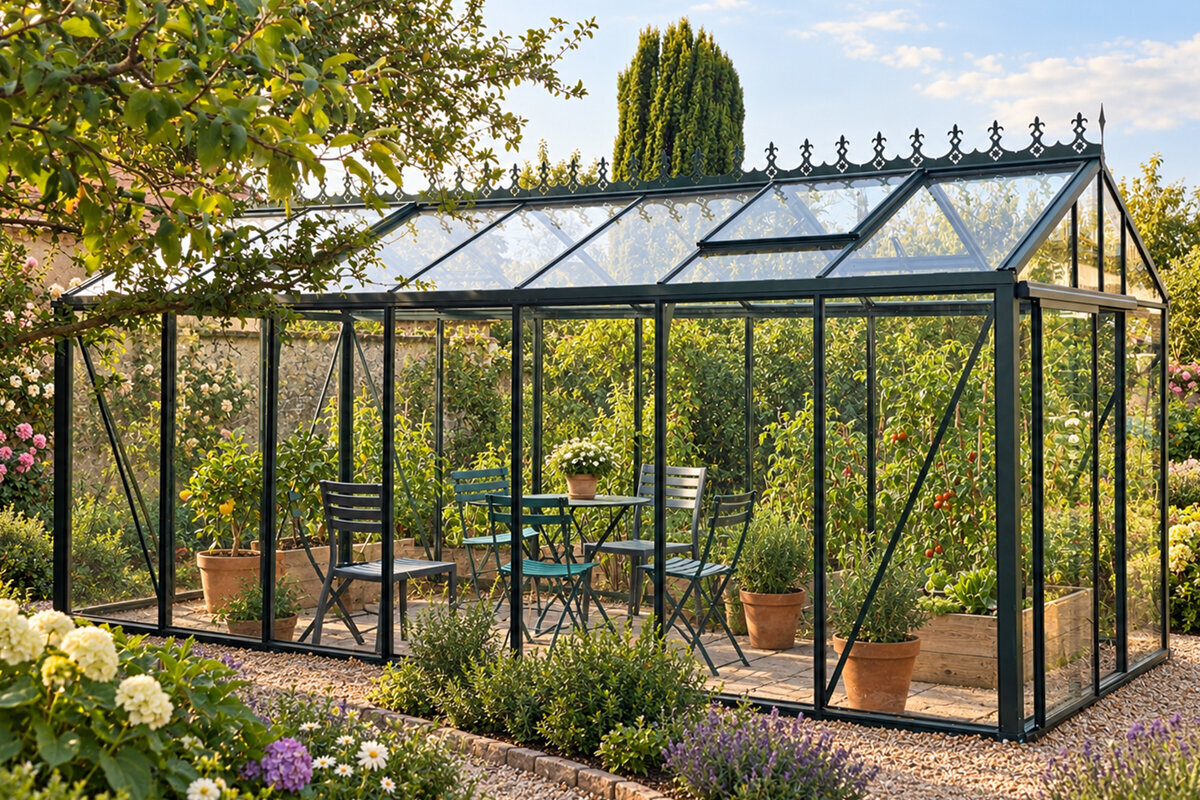
Use the written scope to assess a Classic greenhouse range on its own stated terms.
Stage two
Separate the frame from the fittings
Structural cover should be read with precision. Find out whether it concerns the aluminium frame itself, joints, fasteners or only a narrowly defined failure. Consider what the supplier requires from the base and installation, because a greenhouse that is not properly supported may behave differently from one assembled on a suitable foundation. Avoid assuming that a structural warranty covers every consequence of movement or misuse.
Doors, roof vents, louvres, gutters and opening mechanisms deserve their own line in your notes. They may be made of different materials, have moving elements and need adjustment during ownership. Ask whether normal adjustment, lubrication, alignment or replacement of consumable fittings is treated as routine care. A warranty is strongest when its boundaries around these everyday components are understandable. Where components meet, terminology can matter. Note whether the conditions distinguish frame profiles, connectors and fixings, since a general reference to the structure may not explain how every adjoining part is treated.
Compare the wording for frame members with the wording for doors, vents, handles, clips and hinges.
Check whether self-assembly instructions and base requirements are stated as conditions of maintaining cover.
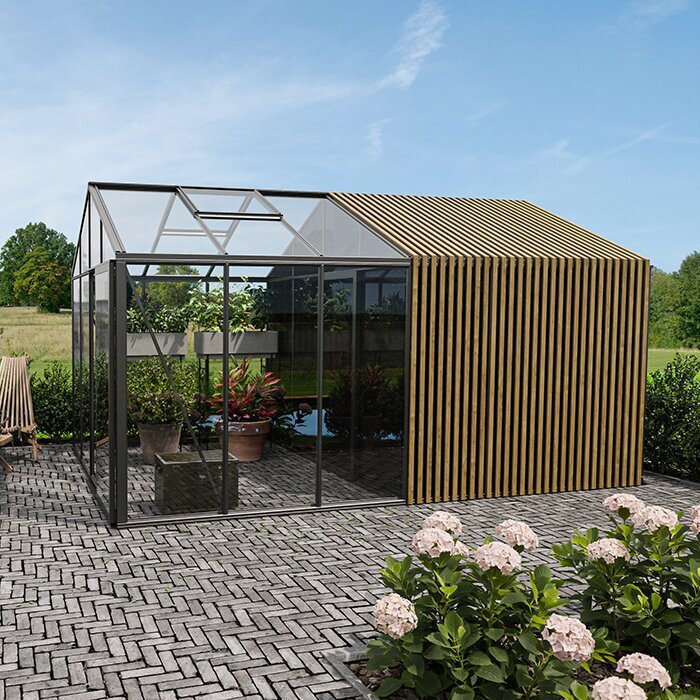
Apply the same frame-and-fitting checklist to a full-size regular wall-attached Lean-To greenhouse before deciding which layout suits your home.
Stage three
Read glass cover carefully
Glass is a distinct category, not simply part of the greenhouse shell. Look for wording that explains whether the cover concerns a material defect, breakage during transport, breakage after installation or another issue altogether. Damage caused by impact, accidental contact, severe conditions or work carried out nearby may be addressed differently. The point is not to expect every event to be covered, but to know the dividing lines before purchase.
Inspect the practical arrangements as well as the headline. If a pane arrives damaged or later appears faulty, establish what evidence is expected and how quickly you should report it. Keep photographs of the condition at delivery and during assembly where appropriate. Ask whether seals, glazing clips and other items needed to refit a replacement panel are considered separately from the glass itself. Ask whether the delivery inspection process has separate instructions from a later warranty claim. Recording any visible concerns promptly can make it easier to establish when and how the issue was first identified.
Distinguish manufacturing defects from accidental breakage, as these terms can lead to very different outcomes.
Clarify the reporting process for visible transit damage before accepting and beginning installation of the greenhouse.
For a traditional freestanding option, review glazing terms on the freestanding Classic greenhouse model alongside its assembly guidance.
Stage four
Understand coating and colour expectations
A greenhouse finish should be compared on its own wording, particularly where powder-coated aluminium is part of the chosen specification. Look for what the warranty says about adhesion, peeling, blistering or corrosion, and what it does not say about superficial marks, gradual weathering or changes caused by unsuitable cleaning. Colour perception can also be influenced by light, surrounding planting and the age of neighbouring materials.
Maintenance instructions matter here. Abrasive pads, harsh chemicals, accumulated grime and contact with unsuitable materials can affect an exterior finish, so establish the recommended cleaning approach. If your site is near trees, a busy road, coastal air or a regularly watered border, ask how routine care should be adapted. Written advice is more useful than a broad verbal reassurance when comparing coating cover. Compare any guidance for cleaning around gutters, glazing bars and sheltered wall-facing areas. These places may be less accessible, so a realistic care routine is as relevant as the wording on the finish itself.
Check whether the finish wording addresses defects in application rather than cosmetic marks from later use.
Keep records of recommended cleaning products and avoid assuming household cleaners are suitable for coated aluminium.
Consider finish care in relation to a full-size regular Lean-To model where the wall-side setting may shape cleaning access.
Stage five
Put exclusions in context
Exclusions are not necessarily a warning sign; they explain where the supplier’s responsibility ends. Read them slowly for references to incorrect installation, inadequate bases, unauthorised modifications, poor maintenance, accidental damage and events outside normal product use. Then relate each clause to your own project. A condition that is easy to meet in a level garden may need more planning on a sloping, exposed or constrained plot.
Pay particular attention to vague assumptions. If you intend to add shelving, irrigation, shading, electrics or third-party accessories, ask whether these changes affect the warranty or whether their own products carry separate terms. Equally, do not assume that a warranty resolves every loss following a fault. Your household insurer can explain what your policy may or may not address for your particular property. If an exclusion is unclear, describe your intended change precisely when seeking clarification. A written answer is more useful when it relates to the particular accessory, fixing method and location you have in mind.
Mark every exclusion that could relate to your intended site, installation method or future greenhouse additions.
Ask your insurer about your circumstances rather than treating product warranty wording as insurance cover.
Check exclusions before personalising a Classic greenhouse configuration with accessories or alterations.
Stage six
Test the spare-parts pathway
Spare parts are central to the long-term usefulness of a greenhouse, especially for items subject to regular handling. Compare how you would identify a required part, who you would contact and what documentation should be retained. An order reference, product specification, photographs and clear description of the affected component can make a later enquiry more efficient, whether the request falls inside warranty scope or not.
Do not confuse availability of a part with automatic warranty entitlement. Replacement components may be assessed according to the reason for failure, the original specification and the applicable conditions. Ask how changes to a product range are handled if you need a matching item in future. The answer may help you decide how carefully to store paperwork and any supplied component diagrams after installation. Consider whether you could identify the affected item without dismantling more of the greenhouse than necessary. Clear photographs taken after assembly can show how panels, fittings and moving parts relate to one another.
Retain assembly manuals and labelled photographs showing vents, doors and fittings once the greenhouse is complete.
Ask how to identify a replacement component if a part number is not visible after assembly.
Plan future maintenance for a full-size regular Lean-To greenhouse by keeping its specification and component details accessible.
Stage seven
Compare the claims process
A warranty has practical value only if its claims route is understandable. Look for instructions on notifying the supplier, supplying photographs, preserving the affected component and allowing an assessment where needed. Check whether you should stop using a damaged door or vent until advice is received. Acting promptly and following the stated procedure can avoid confusion about the original cause of the problem.
Before purchase, ask what remedy language is used. Terms may refer to repair, replacement, provision of a component or another response, subject to the written conditions. Do not assume that installation labour, consequential expenses or unrelated improvements are included unless the document says so. A transparent answer lets you compare not just the coverage category, but also the ownership experience behind it. Check whether the conditions explain how an issue should be documented if it develops gradually. Notes and photographs taken as soon as a concern is noticed can provide a clearer account than memory alone.
Read the claim-notification instructions before installation, not only when a problem has already occurred.
Keep a dated record of maintenance and any issue, using photographs that show the wider greenhouse context.
Choose with confidence by reviewing the support route for a Classic greenhouse option as carefully as its visible design.
Stage eight
Make a purchase-ready comparison
Bring your findings into one final decision rather than judging each warranty category in isolation. A greenhouse with clearly stated care requirements and a straightforward parts route may suit a hands-on gardener, while another buyer may prioritise clarity around glazing or coating. Consider access for maintenance, the proposed base, the degree of exposure and how likely you are to add accessories over time.
Take unresolved questions to the supplier before placing an order, and keep the answers with your quotation and product documents. If your installation may raise planning questions, check with the relevant local authority rather than relying on general guidance. This final diligence is not about finding a warranty with no limits; it is about selecting a greenhouse whose conditions you can realistically meet. Before filing the documents away, make sure the final specification reflects any changes agreed during ordering. This creates a useful reference if you later need to discuss an accessory, component or maintenance question.
Compare the full documents using the same headings, rather than relying on summary descriptions or sales labels.
Confirm site, base, accessories and maintenance expectations before ordering, then retain the written answers safely.
Use your completed comparison to evaluate a full-size regular Lean-To greenhouse design against the practical needs of its intended position.
Comparison
Warranty comparison matrix
Use this matrix to compare documents consistently. The most useful result is not a score, but a clear view of where each supplier defines responsibility, what evidence is required and whether the conditions suit your planned installation and maintenance routine.
| Category | What to look for | Question to ask |
|---|---|---|
| Structural frame | Named components, defect definition and base conditions | Which frame parts are expressly included? |
| Glass and glazing | Defects, breakage exclusions, clips and seals | How are damaged or faulty panels handled? |
| Coating and colour | Finish defects, cleaning limits and cosmetic exclusions | What care is expected for coated aluminium? |
| Moving fittings | Doors, vents, hinges, handles and adjustment | Which items require routine owner maintenance? |
| Spare parts | Identification process, documents and matching components | What information supports a parts enquiry? |
A practical pre-purchase review
Set aside time to read the documents before your greenhouse arrives. This sequence turns broad warranty wording into questions that relate directly to your garden, intended use and ability to carry out routine care.
01
Gather the documents
Collect the product description, assembly guidance, warranty conditions and any accessory information for the exact configuration you are considering.
02
Map each component
List frame, glass, finish, doors, vents, seals and optional equipment, then note where each category is addressed.
03
Assess your site
Consider the base, exposure, access for cleaning and likely garden activity that could affect use or maintenance.
04
Ask focused questions
Request written clarification on unclear exclusions, claim evidence, accessories and the route for identifying replacement components.
05
File your records
Keep the final specification, written answers, order documents and assembly records together for future reference.
Warranty checklist before you buy
Use this checklist to turn a lengthy terms document into an actionable purchase decision. Tick each point only once you can locate the answer in writing or have received a clear written clarification.
01. The exact greenhouse model and chosen accessories are identified in your saved product information.
02. The structural wording names what is covered and explains any installation or base-related conditions.
03. Glass terms distinguish product defects from damage that may occur after installation.
04. Finish wording explains the care expected for coated aluminium and relevant cosmetic exclusions.
05. Doors, vents, hinges and other moving fittings are checked separately from the main frame.
06. You understand what photographs, documents and timing may be needed to report a claim.
07. A practical process exists for identifying and requesting a future replacement component.
08. Any planning or insurance questions have been checked with the relevant local authority or insurer.
Frequently asked questions
Does a longer warranty always mean better greenhouse cover?
Not necessarily. Length is only one element of the comparison. A shorter, clearly defined document may be easier to understand than a longer promise with broad exclusions. Compare the components included, the owner’s responsibilities, the claims process and the stated remedy. The right choice is cover whose conditions fit your intended installation and upkeep.
Should glass be included in the structural warranty?
Do not assume it is. Glass often has separate wording because its risks differ from those of the aluminium frame. Read the conditions for manufacturing defects, delivery damage, accidental breakage and the associated clips or seals. Ask for clarification if the document does not make the position clear for the specific greenhouse configuration.
What maintenance records should I keep?
Keep your order confirmation, product specification, warranty conditions, assembly instructions and photographs taken during installation. A simple dated note of cleaning, adjustment or an observed issue can also be helpful. The aim is not burdensome administration; it is being able to identify the product, demonstrate reasonable care and describe an issue accurately if needed.
Are spare parts automatically covered by a greenhouse warranty?
No. A part may be available to request without being automatically covered. Eligibility can depend on why it failed, whether it is within the written scope and whether installation and maintenance conditions were met. Ask how parts are identified, what evidence is required and whether associated fittings are assessed as separate components.
Can adding accessories affect the warranty?
It can, depending on the accessory, how it is fitted and the written conditions. Shelving, shading, irrigation or third-party additions may introduce separate maintenance or compatibility considerations. Before making changes, review the supplied guidance and ask the supplier in writing if the alteration could affect the relevant warranty terms or claim assessment.
Do I need to check planning or insurance separately?
Yes. A product warranty does not determine planning requirements or household-insurance cover. If your proposal raises planning questions, contact the relevant local authority with your site details. For insurance, ask your insurer how your policy applies. These checks are specific to the property, policy and proposed installation, so general assumptions are unreliable.
Explore greenhouse options
Choose clarity, not just a headline
The best way to compare greenhouse warranties is to separate the promise into practical categories: structure, glass, coating, moving fittings, exclusions and spare parts. Read each category against your own garden and proposed installation, then resolve any uncertainty before you order. Clear written conditions make it easier to care for your greenhouse with confidence.
A thoughtful comparison also supports a better long-term ownership experience. Keep your documents, follow the supplied assembly and maintenance guidance, and know how to report an issue should one arise. When warranty terms are understandable and realistic for your circumstances, they become a useful part of choosing the right greenhouse.
Compare the product details and written conditions for the greenhouse that suits your garden.
