
Corrugated iron raised garden bed: how to tell if it suits your garden

Bloomcabin · Raised-bed guides
Corrugated iron raised garden bed: how to tell if it suits your garden
A corrugated iron raised garden bed can work well if the panels are designed to hold soil, the finish is documented for your planting use and the base suits the site. The name alone tells you none of those things. Check the exact model before buying or reusing sheet.
Identify the sheet
Corrugation is a shape, not a material specification. Get the base metal, grade, coating and sheet thickness in writing.
Check the intended use
For a corrugated iron raised garden bed used to grow food, look for an explicit statement covering the complete bed and its intended use.
Check the whole design
Follow the instructions for joints, supports and fill level. Decide where excess water will go before you assemble.
Compare like with like
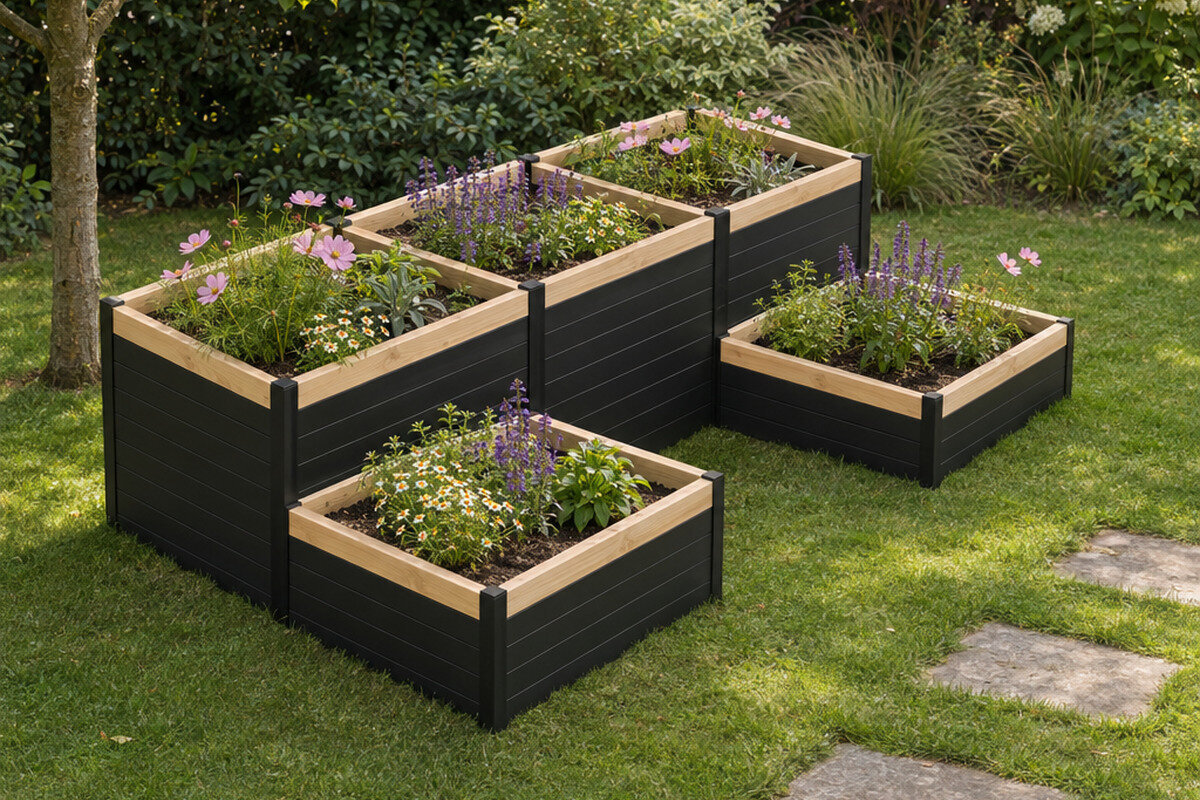
The Bloomcabin model compared below has aluminium walls. It is a separate option, not an example of corrugated iron.
If you are choosing a corrugated iron raised garden bed, first find out whether you are looking at a purpose-made kit, new roofing sheet or reclaimed metal. They can share a profile without sharing a base metal, finish or intended use. For herbs and vegetables, ask about the whole bed, not just the sheet.
Once the material and use are clear, check whether the walls can be assembled as supplied and whether you can reach, drain and maintain the bed at the chosen site. These checks are easier to make with the product instructions and a tape measure than after the bed is full.
01
Read past the word ‘iron’
In a listing for a corrugated iron raised garden bed, “corrugated” describes the ridges formed into the sheet. The word “iron” may be used for profiled steel, so it is not enough to identify the base metal. If the listing says “galvanised”, that describes a zinc coating, not the steel grade or the suitability of the finished bed. A painted face tells you little about what is on the reverse, which may be the face in contact with your growing medium.
Corrugations stiffen a sheet, but they do not tell you how the assembled wall will behave. The sheet thickness, length between supports and way the panels are joined all matter. Two beds can have a similar profile in photographs and use quite different supports. An attractive rib pattern is not a reason to accept a taller wall or extend a panel span beyond the maker’s design.
If you are considering making a corrugated iron raised garden bed from offcuts, ask what the sheets were supplied for and how they were used. A roofing specification, even for new sheet, does not show that the panel and its fixings are designed to retain soil. With salvaged sheet, look for a record of the original finish and any later paint or treatment. If neither can be established, a clean-looking surface does not resolve the uncertainty.
- Record the exact model, named base metal and grade, coating on each face and the finish at cut edges.
- Ask for the sheet thickness and check whether the stated figure includes the coating. The depth of the corrugation is a different measurement.

02
Ask for evidence that matches what you will grow
Start with a specific use, such as growing salad leaves and herbs in an open-bottom bed on prepared ground. When asking about a corrugated iron raised garden bed, give the supplier that use and request the material specification and installation instructions for the exact model in the same message. That lets you check whether the answer applies to the bed you would receive rather than to a different finish or size in the range.
For an edible crop, look for written confirmation that the finished bed is intended for that use with the supplied coating and fixings. Ask whether the instructions require a liner or restrict which surfaces may touch the growing medium. “For outdoor use” is not the same answer. A supplier’s intended-use statement is useful buying evidence, but it is not evidence of independent testing. Nor does missing documentation prove that a product is unsafe; it means you cannot verify suitability from the information offered.
For a corrugated iron raised garden bed intended only for ornamentals, the edible-crop question may not apply, but you still need to know whether the walls are designed to hold soil, how the exposed edges are finished and what care the coating needs. If the only information is a sheet description and an assembled photograph, ask for the instructions before deciding. A listing that does not answer a question central to your plan is a poor basis for a purchase.

03
Measure the outside, the planting space and the reach
Mark the outside footprint of the corrugated iron raised garden bed at the proposed site, then allow separately for the paths you will use. Measure any tight point at a gate or between the bed and a boundary. Ask whether the stated external dimensions include the rim, corner fittings or projecting parts. Use the internal measurements to plan planting, not the outside rectangle you marked on the ground.
Try reaching across the marked width from the side you will actually work from. If the bed backs onto a fence, you may have to reach its far edge from one side rather than the centre from two. Keep access separate from the growing area so you need not step on and compact the soil. Consider the firmness of the path, your working height and the route to a water supply before you settle on the position.
The stated wall height of a corrugated iron raised garden bed is neither the intended fill depth nor necessarily the total rooting depth. The soil surface may sit below the rim. With an open base, roots may also reach suitable ground beneath the bed; with a floor, there is no such extension. Check the permitted fill level and the crop’s needs separately, using your seed instructions and local planting guidance where relevant.

04
Check the joints, supports and exposed edges before filling
Read the instructions for the corrugated iron raised garden bed before opening out the panels. Identify the specified fasteners and any corner pieces, braces or edge protection that the model actually uses. Check which face goes inwards and where the joints are meant to sit. If a fixing looks like an ordinary screw you already have, that does not establish that it is a suitable substitute for the supplied one.
When assembling a corrugated iron raised garden bed, follow the maker’s sequence and handling guidance. Do not use the fasteners to pull a badly misaligned joint together. Check first for reversed panels, an incorrectly positioned joint or an uneven base. If the instructions do not match the parts, ask the supplier rather than drilling new holes or adapting an offcut to fit. The same applies to bracing: a layout intended for a short side is not automatically suitable for a longer run.
- Before filling, check that every specified joint and support is in place, the bed sits as instructed and the intended fill line is clear.
- Stop if an accessible edge is sharp, a panel is damaged or a fitting is missing. Resolve the issue while the bed is still empty.

05
Trace where excess water will go
For an open-bottom corrugated iron raised garden bed, start with the ground rather than the metal. Check what base preparation the maker calls for and look at the spot after rain. If water regularly collects there, decide whether a different position or an appropriate drainage solution is needed before you assemble. An open base lets water reach the ground beneath it; it does not make that ground free-draining.
If the bed has a floor, check where its intended outlets are and whether they will remain clear at the chosen site. On a hard surface, work out where the discharge will go instead of assuming it can run off without crossing a path or collecting against a wall. Confirm that the bed is designed for that installation and that the supporting surface can take the filled weight. Do not drill extra holes or assume that an improvised liner will turn an open frame into a planter for paving.
Once the drainage route for the corrugated iron raised garden bed is clear, choose a peat-free growing medium for the planting you have in mind. Check how the medium is intended to be used rather than assuming any bag labelled compost can serve as the entire fill. Water retention, structure and nutrients vary. Once planted, check the moisture below the surface before watering instead of relying on a fixed schedule.

06
Know how the finish and fittings can be maintained
Ask how to clean and maintain a corrugated iron raised garden bed before choosing the finish. In particular, find out what the maker recommends for a scratch, a damaged edge or a replacement fixing. Paint meant for an exterior metal surface is not automatically appropriate where the wall touches the growing medium. If a repair is needed, confirm that the method is compatible with both the finish and the intended planting use.
Once filled, check the panel ends, joints and lower edges as part of routine garden care. Look for damage to a coating, loosened fixings or a wall that has moved since assembly. A photograph taken when the bed was new can help you distinguish the original panel shape from a change. If a seam on a corrugated iron raised garden bed starts opening or a wall bows, do not push it back or undo its fixings while it is holding soil. Keep clear of the affected side and ask how to unload or repair it.
Use the same checks when comparing listings. A clearly described edge finish and accessible replacement fittings may matter more to you than a general claim about lifespan. Do not assume a rim can be used as a seat or a wall as a support for a trellis unless the maker documents that use.

07
Worked example: choose between two similar-looking listings
Hypothetical example: a gardener has a bay 1.2 m long and 0.6 m wide on prepared ground, with a path outside it. They want an open base for salad leaves. One listing describes a corrugated iron raised garden bed that fits the bay but gives no material or coating details. A second lists the base metal, grade, coating, thickness and fixings, gives installation instructions for prepared ground, and confirms in writing that the complete model is intended for edible crops. Both look similar, but only the second supplies the evidence the gardener needs to go ahead, subject to checking the actual site and reach.
Suppose that second bed has approximate usable internal dimensions of 1.1 m by 0.5 m and allows a fill depth of 0.22 m. Treating the bay as a rectangle and ignoring small variations from the ribs and fittings gives 1.1 × 0.5 × 0.22 = 0.121 cubic metres, or about 121 litres before settling. This is a planning estimate for the hypothetical corrugated iron raised garden bed, not a quantity based on the available bay or the advertised wall height.
If the material is flexible but the layout is not, compare the Bloomcabin Narrow Aluminium Raised Bed 100×50×20cm separately. It has a nominal footprint of 100 × 50 cm, a 20 cm wall height and an open base for prepared ground. Its wall panels and corner posts are aluminium. That makes it a useful comparison for footprint and wall height, not an example of a corrugated iron raised garden bed. The nominal measurements do not establish its actual internal fill volume.

Questions readers ask
Is a corrugated iron raised garden bed always made from galvanised steel?
No. Corrugated describes the shape, and a listing may use iron as a loose label. Galvanised describes a zinc coating; it does not tell you the sheet thickness, how the edges are finished or whether the complete bed is intended for growing vegetables. Ask for the exact model’s specification.
Can I line a reclaimed corrugated iron raised garden bed and grow vegetables in it?
A liner does not identify the old coating, explain the sheet’s previous use or show that it can hold back soil. It may also affect the drainage arrangement. For vegetables, choose a bed with documented materials and intended use rather than using a liner to compensate for unknowns.
Can a corrugated iron raised garden bed go on paving?
Only if the design is intended for that surface, the site can support the filled bed and water has somewhere to drain. An open base intended for prepared ground is not automatically suitable for a patio. Confirm the installation requirements before ordering or filling.
Buy the specification, not the label
Choose a corrugated iron raised garden bed only when you can identify the material, verify the intended use and follow the instructions at your site. If a decisive detail is missing, ask before buying or choose a design that documents it.
Find a raised bed for your plan
Compare layouts and check the dimensions on the product page.
