
How Much Does It Cost to Heat a Pergola Seating Area?
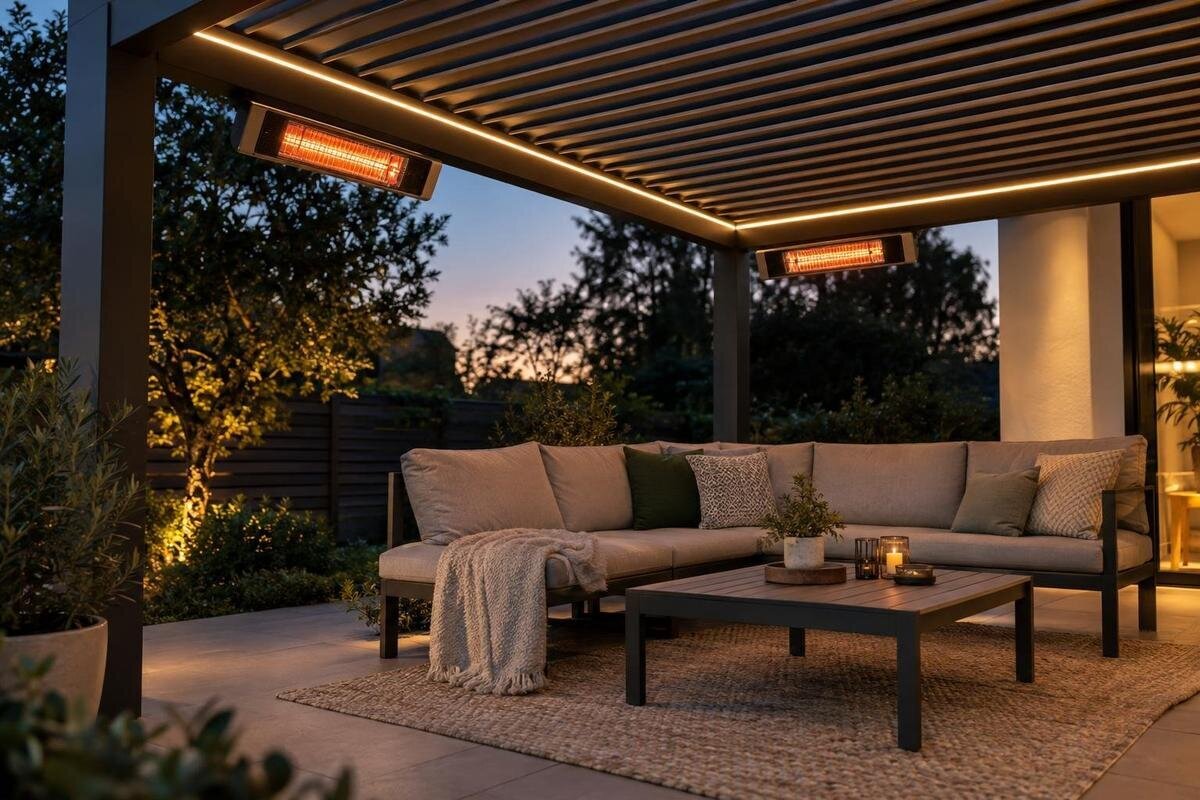
Pergola heating costs
Estimating the cost of heating a pergola seating area starts with three figures: the heater’s electrical input, the time it is on and your electricity unit rate. Multiplying them gives a useful running-cost estimate, but not a promise that the whole seating area will feel warm. Radiant heaters can warm people and surfaces in their path without heating all the outdoor air, while wind and seat position affect comfort. Use your own tariff and realistic sessions in the examples below, then check the exact heater and pergola documentation and get qualified electrical advice on the proposed supply and mounting.

What a running-cost estimate covers
The running cost is the extra electricity charge caused by using the heater, not the full cost of creating a warm seating area. Keep the appliance purchase, mounting, electrical work and controls in separate budget lines, since none belongs in a per-kWh consumption calculation. A household bill also covers other appliances and may include fixed charges, so dividing the total bill by heater-use hours will not give a meaningful heater rate. Find the tariff’s unit price per kilowatt-hour (kWh). If it is shown in pence, either convert it to pounds before multiplying or keep the calculation in pence and convert the total at the end.
The result estimates energy use under the assumptions you enter; it does not predict a particular air temperature or comfort level. Multiplying maximum rated input by every minute of an evening gives a clear full-power scenario, but it may not match a heater run on a lower setting or one that cycles on and off. Decide whether you need a maximum-use estimate, a typical-session figure or a seasonal budget, because each answers a different question. A standing charge is separate from the per-kWh charge, so exclude it when calculating the extra cost of running the heater. A lower estimated bill is not evidence that every seat will feel comfortable.
Calculate electricity use from power and time
To calculate energy use, take the heater’s rated electrical input in watts (W) and divide by 1,000 to convert it to kilowatts (kW). Multiply that input by the hours for which it draws power to get kilowatt-hours (kWh), then multiply by your tariff in pounds per kWh. In compact form: kW × hours × £/kWh = estimated electricity cost. One kWh is the energy used by a 1kW input over one hour. For instance, 1.8kW at that input for 2.5 hours uses 4.5kWh; at an illustrative 30p/kWh, the charge is £1.35. Use electrical input from the heater label or manual.
If two heaters run together for the same duration, add their electrical inputs before multiplying by the hours and tariff. If their running times differ, calculate each device separately and add the costs. Where a tariff changes by time of day, split the session into those periods and apply the relevant rate to each block. The Bloomcabin Pergola listing gives a product area range of 97–258 ft², but that describes the structure, not a heater’s electrical input or a recommended heater size. Floor area and purchase price do not belong in the consumption formula. This method is for electric heaters; fuel-burning models need their own consumption data and fuel rate.
Worked examples with a hypothetical tariff
Suppose an electric heater is rated at 2kW and the hypothetical unit rate is 30p/kWh. At full input it uses 2kWh in one hour, so the consumption charge is 60p; after three hours it has used 6kWh and costs £1.80. Four full-power hours would be 8kWh, or £2.40. If the unit rate were 20p or 40p instead, the three-hour example would cost £1.20 or £2.40. These rates are chosen to show the arithmetic, not to represent a current or typical UK tariff. Change the rate in the calculation to match your own bill.
Now use a 1.5kW heater for two hours at the same hypothetical 30p rate. One session uses 3kWh and costs 90p; twelve identical sessions use 36kWh and cost £10.80. If you are budgeting for a Bloomcabin Bioclimatic Aluminum Pergola, keep this electricity estimate separate from the structure’s purchase cost. Adding a second identical heater for the same hours doubles the example to 6kWh and £1.80 per session, or £21.60 for twelve sessions. That is a comparison of consumption, not a recommendation to fit two heaters. It shows how the number of appliances affects the bill before you assess which arrangement can serve the occupied seats.
A pergola footprint is not a heated zone
Do not treat a pergola’s full floor area as if it were a uniformly heated room. With a radiant heater, warmth is experienced in the area reached by the heater; people further away or outside its effective direction may feel different. The Bloomcabin Lean-To Pergola listing identifies a wall-mounted pergola and gives the structure’s area range as 97–258 ft². Neither that figure nor the model name defines radiant coverage or recommended heater input. There is no sound conversion from square feet of pergola to guaranteed kW demand in the running-cost formula.
Sketch the actual seating arrangement rather than estimating from the roof outline. Mark the seats used most often, the intended heater position and the direction or coverage information in the exact heater manual; note that furniture can put people at different distances. Use the manufacturer’s clearances and documented mounting approval for the specific heater and pergola, rather than selecting a fixing point simply because it is above a seat. The sketch defines the comfort area you care about. It does not alter the cost per kWh, but it can stop you budgeting for an entire footprint that is rarely occupied.

Base the estimate on actual settings and hours
A controllable heater may have more than one power setting. Use the electrical input stated for the chosen mode when the manufacturer provides it, rather than assuming that a control marked low uses exactly half the power. For example, one hour at a confirmed 1kW setting followed by one hour at 2kW uses 3kWh, costing 90p at an illustrative 30p/kWh. The same two hours at 2kW throughout would cost £1.20. When considering the regular Bloomcabin model, record the separate heater’s available settings in your budget notes. A dimmer percentage or descriptive mode name is not enough to establish electrical input unless the heater documentation explains what it means.
Count the time the heater actually operates, not just the length of the gathering. If it is on for two hours during a three-hour visit, use two hours in a full-power example; if it cycles, a maximum-input estimate for the whole two hours will generally overstate consumption. For repeated evenings, list time at each setting separately, because two hours at a lower confirmed input are not equivalent to two hours at full power. A brief log of start and stop times, selected modes and the number of heaters in use during representative sessions can replace a guess with a personal pattern. Keep unusual one-off events separate from routine use.
Radiant warmth does not mean heated air
Many electric infrared heaters are designed to direct radiant energy towards people and surfaces in their path. They can make someone feel warmer without bringing all the surrounding outdoor air up to an indoor-room temperature. An air thermometer is therefore not a direct measure of comfort or electricity cost: the cost follows electrical input and time drawing power. A low air reading can coexist with a perceived benefit in the radiant zone, while a seat outside that zone may not receive the same warmth. This distinction matters when you are comparing comfort rather than the arithmetic.
When comparing heaters for a bioclimatic aluminium model, distinguish electricity consumption from how effectively the warmth reaches the occupied seats. Two heaters with the same electrical input and running time have the same calculated energy cost at a given tariff, even if their radiant patterns differ. Conversely, a lower-input heater may cost less per hour without providing the comfort you want in the intended position. Look for the exact heater’s coverage information and permitted mounting arrangements, rather than judging it by wattage alone. Any claim of lower running costs needs stated assumptions about input and duration; a description such as efficient does not supply the numbers needed for your calculation.
Outdoor exposure changes comfort, not the formula
Wind, exposure and whether the sides are open can change how chilled people feel, even when a radiant heater is operating. Wind does not redirect radiant energy, but moving air can increase heat loss from people and surfaces. Damp clothing, cold furniture, distance from the heater and whether a person faces it can also affect perceived comfort. These conditions do not change the arithmetic when the heater draws the same input for the same duration, but they may change how long people choose to run it. Plan with a realistic range of use rather than building a guaranteed comfort level into the estimate; a more exposed evening may mean more operating time, not a different cost per kWh.
For a wall-mounted pergola model, consider the actual exposure of the seating position rather than assuming that the lean-to format guarantees shelter. A session recorded on a calm evening may not represent how you will use the heater in colder or windier conditions. Note the conditions alongside your operating-hours log so that you can distinguish occasional long sessions from your usual routine. If you are considering a screen or side panel, verify compatibility with the structure and heater instructions before including it in the plan. Do not assign a percentage saving to added shelter without evidence: any budget change should come from a defensible change in heater settings or operating time.
Check electrical planning and installation separately
An energy calculation assumes that the planned electrical equipment can be supplied; it does not prove that an existing socket or installation can serve it. Before budgeting multiple heaters, controls or fixed equipment, give a qualified electrician the exact heater models, input ratings, intended simultaneous use and proposed locations. Ask for an assessment of the supply and any work required. Do not estimate installation from retail wattage alone, and do not treat a pergola product page as confirmation that an accessory or mounting arrangement is approved. This is a separate cost and suitability question, not a complication in the kWh formula.
For the structure shown in the regular pergola product listing, request a quotation that separates the heater, controls, approved mounting equipment and electrical work from the pergola itself. The installer needs the exact structure documents and heater instructions to assess the proposed combination, including outdoor suitability, exposure and mounting compatibility. Once that is confirmed, compare one-off costs alongside the expected electricity use over a stated period. A cheaper appliance is not automatically the cheaper overall plan if the required installation differs. Equally, do not assume a more expensive heater will recover its price through energy savings: that would need a supported difference in consumption under comparable use.

Estimate use across a season
A seasonal estimate is the cost per session multiplied by the number of similar sessions, adjusted for the actual hours and settings. For example, a 1.5kW heater running for two hours on three evenings a week for twelve weeks would use 108kWh. At the purely illustrative 30p/kWh rate, that equals £32.40. This assumes full rated input during every stated hour and an unchanged unit rate; it is not a prediction of typical use. If the tariff has time bands, or weekday and weekend sessions differ, split the use into groups and calculate each at its applicable rate.
For a budget accompanying the bioclimatic pergola listing, vary the expected frequency of use before settling on one seasonal total. Using the same 1.5kW heater for two hours on one evening a week over twelve weeks gives 36kWh, or £10.80 at the illustrative rate. Five evenings a week gives 180kWh, or £54. These are alternative usage assumptions, not expected costs for that pergola. You can also vary session length and confirmed settings, keeping the tariff consistent so the comparison remains clear. If your electricity rate changes during the season, calculate use before and after the change separately rather than applying the latest rate retrospectively to every session.
Compare realistic heating plans
To compare two plans, write down the heater input, selected mode, hours per session, sessions per week and unit rate for each. One heater used for a shorter time may consume the same kWh as a different input used for longer, so the bill alone will not show whether either plan reaches the seats you intend to use. Compare an equal number of occupied sessions at the same tariff, and note whether the input figure is a maximum or a selected mode. If units operate together, include each one rather than applying a single heater’s cost to the whole arrangement.
Keep two results side by side: estimated electricity cost and the comfort question. Write down the area you want to use, the approved heater position and the manufacturer’s stated coverage or operating conditions, if provided; a bill calculation cannot answer those points. Use the maximum-input calculation as a cautious budget when actual draw is unknown, and label the assumption. After several representative sessions, revise the hours and settings to reflect what happened. Your resulting estimate will be personal to your tariff and routine, not a universal price for heating every pergola.
Frequently asked questions
How do I calculate the cost of running a 2kW heater?
Multiply 2kW by the number of hours it draws power to find kWh, then multiply by your electricity rate per kWh. For example, three hours at full input uses 6kWh. At an illustrative rate of 30p/kWh, that costs £1.80. Use the rate on your own tariff and the heater’s confirmed electrical input.
Does a 2kW heater always cost 60p an hour?
Only at full 2kW input when the unit rate is 30p/kWh. A different tariff changes the cost, and a lower confirmed power setting or on-and-off operation can reduce the energy used over an hour. If you only know the maximum input, multiplying it by the whole session is a clear high-use estimate rather than a measured figure.
Can I use the pergola’s floor area to work out heater costs?
No. The electricity calculation uses the heater’s input, operating time and tariff. Pergola area does not establish a heater’s power or the zone it can warm. Use the exact heater instructions and approved mounting information to assess coverage and suitability; keep that comfort question separate from the kWh estimate.
Will a pergola heater warm all the air underneath it?
Not necessarily. Many electric infrared heaters direct radiant energy towards people and surfaces in their path, so warmth can be felt in one area without the surrounding outdoor air reaching an indoor-room temperature. Wind, distance and seating position affect comfort, but the electricity estimate still follows input and operating time.
How can I estimate the cost for a month or a season?
Calculate the energy cost for one representative session, then multiply by the number of similar sessions. For a better estimate, group use by heater setting, session length or tariff time band and add the results. If future use is uncertain, calculate low, typical and high cases by changing the assumptions you can see.
Start with the heater’s confirmed electrical input and your tariff, not the pergola footprint or purchase cost. Multiply by realistic operating hours and the number of sessions; where settings or tariff periods vary, calculate them separately. Read the result alongside a separate comfort check, because radiant reach and outdoor exposure influence where people feel warmth without changing the cost per kWh. Record the assumptions beside the estimate and revise them after representative use. That gives you a figure grounded in your own tariff and routine rather than a generic promise about heating every pergola.
