
Greenhouse Manufacturer vs Retailer: Which Should You Choose?
A greenhouse is rarely an impulse garden purchase. Its proportions, siting, base, ventilation and access all need to work with the way you garden. That makes the selling route relevant: a manufacturer may offer close product knowledge, while a retailer may help you compare several options in one place. Both can be useful when their service suits the project.
Buying direct can feel reassuring when you have chosen a particular design and want answers from the business responsible for making it. A specialist retailer can be equally valuable where you are still weighing up styles, dimensions or brands. The important point is to understand where advice begins, who owns the order, and how support continues after purchase.
For UK homeowners, practical preparation matters more than the badge above the checkout. Build a clear brief, ask written questions about the product and process, and retain all order documents. Whether you buy from a manufacturer or a greenhouse retailer, that approach makes it easier to compare like with like and proceed with confidence.
Stage one
Start with the project, not the channel
Before deciding where to buy, define what the greenhouse must do. Is it primarily for raising seedlings, growing tomatoes, displaying plants, or extending the gardening season? Measure the intended area, note nearby trees and boundaries, and think about the route from house to garden. A clear brief prevents a glossy sales presentation from deciding the project for you.
Write down your non-negotiables alongside your preferences. Door position, usable bench space, glazing choice, colour, guttering and access for a wheelbarrow can all affect whether a design works day to day. A manufacturer may help refine a chosen model; a retailer may help you recognise that your original shortlist does not meet the brief.
Sketch the site, including gates, paths, slopes and anything that could complicate moving materials into the garden.
Separate essential growing features from decorative preferences, so comparisons remain grounded in everyday use rather than appearance alone.
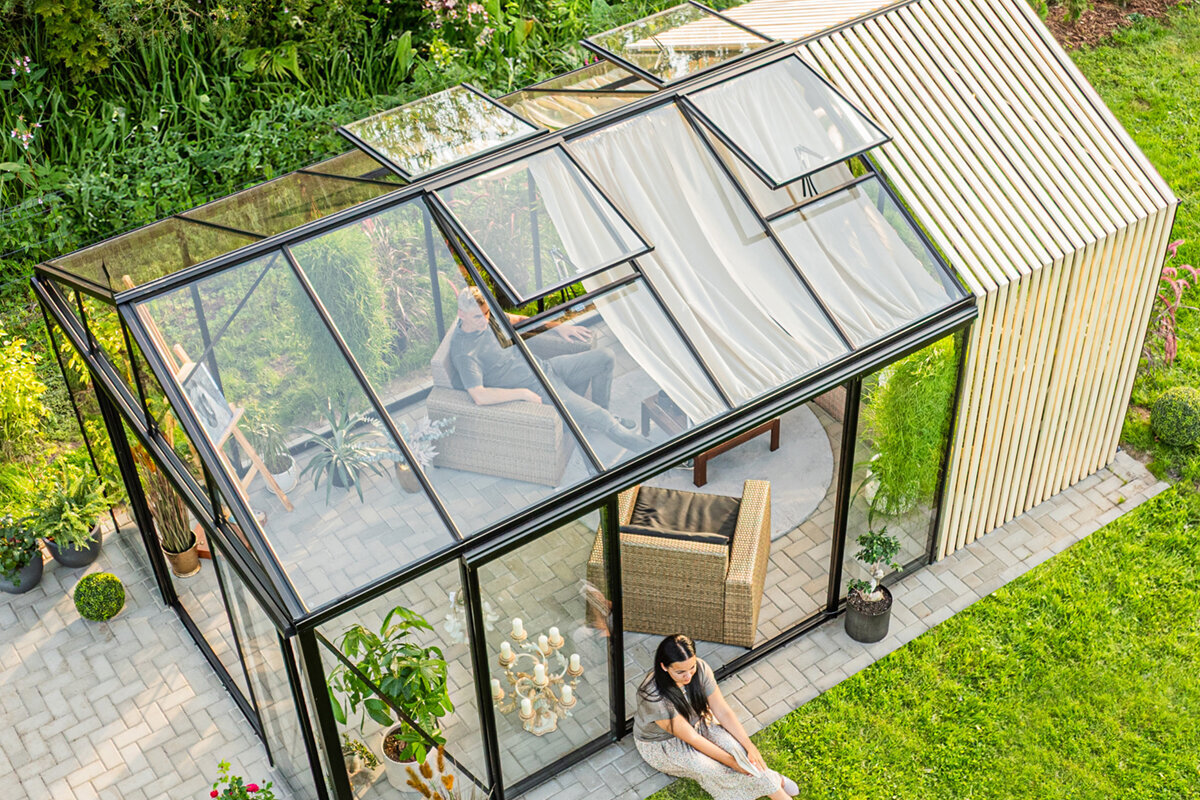
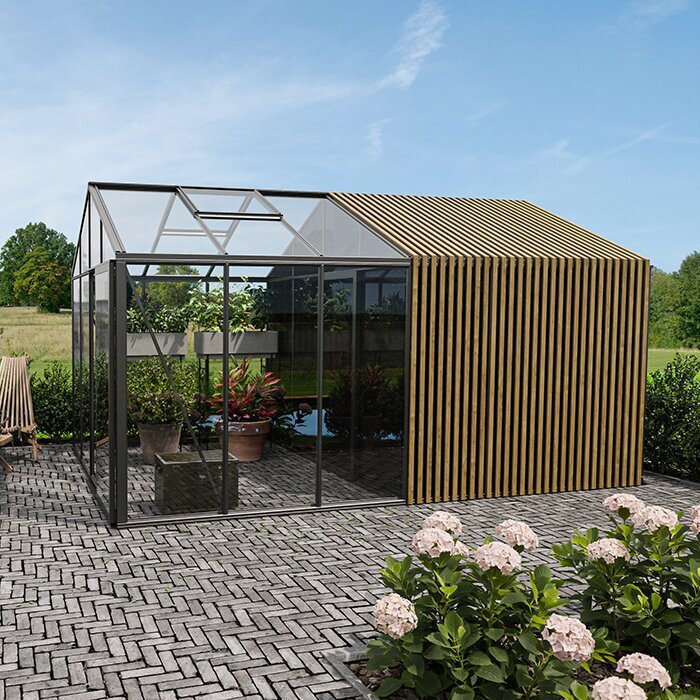
For a freestanding starting point, explore a Classic freestanding greenhouse and compare its layout with your measured garden space.
Stage two
What direct manufacturer buying can offer
Buying from a manufacturer can create a direct line to people with detailed familiarity with their own range. This can be useful when you need to understand available sizes, finishes, accessory compatibility or the distinction between closely related designs. It may also make conversations more efficient because the product information is not being passed through another sales layer.
Direct does not automatically mean simpler for every buyer. You still need to establish how the order is checked, whether your site questions can be answered, and what information is supplied for preparing the base. Ask for the specification in writing and confirm precisely what is included, rather than relying on assumptions formed during an initial conversation.
Ask who will review your final configuration and how changes are recorded before the order is confirmed.
Request clear guidance on the information needed about access, foundations and the proposed installation location.
If your design must sit alongside the house, consider a regular full-size Lean-To greenhouse after checking the wall, access and layout requirements.
Stage three
Where a retailer can add value
A good greenhouse retailer can be particularly helpful while your options remain open. Seeing different styles discussed together may clarify whether you need a compact freestanding structure, a wall-based arrangement, or something with more internal working room. Retailers can also be useful for buyers coordinating a greenhouse with other garden elements and wanting a broader planning conversation.
The quality of retailer advice varies, so test it with specific questions rather than judging by a polished display alone. Can the adviser explain the practical differences between the models you are considering? Do they know who handles technical escalation? Will your order confirmation identify the chosen specification? Useful advice should make the decision clearer, not merely faster.
Compare retailer recommendations against your written brief, particularly access, usable space and the intended position of the door.
Ask whether product queries are answered by the retailer, the manufacturer, or both after you place an order.
When comparing freestanding designs through a showroom or adviser, keep a Classic greenhouse for freestanding gardens on the shortlist as a clear reference point.
Stage four
Compare specifications on equal terms
The fairest greenhouse manufacturer vs retailer comparison is made from documents, not impressions. Create a simple list of the details that matter: overall footprint, eaves and ridge proportions where supplied, glazing, frame finish, doors, vents, included items and optional extras. Then ask each seller to confirm the exact configuration being discussed. Names alone are not enough to establish equivalence.
Pay attention to language such as ‘from’, ‘shown with’ and ‘optional’. A garden display can include accessories or finishes that are not part of the base product. Equally, a direct seller may offer configuration choices that need careful selection. Make sure your final written order reflects the design you have priced and planned for, including any additions that affect the base or space required.
Use one comparison sheet for all quotes, recording inclusions, exclusions, assumptions and the date each detail was confirmed.
Check that dimensions relate to the same point of measurement; external footprint and internal growing area answer different questions.
For a wall-side option, review the stated details of a full-size regular Lean-To greenhouse model rather than comparing only its overall visual footprint.
Stage five
Ask who owns support after ordering
After-sales service is where purchasing channels can feel most different. If you buy direct, the manufacturer may be your primary contact throughout. If you buy through a retailer, the retailer may coordinate the issue, or may direct some technical questions to the maker. Neither arrangement is inherently poor, provided the responsibilities are clear before money changes hands.
Ask practical scenarios rather than a broad question about support. Who should you contact if a component appears incorrect? Who records an order amendment? Who can clarify assembly documentation? Who deals with a concern after installation? Keep email confirmations, drawings and order paperwork together. A well-kept record helps every party understand what was agreed and respond efficiently.
Save the product specification, order confirmation and all agreed amendments in one folder before delivery or installation begins.
Clarify the preferred contact route for missing, damaged or unclear components, including what information you should provide.
If you favour a direct relationship for a freestanding build, investigate the freestanding Classic greenhouse design with the same care you apply to support arrangements.
Practical checks
Plan the site before placing an order
A buying route cannot solve an unsuitable site. Examine light across the day, drainage after rain, prevailing exposure, nearby planting and the practical path for bringing materials through the property. Think about how you will use the greenhouse in winter as well as summer. The most attractive position may not be the easiest place to reach with pots, water and gardening tools.
Foundation preparation deserves early discussion. Different products and sites may call for different approaches, and the supplier should be able to explain what information is needed for its guidance. If your proposal affects a boundary, a listed setting, a conservation area or an unusual site, seek appropriate advice. Check current requirements with your local authority rather than relying on general garden-build assumptions.
Measure access at its narrowest point, including turns, steps and gates, before selecting a greenhouse or arranging any work.
Check drainage and ground levels early; correcting a poorly considered base later can disrupt both gardening and access.
A carefully measured wall-side position may be well suited to a regular Lean-To greenhouse for a full-size wall-side build where circulation remains comfortable around doors and paths.
Decision making
Match the buying route to your confidence
Your own confidence is a legitimate deciding factor. Experienced gardeners with a well-researched specification may prefer the focus of buying direct. First-time buyers may value a retailer’s ability to translate broad ambitions into a manageable shortlist. Some projects benefit from both: research with several sources, then place an order through the route that gives the clearest written answers.
Do not mistake convenience for certainty. A nearby retailer can be helpful, but distance alone does not define expertise or ongoing responsibility. Likewise, direct contact is valuable only if the information is responsive and specific. Choose the route that allows you to ask informed questions, understand the answer, and retain a complete record of the final arrangement.
Choose direct buying when the product is settled and detailed manufacturer-led answers matter most to your decision.
Choose a retailer when you need help comparing approaches, interpreting options or coordinating a wider garden project.
For buyers refining a straightforward freestanding brief, a standard Classic garden greenhouse can make conversations about layout and accessories more concrete.
Final stage
Order with clarity, then keep records
Before confirming any order, read the final paperwork slowly. Check names, contact details, chosen model, dimensions, finish, glazing, accessories, quantities and site-related notes. Ask for corrections in writing if something differs from your understanding. This is useful whether you buy direct from Bloomcabin or through a retailer, because a precise order is the foundation for a smoother process.
Also review the written terms that apply to your purchase, including payment stages, cancellation provisions, delivery arrangements, installation scope where relevant and warranty conditions. Do not assume that a sales conversation covers every eventuality. If insurance is a concern, ask your insurer how your particular property and proposed structure may be treated, rather than relying on a general answer from a seller.
Read the final confirmation against your own comparison sheet, not against memory of a showroom discussion or telephone call.
Keep photographs of the prepared site and copies of correspondence, particularly where access or foundation details were discussed.
When the specification is final, confirm every selected element of your full-size regular Lean-To greenhouse specification in the written order before proceeding.
Comparison
Manufacturer or retailer: a practical comparison
Use this matrix to identify the route that best fits your stage of decision-making. It is a guide to questions worth asking, not a judgement on any individual business. Service arrangements vary, so verify the actual process with the seller you are considering.
| Decision factor | Buying direct from a manufacturer | Buying through a retailer |
|---|---|---|
| Product knowledge | Usually focused on that maker’s own range and configurations. | May compare several ranges; depth can vary by retailer. |
| Early-stage comparison | Useful once your preferred product type is becoming clear. | Often helpful when your shortlist remains broad. |
| Order contact | Often one direct relationship with the producing business. | Retailer may be your main contact and coordinate others. |
| Technical queries | Ask how specialist questions are handled before ordering. | Ask whether technical escalation goes to the manufacturer. |
| Site discussion | Confirm what site information the manufacturer can usefully assess. | Check whether the retailer offers practical site-planning guidance. |
A five-step route to the right channel
Work through these steps before seeking a quote. They will improve conversations with either a manufacturer or retailer and make it easier to spot whether answers are specific to your project.
01
Define the purpose
List the crops, tools and routines the greenhouse should accommodate. This establishes the usable space and access you genuinely need.
02
Survey the garden
Measure the intended area and access route. Note sunlight, drainage, boundaries, slopes and nearby features that affect placement.
03
Build a shortlist
Compare styles that fit the site, then identify the essential configuration choices. Avoid evaluating products only from promotional photography.
04
Question the service
Ask each sales channel who confirms specifications, answers technical questions and remains responsible for communication after ordering.
05
Check the paperwork
Match the final order to your notes, including all selected extras and site assumptions. Retain every written confirmation for reference.
Questions to ask before you choose
Take this checklist into calls, showroom visits or email exchanges. Straightforward, written answers are more useful than broad assurances.
01. Which exact greenhouse configuration is being discussed, and which visible features are optional rather than included?
02. Who is my named contact from enquiry through to post-order questions, and how should I contact them?
03. What site, access and foundation information do you need from me before confirming suitability?
04. Who confirms the final specification, and will every agreed amendment appear on the order documentation?
05. If an item is unclear or incorrect on arrival, what is the reporting process and who coordinates it?
06. Can you explain the difference between the shortlisted models in relation to my intended gardening routine?
07. Which written terms apply to payment, cancellation, delivery arrangements, installation and any applicable warranty scope?
08. What should I check with my local authority, neighbours or insurer for my individual property and proposal?
Frequently asked questions
Is it cheaper to buy a greenhouse direct from a manufacturer?
Not necessarily. The final cost depends on the product configuration, selected extras, site requirements and the commercial terms offered at the time. Compare written quotations on an equal basis and check what each includes. A lower-looking starting figure is not a meaningful comparison if the specification or service scope differs.
Will a retailer know as much as the manufacturer?
A knowledgeable retailer can offer highly useful guidance, especially when comparing styles and brands. For detailed questions about a particular product, ask how they obtain and verify technical information. The key is not the label ‘retailer’ or ‘manufacturer’, but whether the answer is specific, documented and appropriate for your project.
Who handles problems after I buy through a retailer?
That depends on the retailer’s and manufacturer’s arrangements. Ask before ordering who receives the first report, who investigates technical matters, and who communicates the resolution. Request the answer in writing where possible. Keep your confirmation, photographs and correspondence so the agreed specification can be checked quickly.
Should I visit a showroom before ordering?
A visit can help you judge proportions, door access and the feel of different styles, but it is not essential for every purchase. If you do visit, use it to test your brief: ask what is included in the display and compare its dimensions with your own site measurements.
Do I need planning permission for a greenhouse in the UK?
Requirements can depend on the property, location, size, siting and any special designations or restrictions. Do not assume a general rule applies to your garden. Review current guidance from your relevant local authority and seek professional advice where your circumstances are complex or uncertain.
Can I rely on the seller’s advice about home insurance?
A seller can explain the product and purchasing process, but your insurer decides how its policy applies to your home and garden structure. Contact the insurer directly, describe the proposed greenhouse and keep its response. This is especially sensible before committing to a design or location that concerns you.
Explore greenhouse options
Choose the route that makes the project clearer
There is no automatic winner in the greenhouse manufacturer vs retailer debate. Direct buying can suit a settled specification and a desire for focused product knowledge. Retail buying can suit wider comparison and early guidance. In both cases, the strongest signal is clear, project-specific information that is confirmed in writing.
Start with the garden and the way you want to grow, then choose the sales route that supports those decisions. Bloomcabin can be part of a well-considered shortlist, but the best next step is always to measure carefully, ask practical questions and review the final specification before you order.
Use your site measurements and growing priorities to begin a more confident greenhouse shortlist.
