
Greenhouse Polycarbonate Guide | Thickness, Panels & Insulation UK
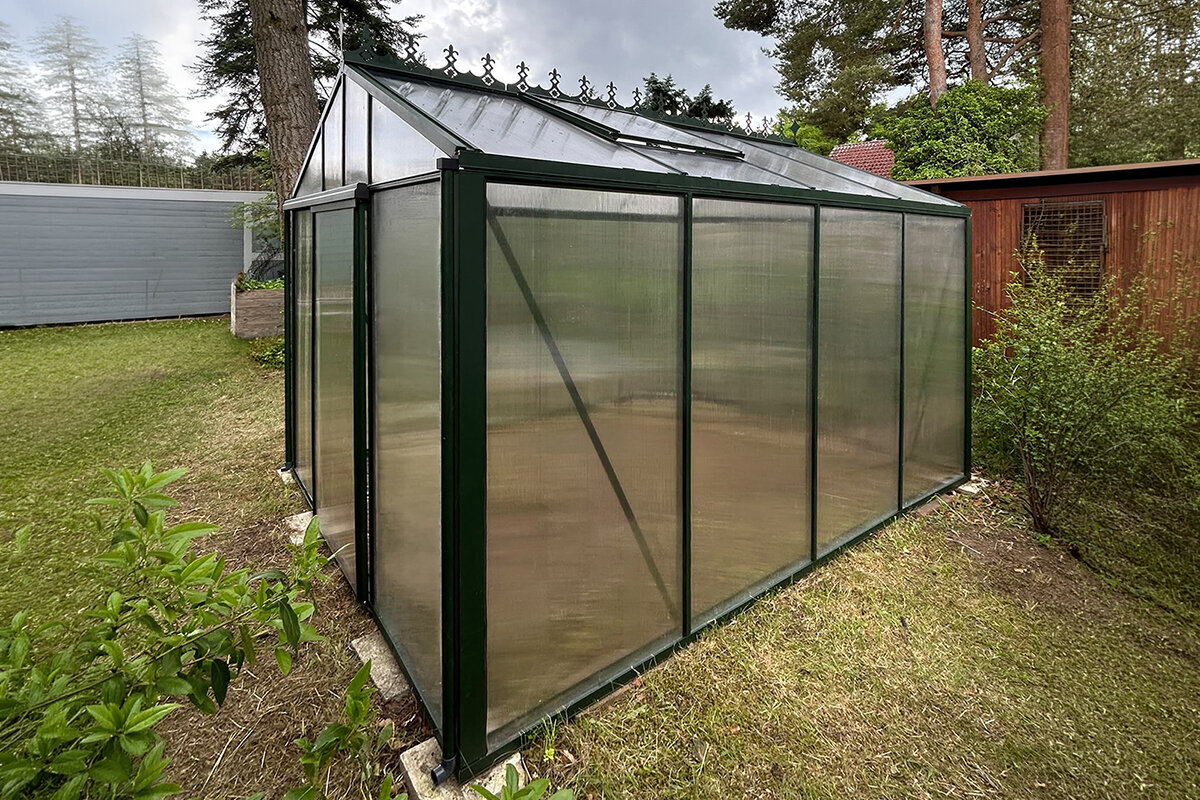
United Kingdom • Greenhouse Materials Guide • Bloomcabin Journal
Greenhouse Polycarbonate Guide
Thickness, twin-wall vs multiwall, insulation, UV protection, condensation and the details that actually determine performance.
Start with the right question
“How thick should greenhouse polycarbonate be?” is useful—but incomplete.
Polycarbonate is widely used as greenhouse glazing because it combines low weight, impact resistance and useful thermal performance. Oklahoma State University Extension notes that greenhouse polycarbonate is available in double- and triple-wall forms and can offer a long service life when an appropriate product is selected and maintained.
But two panels with the same nominal thickness do not necessarily perform the same way. A 10 mm twin-wall sheet, a 10 mm triple-wall sheet and a more complex multiwall sheet have different internal geometries. Those air spaces and ribs affect heat transfer, rigidity, weight and often light transmission.
That is why this guide focuses on how to read the panel as a system, not on a single magic thickness. If you are considering a premium aluminium greenhouse, Bloomcabin’s Classic Aluminium Greenhouse currently allows polycarbonate to be selected as one of its glazing options alongside multiple glass choices.
The best decision therefore starts with climate, intended season of use, light requirements, structural design and the specific technical data supplied for the panel. In the UK, relatively low winter light, frequent humidity and exposed windy sites make this balance especially important.
01 • The material
What is greenhouse polycarbonate?
Polycarbonate is a thermoplastic that can be formed into solid, corrugated, twin-wall and multiwall sheets. For greenhouse construction, multiwall sheets are especially important because the internal cells trap layers of air. Those enclosed air spaces slow heat transfer compared with a single thin skin while the ribs add stiffness without making the panel excessively heavy.
Manufacturers also engineer greenhouse sheets with outdoor UV-protective coextruded layers, different light-diffusion characteristics and, on specialized horticultural products, anti-condensation treatments. The word polycarbonate therefore describes the base material, not the complete performance specification.
02 • Thickness
4 mm vs 6 mm vs 8 mm vs 10 mm vs 16 mm polycarbonate
Thickness is useful because thicker multiwall sheets can accommodate deeper air cavities and more complex structures. But thickness alone is not a universal measure of insulation. ’s current technical range, for example, lists different U-values for twin-wall and triple-wall panels at similar thicknesses. Use the table below as a selection framework, not as a promise that every brand or greenhouse panel performs identically.
| Nominal thickness | Typical design question | Potential advantage | What to verify |
|---|---|---|---|
| 4 mm | Is minimum weight and a slim panel the priority? | Light, simple construction | Insulation, span limits and impact specification |
| 6 mm | Do you want a light twin-wall panel for seasonal use? | Useful balance of weight and cellular insulation | Exact wall structure, U-value and framing centers |
| 8 mm | Do you need more cavity depth or a triple-wall option? | Potentially improved thermal performance | Twin-wall vs triple-wall construction |
| 10 mm | Is extended-season heat retention becoming important? | More insulating potential and stiffness | Light transmission, weight and panel geometry |
| 16 mm+ | Is stronger thermal performance a major project goal? | Can support sophisticated multiwall insulation | Reduced light, frame compatibility, cost and load design |
03 • Internal geometry
Twin-wall vs triple-wall vs multiwall polycarbonate
Twin-wall sheets use two exterior skins connected by internal ribs, creating one principal layer of enclosed air channels. They are simple, light and commonly available in thinner greenhouse configurations.
Triple-wall sheets add another internal skin and create more separated air spaces. Depending on the product, that can improve thermal resistance relative to a similarly thick twin-wall panel.
Multiwall is the broader category. More advanced sheets may use diagonal ribs, X-structures or multiple internal chambers. This is why “10 mm polycarbonate” is not enough information by itself. Ask for the actual cross-section and thermal data.
04 • Insulation
How polycarbonate insulates a greenhouse
Multiwall polycarbonate works partly because its internal chambers trap relatively still air. More elaborate cell structures can reduce heat transfer compared with a simple single skin. Manufacturers report this using U-values or R-values. With U-value, lower generally means less heat transfer; with R-value, higher generally means more resistance to heat flow.
University and Extension references show why wall structure matters. Washington State University emphasizes comparing greenhouse coverings by insulation capability (R-value), while Cornell greenhouse engineering guidance documents meaningful differences in solar transmission, thermal transmission and expected service life between greenhouse glazing types. The practical lesson is the same: two sheets described only by nominal thickness are not necessarily thermally equivalent. Compare the exact panel construction and published thermal data rather than relying on millimeters alone.
If winter growing or heating costs matter, ask for the actual thermal value of the exact sheet—not merely its thickness. For a greenhouse primarily used from spring through fall, maximum insulation may be less important than balancing light, price, ventilation and structural simplicity.
05 • Light
More insulation is not automatically better if it costs too much light
Every extra wall, rib, tint or solar-control layer changes how light moves through a panel. In the UK, winter light is often limited, so light transmission can become the critical resource just when extra insulation seems most attractive. The best specification protects heat without sacrificing more plant light than necessary.
For plant production, look for the manufacturer’s visible-light or PAR transmission data and consider diffusion. A well-designed diffusing sheet can scatter incoming light more evenly through the canopy and reduce harsh local hot spots, while heavily tinted or high-solar-control panels may sacrifice plant-usable light in exchange for lower heat gain.
06 • UV protection
Which side of polycarbonate faces the sun?
Outdoor-grade polycarbonate sheets are commonly manufactured with a coextruded UV-resistant layer. Its job is to protect the polycarbonate sheet itself from long-term ultraviolet degradation. On many products, UV protection is applied to one side only, although two-sided products also exist.
For a single-sided sheet, the marked UV-protected face must point outward toward the sun. Installing it backward can undermine the weathering performance the manufacturer designed into the sheet. Keep protective film in place while identifying orientation and remove it according to the installation instructions.
Do not assume both sides are equivalent. Check the markings and the technical guide for your exact panel.
07 • Condensation
Condensation on the panel is different from condensation inside the flutes
A humid greenhouse naturally produces condensation when warm moist air meets a colder surface. Some horticultural polycarbonate products add an anti-condensate surface treatment that encourages moisture to form a film rather than large droplets. This can reduce dripping and can also reduce the light loss associated with droplets reflecting incoming radiation.
Moisture inside the internal channels is another issue. Multiwall sheets need to be installed so their internal cells, edge closures and framing details work as one system and do not unnecessarily trap water or debris. Polycarbonate also expands and contracts substantially with temperature, so edge clearances, attachment details and drainage paths matter. Always follow the installation instructions for the exact sheet and greenhouse profile system you are using.
08 • Lifespan
How long does greenhouse polycarbonate last?
There is no single lifespan for all polycarbonate. Oklahoma State University notes that a ten- to fifteen-year service life can be expected for polycarbonate greenhouse covering as a general material category, while modern manufacturers commonly provide limited warranties around a decade on specific greenhouse and multiwall products. Actual appearance and performance depend on UV protection, sheet quality, exposure, cleaning, chemical contact, framing and installation.
A panel can remain structurally present while gradually losing optical quality. Yellowing, surface haze, scratching, contamination inside channels or damage around fasteners may matter to a grower before the sheet actually fails mechanically.
For a premium greenhouse purchase, read the warranty language carefully: what is covered, for how long, and whether the warranty concerns breakage, light transmission, yellowing or another specific performance measure.
09 • Impact & structure
Impact resistance does not replace proper greenhouse engineering
Polycarbonate is valued for high impact resistance, and double- or triple-wall greenhouse sheets are commonly chosen where break resistance is important. But the sheet is only one part of the structure. Wind, snow and impact loads are transferred into glazing bars, rafters, fasteners, anchors and the foundation.
A thicker sheet cannot compensate for an under-designed frame, excessive unsupported span or poor fastening. Follow the greenhouse manufacturer’s approved glazing specification rather than substituting a random thicker sheet because it “looks stronger.” Profile dimensions, edge engagement and thermal expansion allowances may have been designed around a specific thickness.
If severe weather is a priority, also read Bloomcabin’s guide to aluminium greenhouses for extreme weather conditions.
10 • Installation
The installation details that decide whether multiwall polycarbonate works well
Orient the flutes correctlyOn sloped or vertical glazing, channels normally run in the direction that allows moisture to drain rather than becoming trapped across the slope.
Put the UV side outwardIf the sheet has one-sided UV protection, install the marked protected face toward the sun.
Treat panel ends correctlyUse the manufacturer-specified solid and breathable tapes, closures and profiles so channels are protected while still able to manage moisture.
Allow thermal expansionPolycarbonate changes dimension with temperature. Hole sizes, edge clearances and profile engagement need to follow the technical guide.
Use compatible cleaners & sealantsSome chemicals can attack polycarbonate. Follow the sheet maker’s approved-care and chemical-compatibility guidance.
11 • Cleaning
How to clean greenhouse polycarbonate without shortening its life
Polycarbonate is tough, but the surface can scratch more readily than glass. Avoid dry abrasive scrubbing, harsh scouring pads and unapproved solvents. A soft cloth or sponge, clean water and a mild compatible soap are usually the safer starting point, followed by a thorough rinse.
Keep leaves and organic debris away from panel edges, gutters and glazing profiles. Dirt that holds water can promote algae and staining around joints even when the polycarbonate itself is sound.
For broader frame and greenhouse-care routines, see Bloomcabin’s Aluminium Greenhouse Maintenance & Cleaning Guide.
12 • Polycarbonate or glass?
Choose by the job the greenhouse needs to do
Polycarbonate tends to suit you if…
impact resistance and low glazing weight matter.
you want cellular insulation from a multiwall sheet.
privacy or a softer, less transparent appearance is acceptable.
the greenhouse is primarily a growing structure rather than a crystal-clear garden room.
Tempered glass tends to suit you if…
maximum visual clarity is a design priority.
you want a premium architectural appearance.
scratch resistance and long-term optical clarity matter strongly.
you expect the greenhouse to double as a display, dining or relaxation space.
Bloomcabin’s Greenhouse Glazing Options Guide covers the broader glass-versus-polycarbonate decision. This article intentionally goes deeper on polycarbonate itself.
13 • Pairing polycarbonate with aluminium
Why an aluminium frame and polycarbonate can be a strong greenhouse combination
A rigid aluminium frame and lightweight cellular glazing solve complementary problems. Aluminium provides precise structural profiles, corrosion resistance and consistent geometry; polycarbonate keeps glazing weight relatively low while offering high impact resistance and useful insulation. Oklahoma State University specifically identifies aluminium as a long-life greenhouse framing material and multiwall polycarbonate as a durable impact-resistant covering option.
For Bloomcabin shoppers, the most relevant example is the Classic Aluminium Greenhouse. Its configurator currently offers polycarbonate among the available roof and wall glazing choices, so you can compare it directly with tempered-glass alternatives within the same greenhouse architecture.
That is useful because the decision becomes about glazing behavior rather than choosing a completely different frame. If you want the traditional greenhouse silhouette and aluminium structure but prefer the handling and impact characteristics of polycarbonate, the Classic model gives you that route.
For a wider greenhouse footprint, also compare the Classic Plus 385, which likewise lists polycarbonate among its glazing options.
14 • Choose by use
What type of polycarbonate should different greenhouse owners prioritize?
Spring–fall hobby growingPrioritize good light, adequate impact resistance and compatibility with your frame. Extreme insulation may not justify sacrificing light or paying for a much more complex sheet.
Cold-climate extended seasonPut more weight on U-value/R-value, panel sealing and air-cell structure, while still protecting winter light transmission. In colder inland or northern locations, do not treat a thicker panel as a substitute for a frame engineered for the actual local wind and snow exposure.
Hail / impact concernVerify the panel manufacturer’s impact data and warranty, but also confirm framing span and attachment details. The entire assembly must resist the event.
Hot-summer growingConsider diffusion, ventilation and shading strategy. UK summers can still create severe greenhouse overheating during sunny periods; roof ventilation and shading are generally more effective tools than relying on a dark panel alone.
Garden-room appearanceIf crystal-clear views and architectural transparency matter more than panel weight, tempered glass may be the better glazing choice.
15 • Common mistakes
Seven polycarbonate mistakes worth avoiding
1. Buying by thickness onlyCompare wall structure and thermal/light data.
2. Installing the UV side inwardFollow sheet markings exactly.
3. Sealing both ends solidMany multiwall systems need controlled drainage/venting at the lower edge.
4. Ignoring thermal movementPanels need the clearances specified by the manufacturer.
5. Using harsh cleanersChemical compatibility matters.
6. Chasing insulation alonePlants still need adequate light.
7. Treating glazing separately from the framePanel span, fastening and structural loads must work together.
16 • FAQ
Greenhouse polycarbonate FAQ
Is 6 mm polycarbonate enough for a greenhouse?
It can be appropriate for some seasonal greenhouse systems, but “enough” depends on the sheet structure, framing span, wind/snow design, thermal goals and manufacturer specification. Do not substitute thickness independently of the greenhouse frame design.
Is 10 mm better than 6 mm?
A 10 mm multiwall sheet can provide better thermal performance than a thinner sheet, but the exact result depends on internal geometry. It may also transmit less light or require a different frame profile. Compare technical data rather than thickness alone.
Does greenhouse polycarbonate turn yellow?
Outdoor UV exposure can degrade unprotected polycarbonate. Quality exterior sheets use UV-stabilized/coextruded protection and often carry limited warranties covering specific weathering criteria. Correct orientation of the UV side matters.
Why is there water inside my twin-wall sheet?
Some moisture can enter internal channels over time. Correct channel orientation, top/bottom edge treatments, breathable lower tape and the approved glazing profiles help manage it. Follow the sheet manufacturer’s installation system rather than sealing every edge identically.
Can I use polycarbonate in a premium aluminium greenhouse?
Yes—when the greenhouse is designed for it. The Bloomcabin Classic Aluminium Greenhouse currently lists polycarbonate as an available glazing option in its configurator, so the panel and aluminium framing can be specified as one system.
What if I have very limited space?
A wall-attached greenhouse can use the same basic glazing principles while saving yard space. See Bloomcabin’s Aluminium Lean-To Greenhouse, which also receives searches around polycarbonate lean-to configurations.
17 • Final decision
The best greenhouse polycarbonate is the panel that fits the whole greenhouse system
Choose the glazing after defining the growing season, climate, desired light level, heating plans and frame. Then compare the exact panel’s wall structure, U-value/R-value, light transmission, UV treatment, condensation control, impact specification, thermal expansion requirements and warranty.
For many hobby growers, a lighter twin-wall panel can be perfectly sensible. For colder or exposed UK sites where shoulder-season use matters, a thicker or more complex multiwall panel may justify its extra cost — provided the frame, light transmission and ventilation remain appropriate. For an architectural garden room where visual transparency is central, tempered glass may still be the better material.
If you want to compare polycarbonate and multiple glass options inside a premium aluminium frame, start with Bloomcabin’s main Classic greenhouse. It keeps the frame decision constant while letting you choose the glazing that best matches the way you plan to grow.
Explore the Classic Aluminium GreenhouseSources & Further Reading
- Met Office — UK Climate
- Oklahoma State University Extension — Greenhouse Structures and Coverings
- Washington State University Extension — Greenhouse Construction and Management
- Cornell University / NRAES — Greenhouses for Homeowners and Gardeners
- Cornell University / NRAES — Greenhouse Engineering
- University of Arkansas Cooperative Extension — High Tunnel Production Guide
Technical values vary by panel structure, thickness, formulation and production specification. External references in this guide are limited to universities, public climate services and Cooperative Extension sources — no competitors. Always use the technical data for the exact panel and the approved Bloomcabin frame specification.
