
Greenhouse Snow-Load Ratings: How to Compare Specifications
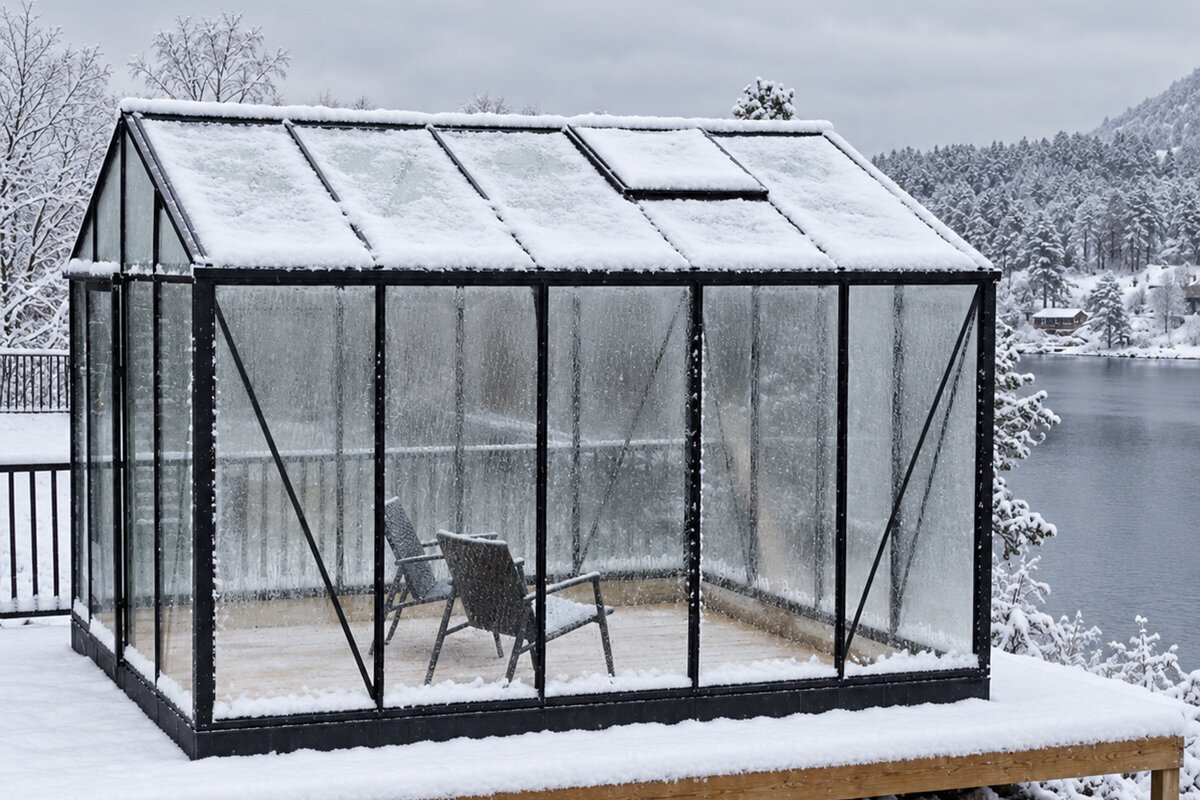
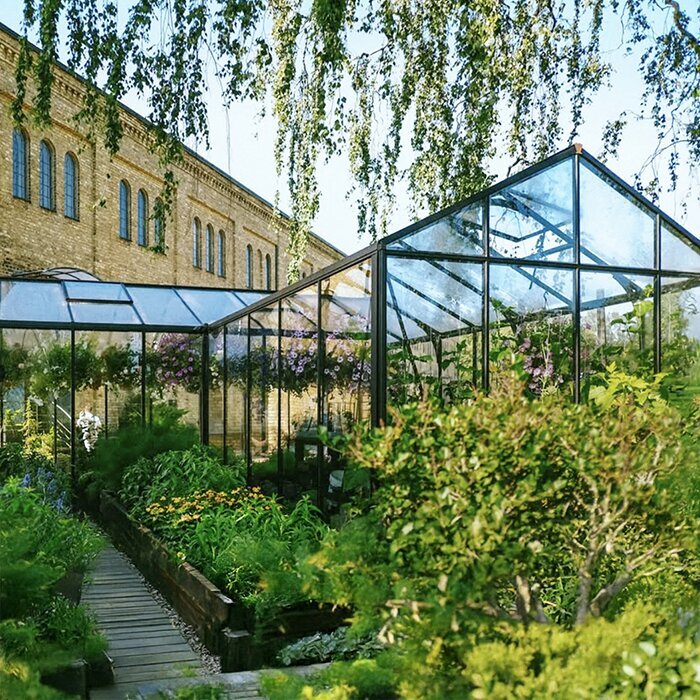
A greenhouse snow load rating is useful only when you understand what it measures, which configuration it covers and what the supplier expects from the installation. This guide helps British homeowners compare technical specifications without mistaking a headline figure for a complete winter-weather answer.
Snow on a greenhouse roof is not simply a question of depth. Its weight changes with moisture, compaction, drifting and thawing. A light, powdery fall can behave very differently from wet snow that has settled in sheltered roof areas. That is why a meaningful comparison starts with the stated load, then looks beyond it to the structure, glazing, foundations and instructions attached to that figure.
For a garden greenhouse, the relevant information should help you judge whether a particular model suits its proposed site and your appetite for winter maintenance. It should not be treated as a promise that any greenhouse will withstand every storm, installation method or neglected accumulation. The clearest specifications describe the assumptions behind the tested or declared roof capacity.
This article focuses on how to read documented snow-load information when comparing greenhouses. It also explains the questions worth asking before ordering, including the effect of site exposure, roof geometry, anchoring and seasonal operation. If your property has unusual exposure, significant altitude or local snowfall patterns, professional and local advice can add useful context.
Start with the figure · 01
What a snow-load rating actually describes
A greenhouse snow load rating is a structural specification, usually expressed as load over an area of roof. It is intended to indicate how the roof system performs within defined design assumptions, rather than to translate directly into a particular number of centimetres of snowfall. Snow density varies greatly, so visual depth is an unreliable substitute for a documented load value.
When reading a product sheet, look for the exact model and whether the stated figure applies across all sizes or only selected configurations. Check whether it refers to the roof alone or the complete assembled structure. If the document is brief, ask for clarification before comparing it with another greenhouse whose information may have been prepared on a different basis.
- Treat a load figure as configuration-specific evidence, not as a universal measure of winter resilience for every possible site.
- Ask whether the published specification includes assumptions about assembly, anchoring, glazing, doors, vents and any additional equipment.
For a freestanding starting point, explore standard Classic greenhouses alongside their model-specific technical information.
Compare like for like · 02
Why roof shape and size change the discussion
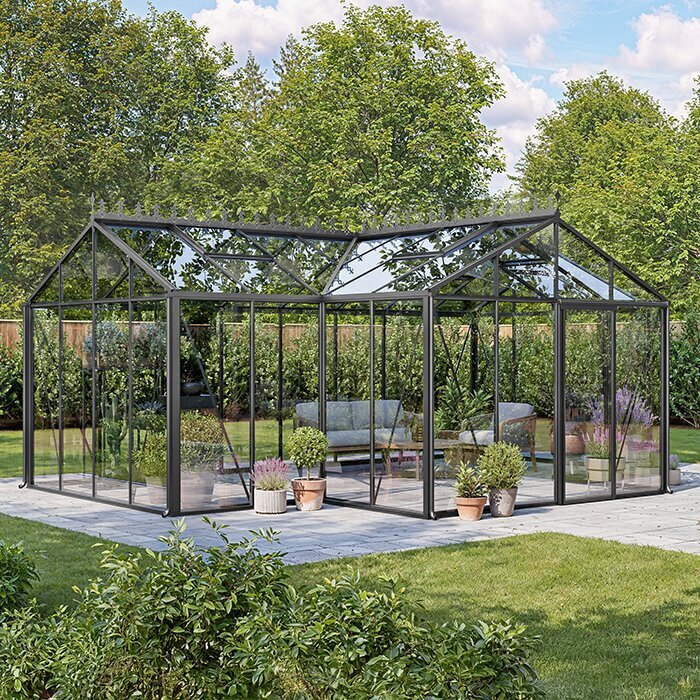
Roof geometry influences how snow settles, slides, drifts and transfers force through a greenhouse frame. Ridge height, pitch, spans and the position of structural members all affect the engineering picture. A specification attached to one footprint should not automatically be applied to a wider, longer or differently shaped alternative, even when the two structures look broadly similar.
Size also affects practical management. A roof that is harder to inspect from the ground or less accessible from a safe position needs a more deliberate winter routine. Compare the stated roof load alongside the layout of gutters, glazing bars and openings, then consider how easily you can observe unusual accumulation without climbing or taking unnecessary risks.
- Do not assume that a familiar greenhouse shape carries identical structural assumptions at every available dimension.
- Prioritise a design whose roof can be observed safely from your garden, particularly after wet snow or rapid thawing.
Where a wall-side layout suits the garden, consider full-size regular Lean-To greenhouses with documentation matched to the intended configuration.
Read the small print · 03
Configuration matters as much as the headline
Technical specifications are most useful when they identify the precise components included in the assessed arrangement. Frame profiles, roof bars, glazing, bracing, doors and ventilation details may all be relevant. Optional shelving, shade systems, hanging crops or interior fittings can introduce loads that sit outside a simple roof snow-load statement, especially if they are fixed to the frame.
Installation is part of the configuration too. A greenhouse placed on an uneven or inadequate base may not behave as intended, however impressive the published figure looks. Follow the supplied assembly sequence and anchoring requirements, and ensure that any preparatory work creates a level, stable setting. If an installer is involved, discuss the product documentation before work begins.
- Request the specification for your chosen size and options rather than relying on a generic brochure summary.
- Keep added hanging weight and frame-mounted accessories within the manufacturer’s guidance, particularly during the winter growing season.
Compare the available options for standard Classic greenhouse models before finalising your preferred configuration.
Look beyond snow · 04
The whole greenhouse system needs consideration
Snow loading is only one part of winter exposure. Wind can move snow into drifts, block drainage paths and apply changing forces to glazing and doors. Repeated freezing and thawing can also leave heavier wet snow in isolated areas. A sensible evaluation considers the greenhouse as a connected system: roof, frame, foundations, drainage, openings and the garden conditions around it.
Water management deserves particular attention. Check where roof run-off will go, whether gutters can be inspected and whether fallen leaves are likely to obstruct them. Standing water, ice and debris can complicate winter upkeep even when they are not the same as snow load. Good access around the greenhouse makes ordinary checks quicker and safer.
- Review drainage routes before installation so meltwater does not create avoidable pooling near the base.
- Clear leaves and loose debris before winter, following safe access practices and the product’s care guidance.
For a compact garden boundary, see full-size regular Lean-To greenhouse layouts and plan drainage with the adjoining structure in mind.
Understand the site · 05
Local conditions can concentrate roof loading
Weather patterns differ markedly across the United Kingdom, and even neighbouring gardens can experience snow differently. Elevated ground, open fields, coastal gusts, valleys and built-up streets each influence how snow arrives and settles. Nearby buildings may shelter a greenhouse in one direction while channelling wind from another, creating uneven deposits that a regional weather forecast cannot predict.
Look upward as well as outward. Snow or ice sliding from a neighbouring roof, overhanging branches and accumulated material from trees can create hazards beyond the greenhouse’s own roof loading. Positioning should allow reasonable clearance, drainage and access for inspection. Where boundaries, structures or unusual ground conditions complicate the site, seek appropriate local professional advice before proceeding.
- Walk the proposed position after heavy rain and windy weather to identify pooling, drifting and awkward access routes.
- Avoid treating a sheltered-looking corner as automatically low risk; surrounding roofs and trees can alter conditions quickly.
A freestanding option such as a standard Classic greenhouse design can make it easier to choose a clear, accessible garden position.
Prepare properly · 06
Foundations and assembly support the specification
A roof-load figure cannot compensate for a poorly prepared base. The greenhouse needs a level, stable foundation that suits the installation guidance and the ground conditions on your plot. Before construction, consider drainage, underground services, nearby roots and the practical route for bringing components into the garden. A careful base helps the frame align correctly and allows doors and vents to operate as intended.
Assembly details matter because structural parts work together. Do not substitute fittings, omit braces or alter the specified fixing approach simply to speed up installation. If you are uncertain about ground preparation or structural fixing, engage a suitably experienced installer. Keep photographs and records of the completed base and anchoring; they can be helpful for maintenance and future enquiries.
- Check that the base is level in both directions before frame assembly starts, rather than correcting alignment later.
- Use the supplied documentation as the controlling reference whenever site practice and a generic online tip appear to conflict.
Before fitting a wall-side model, review the installation needs for full-size regular Lean-To greenhouse options and the condition of the supporting location.
Manage winter actively · 07
Use operating guidance, not guesswork
Winter ownership is an active routine, especially when snowfall is forecast. Follow the product’s operating guidance for doors, vents, roof accessories and snow removal. Do not climb onto a greenhouse roof or strike glazing to dislodge snow. Instead, monitor conditions from a safe position and use only methods the supplier recommends for the particular product and situation.
Pay attention after the weather changes, not only during a snow event. Thawing can make remaining snow wetter and heavier, while overnight refreezing can affect gutters and run-off. Inspect the surrounding area for blocked drainage, loose objects and branches. Inside, avoid making unplanned structural alterations or adding concentrated hanging loads without first checking the relevant guidance.
- Create a simple winter check routine covering the roofline, gutters, doors, vents, base perimeter and nearby trees.
- Keep the greenhouse instructions accessible so everyone responsible for the garden follows the same operating approach.
For a garden structure designed around straightforward access, browse standard Classic greenhouse choices and consider how they fit your seasonal routine.
Ask better questions · 08
Make a confident final comparison
Before choosing between greenhouses, gather equivalent documents for each shortlisted model and read them side by side. Note the model name, dimensions, stated snow-load information, included components, base requirements and limitations. A supplier should be able to direct you to information relevant to the actual arrangement you intend to buy, rather than encouraging a comparison based solely on appearance.
Planning and insurance are separate questions from structural specifications. Requirements and policy terms vary by property, location and provider, so check with the relevant local authority and insurer where appropriate. Explain the proposed position, dimensions and installation method accurately. This is especially worthwhile for constrained gardens, listed settings, shared boundaries or projects close to another building.
- Ask suppliers to identify which document governs the exact model, options and installation arrangement on your quotation.
- Check local authority guidance and your insurer’s current terms instead of assuming that a structural specification settles every property question.
When comparing adjoining-building solutions, request details for full-size regular Lean-To greenhouse configurations that match your planned wall-side setting.
Comparison
A practical way to compare specifications
Use this table to organise product information before you make a shortlist. It is designed to reveal missing context, not to declare one greenhouse stronger than another. Complete it only with supplier documentation for the exact models and options you are considering.
| Comparison point | What to record | Why it matters |
|---|---|---|
| Exact model and size | Name, footprint and roof form | Prevents comparisons between unlike structures. |
| Declared snow load | Figure and stated conditions | Shows the supplier’s documented structural context. |
| Frame arrangement | Profiles, bars and bracing described | Helps identify configuration differences. |
| Glazing and openings | Specified panels, doors and vents | Components may affect the stated arrangement. |
| Foundation requirements | Base, level and anchoring instructions | Correct installation supports intended performance. |
Read the conditions
Ask what configuration the figure applies to, whether optional features alter it, and what foundation, anchoring and maintenance assumptions are included.
Assess the site
Consider drifting, nearby roofs, trees, wind exposure and access. Localised build-up can matter more than an apparently modest forecast.
Keep records
Retain the specification, installation instructions and order details. They make later conversations with installers, insurers or suppliers much more straightforward.
Plan your specification review
Set aside time to compare documents before choosing colours, accessories or interior layouts. The aim is to match a greenhouse to its intended site, then ensure that the selected configuration and installation approach are clearly documented.
01
Map the proposed site
Note exposure, nearby trees, roof run-off, drainage routes and safe inspection access. Photograph the area after rain if it helps reveal pooling or sheltering.
02
Define the exact greenhouse
Record the model, dimensions, roof form and options you want. Do not compare a headline figure from one configuration with another assumed equivalent.
03
Request supporting documents
Ask for the relevant technical specification, installation guidance and any operational instructions. Read limitations as carefully as the prominent product benefits.
04
Confirm the base approach
Decide how the ground will be prepared and who will assemble the greenhouse. Check that the proposed work follows the applicable product requirements.
05
Plan winter ownership
Agree who will inspect the greenhouse during severe weather, how safe access will be maintained and where instructions will be stored for reference.
Snow-load comparison checklist
Take this checklist into conversations with suppliers and installers. It keeps the discussion focused on documented compatibility between the greenhouse, its site and the proposed installation.
01. I have the exact model name, size and configuration for every greenhouse I am comparing.
02. I know what conditions accompany each published greenhouse snow load rating.
03. I have checked whether optional components change the specified arrangement or operating instructions.
04. I understand the foundation, levelling and anchoring requirements before arranging installation.
05. I have considered drifting, nearby roofs, trees and drainage around the intended position.
06. I can inspect the roofline and gutters safely without climbing onto the greenhouse.
07. I have read the winter operating and maintenance guidance for the selected product.
08. I will check relevant local authority guidance and current insurer terms where needed.
Frequently asked questions
Is a higher snow-load figure always better?
Not necessarily. A higher figure may be relevant, but it must be compared with the same level of detail: exact model, size, roof arrangement, components and installation assumptions. A figure without context can be misleading. Choose a greenhouse whose documented specification suits your site and whose care requirements you can realistically follow.
Can I convert a snow-load rating into snowfall depth?
It is not reliable to do so from depth alone. Fresh snow, wet snow, compacted snow and drifted snow can have very different weights. Roof geometry and local accumulation also affect the load pattern. Use the supplier’s guidance and monitor actual conditions rather than relying on a simple depth calculation.
Does a greenhouse need a special base for snowy areas?
The correct base depends on the product’s installation requirements and your ground conditions, rather than on a broad regional label. It must be level, stable and appropriately prepared for the specified fixing method. If drainage, slopes or ground quality are uncertain, obtain advice from an experienced local professional.
Should I remove snow from my greenhouse roof?
Follow the operating guidance for your specific greenhouse. Never climb onto the roof or use actions that could damage glazing, frames or yourself. Monitor snow safely from ground level and use only recommended approaches. Persistent accumulation, drifting and thawing conditions deserve particular attention.
Does the snow-load specification settle planning or insurance questions?
No. A structural specification and property requirements are different matters. Planning considerations can depend on the site and proposal, while insurance cover depends on your policy and circumstances. Check relevant local authority guidance and speak with your insurer if you need confirmation before installation.
What should I ask a supplier before ordering?
Ask which document applies to the exact greenhouse, dimensions and options on your quotation; what base and anchoring are required; and what winter operating guidance applies. Also ask how to obtain the installation instructions. Clear answers are more useful than a single isolated rating.
Explore greenhouse options
Compare the context, not just the number
A greenhouse snow load rating is a valuable starting point, but it becomes useful only when connected to an exact configuration, a properly prepared installation and the realities of your garden. Take time to read the supporting information, consider local exposure and plan how the greenhouse will be checked during winter weather.
Bloomcabin can help you explore greenhouse formats while you build a well-informed shortlist. Bring your site notes and technical questions to the selection process, then confirm the documentation for the model and arrangement you intend to order before making a final decision.
Find a greenhouse format that suits your garden layout, then compare its relevant technical information carefully.
