
Hedges or Pergola Screens: Privacy, Space and Time
Pergola privacy guide
A hedge and a pergola screen can both reduce unwanted views, but they work on different timescales and use outdoor space differently. A screen can create a visual barrier as soon as a compatible system is installed in the right place; plants need room and time to establish, and their cover can change through the year. The useful comparison goes beyond appearance: it is which view you need to interrupt, how soon, and what space and ongoing care you can commit to.

Points to check before choosing 1
How quickly do you need privacy?
If a neighbour's window, path or adjoining seating area overlooks your chairs, timing matters. A correctly positioned screen can interrupt that view as soon as the chosen panel is fitted. A newly planted hedge will usually need time to fill out, with the result depending on plant choice, starting size, soil and exposure. Larger plants may provide useful cover earlier, but their height alone does not tell you how dense the hedge will be at seated eye level. Even an established hedge may have seasonal gaps or thinner patches. Treat privacy for the coming season and privacy after planting has matured as separate requirements, rather than assuming one solution will meet both from the outset.
That distinction is most useful when the issue is one seating area rather than the whole boundary. A pergola screen is a focused intervention: it can help where its surface crosses the line of sight, but it does not turn an open structure into a private room. A hedge can eventually soften a longer edge and screen several points, yet it needs both planting room and patience. Write down when you need the view reduced—now, by next season, or over several years—before comparing layouts. That deadline often rules out an option before appearance does.
Sightlines from neighbouring windows and paths
Start with the place you want to protect and the source of the unwanted view. Sit where people use the terrace, then note whether the view comes from a neighbouring window, an upper floor, a path, a shared access route or another part of the garden. A screen that interrupts one ground-level angle may do little about a view from above or from the side. A hedge may cover a longer boundary eventually, but its expected height and any gaps between plants still matter. Recording where the observer is and where you sit turns a general wish for privacy into a set of specific sightlines.
Draw a simple plan and side view: mark the seats, observer positions, boundary, doors and proposed screen or hedge. For each sightline, ask whether it crosses the planned screen surface or the hedge's expected foliage. Check the ends as well as the centre; a short panel may leave a view around its edge. If you are considering the Bloomcabin bioclimatic pergola, use this drawing when discussing a possible side screen. Include the chairs people actually use, since a low lounge seat and an upright dining chair put occupants at different heights. Moving a seat further along the terrace may also change the angle enough to reduce the length of screening needed. Compare that simple layout change with adding a longer panel or planting across the entire boundary.
Points to check before choosing 2
How much ground does a hedge need?
A young hedge can look like a narrow row, but that is not the space to plan around. Find the expected mature width and height of the plants you are considering, and allow for the trimming and access they will need. Check how the eventual growth relates to paths, gates, bins, furniture and the area you use to move around the garden. If space is tight, a hedge that grows into a route can become awkward to maintain. Plant size, form and site conditions vary, so get species-specific advice rather than assuming every hedge will stay within the same footprint.
A pergola screen may use a side of the structure instead of a continuous planting bed, but the pergola itself, its posts and the clear route around it still occupy space. For the Bloomcabin Lean-To Pergola, request the dimensions of the proposed arrangement before marking it on your plan. Compare usable terrace space, not just the width of a panel against the width of a hedge. Include room to pull chairs out from the table and pass behind them. Where planting would sit beside paving, ask a nursery whether the available soil and rooting space suit the chosen plants. A narrow surface strip is not necessarily a suitable planting bed, and containers bring their own space and care requirements rather than removing those considerations.
What a pergola screen can and cannot hide
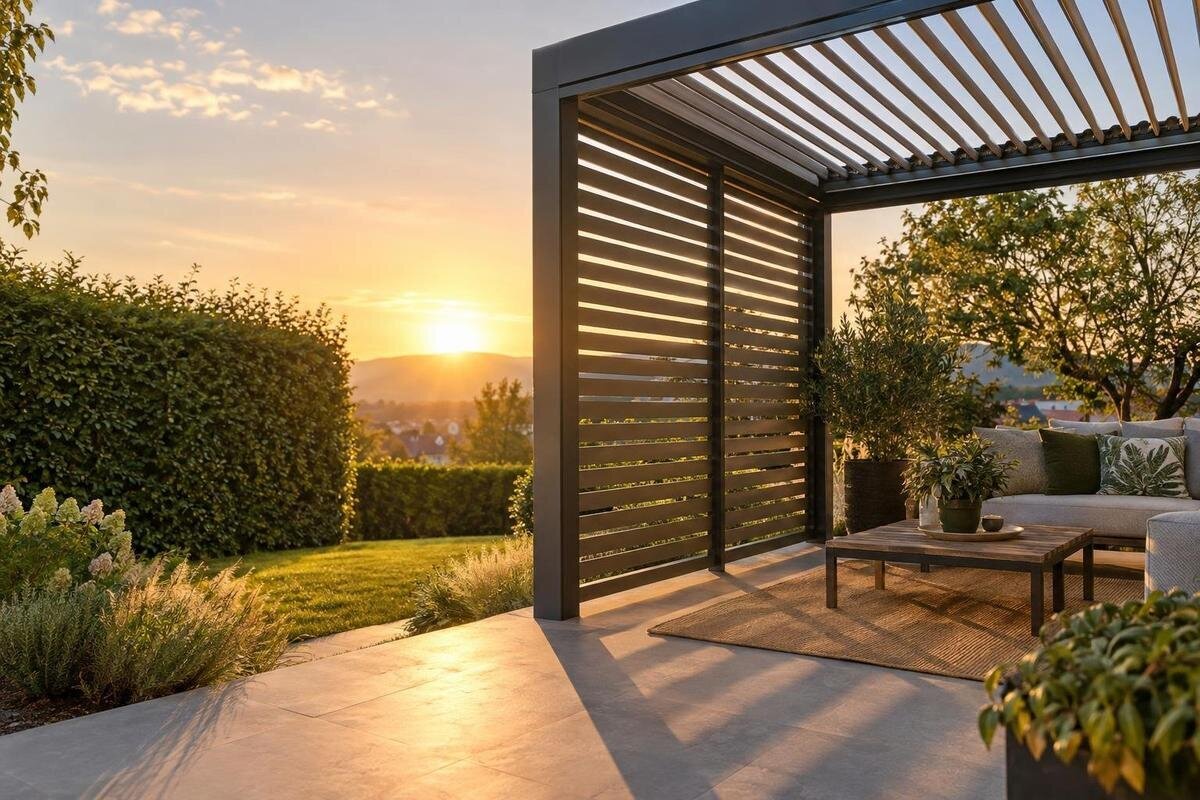
Screens differ in how much they obscure. A closer, more opaque surface can hide more of what lies behind it, while slatted or more open designs may leave shapes, movement or parts of the view visible. Greater openness can preserve more of the outward view and allow more air through, but may offer less visual privacy. Think about what you actually want to conceal from your chosen seat, not just whether a panel looks solid in a product photograph. If possible, assess the proposed level of openness from the positions you marked on your sightline plan.
A side screen only addresses the area it covers. A view may remain above it, around an end or through a gap between panels; a view from an upper window may need a different response from one at ground level. When enquiring about side-screen options for the Bloomcabin Pergola, describe whether you want to obscure faces, shield the table or reduce a broader view of the terrace. Those aims may call for different coverage. Ask to see information about the actual proposed panel rather than judging from a photograph of another configuration. If a sample is available, look through it at a comparable angle and distance. Assess what remains visible as well as what is hidden; a screen that preserves your outward view may also preserve part of the inward view.

Points to check before choosing 3
Will privacy change with the seasons?
Plant choice affects how a hedge looks and screens views over the year. Deciduous plants often become more see-through when they lose their leaves, while evergreen choices retain foliage throughout the year. Neither category guarantees an uninterrupted screen: young plants may not yet meet, and established plants can still be sparse or uneven. Consider whether winter coverage matters as much as summer privacy, and look at the expected form of the specific plants rather than relying on the word evergreen. A garden centre or nursery can help you assess how a suitable plant is likely to look in your conditions.
A fixed, correctly positioned screen does not depend on leaf cover to interrupt a view. If a chosen screen is removable or can be opened, however, its privacy depends on whether it is in place when you need it. Think too about the view you want to keep: a hedge may change the character of a longer garden edge, while a side panel concentrates its effect around the pergola. Decide whether you want the garden to feel screened throughout the year or prefer some views to open up in particular seasons.
Compare the upkeep of plants and screens
A hedge needs care as it establishes and grows. Depending on the plants and site, that can mean watering, weeding, pruning to keep it in the intended shape and dealing with branches or leaves. The amount and timing vary, so ask about the ongoing work before choosing a species, especially if you do not plan to maintain it yourself. Also consider where you will stand to reach it and where cuttings can be gathered without blocking a path. A planting plan that allows for maintenance is more practical than one based only on the finished line of foliage.
Screen upkeep is different, not automatically absent: the structure and panel may need cleaning or periodic checks, and moving or removable parts may have their own care requirements. When comparing the Bloomcabin Pergola, request care instructions for both the structure and any proposed side accessory. Find out which surfaces need access and whether routine care can be carried out from your terrace. Planting immediately beside a panel can make cleaning harder, while an inaccessible hedge face can be difficult to trim. Compare the tasks you would undertake yourself with those you would pay someone to do. Include the handling of hedge cuttings and any specialist screen servicing in that assessment, rather than treating either option as a one-off purchase with no further work.
Points to check before choosing 4
Keep routes, garden views and daylight in the plan
Privacy should not make the terrace harder to use. Mark the route between the house, seating and the rest of the garden, including space to move chairs or carry items through. A screen can visually narrow the area around a pergola, while a hedge may take a strip from the edge of the garden. Neither effect is automatically a problem, but it is worth seeing the proposed boundaries on a plan before deciding where the seating goes. Consider the garden views you want to keep from the house as well as the views you want to block outside.
Stand at the windows and doors that matter and check what the proposed height and position would obscure. A hedge near a window can change the outlook as it grows; a screen can hide a specific slice of the garden, depending on its location and openness. For a wall-mounted pergola from Bloomcabin, assess the proposed side treatment in relation to nearby house windows as well as the outdoor seats. Sketch where the sun is at the times you use the terrace: a panel that blocks a view may also cast shade onto a window or part of the seating area. A hedge's shadow will change as it grows. Distinguish blocking an unwanted sightline from reducing daylight, because achieving one does not necessarily require accepting the other across the whole terrace.
Confirm which side screens fit the pergola model
Before choosing a side treatment, identify the exact pergola model and the side that faces the view you want to interrupt. Ask which screen options are supported for that model, whether they are included or optional, and what dimensions and operation apply to the specific accessory. If you are considering a third-party screen, do not assume it will fit: check compatibility with the supplier or a qualified installer. Also confirm how the chosen arrangement affects access through the side and whether its level of openness gives the privacy you expect from the intended seating position.
When enquiring about side configurations for the bioclimatic pergola, send your sightline sketch and identify the side you want screened. Request written details of the proposed accessory, including its coverage, fixing requirements, operating limitations and any space needed when open or stored. Ask the supplier or a qualified installer to assess whether the arrangement is suitable for your site, including its exposure to wind; do not improvise fixings for an unverified panel. Keep the response with your plan so you can distinguish a confirmed option from an illustration or suggestion. This also makes quotations easier to compare: each should identify the same structure and side treatment, rather than leaving you to infer the contents from a lifestyle image.

Points to check before choosing 5
Use planting and screening for different jobs
A hedge and a pergola screen do not have to compete for the same role. Planting can create a softer boundary along a longer edge, while a screen can target the particular view into a dining or seating area. This can be useful if you want privacy around the pergola before plants have established, or if screening the whole boundary would close off more of the garden than you want. It still takes planning: a combination can use more space and require both horticultural care and attention to the installed screen.
Draw the planting bed, structure, seating and access route together rather than designing each in isolation. If you are considering the Bloomcabin Lean-To model, include its verified layout in the combined plan. Leave room to trim the hedge and reach the pergola for any required care, but ask a nursery and installer about appropriate spacing for the specific plants and arrangement. Decide whether the screen is intended to remain after the hedge fills out. If so, give it a lasting purpose, such as shielding the table where the hedge cannot cover the viewing angle. If it is only a temporary measure, establish whether removal is supported and what will remain visible afterwards. That avoids planning two permanent barriers where one would eventually be enough.
Compare installation and ongoing costs
Compare the complete work involved, not simply the purchase price of plants against the price of a panel. For a hedge, request a quotation based on the chosen species, starting size, planting length and any necessary site preparation. Ask what establishment care is included and what you will need to provide afterwards. Larger plants may offer earlier coverage, but compare their actual density and planting needs rather than paying for height alone. For screening, separate the cost of the pergola, side accessory and installation so that you know what each quotation covers. An existing compatible pergola and a new structure are different purchasing situations; the latter should not be treated as though the screen were the only item required.
For a proposal involving the Bloomcabin bioclimatic model, ask for the selected configuration to be itemised, including which side accessories are included and which are optional. Then compare the ongoing commitments: hedge trimming and establishment care on one side, and the specified cleaning, checks or servicing on the other. Consider the consequences of a gap in coverage too. A failed plant may need replacing and time to fill the space, while a damaged screen may require a matching part. Ask the relevant supplier how replacements would be handled without assuming availability or a particular warranty. If combining the options, separate work needed now from planting or accessories planned later, so the overall budget reflects both stages.
Frequently asked questions
Which option gives privacy sooner?
A correctly positioned screen can interrupt a particular view as soon as it is installed. A hedge usually needs time to establish and fill out, with the pace depending on the plants and growing conditions. Larger plants may provide earlier cover, but check their density at the height that matters rather than relying on height alone. Neither option guarantees privacy from every angle.
Will a hedge provide privacy throughout the year?
That depends on the plants. Deciduous hedges often become more see-through in winter, while evergreen choices retain foliage but can still have gaps. Check the expected coverage of the specific plants rather than assuming every hedge gives year-round screening.
How much space does a hedge need?
Plan for its expected mature width, access for trimming and the space around gates and paths—not only the narrow strip occupied by young plants. Ask a nursery for advice on the chosen species and site.
Are side screens included with every pergola?
Do not assume so. Check the details for the exact pergola model and ask which side-screen options, if any, are compatible and included or optional. A product name or lifestyle image does not confirm an accessory.
Can I combine a hedge with a pergola screen?
Yes, they can serve different purposes: a screen can address a specific seating-area view, while planting creates a broader green boundary over time. Plan the bed, pergola, access route and any compatible side option together.
There is no single winner: a hedge offers a living boundary that takes space and time, while a pergola screen can address a selected view sooner if the exact arrangement is compatible. Base the choice on the sightlines that matter, the space you can spare and how much seasonal change and upkeep suit your garden. When each option has a defined role, it is easier to choose one—or plan for both.
