
Holiday Let Pergolas: Guest Use and Owner Maintenance
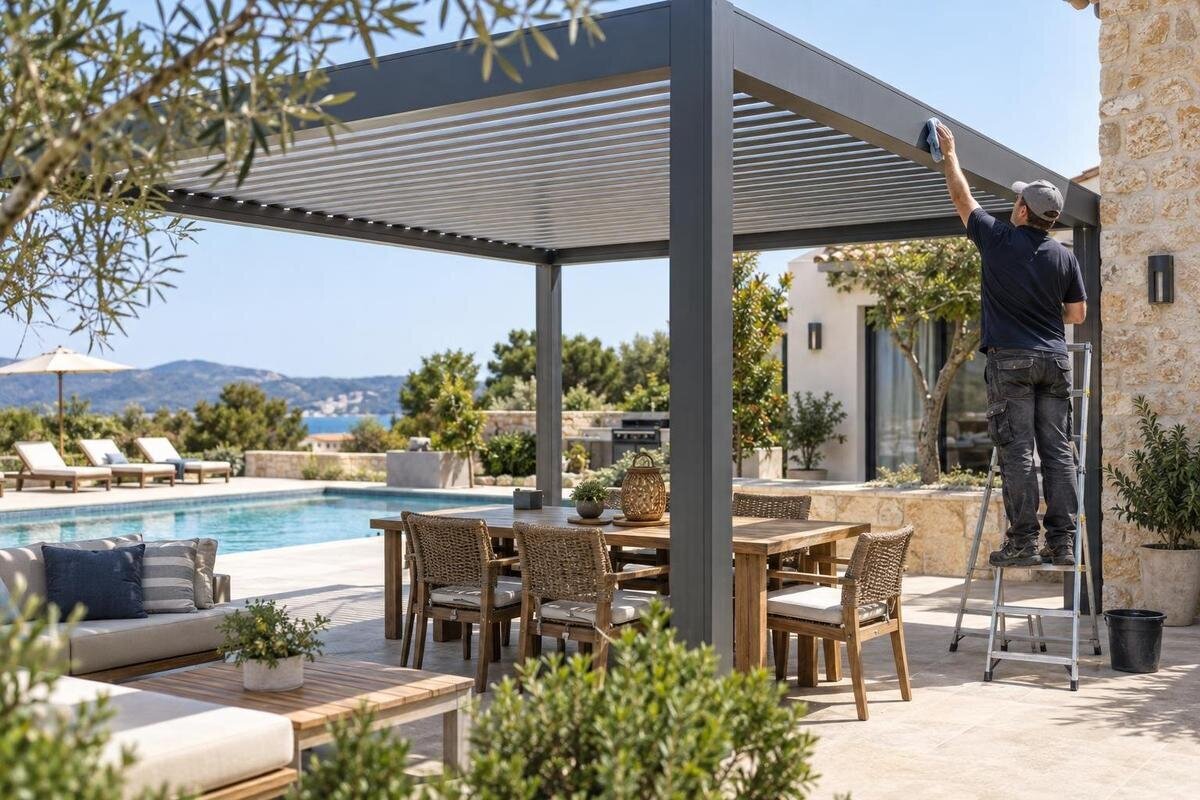
Holiday-let pergola guide
At a holiday let, a pergola is an outdoor space that guests need to understand and the owner needs to keep serviceable. Day-to-day management depends on describing it accurately, making ordinary use straightforward and assigning cleaning, inspection and repair work to named people. The arrangements need to suit the property’s actual layout, whether the pergola is private to one booking or shared with other guests. This guide focuses on guest use and owner maintenance, without assuming that every pergola has the same controls, accessories or weather performance.

Owner’s planning checks 1
Set accurate expectations before guests arrive
Describe the pergola in the booking information as it exists at this property: whether guests can use it, whether it is private or shared, what furniture is included, and any hours or house rules that apply. Explain how to reach it and whether access passes through an area used by other guests. Show photographs that help visitors recognise the space, but do not imply that it is fully sheltered, usable in every kind of weather or equipped with features you have not confirmed. A pergola can be an outdoor amenity without being an enclosed room. If access or use depends on conditions, state those limits plainly and repeat the same explanation in the arrival guide.
Plan the space with the furniture actually supplied, not just the structure’s outline. Measure the route from the accommodation, door openings, places where chairs sit and the path staff use to clean or remove rubbish. If guests share the area, explain how it relates to neighbouring accommodation and where belongings should stay. When comparing options such as the Bloomcabin Bioclimatic Aluminum Pergola, use your furnished site plan to discuss the space required with the supplier. The listing states an area range of 97–258 ft², but usable seating and circulation space depend on the chosen configuration and layout. Account for chairs being pulled out and guests passing behind occupied seats.
Write instructions for the installed pergola
Base the instructions on the pergola installed, not on a generic product description. Identify any controls or moving parts only if they are present, label them in the same words used in the guide, and explain permitted operation in short steps taken from the supplied instructions. If you are considering the bioclimatic pergola model, request operating guidance for the proposed configuration before deciding which functions guests may use. If the installation has no guest-operated features, say so instead of leaving visitors to experiment. Include what guests should leave untouched, how to report a fault and what to do if an instruction is unclear. Use terms guests can match to the parts they see, and do not copy instructions from a similar-looking model.
Put the essential points where a guest can find them without searching: in the welcome guide and, where useful, on a small, legible notice beside the space. Keep the notice brief enough to read at a glance; put longer details, such as the property’s full outdoor-space policy, in the digital information pack. Check that paper and digital versions agree with the booking listing and with the instructions given to the cleaning team. Give one contact route for questions or faults, say who normally responds and explain whether guests should stop using the pergola while they wait. Whenever the setup or guidance changes, update every copy before the next arrival. Avoid asking guests to inspect, adjust or repair the structure.
Owner’s planning checks 2
Define what guests may use or attach
Set simple limits on what visitors may do around the structure. Say whether furniture may be moved and where it must be returned, and prohibit climbing, hanging decorations or attaching hooks, lights and other items unless the owner has explicitly approved an arrangement. Do not invent a weight limit or expect a guest to judge what a frame can hold. State restrictions on cooking, heaters or other equipment in line with the property’s reviewed arrangements; if the setup has not been approved for an activity, exclude it from guest use. Include any property-specific rules about children or pets where relevant. Clear boundaries are easier to follow than a long list of technical cautions.
Make each rule specific to the installed arrangement. When discussing the Bloomcabin Lean-To Pergola with the supplier, explain that it is intended for a holiday let and ask which proposed features, if any, are suitable for guest operation. Record the agreed boundaries in the property guide. Tell visitors not to drill, fix items to the adjacent wall or change the supplied layout unless your written instructions expressly permit it. For an approved decoration or accessory, identify the item and permitted position rather than giving open-ended permission to attach things. Give the cleaning team and anyone covering the property the same wording, so a guest does not hear conflicting advice from different staff.
Keep doors, routes and access clear
Use a measured plan or sketch showing the pergola alongside doors, steps, gates, furniture and the route to the accommodation. Draw chairs in their normal positions and account for them when occupied, not only when pushed in. A clear route helps housekeeping bring in cleaning equipment and lets guests approach the seating without moving a table or crossing another booking’s private area. For shared outdoor space, identify which route stays available while one group is using it. If guests have differing access needs, check the route against the site’s access review rather than assuming level paving is sufficient. Recheck the layout whenever furniture or its normal position changes.
Keep entrances, circulation paths and any access or escape route free of stored cushions, luggage, bins and spare chairs. Do not guess a required clear width from a product photograph: use the actual floor plan and discuss applicable access, fire-safety and planning requirements with the relevant qualified professionals. If considering the lean-to pergola option, show the proposed position alongside nearby doors, windows and routes on that plan. Include door-opening space and any area needed for servicing, not just the seating footprint. Mark where movable items belong so staff can restore the agreed layout after each stay. A photograph of the approved furniture arrangement can make this reset easier for a relief cleaner.

Owner’s planning checks 3
Assign cleaning tasks between stays
Separate a guest’s checkout request from the deeper clean. A short instruction can ask visitors to put supplied furniture back in the stated place, remove their own rubbish and report a spill or breakage. It should not require guests to climb, scrub overhead surfaces, apply cleaning products or decide whether part of the structure is safe. Keep the departure tasks modest and consistent with the booking’s checkout process. If you expect a guest to do more than leave the space tidy, state that before arrival rather than adding a new job in a last-minute message. This makes responsibility clear without turning housekeeping into a technical inspection.
Give the changeover checklist a named owner and a clear place in the schedule. The cleaner may handle visible dirt, litter and resetting furniture; the owner or manager should arrange any specialist cleaning required by the product’s care instructions. When assessing the Bloomcabin Pergola for your property, ask for the relevant care information so you can establish the cleaning tasks before ordering. Make approved methods and products available to the people doing the work, with separate guidance for furniture where necessary. If staff cannot confirm an appropriate method, pause that task and ask the supplier or a competent maintenance provider rather than trying a stronger cleaner. Include a handover note when a task is incomplete, so the next person does not assume it was done.
Inspect during every changeover
Build a brief visual check into each changeover, with technical servicing handled separately. Staff can look for visible damage, newly loose-looking parts, obstruction, missing items or a guest report that a control did not work. They should record the location and what they observed rather than diagnosing why it happened. Add checks after a reported incident or when the maintenance provider’s instructions call for one. A routine glance can help surface a concern early, but it does not replace inspection or servicing that the manufacturer or a qualified professional says is needed. If a staff member is unsure whether an observation matters, they should pass it on rather than dismiss it.
Use the same checklist each time: visible condition, furniture and items left on or against the structure, access around the posts, signs of impact, and anything that may need to be taken out of use. Do not give housekeeping tasks involving ladders, tools, tightening fixings or dismantling components unless the person is specifically trained and authorised for that work. If the Bloomcabin bioclimatic pergola is on your shortlist, request inspection and servicing information for the proposed installation when discussing the order. Keep the final guidance with the supplier details and service records. Log who checked, when, what they found and who is responsible for following up; give unresolved concerns a clear handover rather than simply ticking the inspection box.
Owner’s planning checks 4
Plan owner maintenance and access
Schedule owner maintenance from product-specific care information, known site conditions and advice from the person responsible for servicing it. Avoid adopting an arbitrary monthly or annual interval when supplier or installation documentation sets the relevant checks differently. Put cleaning, inspection and planned works on the property calendar, and reserve enough time for access and follow-up. For a holiday let, coordinate with changeover days, but do not squeeze a repair into a gap too short to complete and review it properly. Record the next due date, the responsible contact and any work still outstanding, so the calendar remains useful when staff or management change.
Agree who will let the maintenance provider in, which area may be unavailable, how equipment can reach it and where staff or guests should go during the work. For a proposed Lean-To Pergola installation, include access to the wall-side area in the site review with a suitably qualified professional. Check whether the provider needs entry to the accommodation as well as the garden, and plan key handover and guest notification through the normal property process. Do not promise uninterrupted use while work is under way. Tell guests before arrival if the amenity or route will be affected, and keep the area closed until the person responsible confirms it can reopen. Leave time to remove equipment and restore the guest layout before the next stay.
Manage repairs and booking downtime
Agree a downtime procedure before the first booking. Make clear who receives a guest report, who can close the pergola area and who contacts the maintenance provider. If there is visible damage, unexpected movement of a component or another concern that could affect safe use, tell guests to leave the area and use the stated alternative; staff should not attempt an improvised repair. Restrict only the space that needs to be restricted, without blocking another route. If the outdoor area is shared, notify every affected booking and housekeeping shift, not only the guest who raised the issue. Record the time and the first action taken.
Allow time in the booking calendar for inspection after repair as well as for the work itself. The reopening decision should rest with the competent person responsible for assessing the completed work, using the relevant instructions rather than the next reservation as the deadline. Before purchasing the regular Bloomcabin Pergola model, ask how faults should be reported and what information the supplier needs to identify replacement components. Keep those details in the maintenance file. Give prospective or confirmed guests an accurate update if a promised amenity is temporarily unavailable. Record the issue, repair date, checks completed and person who approved reopening, then make sure staff and booking communications reflect the same status.

Owner’s planning checks 5
Set weather and seasonal guidance
Weather guidance should describe what guests may do with the installed pergola, not promise universal protection. Use operating limits or procedures supplied for that exact model and confirmed for the installed configuration; do not make up a wind threshold or assume that a canopy, louvre or screen is present. If the instructions say not to operate a feature in certain conditions, translate that into plain guest wording without changing its meaning. Where no guest action is appropriate, say so and direct people to an indoor alternative. Do not treat shade or a roof-like appearance in a photograph as proof that the space is rainproof or available in every kind of weather.
Plan the seasonal routine around care information and professional advice for the actual installation. That could mean allocating time to remove or store items designed to be removable, reserving a maintenance window or checking the space after a reported problem; it does not mean guessing at a universal winter preparation. Tell guests what to do with cushions or movable furniture when they leave, if you expect them to move those items, and make the storage location unambiguous. Ensure the cleaner knows which tasks are routine and which must wait for a trained maintenance provider. Revisit the guide whenever equipment, furniture, instructions or access arrangements change, including before a season when the outdoor area will be used differently.
Choosing a pergola for a holiday let
Before buying or replacing a pergola for a rental, write down what the space must support operationally: how many guests may use it, what furniture will be there, which access routes need to stay clear, how staff will clean the area and how maintenance providers will reach it. Use a measured site plan and actual property requirements to compare arrangements; an attractive photograph cannot confirm clearances, installation suitability or permissions. If use is shared, consider how guests can recognise their allocated seating and how staff reach the space without interrupting another booking. Include storage and changeover movement, not just seating, in the plan.
Use a project enquiry to give the supplier your layout, intended guest use and maintenance arrangements. Ask for the exact model and configuration, written operating and care guidance, and details of how servicing will be handled. Have the real layout reviewed for applicable access, fire-safety and planning considerations; suitability must be confirmed for the project. Before accepting the installation, check that the handover documents describe what was actually fitted, including any differences from the original proposal. Keep a copy accessible to whoever manages the property in your absence. The final choice should suit both the guest experience and the work your team can realistically carry out between stays.
Frequently asked questions
What should guests be told about a pergola at a holiday let?
Explain whether it is private or shared, what furniture and controls are available, which house rules apply and how to report a problem. Describe weather-related limits only when they are confirmed for the installed setup; avoid generic claims such as all-weather.
Should guests clean the pergola before they leave?
Keep guest tasks simple and property-specific, such as returning supplied furniture to its usual place and removing their own rubbish. The owner or assigned cleaner should handle structural cleaning or any task that requires specialist access, products or technical judgement.
How often should a holiday-let pergola be inspected?
A brief visual check at each changeover can be part of the turnover routine, with extra checks after a report or incident where appropriate. This does not replace technical servicing. Follow the care information for the installed product and advice from a qualified professional.
Can guests operate adjustable parts of a pergola?
Only if the installed pergola has those parts and the owner has instructions that expressly cover guest operation. Identify the correct controls and limits in the property guide. If the setup differs from the guide or a control behaves unexpectedly, ask guests to stop and contact the host.
What should I do if a pergola is damaged between bookings?
Keep the area unavailable if there is a concern about safe use, contact the responsible maintenance provider and record the report. Allow time for both the repair and any required check. Reopen only when the person responsible confirms it, and update affected guests if the amenity is unavailable.
A well-managed holiday-let pergola gives guests enough information to use the space confidently without asking them to judge its technical condition. Keep their instructions brief, assign cleaning and maintenance responsibilities clearly, and reserve time for work that cannot fit into a normal changeover. A reliable handover between guests, cleaners and the owner is especially important when a fault leaves the area unavailable. With instructions and records tied to the actual installation, the pergola can be managed as part of the property’s routine rather than left to guesswork between bookings.
