
How to Grow Lemons and Citrus Trees in a Greenhouse
Classic Aluminium GreenhouseUnited Kingdom · Greenhouse Journal
The greenhouse citrus issue
How to Grow Lemons and Citrus Trees in a Greenhouse
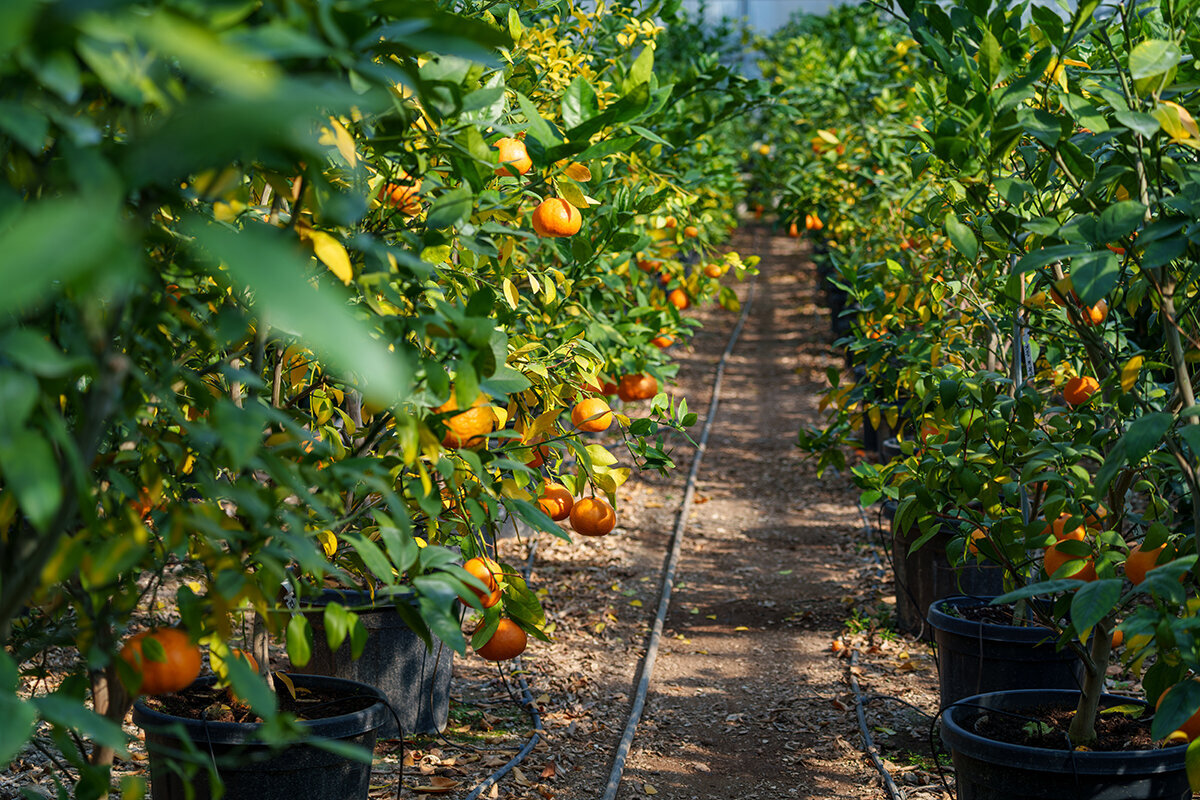
A citrus greenhouse is a movable orchard: generous with light, disciplined with water and carefully planned around a calm, frost-free British winter.
The real proposition
Citrus succeeds under glass when treated as a designed, movable orchard, rather than a patio plant permanently confined indoors.
Light is the engine Winter shelter is valuable, but glazing alone does not guarantee useful light. Give trees the brightest available position and keep the glass clean.
Roots set the pace A container holds finite reserves of air, moisture and nutrients. Pot dimensions, compost structure, drainage and irrigation must therefore work together.
Seasonal movement matters For many UK gardeners, the greenhouse is primarily a winter room. Citrus can move gradually outdoors in mild summer weather and return before cold autumn nights.
01 / Selection before sentiment
Choose a citrus tree suited to life in a container
The most successful greenhouse citrus collection begins with restraint. A compact, grafted tree from a reputable UK nursery is usually a better long-term choice than a seedling raised from supermarket fruit. Seed-grown citrus is unpredictable and may take many years to flower. A grafted plant combines the fruiting variety—the scion—with a rootstock selected to influence vigour, adaptation and manageability. Keep the original plant label and inspect every new arrival before adding it to your collection.
Lemons
Usually the most practical first choice, offering fragrant flowers and useful fruit. Select a named, grafted plant and confirm its winter needs; some lemons tolerate around 5°C in suitable bright conditions.
Limes
Highly fragrant and attractive in containers, but more demanding in winter. The RHS recommends keeping limes above 10°C, so reserve them for a reliably warmer glazed space.
Mandarins
Handsome foliage and excellent fragrance make compact mandarins appealing greenhouse trees. Choose the cultivar carefully, keep the canopy open and never assume its cold tolerance matches a lemon’s.
Kumquats and calamondins
Kumquats have compact habits, small fruit and excellent container character, although they still need bright winter protection. Calamondins are decorative but require distinctly warmer winter conditions.
Buy with questions, not just a label: Ask for the named variety, rootstock, expected container size and recommended minimum temperature. Citrus types differ markedly in cold tolerance and growth habit, while the container itself also influences their final size.
02 / Read the trunk
The graft union shows which shoots belong to the tree
Find the slightly swollen, angled or scarred union low on the trunk of a nursery-grown citrus tree. Keep it clearly above the compost line. This preserves the distinction between the selected fruiting scion and the rootstock and makes new growth easier to inspect.
Any vigorous shoot emerging below the union belongs to the rootstock. Remove it cleanly while young, because it can outgrow and overwhelm the named variety. Growth above the union forms the desired canopy. Shape it selectively rather than shearing annually: remove damaged, crossing, crowded or badly positioned shoots while retaining enough healthy foliage to support the tree.
Healthy structural roots need moisture and air-filled pores, not a permanently waterlogged lower pot. Aim for a rounded, open canopy with enough clear space to water and inspect the compost. Leave room between the foliage and cold glazing, and turn the pot periodically during active growth if most light arrives from one direction.
Scion Above the union
Graft union Keep it exposed
Sucker Remove from below
Roots Need air too
03 / The root workshop
Build a pot that drains, breathes and remains movable
A citrus container should be substantial enough to moderate rapid summer drying, yet only modestly larger than the existing root ball. Moving a small tree straight into an enormous pot creates a large volume of unused, wet compost that roots cannot occupy quickly. The result may be cold, saturated conditions, stalled growth and avoidable root trouble.
Repot in spring as active growth begins, moving up by one pot size rather than making a dramatic leap. A useful increase is generally about 5–8 cm wider in diameter. The correct final size depends on the tree, rootstock and stage of growth. Choose generous drainage holes, a stable base, pot feet and a wheeled caddy capable of carrying the fully watered container.
Use a proprietary citrus compost or a high-quality, free-draining, peat-reduced container mix with enough mineral structure to preserve air spaces. Do not use garden soil: it compacts in pots, slows drainage and reduces oxygen around fine roots. The objective is not a decorative gravel layer, but a root zone that drains freely from surface to base.
Container hydrology
Pot-to-root balance
Water slowly
Moist roots
Open pores
Clear exits
A well-matched container accepts water evenly, drains promptly and becomes lighter gradually between irrigations. An oversized pot can remain wet for too long, while a root-bound pot may swing from drenched to dry in hours. Water thoroughly until some moisture exits, then empty trays so the base never stands in water.
04 / Irrigation through observation
Water the root zone, then observe the tree’s response
A fixed timetable is rarely precise enough for greenhouse citrus. A bright June week, a dull December spell, a root-bound tree and a newly repotted specimen all use water differently. Feel several centimetres below the surface, judge the pot’s weight when practical and use the foliage as supporting evidence rather than the only signal.
1. Assess→
2. Apply→
3. Drain→
4. Adjust
Assess: Feel below the surface. Water when the upper few centimetres are drying but before the root ball becomes completely dry.
Apply: Use tepid water where practical and soak the compost slowly and evenly instead of giving frequent, shallow surface splashes.
Drain: Empty saucers and outer trays, and confirm that every drainage hole remains open. Citrus roots need air.
Adjust: Check more frequently in summer heat and active growth; water less often as winter light, temperature and growth decline.
Water quality and fertiliser
Rainwater can be useful in UK areas with hard tap water, provided that both the stored water and its container are clean. Do not answer every pale leaf with fertiliser. First examine moisture, drainage, root condition, recent temperature changes, available light and pests, noting whether yellowing is uniform or occurs between green veins.
During active growth, use a proprietary citrus fertiliser containing trace elements, following its label from spring into early autumn. Container trees lose nutrients through watering, but a cold, inactive root system cannot safely use strong feed. If white mineral deposits accumulate, occasionally flush the compost with plain water so salts can escape through sound drainage holes. Diagnose the root environment before making aggressive changes.
Read leaves before feeding
Uniform yellowing
Green veins
Crisp margins
Bronzed patches
Stippling
Uniform yellowing may relate to ageing foliage, weak light, cold saturated roots or a general shortage of nutrients.Green veins with pale tissue may indicate poor micronutrient uptake, although pH, root damage or wet compost can contribute.Crisp tips can follow drought, root restriction or accumulated fertiliser salts.Water-soaked or bronzed areas can follow chilling, overheating or scorch.Stippling, webbing or sticky foliage calls for an immediate pest inspection.
05 / Blossom and fruit
Flowers are a promise, not an instruction to overwork the tree
Pollination
Many common home citrus trees are self-fertile and can set fruit without a second specimen. However, insect activity may be limited in a closed winter greenhouse. If fruit set is poor, transfer pollen gently between open flowers in late morning with a soft artist’s brush. There is no need to handle every bloom daily; the aim is light assistance, not a ritual.
Fruit retention
Some early fruit drop is entirely normal. A tree that has been moved, chilled, overheated, dried hard, left saturated or kept in weak light may shed flowers or small fruits to rebalance itself.
Patience
Keep water and feeding steady through flowering and avoid hard pruning. If a young or struggling tree carries an excessive crop, thin some fruit so that leaves, roots and next year’s framework can continue developing.
Citrus can hold flowers, developing fruits and ripe fruits simultaneously because a crop may take nine to twelve months to mature. That spectacle is part of its greenhouse appeal, but it also explains why stability matters. Sudden heat, cold draughts, drought, saturated compost and abrupt changes in light can all cause leaf or fruit drop.
06 / The protected season
Summer ventilation and winter warmth form one climate conversation
A glazed greenhouse magnifies the weather. In summer, citrus may require roof vents, open doors, selective shading and moving air before the wider garden feels excessively hot. In winter, the structure needs a deliberate temperature envelope: bright conditions, protection from frost and watering reduced to reflect slower growth, rather than a vague assumption that being under glass is enough.
Summer: prevent trapped heat
- Open doors and roof vents early on bright days. Automatic openers and circulation help prevent hot, stagnant air around the foliage.
- Use temporary shading during intense sunshine if leaves begin to scorch, especially after moving a tree from a lower-light position.
- Acclimatise citrus gradually when moving it outdoors or returning it under glass; abrupt exposure can scorch leaves and check growth.
- Keep pots off excessively hot paving where possible, preserve airflow and check root moisture frequently during spells of dry heat.
A citrus-ready interior needs ventilation, circulation and practical access around heavy containers. Consider these features when reviewing the Classic Aluminium Greenhouse for a balanced growing environment.
Winter: bright, calm, protected
Do not apply one minimum temperature to every citrus. RHS guidance indicates that some lemons may be comfortable around 5°C, kumquats often need 7°C or more, limes and grapefruits should remain above 10°C, and calamondins need at least 13°C. An unheated UK greenhouse is not automatically frost-free, so monitor it and prepare for cold snaps.
Winter envelope
TemperatureSpecies appropriate
LightBrightest position
WaterLess often, thoroughly
AirVentilate gently
Plan around the tenderest tree rather than relying on one universal citrus temperature. Place thermometers at canopy and pot level, protect containers because they cool faster than garden soil, and keep foliage away from cold glazing. Maintain clean glass, water less frequently but thoroughly when required, and ventilate briefly on mild days without creating persistent cold draughts or trapping stale, damp air.
For a greenhouse expected to shelter citrus through British winters, usable volume, headroom, ventilation and equipment all matter. The Classic Aluminium Greenhouse provides a considered starting point for planning a spacious citrus house. Assess glazing, ventilation and any heating requirements for your particular site, then position tender trees where they can be inspected and protected easily rather than simply where they create the most symmetrical display.
07 / Diagnose, then intervene
Five greenhouse citrus problems that deserve a slower look
Root-zone alert
Leaves yellow while compost stays wet
Pause feeding. Check pot weight, drainage holes, odour and visible root condition. Allow a better interval between waterings and improve drainage before assuming that fertiliser will solve the problem.
Light alert
Long, weak growth with few flowers
Treat this as a light problem first. Move the tree to the brightest suitable position, clean the glazing and avoid heavy feeding that merely promotes more soft growth.
Pest alert
Sticky foliage or sooty residue
Inspect stems and leaf undersides for scale insects, whitefly, mealybugs or aphids. Isolate the tree where practical, physically remove what you can and choose a suitable control for the identified pest.
Salt alert
Crisp margins after repeated feeding
Fertiliser salts can accumulate in container compost. Flush with plain water only when drainage is sound, then resume feeding at a lower, label-directed rate once the plant is actively growing and other causes have been excluded.
Temperature alert
Leaf drop after a cold night or period of heat
Check the recorded greenhouse maximum and minimum with a reliable thermometer. A stress event is often revealed by the temperature history rather than by one leaf. Improve ventilation, temporary shade or winter protection before making substantial nutritional changes.
08 / A year under glass
The annual care calendar for a UK container citrus tree
Use this calendar as a rhythm rather than a substitute for local weather. In many British gardens, gradual outdoor summering offers stronger growth and useful airflow, while the greenhouse serves as a bright winter room and as shelter during the cooler transitions of spring and autumn.
January–February Protect from cold, maximise available light, water sparingly but thoroughly and inspect for scale and mites. Do not force growth with strong fertiliser.
March–April As active growth resumes, begin measured feeding. Repot only if genuinely root-bound, prune lightly and open vents early on sunny days.
May–June Increase watering in response to growth and weather. Acclimatise trees gradually before moving them outside, then monitor flowering, fruit set and pests.
July–August Prioritise ventilation, selective shade and consistent root moisture. Feed according to the product label while active growth continues, and inspect frequently in heat.
September–October Prepare the return under glass before nights become too cold. Inspect leaves, clean pots, quarantine suspect plants and reduce feeding as growth slows.
November–December Put the winter temperature plan into operation, clean the glazing, reduce watering and record actual overnight lows at canopy and pot height.
Any month Remove shoots below the graft, turn containers for even growth, clean dusty leaves and cut ripe fruit with a short piece of stem attached.
At every change If leaves react, trace recent changes in light, temperature, moisture, feeding or location before adding another treatment or moving the plant again.
For greenhouse architecture that supports this seasonal rhythm, explore the Classic Aluminium Greenhouse and use the details for Classic Aluminium Greenhouse. A successful citrus house needs clear circulation, room to roll heavy pots, accessible water, working ventilation and enough overhead and lateral space for mature canopies without pressing against cold glazing.
Questions from the citrus bench
Greenhouse citrus FAQ
Can a lemon tree remain in an unheated greenhouse?
Sometimes, but only when the tree’s own requirements, local minimum temperatures and the greenhouse protection agree. Some lemons may tolerate around 5°C in bright conditions, while limes, grapefruits and calamondins need warmer winters. Use a reliable thermometer at pot level and have protection ready before a forecast cold snap.
Do greenhouse lemons need another tree for pollination?
Many common container citrus trees are self-fertile, so a second tree is generally unnecessary. In a very still greenhouse, gentle hand-pollination with a soft brush can assist, but adequate light and healthy roots matter more.
How often should greenhouse citrus be watered?
There is no reliable universal interval. Respond to compost moisture, pot weight, drainage, season, light and temperature. Aim for a root ball that is watered thoroughly and then allowed to become somewhat lighter, never permanently saturated.
Why did my lemon lose leaves after being moved?
Citrus often reacts to abrupt changes in light, temperature, humidity and root moisture. Stabilise conditions, check for pests and avoid moving it repeatedly. Gradual acclimatisation is much gentler than combining relocation, repotting, pruning and strong feeding.
Should I prune my citrus tree every year?
Prune lightly and purposefully. Remove dead or damaged wood, crossing stems, crowded growth and shoots from below the graft. Avoid severe annual cutting because citrus flowers and fruits towards the canopy edges.
When is a greenhouse too hot for citrus?
Act when leaves scorch, foliage wilts despite suitable root moisture, or heat and still air persist around the canopy. Open doors and roof vents early, improve circulation and use temporary shading before the strongest part of the day.
Sources and further reading
A considered citrus library
These horticultural, extension and government resources support the guidance in this article. Consult them when adapting a greenhouse citrus plan to a particular variety, water supply, pest concern, sourcing decision or British winter setting.
More from Bloomcabin: aluminium greenhouse information guide · Bloomcabin guide to custom aluminium greenhouses · Bloomcabin greenhouse collection
- Royal Horticultural Society — How to grow citrusUK guidance on citrus selection, containers, seasonal movement, temperatures, feeding, pruning and fruit loads.
- RHS — May greenhouse and conservatory adviceTimely UK advice on inspecting protected plants for red spider mite, whitefly and thrips.
- UK Plant Health Information Portal — Biosecurity guidanceOfficial information about plant health, pests, diseases and responsible movement of plant material.
- GOV.UK — Plant passports in Great BritainGovernment guidance on issuing plant passports for regulated plant material traded in Great Britain.
- Mississippi State University — Growing citrus in containersExtension guidance covering container selection, compost, feeding, pruning and cold-sensitive citrus care.
- University of California — Growing citrus in potsPractical container-citrus guidance on varieties, potting, irrigation, fertilisation, pruning and pest observation.
Make room for an orchard
Give citrus the bright winter volume it deserves
Plan generous headroom, bright glazing, active ventilation and a clear route for moving heavy containers through the seasons. The result is more than a protected lemon tree: it is a cultivated garden room carrying glossy foliage, fragrant blossom and slowly ripening fruit through the British year.
Classic Aluminium GreenhouseFor further dimensions and design possibilities, revisit the Classic Aluminium Greenhouse and plan the glasshouse around the mature trees, circulation and seasonal care your citrus collection will genuinely require.
