
How to Grow Melons in a Greenhouse
Bloomcabin growing rooms · United Kingdom
How to Grow
Melons in a
Greenhouse
A greenhouse melon is a small act of summer architecture: warmth held under glass, a vine lifted into light, flowers pollinated in the morning and fruit carefully supported until its perfume says the season is ready.
A vertical glasshouse guide for warm-season fruit
The central proposition
Give warmth a structure,
and sweetness has a chance.
Melons are tender, vigorous vines with exacting needs. They ask for warm roots, bright light, free-draining yet moisture-retentive soil, even watering while fruit forms, and moving air that helps foliage remain healthy.
A greenhouse makes those conditions easier to coordinate, but it also places the gardener in charge of ventilation, training, pollination and crop load. For most domestic glasshouses, small- to medium-fruited melons are the sensible choice. They can be guided upwards, inspected without occupying the entire floor, and carried in simple slings as they gain weight. Begin with the brightest position available, then organise the crop around usable height and daily access. The aim is not a sealed tropical room, but a balanced environment where roots remain steadily moist, foliage receives fresh air and every developing fruit can be reached comfortably.
Choose the vine before choosing its support
A tasting list
for the glasshouse table.
A variety name matters, but first ask how its pace and fruit size will suit your greenhouse. Look for descriptions such as short season,compact,small fruited,greenhouse suitable, or suited to training.
In an unheated or lightly protected UK greenhouse, variety choice is practical risk management. Select seed recommended for greenhouse culture and follow its particular pruning and pollination instructions. F1 hybrids can be vigorous and productive, while grafted plants may help where greenhouse borders are planted repeatedly and soil-borne disease is a concern. Avoid treating the catalogue as a challenge to grow the largest possible fruit; a smaller melon that ripens fully is the more convincing harvest.
- Netted muskmelon Perfumed and often orange-fleshed, this is a rewarding type for vertical training. Some cultivars ripen with stem slip, although harvest behaviour remains variety-specific.
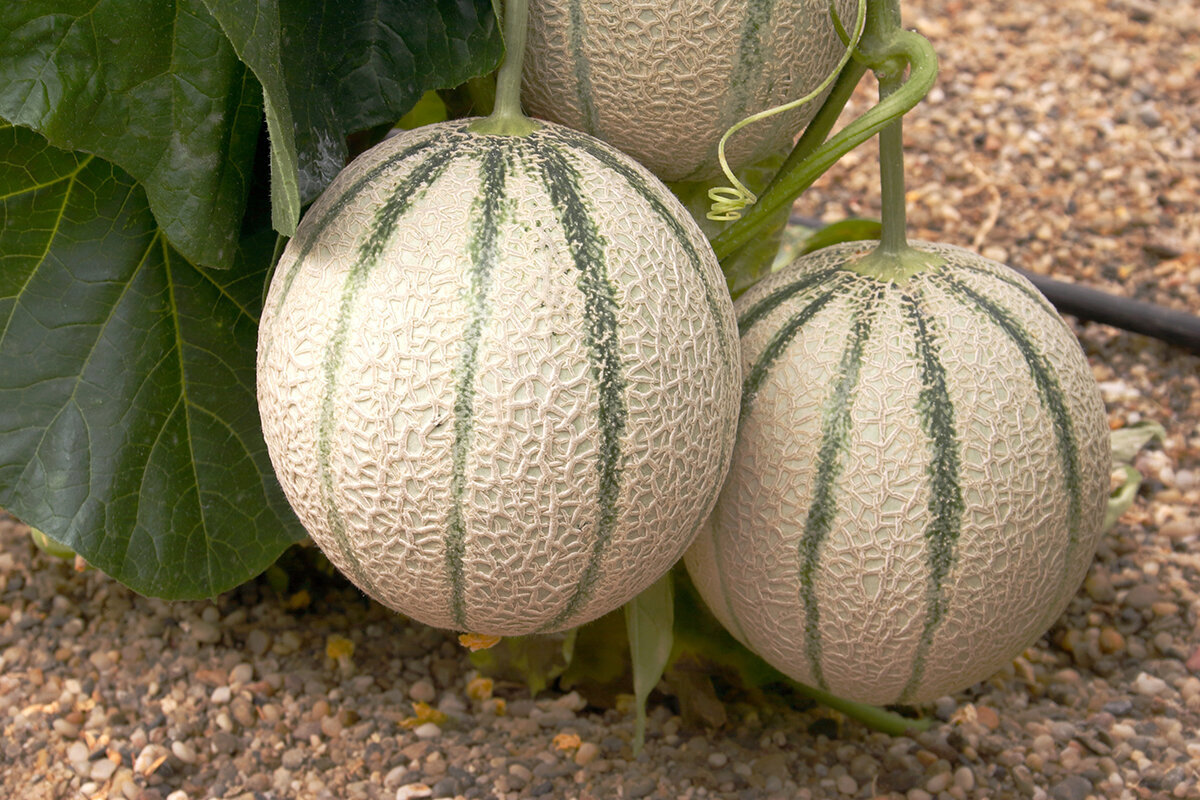
- Aromatic cantaloupe type Compact, fragrant fruit for gardeners who value perfume and a short journey from vine to table rather than sheer size.
- Smooth-skinned melon types Elegant fruit whose ripeness may be less visually obvious. Follow the variety description and assess scent, rind tone and gentle blossom-end give together.
- Compact greenhouse hybrid A practical choice where height and path space are limited. Read the packet carefully for exact training, pruning and pollination requirements.
From seed to settled vine
Start warm. Move gently.
Plant only when the room is ready.
01 · Seed
Warm sowing
02 · Seedling
Strong early light
03 · Transition
Hold steady
04 · Bed
Plant gently
Warm sowing. Sow from mid-April to mid-May in individual pots around 7.5 cm wide and deep. Place two seeds approximately 1.5 cm below the surface, then remove the weaker seedling if both germinate. A propagator maintained at roughly 18–21°C gives the most dependable start. A genuinely warm, bright windowsill can also work, but avoid cold night-time glass. Once seedlings appear, usually after about a week in kind conditions, give them bright light immediately.
Strong early light. Retain one seedling per pot and water enough to prevent the compost drying out. Pale, stretched growth wastes energy needed for a sturdy fruiting framework. Avoid repeated potting-on: melon roots resent disturbance, and a compact young plant transferred at the right moment is preferable to an oversized, pot-bound specimen.
Holding and planting. Keep young plants protected while spring remains unsettled. Do not move them into an unheated greenhouse simply because May has arrived; cold compost, draughts and sharp overnight drops can check growth severely. Plant from late May or during June, once the greenhouse remains reliably above about 12–15°C and plants have three or four leaves. Ease out the intact rootball, set it at the same level or fractionally proud of the surrounding compost, and water carefully. Conditions—not the calendar alone—should determine the handover.
The root room
Build rich, free-draining ground, then water with attention.
Melons are hungry plants, but their roots do not tolerate a cold, airless or waterlogged zone. The dependable foundation is warm, moisture-retentive yet free-draining compost or border soil enriched with well-rotted organic matter throughout the planting area.
In a greenhouse border, incorporate well-rotted garden compost before planting. The RHS suggests up to two bucketfuls per square metre, helping the ground hold moisture while giving a vigorous plant a generous rooting run. Keep the surface tidy and prevent water, compost or mulch from collecting against the vulnerable stem collar. Cucurbits can collapse when planted too deeply, damaged at the base or left continually wet. Design access before growth fills the room: retain a dry central path, a clear watering zone and enough space to inspect the back of every vine.
For container growing, choose a substantial pot at least 40 cm wide and deep, filled with good peat-free multi-purpose compost, and grow one plant per pot. One melon can also occupy a standard growbag. A larger root volume creates a steadier reservoir of moisture and nutrients, but containers still dry faster than a prepared border. Stabilise the pot, install support early and expect to check moisture daily during sunny weather.
The central choreography
Train the vine upwards
before it makes its own plans.
Roots
Clear base
Flowers
Fruit
Roof turn
Main leader
Airy base
Guide laterals
Turn at roof
Read the elevation from bottom to top. Begin with one clear main route and attach it loosely to a dedicated support. Keep the stem base open enough for inspection and airflow, but do not strip away sound leaves. Direct selected laterals towards spaces where they can carry foliage, flowers and one chosen fruit without meeting neighbouring vines in a damp, shaded mass.
When the leader reaches its allotted height, turn it along an appropriate overhead support or stop it according to the cultivar and available light. To consider how the complete room can support vertical crops, explore Bloomcabin's Classic Aluminium Greenhouse. A successful vertical crop depends on useful ridge height, accessible paths, ventilation and safe support points working together.
The morning appointment
Pollination is brief,
gentle and worth being present for.
Open doors and vents will admit some insect visitors, but fruit set under glass should not depend entirely on a passing bee. Hand pollination is often the more dependable option, particularly during quiet or unsettled weather.
Recognise
Morning
Transfer
Repeat
Male flowers sit on thin stalks and provide pollen. Female flowers are readily identified by the tiny immature melon immediately behind their petals. Look for newly opened flowers in the morning, while pollen is fresh and before the greenhouse reaches its hottest point. Learn the difference before reaching for the brush, and follow any special pollination guidance supplied for the particular hybrid you are growing.
On a dry morning, use a soft artist's brush to collect pollen from a fresh male flower, then dab it gently onto the centre of an open female flower. Alternatively, remove the male petals and touch the pollen-bearing centre against the female stigma. One male bloom can serve several females. Avoid wetting flowers, and repeat the process whenever several fresh female blooms open. Over the following days, successful fruitlets should swell steadily and symmetrically; stalled or misshapen growth can be removed once failure is clear.
Keep doors and vents open during suitable daytime weather so insects can contribute. Always read the seed packet first, as modern greenhouse hybrids may require a particular approach.
The energy edit
Fewer fruit can make
a more convincing harvest.
A healthy melon vine may appear capable of carrying every fruit it sets. It is not. Each retained melon competes for leaf area, moisture, nutrition and the remaining warmth of the British season.
Once several fruitlets are swelling, assess the whole plant. Select those on strong, well-positioned laterals with healthy leaves and space around them. Remove damaged, misshapen, crowded or late-setting fruits first, then adjust the remainder to the plant's vigour, cultivar and root volume. The RHS recommends reducing young fruit so those retained can reach useful size and ripen. Garden Organic's practical discipline of one melon per shoot also prevents two promising fruits from overloading a short lateral.
Do not judge crop load by a fixed number alone. A border-grown vine in a bright season may finish more than a container plant after cool weather. Continue watching leaf health, available light and the time left for ripening.
Keep
well set
well set
Keep
well lit
well lit
Remove
crowded
crowded
Remove
damaged
damaged
Support
the rest
the rest
Choose fruit with open space around it. A melon in a congested cluster is difficult to pollinate, inspect and support, while nearby foliage dries slowly. Early selection wastes less of the plant's energy than waiting until a poorly placed fruit becomes heavy. Leave enough healthy leaf beyond each retained melon to feed it, and never turn crop thinning into wholesale defoliation.
A small act of engineering
Make a sling before
the fruit asks for one.
Broad cradle
Expansion room
Secure attachment
Weekly check
Use old tights, soft netting, broad fabric strips or purpose-made mesh bags to distribute the load without creating a narrow pressure line across the rind. Fit the sling while the selected melon is still small and leave generous room for expansion. A support that looks loose in July may become restrictive during August. Keep the material clean, dry and breathable rather than creating a damp pocket around the fruit.
Attach the cradle to a secure crop-support line or manufacturer-approved structural fixing, never tightly around the fruiting stem and never to glazing or a moving vent. Check it weekly for wet fabric, imbalance, constriction or a stem being pulled sideways. The sling should carry the fruit while allowing easy inspection and adjustment; support is an ongoing element of crop care, not a one-off installation.
The moisture rhythm
Water evenly. Feed with purpose.
Keep the roots composed as fruit ripens.
Planting
Vine growth
Fruit set
Finishing
After planting: water around the rootball to settle the compost without saturating the stem collar. Allow air to remain in the root zone, but never let the plant wilt. As leaf area expands, increase watering steadily rather than alternating drought with flooding. Container-grown melons warm and dry rapidly, so check them daily in sunny weather while remembering that checking does not automatically mean watering.
Flowering and fruit set: consistency matters most. Apply water directly to the soil or compost, ideally early in the day, so foliage does not remain wet as the greenhouse cools. Plants in a prepared border may retain moisture longer than those in pots or growbags. Feel below the surface before watering; the greenhouse air can be hot even while the root zone remains adequately moist.
Feeding and finishing: give container and growbag plants a suitable liquid feed according to its label. RHS guidance suggests a general organic-based feed early in summer, followed by a high-potassium liquid feed once fruit reaches roughly walnut size. Do not attempt to repair a week of neglect with one excessive feed or drenching. As melons approach maturity, continue preventing wilt without swinging between dryness and saturation. Attentive hand watering or a simple drip line can both work when the gardener can still inspect the compost and respond to changing weather.
The ventilation loggia
Warmth is useful.
Stagnation is not.
A melon greenhouse should feel warm, bright and breathable rather than sealed. Air movement removes excess heat, helps foliage dry and prevents a heavy atmosphere building around flowers and dense leaves after watering.
Use roof vents and lower openings or doors together where possible, allowing hot air to rise and escape. During a bright heatwave, temporary greenhouse shading may reduce scorch and stress, but avoid turning the room permanently dim. Damping down a bare floor can modestly raise humidity during fierce heat, yet it is no substitute for correct root watering and airflow. Keep leaves away from wet glazing, maintain clear paths and close ventilation thoughtfully as temperatures fall towards evening.
Bloomcabin's greenhouse for the UK garden offers useful planning context for coordinating ventilation, shading, irrigation, staging and crop-support features before vigorous vines occupy the room.
A five-minute glasshouse walk
Inspect little and often.
1 · Undersides first
Look beneath young leaves for glasshouse whitefly, aphids, thrips and red spider mite. Sticky honeydew, stippling, tiny insects or fine webbing are early signs worth investigating immediately.
2 · Read the leaf
White, floury patches may indicate powdery mildew. Yellowing, distortion, mosaic patterns or dead areas require caution, improved hygiene and proper identification rather than indiscriminate pruning or treatment.
3 · Check the stem
Inspect the collar, ties and clips. The base should remain firm, uninjured and free from pooled water; replace any fastening that rubs or constricts thickening growth.
4 · Inspect the room
Lift each melon gently to confirm its sling carries the weight. Clear fallen leaves, spent flowers and old ties, and keep paths free from algae and standing water.
Prevention begins with a clean, open crop. Quarantine new plants where possible, wash hands and tools after handling a suspect vine, and remove badly affected material promptly. Biological controls can work well against greenhouse pests when introduced early, before populations become extensive. Do not attempt to cure mosaic-like virus symptoms by pruning; isolate suspicious plants and maintain scrupulous hygiene. At season's end, remove crop debris and clean the greenhouse to reduce overwintering pest pressure. Remove only old, damaged or seriously affected leaves—healthy foliage is still needed to ripen the crop.
The sensory descent
Harvest by a compass
of cues, not size alone.
A ripe melon announces itself through several small changes. Their sequence differs among cultivars, so the packet's maturity guidance is a useful forecast rather than a command to harvest on a particular day.
01
Fragrance
02
Rind
03
Stem
04
Timing
Fragrance. Aromatic cantaloupe types may develop a clear, sweet perfume, particularly near the blossom end. Smooth-skinned cultivars can be less fragrant, so never rely on scent as the only test.Rind and ground colour. Look for the cultivar's expected shift in ground colour or rind tone. ‘Ogen’, for example, becomes yellow as it ripens. A hard, glossy green rind generally suggests that more time is required.
Stem behaviour. Some muskmelons develop a slip layer and release readily when mature, but this is not universal. Check the variety description rather than waiting for every fruit to detach. Gentle give at the blossom end may be useful, provided it is not confused with softness, damage or bruising. Compare scent, rind, stem and the approximate timing together; months of patient cultivation should not end with aggressive squeezing.
If the fruit does not release, harvest in the cool of morning with clean secateurs, leaving a short stem where appropriate. Carry it indoors carefully and allow brief finishing at room temperature if needed. Once beautifully ripe, chill only shortly before serving so its fragrance remains part of the experience. Wash the rind before cutting, use clean knives and boards, and refrigerate cut melon promptly.
Questions from the vine room
Greenhouse melon FAQ
How many melon plants suit a small greenhouse?
Begin with fewer than the floor plan appears to permit. One or two well-trained plants can occupy substantial vertical and lateral space once fruiting shoots develop. Allow roughly 45 cm between upward-trained plants, but also preserve a genuine path, sufficient ridge height, good ventilation and access to both sides of the canopy.
Do greenhouse melons need hand pollination?
It is often worthwhile in a domestic greenhouse, particularly when insect activity is low. Transfer pollen from a newly opened male bloom to a fresh female flower in the morning. Follow the exact hybrid's packet instructions.
Why do flowers drop without forming melons?
Early flowers may be male, so some dropping is normal. Once females appear, failed pollination, cool conditions, excessive heat, sudden water stress or an overloaded vine can cause fruitlets to abort. Restore even care and retain the strongest set.
Can I grow a melon in a pot?
Yes. Use one plant in a container at least 40 cm wide and deep, filled with peat-free compost. Choose a compact or smaller-fruited cultivar, provide strong vertical support and check moisture particularly closely throughout warm summer weather.
Should I remove leaves around ripening fruit?
Remove only leaves that are diseased, badly damaged or causing persistent congestion. Healthy leaves provide the energy that sweetens the melon. Improve airflow through considered training rather than suddenly exposing fruit or leaving a bare vine.
What greenhouse form suits vertical melon growing?
Choose enough ridge height for a trained leader, a secure overhead crop-support route and slung fruit above an accessible path. Ventilation is equally important: rising warm air needs an effective exit as the summer canopy becomes fuller.
Reference colophon
Sources and further reading
Royal Horticultural Society — How to grow melons
Detailed UK guidance on sowing, planting, training, watering, feeding, pollination and harvesting melons.
RHS — Greenhouse growing and planting out tender crops
Practical advice on protected propagation, warm conditions and planting tender crops without a cold check.
Royal Horticultural Society — Cucumis melo plant profile
Botanical details, growing conditions and cultivation information for the melon species.
Garden Organic — How to grow melon
UK organic growing guidance covering sowing, training, pollination, crop selection and practical pruning routines.
RHS — Glasshouse whitefly identification and control
Identification, monitoring and current management guidance for this common sap-feeding greenhouse pest.
RHS — Glasshouse red spider mite
Symptoms, life cycle, prevention and control guidance for mites affecting protected greenhouse crops.
A final invitation
Give the vine somewhere beautiful to climb.
A successful melon greenhouse is not defined by floor area alone. It is shaped by enough ridge height for a trained leader, thoughtful ventilation for a living canopy, clear paths for morning pollination and daily watering, and secure crop-support points from which ripening fruit can hang without burdening stems or greenhouse glazing.
For a classic, adaptable foundation, explore the Classic Aluminium Greenhouse. Its considered proportions create a versatile setting for vertical crops—one that can be arranged around borders, containers, support lines, ventilation and the quiet pleasure of harvesting a fragrant melon under glass.
Classic Aluminium GreenhouseContinue planning
Consider the proportions of the Classic Aluminium Greenhouse, with configurations that can accommodate practical pathways, crop zones and tall trained vines.
For broader style and configuration ideas, explore Bloomcabin's overview of greenhouse design options.
When planning access and airflow, consult the practical aluminium greenhouse FAQ for information about roof windows, ventilation accessories and available greenhouse features.
