
How to Grow Onions in a Greenhouse
The greenhouse case for onions
Protected growth, not artificial summer
A good onion is built in layers before it resembles a bulb. The early task is to produce enough healthy leaves before the seasonal daylight trigger arrives.
What cover changes
A greenhouse smooths the difficult edges of a British spring: cold rain, saturated ground, crusted seedbeds and sharp changes in weather. It makes propagation more reliable, keeps prepared soil workable and provides a sheltered place for initial curing. Irrigation, ventilation and hygiene also become deliberate daily decisions—an advantage for a shallow-rooted crop that dislikes drought, waterlogging and stagnant humidity.
What cover cannot change
Bulb onions respond to day length as well as temperature. A long-day variety still waits for long summer days, while a short-day variety may receive its bulbing signal before it has made enough leaves in a northern garden. For a home crop, the sensible approach is to select a cultivar bred for British or northern European conditions and allow the natural season to provide the cue.
The practical format
For many home gardeners, the most dependable method is to sow seed in late winter in a bright, frost-free propagation space, then establish sturdy plants in a prepared greenhouse border or deep container. A well-ventilated, unheated greenhouse can carry the entire crop. The structure should moderate rain and wind without trapping excessive heat around mature foliage or encouraging soft, weak growth.
A carefully configured Classic Aluminium Greenhouse suits this sequence particularly well: seed trays can begin on staging, while accessible borders, orderly paths and adaptable ventilation support upright foliage, controlled watering and clean curing later in the season.
Starting material
Seeds, sets or transplants?
All three routes can produce onions, but they offer different levels of control over cultivar, timing, bulb size, bolting risk and eventual keeping quality.
For choice and control
Seed offers the broadest selection of long-day cultivars, storage qualities, colours and shapes. Sow fresh seed thinly in modules or multi-cell trays filled with peat-free seed compost. Keep the medium evenly moist rather than wet, and provide bright, cool conditions after emergence. Seed requires planning, but it lets you select precisely for UK day length and intended use.
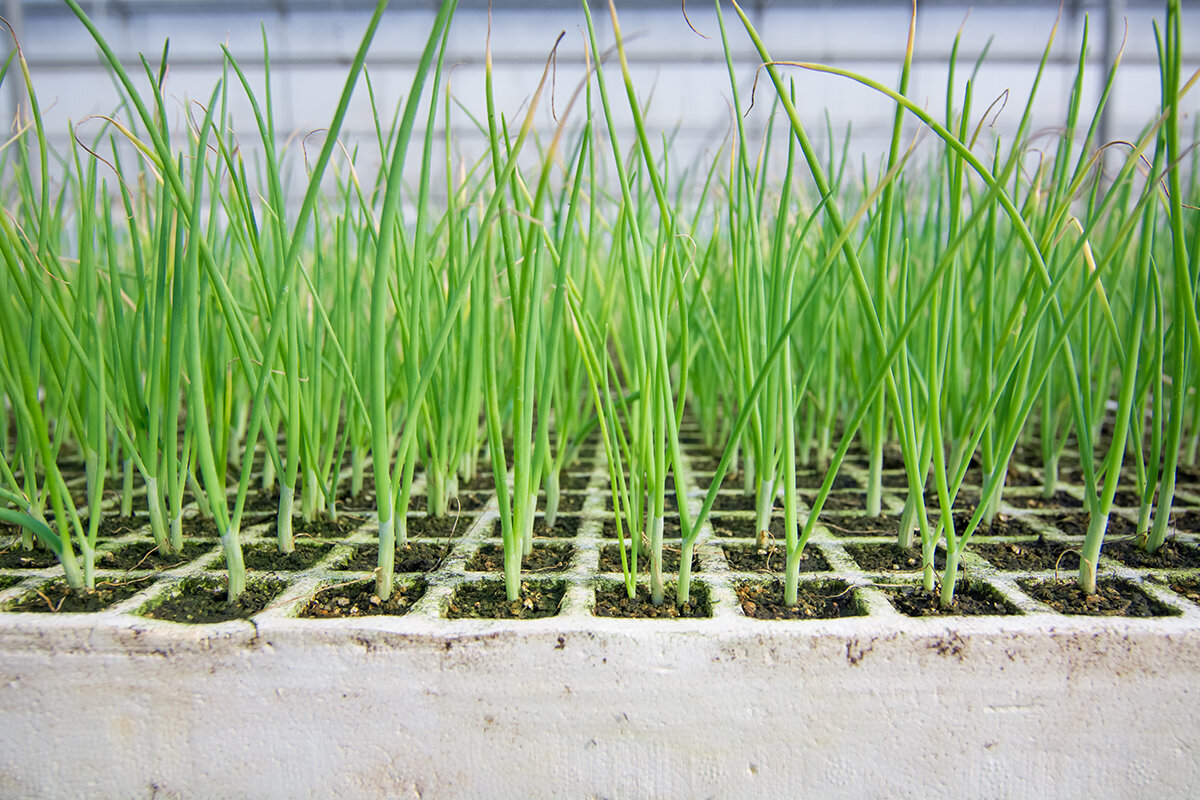
Greenhouse propagation gives seed-grown onions time to form sturdy leaves and roots before the main outdoor season begins.
For speed and simplicity
Sets are small dormant bulbs and provide a quick, practical route to a household crop. Choose firm, healthy material, planting each set shallowly with its pointed tip just visible. If premature flowering has been a recurring problem, consider heat-treated sets. Keep them bright and ventilated rather than trying to force rapid growth in an overheated greenhouse.
Use sets when convenience and a compressed spring schedule matter more than an extensive cultivar choice.
For measured early planting
Purchased plugs or home-raised transplants shorten the establishment period and make it easy to allocate exact numbers to a small greenhouse bed. Select fresh, upright plants of a cultivar suitable for UK conditions. Plant promptly, water the roots in gently and avoid burying either the neck or the central growing point.
For a modest productive bed, transplants combine an early start with precise spacing.
Bloomcabin view. Start from seed when cultivar choice and storage performance are priorities. Choose transplants when you want uniform plants and measured use of covered space. Reserve sets for simplicity or a shorter schedule, using heat-treated material where bolting has repeatedly reduced the crop.
The day-length observatory
Choose onions by the light they expect
Day length is the quiet architect of bulb formation. A greenhouse can shelter leaves and roots, but the cultivar determines when the plant interprets the season as the moment to make a bulb.
Propagation and timing
Build leaves first, then allow the bulb room
Sow onion seed thinly in clean modules or cells of free-draining, peat-free seed compost and cover it lightly. Keep the medium consistently moist until emergence. Once seedlings appear, bright light is more valuable than excessive heat. A cool, frost-free greenhouse bench works well, provided trays are protected during cold spells and vents are opened early on bright days to prevent sudden overheating.
Water at compost level and never leave young roots standing in water. Turn trays if illumination comes predominantly from one direction. Pale, stretched growth usually calls for better light and less warmth, not an immediate dose of feed. Transplant once plants are sturdy enough to handle and their roots hold the compost together, hardening them gradually if they have received stronger protection.
Prepare the final border or container before planting. A bright unheated greenhouse can be ideal because it moderates wind and rain without promoting lush, weak foliage. Establish plants in workable, free-draining soil while there is still time to make leaves before the cultivar’s daylight cue. Plant later sets only into evenly moist soil, never a saturated or hot, dust-dry border.
For an orderly compact crop, the Classic Aluminium Greenhouse can serve as a considered propagation room as well as the final growing space. Use stable staging for modules, retain an accessible path and reserve sufficient border or container depth for roots. Storage onions should not be forced into tiny pots where moisture fluctuates rapidly.
The anatomy beneath the skin
An onion bulb is not a root
The bulb is a compact stem surrounded by enlarged leaf bases and held above a short basal plate. Fine roots emerge beneath that plate and spread relatively shallowly. This architecture explains why deep planting, heavy earthing-up and compacted wet soil interfere with clean expansion and healthy necks.
Set transplants so the roots are covered and securely anchored, but do not bury the growing point or future bulb. Plant sets shallowly, with the base covered and pointed tip at or just above the surface. As swelling begins, allow the bulb shoulder to remain visible. Every healthy upright leaf contributes a layer to the eventual bulb, so protect foliage from disease and repeated stress.
Prepare a firm, free-draining bed enriched beforehand with well-rotted organic matter rather than fresh manure. Onions need a consistently workable root zone but respond poorly to compaction, waterlogging and excessive fertility. A soil test offers the clearest basis for feeding; without one, use a restrained balanced feed during leaf production and taper it as bulbs begin swelling.
The growing gallery
Spacing, water, fertility and airflow
For full-size bulbs, space plants 10–15cm apart, using the closer end for smaller onions or earlier kitchen use and 12–15cm for larger keepers. Keep rows approximately 25–30cm apart. Two narrow beds and a genuine central path are generally more useful than one over-wide bed. Easy access allows you to weed, inspect necks, direct water accurately and open vents without repeatedly brushing against wet foliage.
Onion roots occupy the upper soil profile, so they respond poorly to cycles of severe drought and flooding. Water deeply enough to moisten the rooting zone, then let the immediate surface begin drying before watering again. A drip line or watering can directed at soil level keeps foliage drier than overhead spraying. Reduce irrigation as the crop naturally matures, but do not abruptly starve green bulbs that are still expanding.
When the bulb refuses to cooperate
Read the failure before correcting it
Small bulbs, healthy leaves
The cultivar may have received its daylight cue before the plant was large enough, or sowing may have been too late. Recheck variety suitability, timing, light and spacing before blaming the compost; water and fertiliser cannot fully repair a day-length mismatch.
Thick necks and poor keeping
Late nitrogen, excessive warmth, rich soil, overcrowding or continued heavy watering can keep foliage active too long and leave necks slow to dry. Stop stimulating growth, maintain ventilation and let the crop reach natural maturity before lifting.
Distorted or mined foliage
Inspect allium leaves for distortion, tunnelling or mining damage, and remove badly affected material. Keep surrounding weeds controlled and do not move suspect plants or soil carelessly. Clean access and regular inspection make changes easier to identify early.
Pale patches or collapsing foliage
Onion downy mildew is favoured by damp, humid conditions and recurring leaf wetness. Remove affected material, improve spacing and ventilation, water at soil level and do not compost diseased plants. White growth around the basal plate with tiny black resting bodies may indicate persistent white rot.
A greenhouse is not automatically free from pests or disease. Its advantage is visibility: moisture, crowding, damaged leaves and wet necks can be recognised early. Practical paths, adaptable doors and effective roof ventilation should therefore be considered when reviewing the Classic Aluminium Greenhouse.
Neck fall, lifting and curing
Let the crop enter its paper season
Storage begins before lifting. As bulbs mature, the foliage yellows, softens and falls naturally; around half the tops falling over is a widely used harvest cue. Do not bend or twist healthy green leaves to manufacture this appearance. Forced collapse can damage the neck and is not equivalent to natural maturity.
Lift on a dry day where possible. Ease bulbs from the soil without cutting, bruising or pulling hard on their tops, and gently remove only loose soil.
Lay bulbs in a single layer rather than piling them in a damp greenhouse corner. Keep doors and vents working so air can circulate. In strong sun, provide shade or move the crop away from harsh direct heat: the purpose is controlled drying, not cooking. Curing may take around two weeks or longer, depending on weather, bulb size and airflow.
Mild or sweet onions are generally best used earlier. Cultivars selected for storage keep more reliably, provided every bulb is mature, fully cured, firm and undamaged.
After the curing bench
Store only bulbs that pass inspection
Once the crop is fully cured, trim dry roots and tops as appropriate while retaining the protective skins. Keep whole onions in a cool, dark, dry and well-ventilated place. Nets, strings, open trays or slatted shelving allow air to circulate more effectively than sealed plastic. Inspect the store regularly and remove any bulb that softens, sprouts or develops decay before it affects its neighbours.
A greenhouse can be an excellent curing space when it is shaded, dry and airy, but it is not automatically the right winter store. Temperature and humidity may fluctuate, and an unheated structure may not protect bulbs from severe cold. Choose a consistently cool, dry location instead, keeping onions away from damp produce and sources of condensation.
Best candidates Firm, undamaged bulbs with crisp skins, dry bases and tightly cured necks.
Use first Sweet onions, split or bruised bulbs, thick-necked specimens and any showing soft patches.
Never do Seal whole onions in plastic, store them wet or mix suspect bulbs among sound keepers.
Seasonal reset Remove roots and crop debris, clean tools and rotate future alliums away from soil where disease has occurred. Moving within one infected greenhouse bed is insufficient.
Frequently asked questions
Greenhouse onion questions, answered plainly
Can onions grow entirely in a greenhouse?
Yes, provided they receive full light, sufficient border depth or container volume, carefully controlled watering and generous ventilation. An unheated greenhouse can work particularly well. The crucial limits are cultivar suitability and the prevention of excessive heat, crowding and humidity as foliage and bulbs mature.
When should I sow onions in a UK greenhouse?
For seed-grown main-crop onions, late winter is a useful general window. Sow in modules or a suitable tray in bright, frost-free conditions, then grow the seedlings steadily rather than excessively warmly. Always follow the packet for the named cultivar, particularly for overwintering onions or varieties with a specific schedule.
Why did my onions make leaves but small bulbs?
Common causes include an unsuitable day-length type, late sowing, insufficient leaf growth before bulb initiation, shade, crowding or repeated drought. A short-day cultivar may receive its signal too early in Britain, while even a suitable long-day onion cannot make a large bulb if it enters summer with too few healthy leaves.
How often should onions be watered under glass?
Water according to moisture below the surface, current weather, soil texture and plant size rather than following a rigid calendar. Aim for consistent moisture during establishment and bulb expansion without saturating the bed. Low-level watering is preferable to overhead spraying, and irrigation should be reduced gradually as natural maturity approaches.
Should I bend onion tops to hasten maturity?
No. Wait for the foliage and necks to soften and fall naturally. Folding green leaves can injure the neck and does not produce the same dependable maturity. Lift carefully once a substantial proportion of the tops has fallen, then cure the bulbs with shade, dryness and steady airflow.
Sources and further reading
Continue with trusted horticultural guidance
More from Bloomcabin: aluminium greenhouse information · aluminium greenhouse FAQ · Bloomcabin UK greenhouse collection
- RHS — How to grow onions
- RHS — Onion downy mildew guidance
- RHS — Recognising and managing onion white rot
- RHS — Bolting in vegetable crops
- AHDB — Crop damage caused by allium leaf miner
- UK Plant Health Portal — Allium leaf miner risk information
- Teagasc — Onion harvest and post-harvest management
- RHS — Growing onions in home gardens
