
How to grow watermelons in a greenhouse
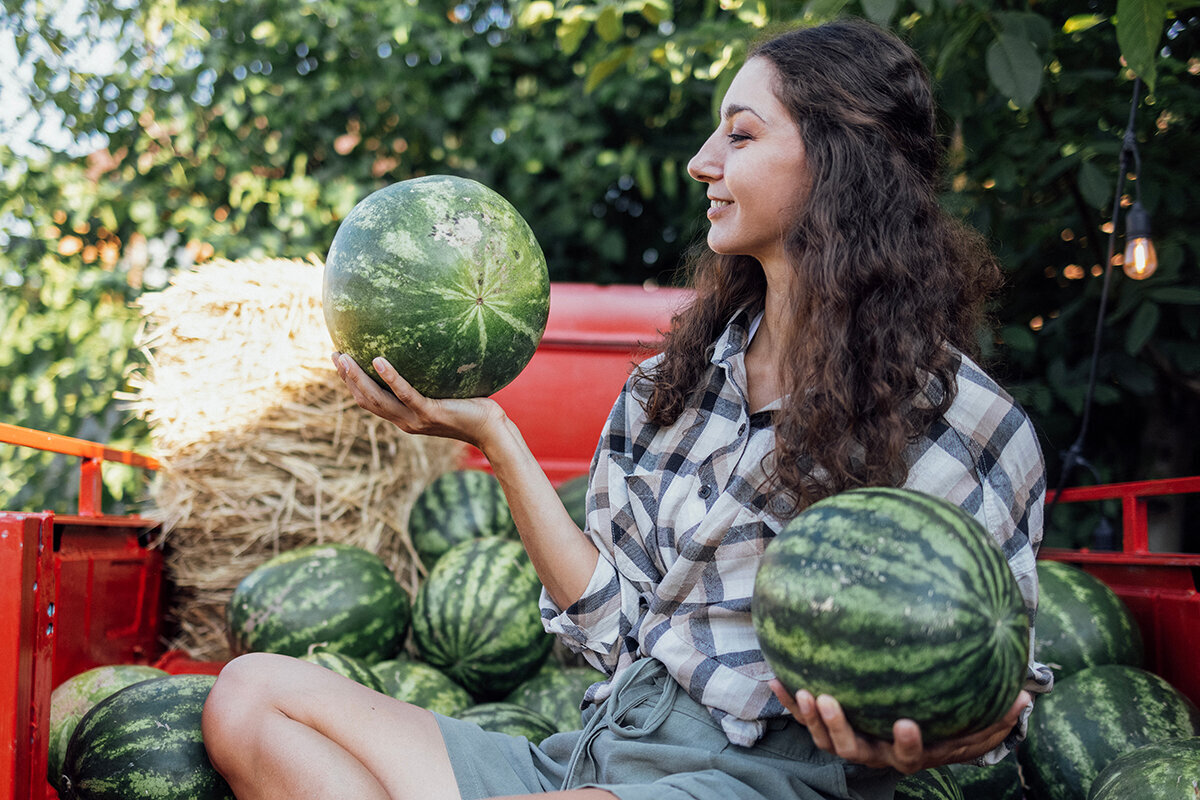
Bloomcabin glasshouse crop notes / United Kingdom
How to grow watermelons in a greenhouse
Space. Heat. Support. A British greenhouse watermelon is not simply a vine enjoying warmer weather. It is a demanding summer crop with hungry roots, a long reach and a heavy payload. Design its route, climate and support before the plant occupies the room.
1 Serious vine per small greenhouse bay
The first decision is not the cultivar. It is geometry.
Watermelon succeeds under glass when the structure can accommodate its complete working footprint: a warm root bed, reachable fruit, opening doors and vents, an unobstructed path and enough clear air around the foliage.
In a modest domestic greenhouse, one well-managed plant is often more rewarding than several forced into a tangle. Reserve a proper working lane and a dedicated vine route, then decide whether each fruit will rest on the ground or hang from a purpose-built support. Consult the Classic Aluminium Greenhouse to map beds, paths and working zones before planting.
For a warm-season crop that may occupy the structure from late spring into late summer, the Classic Aluminium Greenhouse provides the clear planning logic watermelons reward: generous beds, an uninterrupted central route, useful ridge height, roof ventilation and practical access around every developing fruit.
Across the United Kingdom, the greenhouse primarily supplies the dependable warmth and shelter that an outdoor watermelon crop may lack. Conditions still vary: northern and exposed gardens may struggle to maintain a warm root zone and sufficiently long season, while a sheltered southern greenhouse can overheat rapidly during bright weather. Treat the structure as a controllable climate rather than a promise of automatic success. Monitor minimum and maximum temperatures, ventilate before heat accumulates, and retain enough space to alter irrigation, shading and airflow as the weather changes. Tender plants should not enter their final position while cold nights are still likely to pull temperatures below roughly 12–15°C.
01 / Give young roots somewhere to go
Propagate briefly. Transplant deliberately.
01
Warm germination
Sow from late April to early May when you can provide consistent warmth and bright light. Place one seed in each small pot of free-draining seed compost, setting it on edge if preferred. Keep the medium warm and lightly moist, never saturated. Bottom warmth or a controlled propagator encourages prompt, even emergence without leaving the seed in cold, airless compost.
02
Keep the seedling compact
Move emerged seedlings into strong, even light and leave enough space for foliage to remain dry. Water with restraint and turn pots only if plants lean markedly. Watermelons dislike root disturbance and gain nothing from becoming congested, trailing specimens indoors. Aim for a sturdy, actively growing plant whose root ball holds together without being pot-bound.
03
Wait for conditions, not the calendar
Plant only when the greenhouse bed or container is reliably warm and chilly nights will not check growth. Melons grow most strongly at around 25°C, but the important point is stability rather than one warm afternoon. In a cold spring, wait. In an unusually bright spell, establish ventilation and selective shade before exposing a tender transplant to excessive glasshouse heat.
02 / Ground culture or vertical training?
Choose the load path before tying a stem.
A watermelon vine can be directed, but it must never be treated as a weightless climber. Choose the training method according to mature fruit size, usable floor area, access and the independently verified capacity of the support system—not because hanging fruit would make a dramatic display beneath the roof.
A / Ground culture
For larger fruit and simpler structures
Allow the main vine to travel deliberately along a broad bed or clean floor-side route. Once fruit develops, place it on a dry tile, board, straw-like barrier or purpose-made cradle. This keeps the rind away from permanently damp compost and makes inspection easier while the fruit expands.
- Choose ground culture for medium or large fruit, uncertain overhead capacity or a first greenhouse attempt.
- Allow for a vine approximately 1–2 m long, then guide it gradually rather than forcing tight changes of direction.
- Keep every fruit reachable; never create a layout that requires stepping across vines to water or ventilate.
B / Vertical training
For compact fruit and engineered support
Guide a compact cultivar up a separate, robust trellis or tensioned crop-support system using soft ties or clips. Support every retained fruit with a broad sling. Vertical culture saves floor area, but it demands more regular handling and only works when the entire load path is designed to carry mature fruit safely.
- Select compact, short-season and smaller-fruited cultivars wherever possible.
- Use a dedicated support fixed to suitable anchors or independent posts—not vents, glazing bars, lightweight staging or accessory rails.
- Leave clear air between foliage and hot glazing, and keep the vine away from doors and roof vents.
One-bay space budget
ROOT BED
CLEAR PATH
VINE ROUTE
FRUIT ACCESS
The greenhouse must continue to function after the vine fills out. Protect a usable walking lane and ensure that doors and vents can operate without brushing dense foliage. Keep the bed generous, the route legible and every retained fruit within easy reach. Bloomcabin’s Classic Aluminium Greenhouse explains how temperature, humidity and soil-moisture monitoring can support a more deliberately managed growing space.
Measure from the practical working edge of the bed, not simply from the greenhouse wall. A vine can be redirected, but a blocked doorway, inaccessible dripper or melon hidden behind foliage creates weeks of avoidable maintenance. Stand in the intended growing position before buying seed and imagine the mature vine, leaves and supported fruit. If there is nowhere to stand while pollinating, checking a sling or reaching a vent handle, choose a smaller cultivar or reduce the crop plan before sowing.
03 / The sling laboratory
Carry fruit through a designed support.
An enlarging watermelon can become heavy enough to tear its vine or distort an improvised fixing. The stalk should feed and guide the fruit; it should not be expected to carry the mature load. A correctly fitted sling spreads pressure and transfers weight into a dependable support.
Fit the cradle when the selected fruit is around tennis-ball size and its rind is beginning to firm. Use wide, soft and quick-drying material: purpose-made melon netting, clean synthetic mesh, washed shade mesh or a broad fabric strip can work. Avoid narrow string, wire, thin carrier bags and material that traps moisture against the rind. Leave generous expansion room and inspect the sling weekly.
Treat the greenhouse frame and the fruit-support system as separate engineering questions. A strong structure does not make every bar, fixing or accessory suitable for a concentrated crop load. If the proposed attachment cannot be verified, grow fruit on the ground or install independent internal posts and crossbars intended for the task.
Sling load path
FRUIT
BROAD SLING
SECURE SUPPORT
Failure warning: Never attach a fruit sling to a roof vent, glazing bar, gutter or component not designed to bear that load. Recheck clips, knots, abrasion, dampness and tension after rapid growth or a period of high temperatures.
04 / Pollination is a handover, not a hope
Read the flower. Transfer pollen. Then allocate the crop.
Enclosure changes pollination. Open doors and vents in suitable weather so insects can enter, but do not rely on bee visits during cool, wet or closed conditions. Watermelons carry separate flowers: a female bloom has a distinct miniature fruit behind its petals, while a male bloom sits on a narrow stem.
Morning01 FRESH BLOOM
Identify02 MALE FLOWER
Transfer03 FRESH POLLEN
Confirm04 FRUIT SWELLS
Inspect newly opened flowers in the morning, while pollen is fresh and female flowers are receptive. Remove a male flower, peel back its petals and gently touch the pollen-bearing centre to the centre of a newly opened female flower. Alternatively, use a clean, soft artist’s brush. Repeat if uncertain, then mark the female flower loosely with the date. Successful fruit should begin swelling over the following days; failed set commonly stalls, yellows or drops.
Date note: Record each pollination date on a loose tag. It provides a useful harvest window, distinguishes similarly placed fruit and turns crop allocation into a deliberate decision rather than a memory test later in summer.
Allocation note: Once several fruit begin to enlarge, retain those with the best future rather than attempting to finish everything. A compact container-grown plant may be best limited to one fruit. A vigorous plant in a generous, warm border may carry more, provided healthy leaves, irrigation and support capacity keep pace. Favour a well-shaped fruit on an accessible section of vine with nearby leaves and a clear cradle position. Remove weak, misshapen, shaded or awkwardly placed fruit early.
05 / Controlled water, not anxiety
Match irrigation to the crop stage.
Watermelons use substantial water while their canopy and retained fruit expand, but they suffer when roots repeatedly move from dry stress to saturation. A drip line is particularly useful: it delivers water to the root zone rather than the foliage, keeps paths drier and makes gradual adjustments easier to repeat.
Check moisture below the surface rather than judging by the colour of the top few centimetres. Assess container weight as well as touching the compost. Open soils may need more frequent irrigation; heavier ground requires slower watering and time for air to return. Adjust for sunshine, plant size, drainage and fruit load instead of following an inflexible daily schedule.
Observation is part of the irrigation system. Inspect an emitter near the beginning and end of each drip line, especially after cleaning a filter or adjusting a timer. Uneven delivery can resemble a mysterious health problem when part of the bed is simply receiving less water. On bright days a mature plant may drink quickly; during cool, dull weather the same routine can leave roots saturated for too long. Record meaningful changes alongside heat events, flowering and fruit expansion so the next adjustment is based on the crop’s response rather than instinct.
Water demand by stage
Establishment
Even
Flowering
Steady
Fruit expansion
Highest
Final ripening
Measured
Avoid the drought-and-deluge cycle. Keep the root ball evenly moist during establishment without creating a cold, saturated zone. Maintain steady moisture through flowering and early set, then meet peak demand while retained fruit expands. Dramatic drying followed by flooding can impair development and increase splitting risk. As maturity approaches, ease irrigation gradually rather than stopping abruptly. Never allow the plant to collapse in an attempt to concentrate sweetness.
06 / Heat and humidity management
Vent early. Shade selectively. Keep air moving.
Watermelons appreciate warmth, but a closed UK glasshouse can move beyond productive conditions within hours. On bright days, open roof vents and doors before the interior becomes oppressive. If harsh afternoon sun repeatedly drives excessive heat, use selective shading and stronger cross-ventilation. Reduce the shade when skies turn dull, because abundant light is essential for the leaves producing sugars for the fruit.
Humidity is the quieter half of climate control. Dense foliage, wet floors, overhead watering and closed evenings encourage disease. Irrigate at soil level, remove dead leaves, keep fruit away from damp surfaces and use doors and vents to clear moist air whenever outdoor conditions allow. Bloomcabin’s aluminium greenhouse product information offers practical context for arranging beds, circulation and ventilation around a productive greenhouse interior.
During a heatwave, do not keep the greenhouse closed simply because watermelon is a warm-season crop. A hot, stagnant interior can stress leaves, weaken pollination and dry the root zone quickly. Vent early, shade only as necessary and avoid drenching a heat-stressed plant with icy water. Conversely, a sudden cool period may justify closing earlier in the evening while preserving useful daytime airflow. A minimum/maximum thermometer provides better evidence than intuition. The objective is not a perfectly fixed temperature, but a sufficiently stable root and leaf environment for growth, pollination and ripening.
Field manual / diagnose before reacting
Leaves wilt at midday but recover later Check root-zone moisture and greenhouse temperature first. Hot, dry air may temporarily outpace uptake; do not automatically add feed or flood the bed.
Flowers fall or small fruit aborts Look for incomplete pollination, cool conditions, water stress, excessive heat or too much fruit set. Hand-pollinate fresh morning flowers and review several days of conditions.
White powder develops on leaves Suspect powdery mildew. Improve airflow, remove badly affected leaves carefully, avoid overhead wetting and use only a treatment approved for the crop if cultural control is insufficient.
Sticky growth or pests beneath leaves Inspect tender tips and leaf undersides for aphids, whitefly, red spider mite and thrips. Isolate new plants, remove debris and favour careful, crop-appropriate management that protects pollinating insects.
Fruit splits or develops watery flesh Review irrigation consistency, especially heavy watering after a dry spell near maturity. Improve the watering rhythm next season rather than attempting to correct the fruit with additional feeding.
07 / Harvest evidence, not folklore
Combine several signals. Reject one-test verdicts.
Watermelons do not become sweeter after harvest, so record the pollination date and consult the cultivar supplier’s expected maturity period. Temperature, light, root health and fruit load can all alter the schedule. Begin inspecting regularly as that window approaches, looking for agreement among several physical changes rather than trusting one traditional trick.
Useful clue
Nearest tendril
Compare
Rind finish
Ground-grown
Ground spot
Never alone
Sound
Nearest tendril: The small tendril nearest the fruit often changes from green to brown and dry as ripeness approaches. Read it alongside fruit age and overall appearance, because plant stress can dry a tendril prematurely.
Rind finish: The glossy look associated with active growth may become more muted as the fruit matures. Compare its finish with younger fruit on the same plant rather than relying on memory.
Ground spot: On a ground-grown melon, the resting side may change from pale white towards cream or yellow. A suspended fruit does not develop a meaningful ground spot, so this clue cannot be applied to every crop.
Sound: A low, resonant note when tapped is traditional advice, but sound varies with cultivar, fruit size and the listener. Use it only as supporting evidence alongside age, tendril condition and rind appearance.
Harvest cleanly: When several signals agree and the expected maturity window has arrived, cut the stalk with clean secateurs, leaving a short section attached. Carry the melon from underneath rather than pulling on the vine. Keep whole fruit in a cool, shaded place, not a cold and damp greenhouse. Once cut, cover the exposed flesh and refrigerate promptly. Taste and texture provide valuable notes for next season’s cultivar, irrigation and fruit-allocation plan.
Blueprint appendix
Greenhouse watermelon FAQ
Which watermelon varieties suit a UK greenhouse?+
Choose compact, short-season and smaller-fruited types suited to UK protected growing. They are the most practical candidates for vertical training and are easier to finish within a domestic glasshouse. Large field watermelons demand considerably more root room, foliage, heat, time and support, so ground culture is generally safer where they are attempted.
How many watermelon plants fit in a small greenhouse?+
Often one is enough. A single well-positioned plant lets you manage pollination, support, airflow and irrigation without sacrificing the path. Add another only if each vine has a distinct route and you can still reach doors, vents, drippers and every developing fruit. Fewer properly managed plants are usually more rewarding than an inaccessible tangle.
Do greenhouse watermelons need hand pollination?+
It is sensible whenever insect activity is unreliable. Open doors and vents in suitable weather, but transfer pollen manually during cool, wet or enclosed periods. Use a newly opened male flower or clean soft brush on a fresh female flower in the morning, then date the pollination so you can monitor set and eventual maturity.
Can watermelons hang from the greenhouse frame?+
Only when the selected attachment and support arrangement are demonstrably suited to the expected load. Never hang mature fruit from an unverified glazing bar, vent mechanism, gutter or lightweight accessory. Use an independent, purpose-built trellis and support each fruit in a broad sling. Ground culture remains an excellent, quieter alternative.
Why is my greenhouse watermelon not sweet?+
Flavour depends on adequate light, warmth, healthy leaf area and consistent moisture. Cold or waterlogged roots, disease, excessive shade, severe drought, late flooding or too many retained fruit can reduce quality. Harvesting early is another common cause, which is why the pollination date and several maturity clues should be considered together.
Should greenhouse watermelon vines be pruned?+
Prune with restraint. Remove damaged, diseased or badly positioned growth and redirect shoots that block access, but do not strip leaves merely to make the vine look tidy. Leaves manufacture the sugars required by the fruit. Selecting a manageable number of well-placed melons is usually more valuable than severe routine pruning.
Sources and further reading
Research behind the growing plan
This guidance has been adapted for domestic greenhouse conditions in the United Kingdom using the following horticultural and extension references. Always check the seed supplier’s information for cultivar-specific sowing dates, mature fruit size and expected maturity period. Use only crop treatments currently approved for your circumstances and follow their labels.
- Royal Horticultural Society — How to grow melons
- Royal Horticultural Society — Greenhouse growing and tender crops
- NC State — Greenhouse pollination and trellis fruit support
- University of Missouri Extension — High Tunnel Melon and Watermelon Production
- Oregon State University Extension — Pacific Northwest Watermelon Production
- University of Maryland Extension — Growing Melons in a Home Garden
A better crop begins before sowing
Plan the structure before the vine takes the room.
Give the crop a genuinely generous root zone, an open working path, dependable ventilation and a support strategy that respects mature fruit weight. The reward is not simply more growing space, but a calmer and more manageable summer greenhouse—and a watermelon with time to ripen properly.
Classic Aluminium GreenhouseWhen choosing a configuration, prioritise usable bed area, standing room beneath the ridge, doors that preserve access, effective roof ventilation and the ability to add selective shade or climate-monitoring accessories as your growing ambitions develop.
