
Moving an Aluminium Pergola: What to Assess
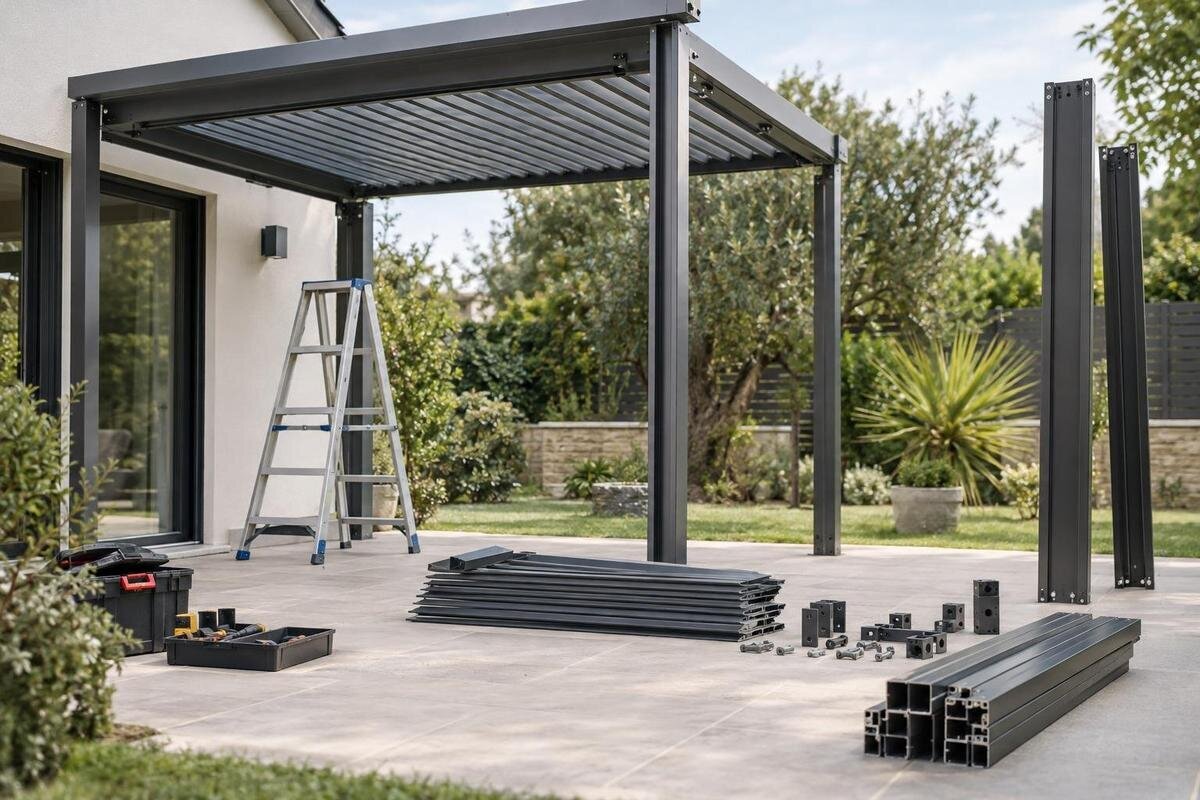
Pergola relocation guide
Moving an aluminium pergola is not simply a question of whether its frame can be taken apart. The exact model, assembly method and condition, the existing connections, and the demands of the new site all affect what can be reused. Assess these points before dismantling: otherwise, parts may be transported only to find they cannot be refitted, or that the new position needs a different support arrangement. A move should be planned as a new installation, not assumed to be a transfer of the old one.

01
Can an aluminium pergola be dismantled and reinstalled?
An aluminium pergola may be capable of dismantling and reinstallation, but the material alone cannot confirm that. The answer depends on the exact model, how its parts are joined, the original installation method, any changes made since purchase and its present condition. It also depends on whether the manufacturer’s instructions still apply to the unit and whether replacement parts can be identified for anything that cannot be reused. The receiving site matters just as much: an arrangement that worked in one position cannot automatically be assumed suitable elsewhere. Treat the move as a fresh installation assessment, not a guaranteed reuse of everything that comes down.
Separate the decision into three questions: can this exact structure be dismantled safely under its instructions; which components may be reused after inspection; and can the intended arrangement be installed appropriately at the new site? The answers can differ. A frame might remain serviceable while its anchors need replacing, or most parts might be sound while the old wall connection cannot be reproduced. Ask the supplier or a competent installer to review the model information, photographs and destination before booking removal. If the identity or assembly method is unclear, pause rather than relying on a generic diagram or visual guess.
Identify the model and original installation
Record the exact product name and model code, order confirmation, serial label if fitted, purchase date, original manual and any technical drawing. Note who installed it, whether it is wall-connected or separately supported, and whether screens, lighting, controls or other additions were fitted later. Take clear photographs while everything is still assembled: overall views from several sides, each connection, labels and any alteration or damage. Include the dimensions as the structure stands now, but distinguish measurements you have taken from those in the original documentation. These records help a technician identify the instruction set and separate original components from later changes.
When documents are incomplete, a current listing may help describe the product name you believe matches, but it cannot prove the identity of an older unit. The Bloomcabin Pergola product page provides a named reference to include with your enquiry. Across the catalogue, names and photographs do not establish an older structure’s dimensions, revision, component compatibility or installation requirements. Share the reference alongside your original paperwork and photographs, and explain any differences you can see. If a label is missing or unreadable, say so. This gives the supplier a clearer starting point than choosing a model code solely because the frame looks similar.
02
Separate reusable parts from parts that need replacing
Make an inventory that separates the main posts and beams from roof elements, joining brackets, fixings, seals, gutters and accessories. The parts will vary by model, so use its manual and parts list rather than assuming every pergola has the same components. Photograph visible bends, cracks, looseness, corrosion, damage to the finish or worn seals, and record where each issue occurs. A clean-looking surface does not prove that a connection is serviceable; an installer may need to inspect joints and attachment areas once the structure is safely dismantled. Mark each item as apparently undamaged, uncertain or visibly damaged, rather than labelling the entire frame reusable.
For any moving or adjustable roof elements, record their type, controls and observed condition separately from the frame. Note missing pieces, unusual noises, leaks or changes in operation so the assessment addresses known issues as well as visible damage. If you are considering a replacement instead, include Bloomcabin’s bioclimatic pergola as a separate option in the enquiry, rather than assuming its parts will fit the existing unit. For relocation, ask how each uncertain component will be assessed and recorded after removal. Keep the inventory organised by assembly so that a damaged roof part is not overlooked simply because the main posts and beams appear sound.
Plan dismantling and transport as one controlled job
A large assembled frame should not be treated as a loose kit: the installer must determine the dismantling sequence and any temporary support needed for this particular structure. Do not begin by undoing whichever fixings are easiest to reach. Connections can hold parts in position, and releasing them in the wrong order may cause movement or damage. Follow the model-specific instructions and have an experienced installer assess access, handling and who will carry out the work. If the structure is unstable, visibly damaged or difficult to reach, stop and ask for an on-site assessment rather than trying to free it by force.
Plan transport and storage at the same time as removal. Confirm the route from the pergola to the vehicle, loading space, protection for long components and a secure place to keep them if the new site is not ready. Agree how parts will be labelled and matched to photographs or the parts list, and who will check them on arrival. Ask the contractor to specify suitable handling and storage so components are not dragged, bent, dropped or mixed together. A missing label or a bag of unmarked fixings can make later identification much harder, even when the main frame appears intact.
03
Reassess existing fixings and connections
Before fixings are removed, document how the pergola is attached: to the ground, a prepared base, a wall, or a combination, as applicable. Ask the installer to inspect visible movement, gaps, cracks or damage in the surrounding material, water staining and corrosion around connection points. The condition hidden behind a bracket or post base may only become clear during professional removal, so allow for findings that cannot be confirmed from photographs. Do not assume anchors, bolts, brackets or old holes are reusable simply because they held the structure before. Suitability depends on their condition, the exact system and the supporting material at the new location.
Wall-attached arrangements need a separate record of the wall-side brackets and the wall’s condition, not just the parts away from the house. Photograph the junction from accessible positions and note any previous repairs, gaps or staining for the installer to investigate. If you are also pricing a new wall-mounted arrangement, the Bloomcabin Lean-To Pergola can be identified separately in the comparison. For the existing structure, request a record of which brackets and fixings may be retained, which need further inspection and which require replacement. Include responsibility for making good the old attachment points in the removal quote, especially if the property will be handed over before reinstallation.
Measure the new site against the complete structure
Measure the planned footprint, not only the roof area. Post positions, beam projection and overall height can determine whether doors, windows, paths, drains, lights and access routes remain usable. Check both the space where the pergola will stand and the room needed to reach its connections for future inspection. If a roof, screen or other fitted component needs operating or access clearance, include that in the layout. Compare measurements with the exact model drawing where available and resolve any differences with the installer before removal. A product photograph may show the general appearance, but it is not a reliable measuring document.
A catalogue area can help with an initial comparison, but it is not a substitute for the unit’s actual dimensions. The regular pergola model listing gives a range of 97–258 ft²; that stated range does not identify the footprint of an existing structure or the clearance the new site needs. Record post positions, outside dimensions and height on a sketch of the destination, with nearby doors and other obstructions marked. Confirm which way the structure will face and whether its original orientation can be retained. If the intended spot is smaller or differently shaped, ask whether the model supports a revised layout rather than trimming parts or changing their positions yourself.
04
Check the new base and wall support
Inspect the destination independently of the old base. Note the surface type and visible condition, whether it is level and unobstructed, how water drains, and any cracks or movement. Do not infer suitability just because paving or a slab looks substantial. If work may involve excavation, identify buried services before contractors plan it. The installer or another appropriate professional should assess whether the proposed support arrangement matches the pergola’s instructions and the actual ground or structure. This cannot be resolved by copying the old anchor positions: the new surface, layout and connections may all differ.
If the destination uses a house wall, discuss its construction and condition with the installer, along with openings and proposed attachment positions. When comparing relocation with a new Bloomcabin lean-to pergola, have each proposed arrangement assessed against that wall rather than assuming the same connections will serve both. Mention known repairs and provide any relevant building information you already hold. A separately supported pergola also needs its own base assessment. Agree who will inspect the supporting structure and specify any necessary preparation before installation is booked. Check with the relevant local authority or an appropriate professional whether permissions or site restrictions need attention; moving within the same property does not settle that question.
Give moving roof parts and controls separate attention
Treat moving roof parts and powered additions as systems to be checked, not just items in a component count. Record whether roof panels or louvres move as expected, any issues with the controls, and whether lighting, sensors, screens or other accessories are present. Do not force a mechanism for a demonstration or assume its operation will be unchanged after transport. The original manual should show what belongs to the unit; the installer can identify items that need specialist handling. Photograph switches, labels and connections only from accessible positions, and note faults without opening electrical housings or removing covers.
If any part is powered, arrange its disconnection, inspection and reconnection with a qualified service professional; the frame installer may not be the right person for every service task. Confirm who is responsible for controls, lighting or other equipment before work begins, and what operational checks will follow reinstallation. If you are comparing a replacement such as the Bloomcabin Bioclimatic Aluminum Pergola, ask separately about the equipment included and the service work it would require. For the existing system, keep a record of controls and any available instructions with the labelled components. Include this work explicitly in the relocation quote so responsibility is not left unclear between contractors.

05
Get a written parts and installation assessment
Ask for a written assessment that distinguishes dismantling, transport, storage, inspection, reassembly, fixings, site preparation and any electrical work. It should state which parts are expected to be reused, which need confirmation after removal, what replacements may be needed and what happens if hidden damage is found. Clarify whether the quoted work includes storage, waste disposal and access arrangements, and how additional work will be agreed if the assessment changes. Ask the supplier, manufacturer or original installer whether the proposed work could affect existing warranty or support arrangements. A clear scope helps you compare like with like, rather than relying on a single headline estimate.
Send the supplier one organised enquiry containing the identification records, component inventory and photographs of both sites. Number the photographs so replies can refer to a particular joint or damaged part without ambiguity. For a replacement comparison, name the proposed product, such as Bloomcabin’s bioclimatic model, separately from the structure being moved. Ask for part identifiers for any proposed replacements and distinguish confirmed availability from items still awaiting identification. Agree who will approve additional parts if hidden damage is found, and whether work must pause until they arrive. Keep the replies and revised parts list with the quote so everyone works from the same agreed scope.
When does replacement make more sense?
Relocation is easier to assess when the unit is identifiable, its frame and components pass professional inspection, parts support can be confirmed, and the new site can meet the system’s installation requirements. Compare replacement if the manual is missing, damage cannot be assessed, key parts cannot be identified or the new arrangement would need changes that are not supported for the model. These are reasons to investigate alternatives, not automatic proof that the pergola must be discarded. Compare the complete project scopes: removal, transport, inspection, parts, new-site work, installation and what happens to the existing structure.
Request two clearly separated quotes if both routes remain realistic: one for relocating the existing unit and one for supplying and installing a replacement. A named option such as Bloomcabin’s regular pergola model gives the replacement enquiry a clear reference, while its drawings and installation requirements still need their own site review. Compare what each quote includes, the uncertainties remaining and how those uncertainties could affect the sequence of work. For relocation, identify any costs that cannot be settled until dismantling exposes the joints. For replacement, include removal of the old structure. The useful comparison is between complete projects, not a moving estimate on one side and a product price on the other.
Frequently asked questions
Can an aluminium pergola always be dismantled?
No. It depends on the specific model, how it was assembled, its condition and the instructions for it. Some components may be reusable while fixings or other parts need assessment or replacement. Ask for a model-specific review before removal rather than relying on the fact that the structure was assembled in sections.
Can I reuse the original anchors at the new site?
Not without checking. Their condition, the connection design and the new supporting surface all matter. An anchor that held the pergola in one place does not prove it is suitable elsewhere. Ask the installer to specify which fixings may be retained and which need replacing; do not use old holes as a layout guide.
Can I dismantle a pergola myself?
Do not treat it as an ordinary flat-pack task. A large frame may move when connections are released, and powered parts bring separate service requirements. Use the exact manual and arrange competent installation support. If controls or wiring are fitted, leave disconnection and reconnection to a qualified service professional.
What should I send when asking about spare parts?
Provide the model label or best available identification, order details, manual or drawings, and clear photographs of the whole structure and individual components. Include close-ups of fixings, visible damage and any added controls. State what is uncertain, and ask the supplier to confirm compatibility against the exact model rather than a similar-looking product.
Could moving the pergola affect its warranty or product support?
Possibly; terms and support arrangements vary. Before work starts, ask the supplier, manufacturer or original installer whether dismantling, third-party work, reused fixings or changes at the new site affect any existing cover or support. Request the answer in writing, and do not assume either that cover continues unchanged or that it ends automatically.
Moving an aluminium pergola is easiest to judge when identification, parts assessment, transport and new-site checks are treated as one project. Confirm the manual, have the structure and fixings assessed before removal, and settle the new layout and support conditions before parts are moved. If a detail remains uncertain, hold the dismantling date until the manufacturer or installer has answered it. A supported relocation or a clearly scoped replacement is a better basis for a decision than assuming that an intact-looking frame will fit a new site.
