
Multipoint Door Locks: What Should You Check Before Buying?
UK door hardware buying guide
A replacement patio or entrance door can look straightforward until the lock is discussed. The old door may have a long strip of hardware along its edge, yet the new opening could have different handing, a different active leaf, new handles or a changed threshold. A multipoint lock therefore needs to be chosen as part of the complete door arrangement. Before ordering, establish how the door opens, who will use it, how it must be locked from both sides and how the sash meets the frame. Then ask the supplier to confirm the compatible lock case, locking elements, cylinder, handles and frame keeps for that precise configuration. This turns a vague request for “more locking points” into a specification that can be fitted, operated and maintained sensibly.
Start with the opening you are actually buying
A multipoint lock secures a door at several positions along its locking edge through one coordinated mechanism, but that description does not identify a universal product. Start with an opening record: inward or outward movement, hinge side viewed from outside, approximate opening size, intended use and whether the project is new work or a retrofit. For a replacement, photograph the whole door, lock edge, hinges, frame and threshold. Mention recurring problems such as rubbing, lifting the sash to lock or difficulty during wet weather. That evidence gives a supplier a more useful starting point than asking generally for a secure multipoint lock.
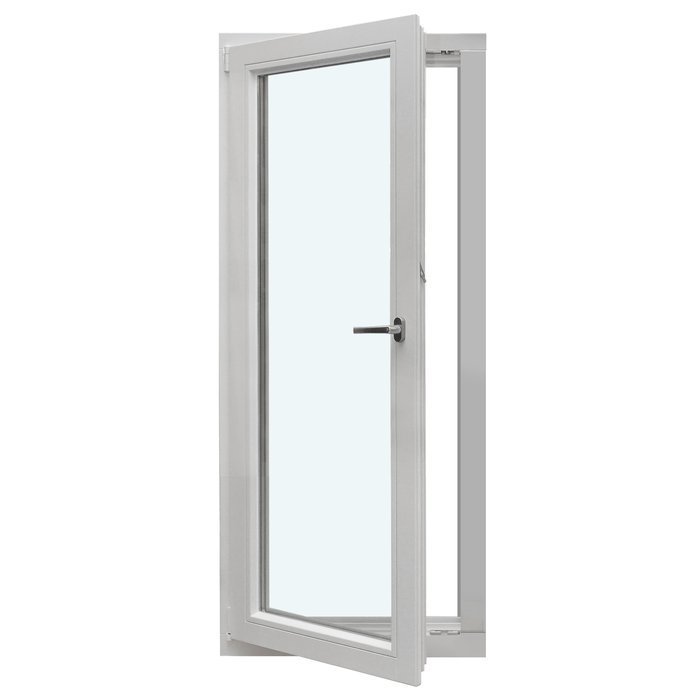
A product title confirms an opening configuration, not unseen lock details. For example, outward-opening external doors may suit a site where internal floor space is limited, but the proposed lock, cylinder and handles still require confirmation. Check the swing against paths, steps, planting, gates and shelter. Record any alarm contact, access-control device, letter plate or door viewer that must coexist with the mechanism. If an existing frame or threshold will remain, say so before a new leaf is specified. No quantity of locking points can correct a swing obstruction, incompatible frame preparation or an opening that has been measured from the wrong side.
Treat operation as a daily-use decision
A locking-point count says little about how the door feels in use. Ask for the full sequence from both sides: does pulling the door shut only engage the latch, must the handle be lifted, when is a key turn required, and what releases every locking element? Have this demonstrated or recorded for the quoted arrangement. Consider somebody arriving with shopping, a child being supervised near the doorway or a visitor unfamiliar with the mechanism. The right routine is one regular users can repeat reliably. A mechanism may be technically compatible yet prove frustrating if everyone expects the door to work like a conventional latch-only entrance.
Distinguish clearly between closing, latching and locking. State who needs key access from outside, whether the inside is to use a key or another operating arrangement, and whether the exterior has a lever or pull. For a panelled outward-opening entrance door, those decisions should be coordinated with the door preparation rather than added after manufacture. Ask what happens if the handle is lifted before the sash is fully home and how a user can recognise full engagement. Resistance should not simply be overcome by force: it may indicate poor alignment, an incorrectly positioned keep or a sash that has not closed squarely.
Look beyond a simple count of locking points
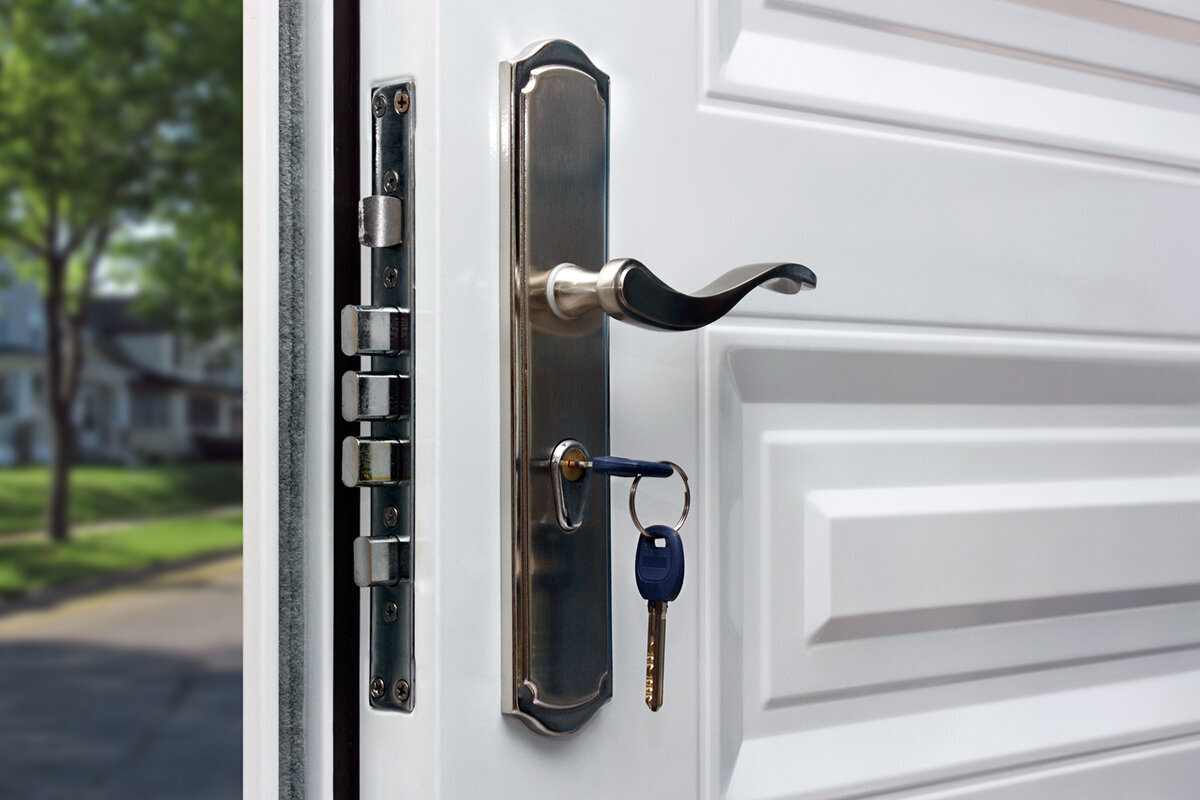
Multipoint mechanisms can use different locking elements at different positions. Ask for the exact arrangement proposed for the selected door rather than assuming that one type or quantity is always preferable. A drawing should identify the latch, other locking elements and their matching frame keeps. This allows you to see where the mechanism engages and whether the description in the quotation matches the door. The strip works with the hinges, sash, frame and threshold; it is not an independent security upgrade. Accurate meeting between those parts matters more to everyday operation than an isolated photograph of hooks, rollers, bolts or a central lock case.
Give the frame receivers equal attention. Confirm that compatible keeps are included, identify who fits them and establish whether their positions are prepared during manufacture or set on site. If only a leaf is being replaced while the frame remains, ask a competent specialist to confirm that the retained construction can accept the proposed hardware. A generic strip selected by appearance is risky because faceplate size, fixing positions, gearbox location and engagement geometry can differ. Request component references and a marked drawing for the complete set. That record also makes later maintenance more practical than relying on a broad description such as “five-point lock”.
Specify the cylinder and key arrangement early
The cylinder accepts the key, but its dimensions and format must suit the door thickness, lock case and handle furniture. Tell the supplier which sides need keyed access and what form of internal operation is intended. Ask how the cylinder will be measured in the assembled door and whether escutcheons or other fittings are included. Do not assume that an existing cylinder can transfer merely because its outline looks similar. If it projects, sits too deeply or conflicts with the handle backplate, the result may be difficult to use or visibly unfinished. The cylinder should therefore appear as a defined item in the hardware schedule.
Plan keys before confirming the order. Decide who needs access, where a spare will be held and whether entrance and garden doors should be operated separately or as an agreed compatible arrangement. If considering a single-leaf outward-opening patio door, explain whether people regularly enter from the garden or mostly unlock it from inside. That routine affects the usefulness of an external handle, cylinder or pull. Ask the supplier to label the internal and external components, finish and key plan in writing. Terms such as thumbturn, keyed cylinder, lever and pull describe different functions; they should not be treated as interchangeable decorative options.
Match handles, spindle and furniture to the lock
Handles transmit movement to the lock, so compatibility must be confirmed rather than inferred from appearance. Ask whether the set is lever/lever, lever/pull or another arrangement, which spindle it uses and how that spindle engages with the lock follower. Confirm how the cylinder relates to the backplate or separate escutcheon. If a particular colour or finish matters, specify it alongside the operating requirements and check that every visible piece is included. A catalogue image can suggest a style, but it does not prove that the illustrated furniture is supplied with the quoted lock case, door thickness or opening direction.
Consider reach and grip for everyone who regularly uses the entrance. Can they lift the lever comfortably, hold it while turning a key and understand when the door is secured? Think about wet hands, gloves, reduced grip and approaching while carrying bags. If an external pull is proposed, ask what operates the latch and additional locking elements on each side. Locate any letter plate, viewer, access-control reader or alarm contact on the same elevation so internal parts do not compete for space. Approving one coordinated hardware drawing is safer than selecting attractive accessories independently and discovering a conflict after the door has been prepared.
For paired doors, identify the active leaf
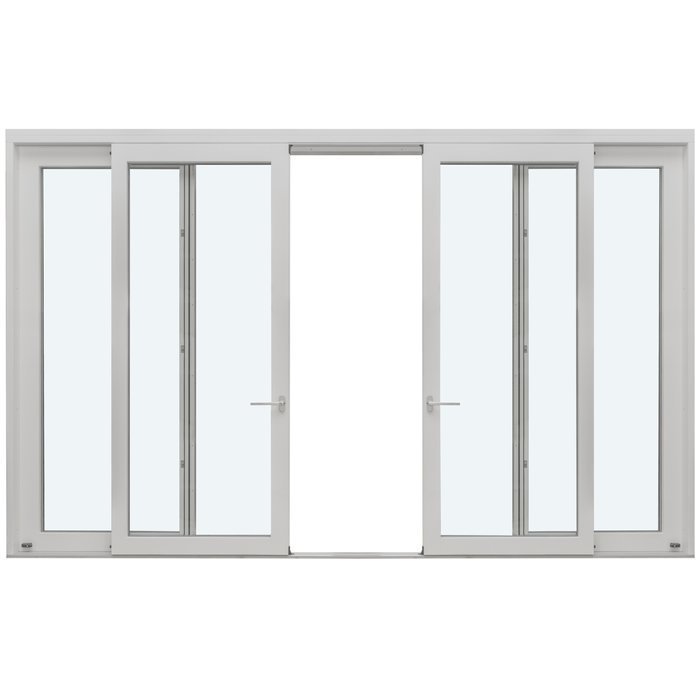
A pair of doors introduces decisions that a single leaf does not. Identify which leaf opens first, how the second leaf stays secured and how it is released when the full width is needed. Ask whether catches on the inactive leaf are convenient to reach and what closing order users must follow. This affects ordinary garden access, entertaining and moving furniture, as well as where the locking elements are received. The active leaf may lock into the frame, the meeting stile or a combination of components. A symmetrical appearance does not mean that both leaves carry identical mechanisms, so the active side must be recorded explicitly.
For inward-opening double-leaf patio doors, check the active leaf against internal furniture and curtain positions. With outward-opening double-leaf patio doors, assess the exterior swing area and approach. In both cases, request an elevation marking handles, cylinder positions, locking edges and the meeting arrangement. It should show which leaf opens first and whether both leaves can be operated without unusual force. If replacing a troublesome pair, provide photographs of the central joint, top and bottom clearances and existing receivers. The cause may lie in alignment or the wider assembly rather than the central lock alone. Include the correct closing sequence in the handover.
Keep sliding hardware separate from hinged-door assumptions
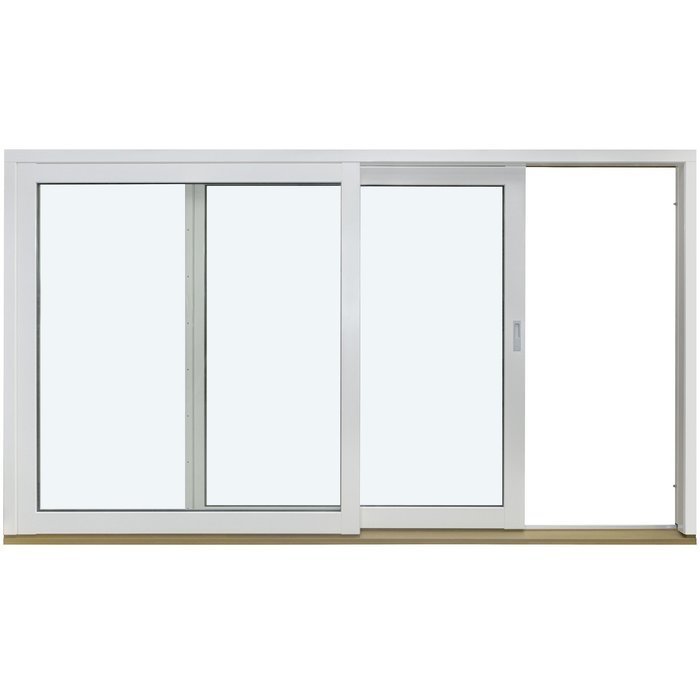
Do not transfer a hinged-door lock specification automatically to a sliding opening. Sliding panels have different movement, handles, meeting edges and locking interfaces. First identify how the panel travels and then ask for the operating sequence made for that system. A Patio Life side-sliding patio door establishes a side-sliding configuration, so its lock questions concern the proposed sliding hardware rather than a conventional hinged-door strip. Ask how the moving panel is brought fully closed, what action engages the mechanism and how the fixed and moving sections meet. Suppliers should describe the actual components instead of relying on the word “multipoint” as a complete specification.
For sliding doors, confirm the included handles and locking arrangement for the chosen design. Consider where a user stands, the available gripping space and whether curtains, blinds or nearby furniture could impede the handle. Ask how the closed position is recognised and what adjustment is available if the moving panel no longer meets its receiver cleanly. Quotations using similar terms can describe different operating actions, so compare written sequences rather than feature counts alone. The threshold, panel movement, access route, glazing layout and hardware should be assessed together. A lock type associated with an entrance door should only be treated as an alternative if compatibility is expressly established.
Plan retrofit work from measurements and evidence
When replacing an existing mechanism, measuring only the visible faceplate is insufficient. Record its length and width, handle and cylinder centres, distance from the door edge to those centres, fixing positions and the location of every locking element and keep. Photograph the strip with the door open, the matching frame receivers, hinges and threshold. Include any legible maker’s marks, but do not assume that every current component carrying the same name is interchangeable. Previous repairs, wear and variations in door preparation may affect the choice. Provide dimensions in millimetres and label the viewing side so handing is not left to interpretation.
A new mechanism cannot compensate for loose hinges, a distorted sash, frame movement or a threshold that prevents proper closure. If the door must be lifted, pushed hard or held in position while locking, have the cause assessed before ordering parts. Agree whether the installer’s work includes diagnosis, adjustment, replacement components and final testing, or merely fitting hardware supplied by somebody else. This prevents a gap in responsibility when a correctly identified lock is installed into an opening that still does not align. Keep the photographs, measurements, component references and final adjustment notes with the property records; they can simplify future servicing or fault discussions.
Ask for configuration-specific supporting information
Product literature is useful only when its scope is clear. Request documentation identifying the door type, opening direction, lock arrangement, cylinder and furniture covered by your quotation. A general brochure may show several alternatives, so ask which image and description apply to the ordered configuration. Where performance or test information is relevant, establish what complete door-and-hardware arrangement it covers and whether changes in handles, glazing, dimensions or opening direction fall outside that evidence. Do not transfer a statement from one configuration to another without confirmation. Any project-specific compliance question should be reviewed using the complete specification by the appropriate qualified professional.
The quotation should distinguish the door from the lock case, locking elements, cylinder, internal and external furniture, keeps, finish, keys and optional access devices. Mark each item as included, excluded, alternative or awaiting confirmation. Ask who checks hardware compatibility before manufacture and what information will accompany delivery. Also establish the process for reporting missing parts, transit damage or an operational problem after fitting. Bloomcabin confirms a 5-year warranty for windows and doors. Delivery is normally 4–6 weeks, subject to order confirmation. These commercial details support planning, but they do not replace a configuration-specific hardware schedule or a clear allocation of fitting responsibility.
Finish with a practical pre-order review
Before approval, rehearse realistic situations: arriving with a key, entering from the garden, securing the property at night, letting a visitor leave and opening a second leaf for furniture. For each, identify the required actions—close, lift, turn, release or slide—and ask again if any step is unclear. Check swing, handing and active leaf against a drawing viewed from a stated side. Verify colours and handles, but also inspect the less visible lock case, cylinder, receivers and threshold details. Record who is responsible for measuring, compatibility approval, frame preparation and adjustment. A signed hardware schedule prevents verbal assumptions from passing unnoticed into manufacture.
Agree a handover test before fitting begins. It should cover closing without excessive force, moving the handle, engaging every locking element, locking and unlocking from each intended side and operating both leaves where applicable. For single-leaf inward-opening patio doors, check that furniture, curtains and the normal route through the room leave enough operating space. Ask for care instructions and identification of the supplied keys and hardware. The best multipoint lock is not selected through one headline feature: it is the arrangement that matches the door, frame and installation, provides an understandable routine and leaves enough documented information for adjustment and future maintenance.
Frequently asked questions
Do more locking points always mean a better choice?
No. What matters is how the lock case, locking elements, frame keeps, hinges, cylinder and handles work in the complete door. Ask for the proposed arrangement and supporting information for the exact configuration. A larger count alone does not establish compatibility, straightforward operation or accurate engagement with the frame.
Can I fit a multipoint lock to an existing door myself?
Replacement depends on detailed measurements, door preparation and the condition of the sash and frame. If the door rubs, needs lifting or makes the handle resist, investigate alignment rather than forcing a new component into place. A competent installer or suitable door specialist can assess the whole assembly and allocate the necessary work.
What photographs should I send when replacing a lock?
Photograph the complete door inside and outside, its opening edge, lock strip, handles, cylinder, hinges, frame keeps and threshold. Add close-ups of markings, damage and areas that rub. Include labelled millimetre measurements, state which side the door is viewed from and provide a closed-door image that shows the surrounding gaps.
Should the same key operate my entrance and patio doors?
That is an access-planning choice, not an automatic feature. First ask whether the cylinders and proposed hardware support the preferred arrangement. Consider who uses each entrance, how spare keys will be managed and whether separate access is preferable. Have the selected cylinder and key plan recorded explicitly before the order is confirmed.
What should I test when the door is handed over?
Test closing, handle movement, engagement, locking, unlocking and opening from every intended side. With paired doors, test the active and inactive leaf sequence and the full opening. Do not treat excessive force as normal. Record stiffness, rubbing or incomplete engagement promptly, and retain the supplied hardware information, care guidance and keys.
Next steps
Choosing a multipoint door lock is primarily a coordination task. Start with the actual opening, its movement, handing, frame and users; then specify the operating sequence, locking arrangement, cylinder, handles and keeps as one set. Retrofit work needs accurate measurements, photographs and diagnosis of any alignment problem before parts are ordered. For a new door, review a configuration-specific drawing and hardware schedule before confirmation, then agree the handover tests. This gives the supplier and installer a clearer brief while leaving users with a locking routine they can understand and operate consistently.
