
New vs Second-Hand Greenhouse: Which Is the Better Buy?
Greenhouse buying guide
New vs second-hand greenhouse: make the choice with clear eyes
A used greenhouse can be a satisfying garden find, while a new one offers a clean starting point. The better choice depends on how confidently you can assess what is included, what has aged and what your site needs.
Comparing a new vs second hand greenhouse is not simply a question of spending less today. A pre-owned structure may have character, a generous footprint or a desirable frame, yet its true value rests on its condition and whether the essential pieces have survived dismantling. A new greenhouse is more predictable, but should still be chosen carefully for the garden and the way you intend to grow.
Start with the place it will occupy. Measure the proposed base, observe shade through the day and think about access for pots, compost, tools and glazing. Then consider the greenhouse as a complete system: frame, glazing, doors, vents, fixings, base, gutters and instructions all affect whether installation feels straightforward or becomes a long-running reconstruction project.
This guide separates the practical questions from the temptation of a bargain. It will help you inspect a used greenhouse honestly, compare the risks against a new purchase and decide where your own time, confidence and garden plans place the greatest value. It is a buying guide, rather than a comparison of low-cost and premium greenhouse categories.
01 · First principles
Compare the whole project, not the listing
The useful comparison begins after the advertised figure. A used greenhouse can involve collecting long frame sections, labelling components, protecting panes and storing everything safely before assembly. It may also need cleaning, fresh sealant or replacement clips. None of those tasks makes it a poor purchase, but each deserves a place in your decision before you commit to collection.
With a new greenhouse, the project is easier to define from the outset: choose a format, prepare the foundation and organise assembly around the supplied components. That does not remove the need for care, especially when levelling a base and handling glazing, but it changes uncertainty into a sequence of planned jobs. For many households, that clarity is part of the value.
- List every likely task after collection, including dismantling, transport, sorting, cleaning, repairs and the preparation of a permanent level base.
- Compare the likely finished result, rather than treating a low collection price as the complete cost of ownership.
For a straightforward freestanding starting point, explore a standard Classic greenhouse alongside any promising local used listing.
02 · Used greenhouse inspection
Read condition from frame to foundations
Inspect a used greenhouse in person whenever possible. Look along aluminium members for twists, dents and corrosion around joints; check that door tracks are clean and that moving parts have not been forced. Small cosmetic marks can be entirely acceptable, whereas distorted frame sections or improvised structural repairs deserve much closer scrutiny. Ask why it is being sold and how long it has stood in its present position.
Glazing needs a calm inspection too. Count cracked, chipped or missing panes, and look for clouding, deep scratches and damaged edges. Check whether clips, cappings, seals and retaining pieces remain present. A greenhouse that looks complete from a distance may have been altered over years of use. Photograph details with permission, so you can assess them methodically once the excitement of viewing has passed.
- Bring a tape measure and compare overall dimensions, door openings and panel spacing with the space available in your garden.
- Ask to open doors and vents, then note any stiffness, loose hardware or missing pieces before arranging collection.
Where a wall can shape the layout, compare the dimensions of a full-size regular Lean-To greenhouse layout with the actual wall, path and roofline available.
03 · Completeness
Missing components change the calculation
A used greenhouse is only as useful as its complete kit of parts. Frames, glazing and a door are obvious, but overlooked elements can be equally important: brackets, corner pieces, bolts, nuts, clips, seals, roof vents, gutter sections and base connectors. Ask for an inventory before viewing, then sort and label every part during dismantling. A seller who has retained instructions gives you a valuable point of reference.
Replacement parts may be available for some designs, but never assume that an older greenhouse has a simple match. Profiles, hole positions, glazing sizes and fittings can vary between generations or manufacturers. Establish the maker and model where possible, and check what can actually be identified before treating a missing part as a minor issue. Unbranded structures require particular patience and practical judgement.
- Request clear photographs of corners, door assemblies, vent mechanisms and fixings, not just broad exterior views of the greenhouse.
- Count glazing panels against each bay and roof section, recording their approximate sizes before anything is removed from site.
A new standard Classic greenhouse kit can simplify the inventory question when you would rather begin with coordinated components.
04 · Moving day
Transport and dismantling are real risks
Dismantling is often the moment when a good used greenhouse becomes a more demanding project. Glass must be removed and protected with great care before frame sections are released; loose bolts and small fittings need labelled containers. Work methodically, avoid rushing in poor weather and take photographs at each stage. If the seller has already dismantled it, ask how components were grouped and whether glazing has been stored safely.
Plan collection around the longest frame sections, the quantity of glazing and safe loading rather than guessing from the greenhouse footprint. You will need suitable protection, secure restraint and a dry temporary storage area at home. Do not leave panes leaning where they can slip or be knocked. If transport logistics feel marginal, a new purchase may offer a more manageable route for your circumstances.
- Photograph each elevation before dismantling, then label matching frame pieces in a sequence that will make later assembly easier.
- Keep glass upright with protective separation and never rely on loose stacking in a vehicle or temporary garden storage area.
If your access is narrow, review the assembly planning for a full-size regular Lean-To greenhouse installation before deciding how much recovered material you can safely manage.
05 · Garden fit
Choose form for the way you grow
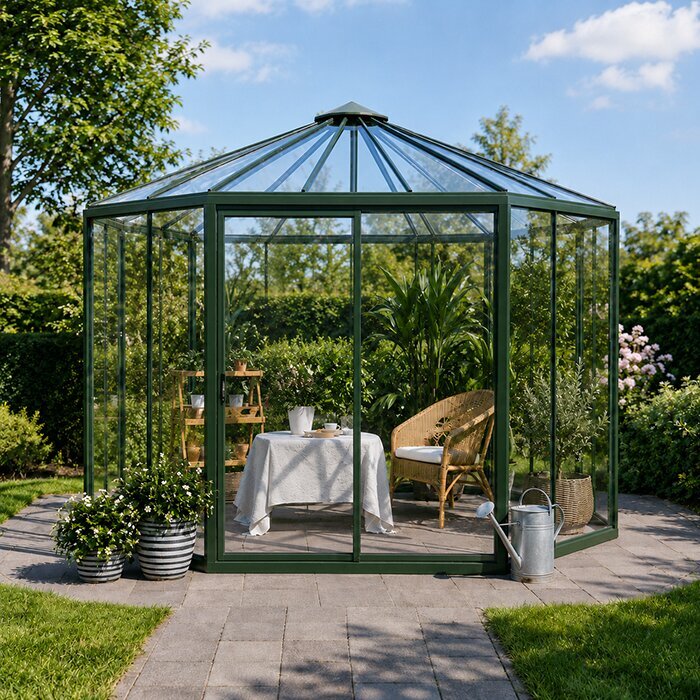
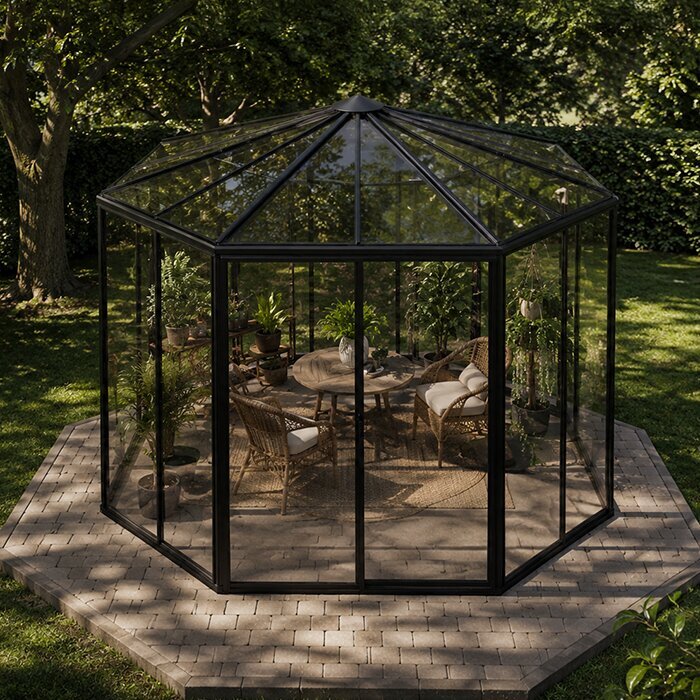
A greenhouse can be in fine condition and still be the wrong fit for your garden. Consider door clearance, routes from the kitchen, nearby trees, privacy, drainage and the working room needed around the structure. Think beyond seed trays: will you want a potting surface, shelving, taller crops or a chair for quiet tending? The right footprint should support your ordinary gardening habits, not just fit into an empty corner.
New models make it easier to select a proportion and visual character intentionally. A used greenhouse asks you to make the garden accommodate what has become available. That can be delightful in an established plot, particularly where a distinctive structure complements the setting, but it is worth drawing the proposed outline first. Marking it on the ground reveals conflicts that photographs cannot show.
- Mark the proposed footprint with string or canes, including door swing and a practical approach route from the house.
- Observe sun and shade over several days, while also considering shelter, falling debris and water run-off around the chosen site.
For gardens that suit a classic freestanding silhouette, consider a standard Classic greenhouse design as a benchmark for usable internal space.
06 · Installation
Set aside time for a sound start
Whether new or used, a greenhouse benefits from a stable, level foundation prepared for its chosen location. Do not use an uneven surface to compensate for a frame that has settled or become distorted. Check drainage around the site and leave sensible access for cleaning glass, maintaining gutters and opening doors. The structure should be assembled in accordance with the applicable product guidance, with fixings and components used as intended.
A second-hand project requires an extra stage of assessment during assembly. Stop if holes do not align, a member appears under strain or glazing does not sit as it should; forcing components can create a problem that only becomes visible later. With a new greenhouse, follow the current instructions carefully and confirm that the model, base and site are compatible before beginning work.
- Prepare the base before collection or delivery so parts do not linger exposed while site decisions remain unresolved.
- Build with another capable adult where appropriate, allowing enough uninterrupted time to check alignment before glazing is installed.
A full-size regular Lean-To greenhouse model also calls for careful checking of the supporting wall and surrounding access before installation begins.
07 · Long-term ownership
Think beyond the first season
The more you intend to use a greenhouse, the more useful it is to consider ongoing care at the point of purchase. Doors, vents, gutters, glazing retention and seals all benefit from occasional inspection and cleaning. A used greenhouse may have already proved durable in one garden, but it may also arrive with wear that asks for attention sooner. Be realistic about the maintenance you enjoy doing and the spare time you have.
New ownership can make product identification and future enquiries more straightforward, while a used greenhouse can come with an uncertain history. Keep records of your own installation, photographs and component details regardless of which route you choose. These notes are useful when maintaining the structure, sourcing compatible items or explaining its configuration to a future owner. Good record-keeping protects the value of your effort.
- Clean gutters and check drainage regularly, because blocked run-off can affect the ground around any greenhouse foundation.
- Keep an assembly record with photographs, component labels and receipts for any replacements or repairs made over time.
For clear product identification from day one, look at a standard Classic greenhouse purchase and retain its documentation with your garden records.
08 · Final decision
Match risk to your confidence
A second-hand greenhouse is a sensible choice when its condition is visible, its parts are accounted for and you have the skills, help and flexibility to manage collection. It can suit a gardener who enjoys restoration and does not mind a little detective work. Walk away from pressure to decide quickly, vague descriptions or a structure that cannot be properly inspected; another opportunity will appear.
A new greenhouse is often the calmer decision when the garden project has a defined purpose, the household wants a reliable route to completion or the buyer is new to assembly. It is not automatically the right answer for every plot, just a way to reduce unknowns. Consider your site, practical support and appetite for remedial work, then choose the route you will feel comfortable maintaining.
- Write down your non-negotiables before viewing used options, including dimensions, door position, glazing condition and the availability of all fittings.
- Ask your insurer whether a proposed garden structure affects your policy, and confirm local requirements with the relevant authority when needed.
For a planned garden project, a full-size regular Lean-To greenhouse option may offer a considered alternative to adapting a used freestanding structure.
Comparison
New and used at a glance
Neither route wins in every garden. Use this comparison to focus on the issues that tend to shape real ownership: confidence in condition, completeness, installation planning and the effort you are ready to contribute after the purchase.
| Buying factor | New greenhouse | Second-hand greenhouse |
|---|---|---|
| Starting condition | Known, unused components supplied for the selected model. | Varies; inspect every structural and glazing component carefully. |
| Parts and instructions | Coordinated components and current assembly information are easier to establish. | Inventory may be incomplete; instructions or model details can be absent. |
| Garden fit | Choose a form around the prepared site and growing plans. | Adapt the available structure to your site, if dimensions permit. |
| Collection and handling | Plan installation around supplied packages and your prepared foundation. | Dismantling, loading, protection and temporary storage require extra organisation. |
| Future maintenance | Product identity supports orderly record-keeping and future enquiries. | History may be unclear; document condition and any repairs yourself. |
A practical buying plan
Give either option the same disciplined preparation. A short plan reduces impulsive decisions and makes it easier to recognise whether a used greenhouse is genuinely ready for a new garden.
01
Measure the site
Mark the footprint, door clearance and working space. Check sun, shade, paths, drainage and whether a wall or boundary affects the proposed position.
02
Define your growing needs
Decide how you will use the greenhouse through the year. Include room for staging, pots, taller plants, watering and comfortable access.
03
Set your used-buying criteria
Create a list of essential parts and acceptable wear. Include an identifiable frame, serviceable glazing, working doors and a realistic collection plan.
04
Inspect or specify
View used options methodically with photographs and measurements, or review new-model dimensions and installation requirements against your prepared garden site.
05
Prepare before assembly
Arrange a suitable level foundation, practical help and protected handling space. Keep instructions, photographs and labelled fittings together throughout the build.
Used greenhouse viewing checklist
Take this list to a viewing and resist judging from one flattering exterior photograph. The aim is not perfection; it is to understand exactly what you are taking on.
01. Confirm the greenhouse dimensions and compare them with a marked-out footprint in your own garden before agreeing collection.
02. Examine aluminium frame members for bends, cracks, corrosion, poorly aligned joints and evidence of improvised structural repairs.
03. Count glass or panel sections, noting cracks, chips, clouding, missing pieces and whether each section can be transported safely.
04. Test doors and vents where possible, checking tracks, hinges, catches and the completeness of their associated fittings.
05. Ask whether the original instructions, model name, assembly photographs or any component inventory are still available.
06. Check for brackets, bolts, clips, seals, cappings, gutters and base connectors rather than assuming small items are included.
07. Plan safe dismantling, vehicle loading and temporary storage before collection; do not make arrangements that depend on rushed handling.
08. Consider the likely maintenance work honestly, then check planning questions with the local authority and insurance implications with your insurer.
Questions buyers often ask
Is a second-hand greenhouse worth buying?
It can be, provided the greenhouse is complete enough to assemble safely, its frame and glazing are in serviceable condition, and it suits your prepared site. Its value depends on more than the initial figure: collection, missing fittings, cleaning and your own time should all be part of the decision.
What is the biggest risk when buying a used greenhouse?
Missing or damaged components are often the most awkward issue. A frame can look sound while essential clips, brackets, panes or door parts have gone astray. Ask for a full view of the greenhouse, inspect it in person where possible and make a written inventory before dismantling begins.
Can I move a greenhouse without dismantling it?
That depends on its size, construction, access and the equipment available, but moving a glazed structure intact can introduce unnecessary risk. A careful, documented dismantle is often more manageable. If you are uncertain, seek appropriate practical help rather than improvising a lift or transport arrangement.
How do I know whether replacement parts will fit?
First identify the manufacturer and model, then compare the exact component, profile and dimensions with available information. Do not assume that parts from a similar-looking greenhouse are interchangeable. Older or unbranded structures can be harder to match, so confirm options before relying on a replacement solution.
Do I need permission for a greenhouse in the UK?
Requirements can depend on the property, location, dimensions, boundaries and other local considerations. Check the current position with your relevant local authority before installation, especially if the garden has unusual constraints. A seller’s experience at another address is not a reliable answer for your own site.
Should I insure a greenhouse?
Insurance arrangements vary by policy and by the details of the structure and garden. Ask your insurer whether you need to declare it, what conditions apply and what documentation they may want. Keep photographs, purchase records and notes about installation, whichever buying route you choose.
Explore greenhouse options
Choose the greenhouse you can finish well
The best new vs second hand greenhouse decision is the one that fits both your garden and your practical capacity. A well-kept used structure can be rewarding when it is complete and honestly assessed. A new choice can bring welcome certainty when you want to concentrate on creating a considered growing space rather than solving unknowns.
Do the measuring, inspect the details and plan the foundation before committing. Then choose a greenhouse whose scale, layout and maintenance needs feel realistic for everyday life. Bloomcabin can help you explore new greenhouse formats while you compare them thoughtfully with a local second-hand opportunity.
Find a greenhouse format that works with your site, growing plans and preferred route to installation.
