
How Pergola Privacy Changes After Dark
Pergola planning guide
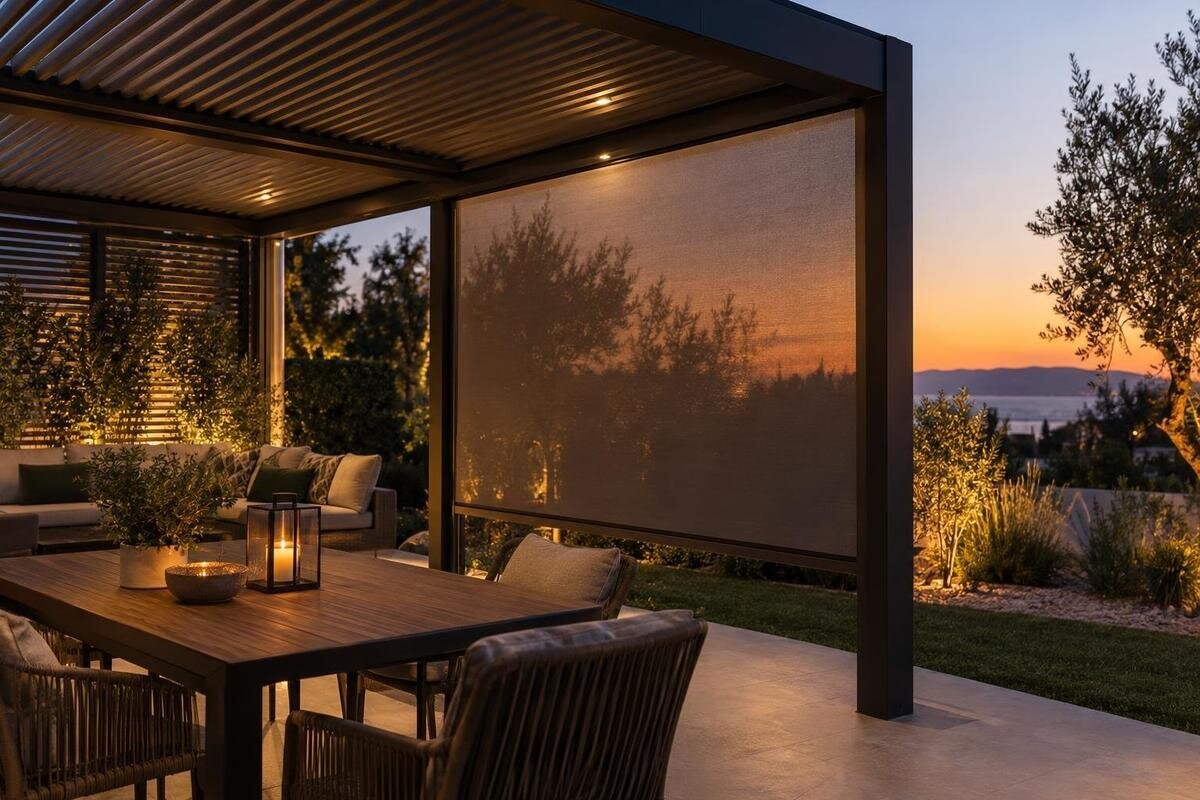
Privacy under a pergola can change sharply after sunset. A woven side or glazed panel that seems to screen a seating area in daylight may reveal silhouettes once the lights come on; reflections that obscure a view by day can disappear or move at night. The useful question is not simply whether a material looks opaque, but who can see what from each real viewpoint under the lighting you intend to use. This guide explains how to test fabrics, glazing and light placement without assuming a particular side accessory comes with a pergola.

Why privacy can change after dark
During daylight, the bright sky and garden can dominate what you see, while the seating area sits in relative shade. A side may therefore look like a visual barrier from one direction even if light passes through it. After sunset, a lit pergola becomes the brighter scene against a darker garden. When the occupied side is brighter than the observer’s side, openings or transparent surfaces can reveal more detail and movement. A lamp may pick out faces, clothes and activity that were hard to distinguish in daylight. The fabric or pane has not changed; the contrast across it has.
People outside may then make out forms that occupants, looking towards a dark garden, cannot see in return. This is not a guaranteed one-way effect: a bright garden light or a neighbour’s lit window can alter the balance, while a reflection may mask one angle and not another. Ambient light also falls as dusk turns to full darkness, so one quick check may not represent the whole evening. When considering Bloomcabin Pergola, separate the choice of structure from the privacy requirement. Decide whether you want to hide recognisable faces, obscure movement or simply make the seating area less exposed. These are different outcomes, and stating your priority makes it easier to assess a proposed side treatment.
Map the views that matter
Walk the perimeter at dusk and list the places from which someone could see the seating: a neighbouring patio, shared path, gate, nearby garden seat or an upper-floor window. Mark the intended chairs, table and entrance on a simple plan. A screen interrupts only sightlines that cross the material. A view may pass around a short return, over its top, through an opening or across an uncovered end. A quick plan is more useful than choosing from a product photograph because a side that masks one straight view may leave an oblique approach open. Note which views matter most instead of treating the whole boundary as equally exposed.
Repeat the check from seated and standing eye heights, not only from the centre of the garden. A neighbour looking from an upstairs window may have a downward view over a panel; someone on a path may see around an end. A rough side-view sketch can help reveal what a plan misses, especially where the observer is elevated. Note whether each line crosses the proposed screen, a doorway or an uncovered corner. This does not mean every side must be closed: it identifies the direction needing attention. Use the sketch when discussing Bloomcabin Bioclimatic Aluminum Pergola, and request the dimensions of the proposed configuration and its side openings. The useful comparison is between your sightlines and the area a side component would actually cover, rather than the overall appearance of a catalogue photograph.
Test the pergola as people will use it
An empty pergola can pass a privacy check that a lived-in one fails. A seated person presents a different outline from someone standing to serve a meal or walking between chairs and the house. Include each regular seat, the route to an entrance and any spot where somebody may pause. Look for visible heads and shoulders, moving hands and activity behind a screen, not just whether a face is recognisable. If furniture may be rearranged, test the layout that puts people closest to the exposed boundary as well as the usual one. This makes the privacy requirement concrete: hiding activity is different from simply softening detail.
Add light positions to the plan. An overhead lamp, table light and a light near a side can illuminate a person or fabric from different directions; backlighting may make a silhouette more distinct, while a bright surface can draw attention to the boundary. The effect depends on placement, so test the actual lamps and normal settings rather than guessing from the fitting type. Have one person occupy the space while another checks outside at ordinary standing and seated heights, including while the person moves. If comparing a frame such as this Bloomcabin model, bring the seating-and-light plan to the configuration discussion. Mark the space needed to pull chairs out and move behind them, so a proposed screen position is assessed against the occupied layout rather than an empty terrace.
What fabric weave reveals at night
Fabric privacy depends on weave openings, thickness, colour, tension and the distance between the fabric and a person—not on a generic label such as privacy screen. Openings that are hard to notice from the sunlit side can show interior movement when a lamp is behind them. A denser, more opaque fabric limits direct views through its surface, but does not seal the whole side: sight may remain around edges, seams, a gap below or above a partial panel. Separate softening the view from concealing occupants. Decide whether a blurred body outline is acceptable or whether the aim is to prevent direct recognition.
Colour alone is not a reliable guide. A dark, open weave may still reveal a brightly lit person after sunset, while a pale fabric may become conspicuous when illuminated. Neither colour establishes how much detail will be visible: openings in the weave and the lighting on each side remain important. Compare materials under the same conditions rather than treating a darker shade as an automatic privacy upgrade. For any fabric proposed alongside the Bloomcabin Pergola listing, ask for the material reference and a representative sample. Keep those details with your observations so that a later change of colour or weave does not get mistaken for the material you tested. A photograph can help identify the finish, but it cannot establish its night-time privacy.

Test fabric samples with real lighting
Small swatches show colour and texture but rarely reproduce a full side. Where possible, put the sample at the proposed height and orientation and look through it after sunset. Place a person in the usual seat and switch on the actual types of light you plan to use: overhead, dining or low decorative light. Ask the observer to check whether they can recognise a face, see a body outline, follow hand movements or only notice a general glow. Test with the light behind the person, to one side and off. The difference between these versions tells more than a bright afternoon glance.
Repeat from the nearest outside position and a more distant one, both square-on and at an angle. A fabric close to a lamp can glow; the same material further away may look different. Include the top and side edges rather than holding a rectangle in the middle of the view. If a full panel is unavailable, a safely positioned, full-size mock-up is more informative than a web image; do not rely on a small sample as proof. A phone’s automatic exposure can make shadows appear brighter or lights dimmer than they look, so use photographs as notes, not verdicts. When enquiring about Bloomcabin Lean-To Pergola, ask whether a representative sample or demonstration of the proposed side material is available. Record any differences between that demonstration and your terrace, particularly the lighting and viewing distance.
How glazing behaves after sunset
Clear glazing does not conceal a person simply because it reflects light in daylight. After dark, a pane may reflect an interior lamp and still transmit a view through it, especially when the occupied side is brighter than the outside. Tinted or reflective treatments can alter the view, but their effect depends on brightness on both sides and the observer’s angle; a mirror-like daytime appearance is not proof of night privacy. Treat glass as a boundary, not automatically as a screen. Check whether the objective is a clear view, a blurred view or visual concealment: these are different requirements.
Obscure or frosted glazing scatters detail rather than becoming an opaque wall. It may blur features, while a person close to the pane or strongly backlit can still produce an outline. Texture, pattern, distance between the person and glass, and light direction all affect the result. Reflections can also look different from inside and outside, so test both views. Check a pane at its proposed orientation from outside with the seating-side lights on, not just against a bright showroom. If glazing is proposed for the bioclimatic aluminium pergola model, request the exact glazing description rather than relying on terms such as frosted or tinted. A sample of a different finish cannot establish how the proposed pane will obscure faces or silhouettes.
Plan the lights as well as the screen
Plan lighting with privacy rather than trying to solve the problem by making the area uncomfortably dark. List the tasks—eating, reading, moving between seats—and identify lights that face an exposed boundary or sit behind a person from an observer’s viewpoint. A bright source can outline a person or illuminate a screen; an overhead light and a table lamp may produce different results because they fall at different angles and heights. Where the chosen fittings allow, direct light onto the task or a nearby surface instead of towards the garden or a neighbouring window. Glare can make it harder to see for a moment, but it is neither dependable nor a considerate privacy measure.
Consider the lighting combinations used over an evening, rather than assuming every fitting will always be on. Dining may call for a table light, while conversation afterwards may need less illumination across the seating area. Dimming or separate controls can offer flexibility where compatible fittings and controls are provided, but a lower setting is useful only if people can still carry out the intended activity comfortably. Include light spilling through the house doors in this assessment: switching off a terrace lamp may have little effect if the room behind remains brightly lit. For this Bloomcabin model, ask what lighting, if any, is supplied and what control options are available. Have any proposed fixed electrical work assessed by a qualified electrician; a privacy plan is not an installation specification.
Match the side treatment to the exposed view
Once the exposed sightline is clear, choose the amount of screening it actually needs. A partial panel or open weave may soften a diagonal view and retain some outlook, yet still show movement or leave gaps. A more opaque surface blocks direct sight through its covered area, but not over its top, around an end or through an entrance. Clear glazing generally maintains a view through the pane, while obscure glazing blurs it and may still show outlines. Compare these effects against the specific viewpoint rather than assuming that more enclosure automatically means a better night-time result.
Before committing, confirm that the proposed side component is approved for the exact pergola model and whether it is included or an optional extra. A product photograph may show a configuration different from the base listing; a separately bought screen is not automatically compatible just because its material looks suitable. With the Lean-To Pergola listing as with any frame, obtain confirmation of the exact combination and relevant installation requirements. Ask how the component meets the posts, corners and entrance, and request details of any remaining gaps. Those junctions affect the view even when the central material is opaque. Keep this information with the quotation so you can distinguish the configuration you assessed from alternatives offered later.

Run an evening privacy check
Use a final evening check to compare the arrangements you are genuinely considering. Start with the usual chairs and lights in place, then change one thing at a time: a lamp setting, a seating position or the proposed side treatment. Keep the observer at the same viewpoint for each comparison so that you can identify which change made the difference. Record separately whether they can recognise a face, make out a body outline, follow movement or see only a vague glow. These are different levels of privacy, not a single pass or fail. Repeat the most promising arrangement after full darkness if the first check was at dusk. Where nearby outdoor lights regularly come on later, include that condition before deciding which arrangement meets your requirement.
Write down the viewpoint, observer height, lamp combination and result on the sketch. Check the view from the occupied seats too: an arrangement that improves concealment may also remove an outlook you value. If the pergola is not installed, use a full-size mock-up in the proposed position where practical, and mark any junctions or openings it cannot reproduce. Treat those untested areas as remaining questions rather than assuming the mock-up represents the finished side. Ask another person to repeat the observation; someone arriving from a brightly lit room may initially judge a dark scene differently from someone who has been outside for a while. Keep the record as a comparison of the tested conditions, not a promise of identical privacy on every evening.
Balance night privacy with daytime views
Night-time privacy is one part of choosing a side. A solid fabric or panel can block direct views through its surface but also remove the garden outlook; an open weave or clear pane keeps more visual connection while potentially showing activity. Obscure glazing may pass diffuse light and blur detail but still show silhouettes. Consider how each option feels from the occupied seats by day as well as at night. If the concern is a particular evening view, a treatment on that boundary may be preferable to covering every side. If privacy is needed more consistently, assess the uncovered gaps and angles as well.
Check that the arrangement remains practical when people move around: where they enter, where furniture sits and which lights they habitually switch on. A side component may be open in one arrangement and closed in another, so include the version used most often and the least private likely set-up. Revisit the test after the furniture and lighting are finalised; small changes in position can alter a sightline. The aim is not to guarantee invisibility in every condition, but to choose a side treatment and lighting balance that meet a clearly stated level of privacy without sacrificing more outlook than necessary.
Frequently asked questions
Why can a pergola feel less private when its lights are on?
After sunset, people inside may be brighter than the garden outside. That contrast can make movement and outlines easier to see through mesh or transparent glazing, while occupants see darkness or reflections in return. Lights do not make every screen transparent, but they can reveal weaknesses that a daylight inspection misses.
Does a woven screen provide privacy after dark?
It depends on the weave, the lighting and the view from outside. Openings that are hard to notice in daylight may reveal movement when the seating area is lit. A denser fabric may block more of the view through its surface, but edges, gaps and the area above a partial screen still matter.
Will frosted glazing hide people at night?
Frosted or obscure glazing can blur detail, but it does not always hide a person’s outline. Someone close to the pane or strongly backlit may still be visible. Test the proposed glazing from outside with the lights you expect to use; a small sample viewed in a bright room is not conclusive.
Should I choose a dark fabric for better privacy?
Colour alone is not a dependable guide. Weave openings, light levels and the distance between the fabric and the person all affect what an observer can see. A dark fabric may still reveal a lit silhouette, so compare the actual material at its intended position rather than choosing by colour or a product photograph.
Are screens or glazed sides included with a pergola?
Do not assume they are. A model name or photograph does not confirm which side components are supplied, optional or approved for that exact configuration. Check the product information and ask the seller to confirm the specific combination. A separately sourced screen is not automatically compatible.
The decisive test is an occupied pergola at dusk, viewed from the places that matter while the lights are set as they will be used. If faces, movement or silhouettes remain visible, reconsider the lighting, the side treatment or the seating position, then check the result again from inside and out. This avoids mistaking a reflective daytime surface for night privacy and keeps screening focused on the sightlines that actually affect evening use.
