
Should You Repair or Replace an Older Pergola?
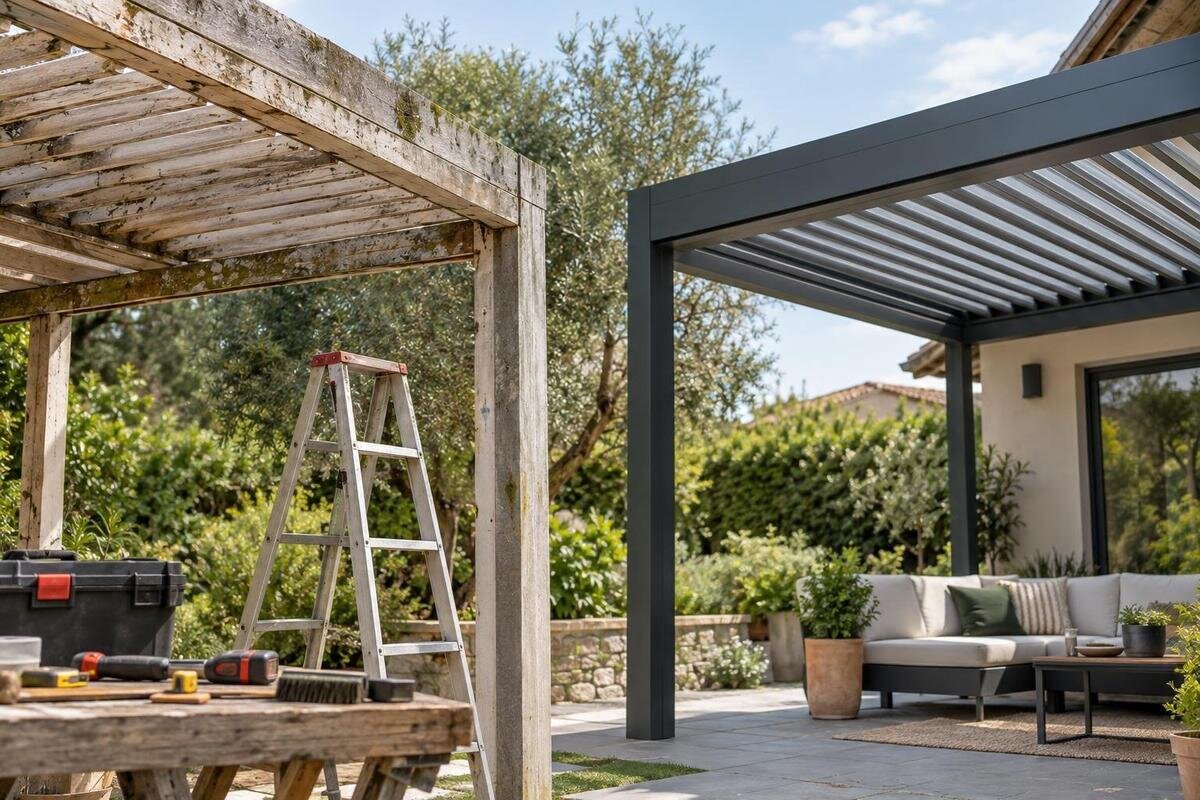
PERGOLA REPAIR OR REPLACEMENT
An older pergola does not need replacing simply because it has been in place for years, and one visible fault does not tell you how much work is needed. The useful comparison is between its present condition, the cause and spread of faults, whether the correct parts and service are available, and the full scope and cost of each option. This checklist helps you gather evidence, recognise when a professional assessment is needed and compare repair and replacement proposals without assuming either is the right answer.

Check safety before deciding whether to repair
Before considering a quote, look for signs that the pergola may be unstable: a post that has shifted, a member that is bent or cracked, a connection that has pulled apart, or a frame that moves unexpectedly. These observations do not diagnose the cause, but they are enough to stop using it and keep people clear until it has been assessed. Do not climb on the structure, hang weight from it or force a jammed roof or screen to see whether it moves. A photograph taken from a safe position is more useful than a risky test. If a component appears liable to fall, treat it as an immediate safety concern and arrange prompt help.
Surface wear is not automatically a structural fault, but appearance alone cannot confirm that the supporting members and fixings are sound. Record anything loose, distorted or newly noisy without trying to tighten, straighten or remove it. If damage followed an impact, severe weather or nearby building work, note that context without assuming it explains the fault. If a powered roof, lighting or another electrical feature is fitted and behaves unpredictably, stop operating the affected feature and arrange suitable service; do not open electrical housings. This is a safe-use decision, not a commitment to replace the whole pergola.
Collect the model details and fault history
Find the strongest identification you have: the maker, exact model name, serial or batch number, order confirmation and installation date. Keep the manual, assembly instructions, technical drawings and earlier service paperwork together. If a label is difficult to reach, photograph it only if you can do so safely; do not remove a cover or dismantle trim to find it. An older installation may differ from a later version with a similar name, so give the exact details rather than relying on memory or a photograph of a pergola that looks much the same.
Create a short fault log. Note when the issue began, which component is affected, whether it happens every time or intermittently, and what was happening just beforehand. Take one wide photograph that shows the pergola in its setting, then close-ups of the affected area from safe positions. Add another angle if it helps explain what has changed, but do not repeatedly operate a faulty mechanism for a better picture. Record earlier repairs and whether the same symptom returned. Clear evidence helps a supplier or service provider identify what to check before suggesting parts or work.
Distinguish a local fault from wider deterioration
Separate the visible defect from the cause that may lie behind it. A failed handle, panel, hinge, actuator or control may be one replaceable item, but a similar symptom can result from strain or misalignment elsewhere. Note whether one component is affected or several, whether the frame has changed shape, and whether gaps or alignment have altered since the problem began. One failed part does not prove that everything around it is sound; equally, visible wear in several places does not by itself prove replacement is necessary. These observations help frame an inspection, but they are not a diagnosis.
Ask the installer or service provider what adjacent parts were checked and what evidence supports the proposed repair. The assessment should distinguish visible findings from anything that remains uncertain or concealed. If replacement enters the comparison, you can include Bloomcabin’s bioclimatic pergola in a separate product enquiry. Keep the two assessments distinct: the repair report should explain the existing fault, while the replacement proposal should address the new installation. A catalogue model name does not establish compatibility with old components or suitability for the site. Ask which findings would make a local repair insufficient before commissioning a broader quotation.
Check whether the correct parts can be identified
Parts support depends on the exact pergola identity, not on a close visual resemblance. Ask for the precise model and revision, the part name or code, and any information needed to confirm that it belongs to the existing assembly. A handle, motor, control, panel or joint may look similar across models yet have different interfaces or operating requirements. Send the maker’s label and clear diagnostic photographs, along with purchase records if available. Provide measurements only if requested and only where they can be taken safely; do not assume that a part from another pergola will fit because its shape appears comparable.
Ask whether the exact component can be supplied, whether a supported alternative or larger assembly is available, and whether installation calls for a service technician. Request written compatibility confirmation and ask how long any parts quotation remains valid. Where availability is uncertain, distinguish a confirmed supply date from an estimate before booking labour. If the search reveals no supported repair route, a separate enquiry about Bloomcabin’s lean-to pergola can help you obtain a replacement proposal for comparison. Keep the supplier’s answer about the old part with your records, including any further identification needed, so another enquiry does not repeat the same unresolved search.

Separate essential repairs from optional upgrades
Write down what a successful outcome means before asking for options. Restoring the pergola’s existing function is different from improving its appearance, changing the covered area or adding a feature it never had. For a repair, ask whether the proposed work restores the function described in the relevant instructions. For an upgrade, identify each new component and any related controls, supports or electrical work as separate items. That makes it easier to spot when a low repair figure leaves out work needed for a wider change, and prevents optional improvements from being presented as essential to fixing the fault.
Your needs may have changed since the pergola was installed: furniture, access routes, the garden layout or the way you use the space can all affect what you want from a replacement. Separate essentials from preferences, and do not assume a new feature will suit the existing structure. Confirm the permitted configuration with the relevant documentation or service provider; do not assume a frame can support additional weight or enclosures. When enquiring about the Bloomcabin Pergola model, use that list to request a clearly specified option. Price optional additions separately so you can judge the replacement against a repair that restores the original function.
Compare the full cost of repair and replacement
Ask for the repair proposal to show more than the cost of a part. It may need to account for diagnosis, components, labour, access arrangements, transport, testing and making good any affected area. Ask whether an inspection fee is separate, whether it would be credited towards work, and which items are confirmed or still provisional. If the provider cannot yet identify the fault, a diagnostic visit and a repair quote are different things; keep them distinct when comparing proposals. An itemised scope makes it easier to see what you are being asked to pay for and what remains unresolved.
A replacement comparison should include its full proposed scope, not just the price of a product: ask what is included for removal, disposal, installation, site preparation, any relevant services and finishing work. Compare proposals against the same intended outcome, with exclusions and assumptions visible. Do not weigh the price of one repair part against an all-in replacement figure. If you request a quotation for the bioclimatic pergola option, ask for product and site-work costs to be itemised. Check whether tax is included and whether provisional allowances could change after inspection. This gives you comparable totals without treating uncertain costs as settled.
Include repeat faults and earlier repair work
Build a timeline from invoices, service reports and your own notes. Record what failed, which part was replaced or adjusted, whether the same symptom stopped and how soon it returned. A previous repair is useful evidence, but it does not automatically mean the work was poor or that the whole pergola is beyond repair. The important question is whether the cause was identified and whether the proposed work now addresses it. If an earlier service report is vague, ask the provider to explain what was found before agreeing to repeat the same intervention.
Recurring faults can make a repair less attractive if each visit deals only with the symptom, or if several parts now need attention. They can also have a specific, repairable cause; recurrence alone cannot settle the decision. Ask what further checks are recommended and what would change the recommendation. Check whether an earlier repair has any applicable service or parts cover before paying for the same work again; use the actual paperwork rather than assuming it does. If you also seek a proposal for the lean-to pergola option, explain the fault history so the adviser knows which concerns the new project needs to address.
Check site constraints before pricing a replacement
Record the existing footprint and the practical details that may affect a new proposal: its relationship to a wall, the positions of posts, nearby doors and windows, drainage routes, paving, access through the garden and any services that need to be considered. Measure only from safe, accessible positions, and note where the old layout no longer works. A replacement with a similar-looking footprint may still have different connection points or installation requirements. Give these details to the supplier or installer so that the proposal is based on the actual site rather than assumptions drawn from a photograph.
Do not assume an old base, wall connection or set of fixings can be reused simply because the replacement appears similar in size. Ask the installer what needs to be checked and who is responsible for assessing the relevant supporting surfaces. Confirm the required assembly access and any site preparation before comparing totals. If planning or property permissions may be relevant, check them with an appropriate adviser before ordering. When requesting a site-based proposal for Bloomcabin’s standard pergola listing, include photographs and a simple layout sketch. Mark measurements as approximate where necessary, and ask which dimensions the installer must verify before the order is finalised.

Ask for a written scope and clear exclusions
For a repair recommendation, ask what has failed, what evidence supports that finding, which exact parts and tasks are proposed, and whether anything else was inspected. Ask whether the work is intended to restore the existing function, what remains uncertain and how the provider will confirm the repair is complete. For powered features, establish which service tasks are included and who is qualified to perform them. A clear written answer lets you compare the proposal with the fault history rather than relying on a brief verbal description such as replacing a part or adjusting the mechanism.
For a replacement quote, check that it names the proposed model or configuration and explains installation, removal, site work, exclusions and any aftercare or warranty terms being offered. Ask who will handle items left outside the quoted scope, and do not assume that optional accessories or existing services are included. A quotation referring to the Bloomcabin bioclimatic model should identify the selected configuration rather than leaving you to infer it from a listing. Ask how changes discovered during site assessment will be priced and agreed. Keep the final specification with the accepted quotation so there is a clear record of what you authorised.
Choose based on condition, support and intended use
Repair is a stronger candidate when an inspection identifies a local cause, compatible parts and suitable service are available, and the work meets your needs without leaving important faults unresolved. Replacement deserves a closer comparison when damage affects several areas, a supported repair cannot be confirmed, the same issue keeps returning or your requirements have changed. There is no universal cost percentage or age threshold that decides this for every pergola. The scope, uncertainties and expected result matter as much as the headline figure. If evidence is incomplete, further diagnosis may be the sensible choice before either committing to a larger repair or ordering a replacement.
Write down the decision and its conditions: for example, proceed with repair if a named part is confirmed compatible, or compare replacement if the inspection finds wider damage. Keep the photographs, manuals, reports and quotes together so the next conversation starts from the same facts. If the Bloomcabin lean-to model remains on your shortlist, record any unanswered questions about its proposed installation alongside those for the repair. Do not count an unresolved option as a firm alternative. Once the conditions are answered, choose the proposal that meets your requirements with an acceptable scope, cost and level of uncertainty, rather than reopening the comparison on age alone.
Frequently asked questions
How old does a pergola have to be before it should be replaced?
There is no age at which replacement automatically becomes the right choice. Look at the extent of damage, whether the cause can be identified, whether compatible parts and service are available, and the full scope of a repair. A well-supported repair may be reasonable for an older pergola; recurring faults or widespread damage may justify comparing replacement instead.
Can I repair an older pergola myself?
That depends on the task and the manufacturer’s instructions. Do not attempt structural repairs, work on uncertain fixings or wiring, or dismantle components to diagnose a fault without suitable expertise. For powered features, use appropriate qualified service. If the pergola may be unstable, stop using it and keep people clear until it has been assessed.
What information should I provide when asking about a spare part?
Give the maker, exact model and any serial or revision details you can safely find. Include the purchase or installation record if available, a clear photograph of the relevant label, and wide and close-up photographs of the fault. Describe when it occurs and any earlier repair. Ask what further information is needed to confirm compatibility.
Does an unavailable spare part mean the pergola must be replaced?
Not necessarily. Ask whether a supported alternative, approved assembly or other repair route exists, and who can carry out the work. Do not substitute a part that only looks similar. If no suitable repair is confirmed, compare a replacement proposal with the full repair scope and check how each option meets your requirements.
Does the same fault happening again mean the pergola is beyond repair?
No, but recurrence is a reason to ask for a clearer diagnosis before authorising the same work again. Share the previous service records and ask what was found, what was changed and whether the original cause may still be present. A repeated symptom may need further investigation; it does not, by itself, prove that replacement is necessary.
Make the decision from evidence rather than age or the first repair estimate. Establish whether the pergola is safe to use, identify the model and fault, and find out whether a compatible, supported repair is possible. Then compare complete proposals against the result you need, including site work and unresolved uncertainties. If the cause is still unclear, further assessment is more useful than guessing at a part or treating replacement as inevitable. A written record of the findings gives you a sound basis for choosing what to do next.
