
Can Outdoor Furniture Stay Under a Pergola All Year?
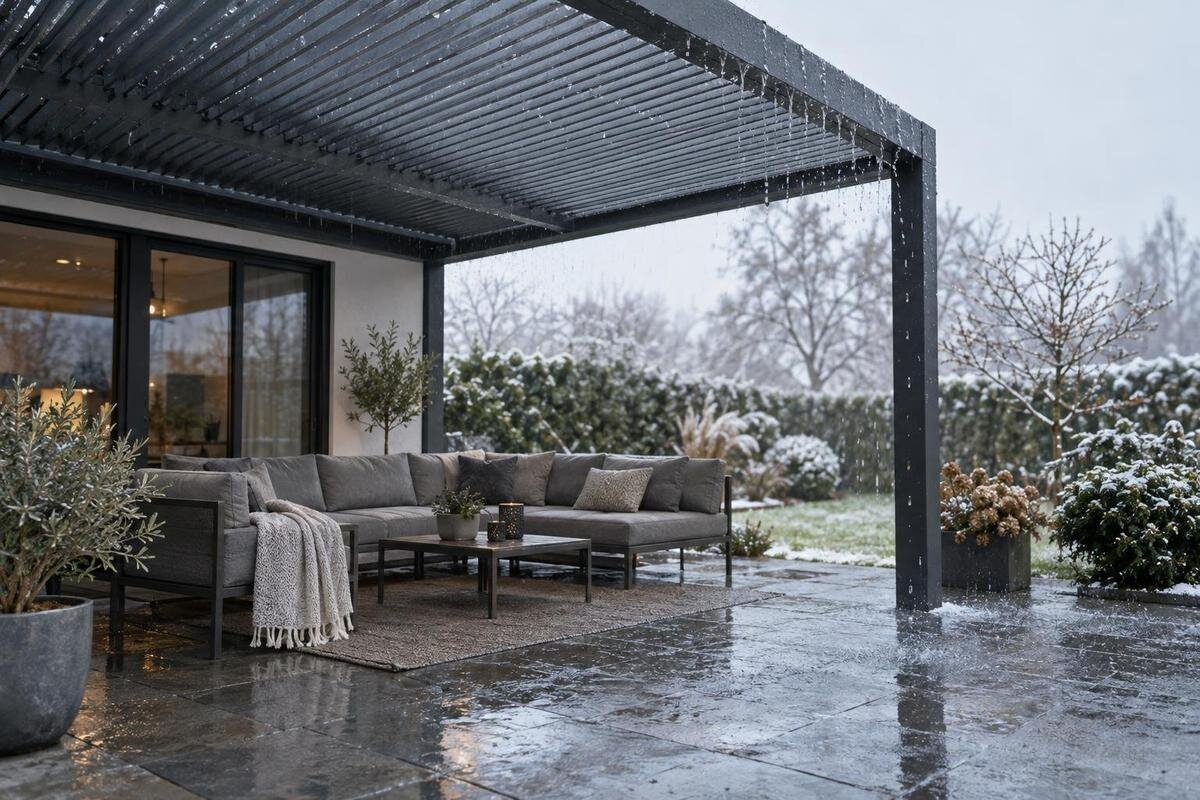
Pergola weather and furniture care
Can outdoor furniture stay under a pergola all year? Often, yes, if the pieces are made for outdoor use and you accept that the space may still get wet. A pergola can reduce direct rain and sun, but open sides leave furniture exposed to wind-driven rain, ground splash and overnight moisture. Assess each item, the exact roof and side configuration, and how quickly the area dries; do not treat the footprint as an outdoor storeroom. Furniture care and winter roof operation are separate decisions: a table staying outside says nothing about how the pergola should be operated in frost, wind or snow.

A pergola offers shelter, not dry storage
Yes, outdoor furniture can often remain beneath a pergola throughout the year, but shelter is not the same as dry storage. Open sides let rain travel horizontally, while water can also splash up from paving or arrive from adjoining surfaces. The amount of protection depends on the exact roof, site and side arrangement; a louvred roof, fixed cover and screened enclosure should not be treated as interchangeable. Unless the model-specific documents say otherwise, plan for some wetting and allow furniture to dry. Even furniture made for outdoor use may need care and may not suit a permanently damp, shaded position. A pergola does not automatically turn its footprint into a shed or conservatory.
Make the decision item by item. A frame and tabletop intended for outdoor use may be practical to leave out if the maker permits year-round exposure. Removable cushions, parasols, throws and other absorbent pieces need their own storage arrangements, even when the main furniture can stay. If the Bloomcabin Pergola model page is on your shortlist, consider the furniture you already own alongside the proposed shelter. List which pieces can remain outside, which need protection between uses and which must come indoors for winter. Check whether covers and replacement upholstery have separate care instructions. This avoids buying a seating arrangement that looks convenient in summer but requires more daily handling than you can manage.
Wind-driven rain reaches the open sides
The first test is not whether rain falls vertically onto the roof, but where it comes from in the weather that reaches your patio. Wind can drive rain through open sides and beneath roof edges; the side that stays sheltered in one wind direction may be exposed in another. A piece beside an opening may be more exposed than one further inside, though the layout and roof design matter. A nearby wall can alter gusts or deflect water rather than simply blocking it. Consider likely wind directions, the most exposed corners and the route from the house before placing chairs. Wind can also carry water around a wall's end, so depth alone is not a guarantee.
For a wall-mounted model such as the Bloomcabin Lean-To Pergola listing, examine the building junction and the paths rain may take around it; the model name is not evidence of a watertight seal. Look at neighbouring doors, sills and paving as well as the furniture position. Ask the installer how the proposed junction will manage rainwater and whether nearby building runoff needs separate attention. A table may remain usable even if its outer chairs get wet, so assess each position separately. Leave enough room to pull chairs back without placing them beyond the shelter. Where rain regularly reaches the perimeter, reserve that space for less vulnerable items rather than upholstered seating.
Roof drainage and ground splash need separate checks
Roof runoff creates a different problem from rain entering sideways. Water may be channelled to particular edges or outlets, then drip or splash onto the floor; an obstruction or an unsuitable discharge path may also leave water where furniture stands. The intended route is model-specific, so use a drainage diagram to trace water from the roof to its discharge point. Keep seats, cushions and timber feet away from places where water is known to fall or collect, and leave the route accessible for routine checks. After rain, look beneath chair feet and table bases, where pooling can go unnoticed. If an outlet or route is hidden, request maintenance guidance rather than guessing. Observe from a safe position during rain, then check where water remains afterwards.
When comparing a Bloomcabin Bioclimatic Aluminum Pergola, request the drainage diagram and weather-performance documents for the exact model and configuration rather than inferring drainage from its name or image. Check that the documents cover the roof arrangement you would use and show where water is directed. Look at the ground beneath and beside the structure too: splashback, puddles and runoff from nearby roofs can wet furniture even if the pergola handles its roof water as intended. Map those other water sources as well. Furniture placement can reduce exposure, but cannot correct a drainage arrangement that does not suit the site.
Dew, condensation and slow drying
Rain is not the only source of moisture. On a clear night, dew can settle on cool furniture surfaces; humid air meeting a cooler surface can also leave condensation. A damp seat in the morning therefore does not, by itself, prove that the roof is leaking. Timing and pattern offer clues: moisture after a rain-free night differs from repeated wetting beneath one edge or outlet, although inspection or the maker's guidance may be needed to identify a fault. Check the underside of table tops, seat pads and joints, not only visible upper surfaces. Note whether moisture disappears once the area gets more air and light, rather than assuming all dampness comes from rain.
Drying time matters as much as how much water arrives. A roof may reduce direct sun, and screens, an enclosure or tightly arranged furniture may reduce air movement; damp fabric and shaded surfaces can then take longer to dry. When planning furniture beneath the Bloomcabin Pergola model, leave space between pieces rather than packing the whole sheltered area with seating. Check whether chairs tucked under a table dry as readily as chairs left clear of it. Lift removable pads to inspect the surfaces beneath them, following their care instructions. If furniture remains damp between showers, reduce the amount left outside or move vulnerable pieces to a drier position. A dry-looking upper surface does not establish that the whole item has dried.

Furniture materials need different care
Check the furniture maker's guidance by material and construction, not just by frame colour. Outdoor-use timber may still need specified cleaning, finish care and inspection; joints and feet are vulnerable if they remain in standing water. Coated metal deserves checks for damaged finishes and dirt trapped around connections, while uncoated or differently finished metal may have other needs. Do not assume a pergola roof makes these routines unnecessary. Keep care information for the whole piece: a metal frame can still have timber slats, textile parts or other materials with separate requirements. If a finish is damaged, use only the repair method recommended for that furniture rather than applying a generic treatment.
Woven furniture also needs identification: synthetic outdoor weave and natural plant fibre are not interchangeable, even when they look similar. Dust and moisture may collect in the weave, seams and underside of seats, so clean and dry those areas as the maker directs. Check fixings, glides and moving parts as well as broad surfaces, because exposed hardware may need attention too. If the maker describes an item as suitable only for occasional sheltered use, a pergola may still provide too much exposure. For a mixed-material piece, the least weather-tolerant component should set the care plan.
Cushions and covers need their own plan
Cushions, seat pads, parasols and loose fabrics are often the items that make year-round storage inconvenient. A fabric described as suitable for outdoor use may still have limits on continuous wetting, and stitching, seams or filling can take longer to dry than the surface suggests. Check what the care label actually promises: occasional water resistance is not the same as a claim for permanent exposure. Remove loose textiles before prolonged wet weather or a period away, and let them dry fully before stacking or storing. If they are left out, check beneath them after rain; a roof does not keep the hidden side dry. If using a storage box, follow its guidance and do not pack away damp items.
A fitted cover can help with dirt and some exposure, but choose one intended for that furniture and use it as directed. A cover that traps moisture, sits in pooled water, rubs against surfaces or catches wind can create problems of its own; no generic waterproof cover suits every item. Put it over clean, dry furniture, check beneath it periodically and remove it for airing when needed. Even beneath the wall-mounted Bloomcabin Lean-To Pergola, the furniture's material instructions still matter. Do not improvise a sheet over the pergola roof or frame: that changes the arrangement and is not a substitute for documented weather performance.
Winter roof operation is a separate decision
Leaving furniture out does not tell you whether a pergola roof should be left open, closed, adjusted or operated in winter. Those are separate questions governed by the exact model's operating instructions and stated limits for wind, frost, snow and unattended conditions. Roof types and control systems differ, so neither a universal position nor an assumption that a furniture cover protects the structure is reliable. Keep access to controls and drainage points clear, and arrange furniture so it does not obstruct the use or inspection required by the manual. The furniture can be moved for the season without changing the roof settings.
For the Bloomcabin Pergola listing, request the operating instructions and identify any actions required before leaving the structure unattended in winter. Work out whether those actions remain possible with the furniture and its covers in place. For example, a large covered dining set should not block access that the manual requires for inspection or maintenance. Keep the instructions available to anyone responsible for the property while you are away. If a moving part appears frozen or stuck, do not force it; follow the maker's guidance. Plan where furniture can be moved if necessary, rather than assuming that its preferred position must determine how the roof is operated.
Screens and enclosures change airflow
Adding a screen, curtain or enclosure can reduce direct exposure from a particular side when used in its intended position, but it does not automatically make a pergola watertight. Rain can still enter through openings, arrive from another direction or reach the floor as runoff. A more enclosed area may also have less air movement, so surfaces and fabrics can stay damp for longer. Consider what an accessory is designed to do—privacy, shade, wind reduction or rain control—and do not assume it provides all four. An accessory intended mainly for shade may behave differently from one documented for rain control, so check the purpose and limits.
If the Bloomcabin Bioclimatic Aluminum Pergola product page is on your shortlist, confirm which side products, if any, are approved for that exact version and what limits apply when they are deployed. A photograph does not establish that screens or glazing are included or compatible. Ask whether the proposed sides can be opened independently and what access is needed to use them. These details affect whether you can shelter one exposed side while retaining ventilation elsewhere. Check that furniture will not obstruct handles, tracks or the movement of an approved accessory. Assess the complete configuration: protection gained at one opening may be less useful if the resulting space is difficult to air or maintain.

Check the actual furniture positions
Where the structure is already in place, observe it during ordinary rain rather than judging from a dry-day visit. Note the wind direction, the furniture's position, wet edges, drips, splashback, puddles and the point at which surfaces begin to dry. Repeat in more than one typical direction if possible; a single shower cannot establish performance across seasons, and do not expose yourself or the furniture to a storm to test it. Check under seat pads and legs or bases too. Those observations help distinguish a placement problem from a need for different storage. Take notes before moving everything, so you can see which change made a difference.
Before choosing the Bloomcabin Lean-To Pergola model, ask for model-specific weather limits, controlled observations and a drainage diagram, then compare them with the positions you plan to furnish. Useful observations should identify the roof and side configuration, the direction of exposure, the conditions observed and where water entered or collected. Ask whether the assessment recorded only roof drainage or also wetting at furniture height and near the floor. A photograph taken after rain cannot answer all those questions. Distinguish documented operating limits from observations of how dry a particular layout remained; they answer different questions. Where information is unavailable, leave flexibility in the furniture layout and avoid making dry cushion storage a condition of your purchase.
Which furniture can stay outside all year?
An all-year arrangement often works best as a mixed system: keep suitable frames and hard-wearing surfaces outside, but bring in cushions and pieces that are not designed for continuous exposure. Allocate storage space before deciding how much upholstered seating to buy. Check the size of cushions when stacked, whether their covers need removing and whether you can carry them through the nearest doorway. A storage routine is easier to maintain when the dry storage area is close at hand. For furniture that moves seasonally, check its weight and the clear route to storage. Avoid relying on a cramped shed or indoor corner that will not actually accommodate the pieces you intend to bring in.
Indoor or sheltered storage is the simpler choice when furniture retains moisture, finishes need constant attention, the space stays shaded and poorly ventilated, or you will be away and unable to inspect it. Outdoor storage may be acceptable where materials are intended for exposure, wetting is limited and routine cleaning and drying are realistic. Reassess after adding screens or rearranging furniture, because those changes can affect exposure and airflow. Review the arrangement through seasonal changes too: a place that dries readily in summer may stay damp during shorter days. Keep the pieces outside only while their condition and care requirements support that choice, rather than treating the original layout as permanent.
Frequently asked questions
Can I leave garden furniture under an open pergola all year?
Possibly, if each piece is intended for outdoor exposure and its maker's care instructions allow it. Open sides still admit wind-driven rain, and paving can splash. Check the furniture after ordinary wet weather and bring in or cover parts that remain damp or need more protection.
Will a pergola keep cushions dry?
Not reliably. Rain can blow in from the sides, and dew or condensation may leave fabric damp even after a dry night. A roof reduces some direct exposure but is not a guarantee of dry storage. Remove cushions or use an appropriate furniture cover as their care instructions allow.
Should I cover furniture that is already under a pergola?
Only if the furniture maker's guidance and the cover's instructions support it. Put covers on clean, dry items, check beneath them and allow airing; a cover that traps moisture or pools water may leave furniture damp. Store vulnerable cushions indoors if they cannot dry fully under the pergola.
Should pergola louvres stay open or closed in winter?
There is no universal position. Follow the operating and weather-performance instructions for the exact pergola, including stated limits for wind, frost, snow and unattended conditions. Furniture staying beneath the roof does not determine the roof setting. Do not force a component that is frozen or stuck; use the maker's guidance.
Do side screens make a pergola weatherproof?
Not necessarily. A screen may reduce exposure from one direction when used as intended, but gaps, runoff and other wind directions still matter. It may also reduce airflow and slow drying. Confirm compatibility and weather limits for the complete model configuration, rather than relying on a photograph or accessory description alone.
An outdoor furniture set does not need one all-or-nothing winter plan. Leave only items whose materials, location and care instructions allow it; protect or store cushions and vulnerable components separately. Watch how wind-driven rain, roof runoff and overnight moisture affect each furniture position, and follow the pergola's winter operating instructions independently of your storage choices. If furniture dries properly and you can inspect and maintain it where it stands, leaving it outside all year may be workable. Otherwise, moving it to a better position or storing it indoors is the more reliable choice.
