
Post-Storm Pergola Checks: What to Inspect
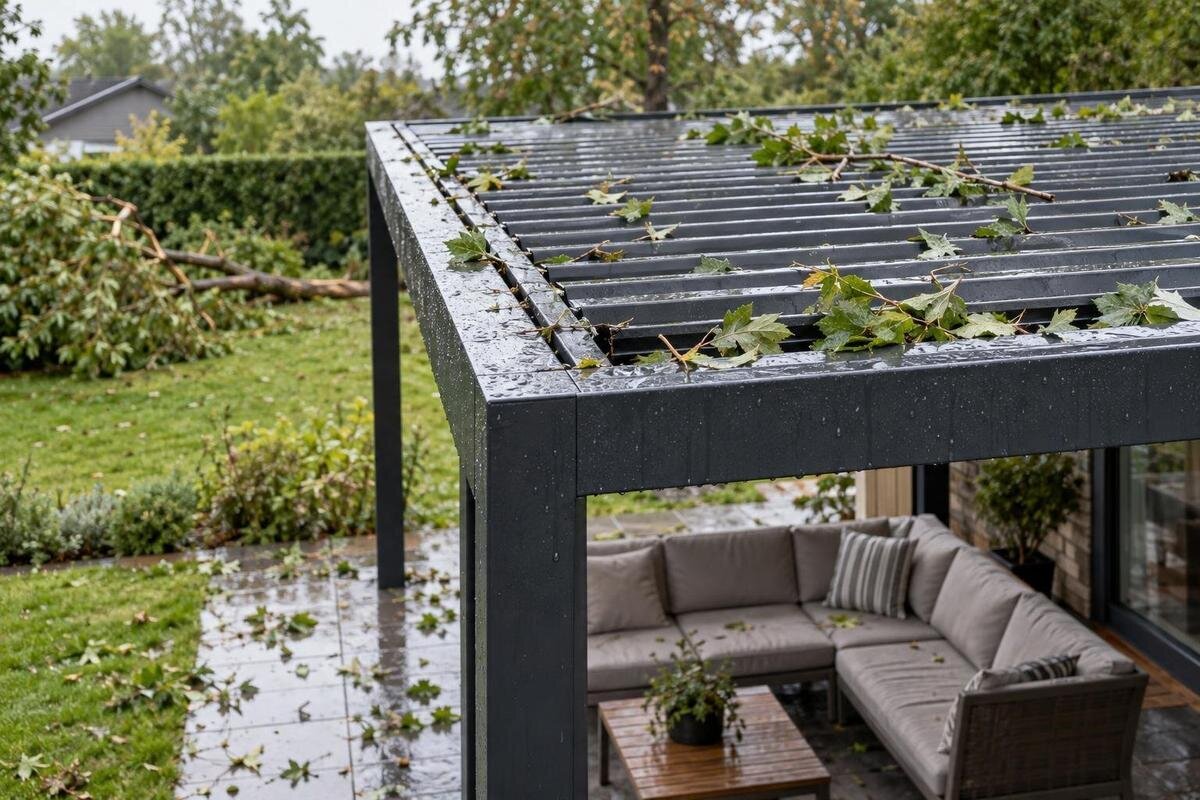
Pergola care after severe weather
After high winds or heavy rain, a pergola can look unchanged while a joint, roof component or fixing has shifted. Start only when the weather and surrounding area are safe, stay on the ground, and treat this as a visual check rather than a repair. The aim is to spot obvious movement or damage, preserve clear evidence and decide whether the structure should remain out of use until a qualified person has assessed it. Do not climb onto the pergola, use a ladder to reach the roof, or test a mechanism that appears damaged.

Wait until the area is safe to approach
Wait until the wind has eased and the immediate aftermath is safe before going outside. Do not inspect during lightning, heavy rain, flooding, poor visibility, or while branches, roofing material or other debris are still moving. A pergola that is visibly swaying, shedding parts or making new repeated noises is not a place to approach for a closer look. Keep children and pets away, and do not walk beneath a section that appears loose or distorted. Choose a time when you can see the ground clearly and reach the viewing point without stepping over fallen objects. If there is no safe route, remain at a distance and arrange help rather than seeking a better angle.
First look for hazards beyond the pergola: fallen trees, unstable fences, damaged overhead lines, broken outdoor lights, sharp debris and standing water near electrical equipment. Do not approach or touch a fallen cable, exposed wire or damaged electrical fitting, even if it seems inactive; keep others clear as well. Avoid water where electrical equipment may be affected, and do not move a branch if it is caught against wiring or a frame. Never ask someone to hold a post, roof part or ladder while you inspect. If access depends on handling damaged equipment, stay away and seek qualified help. An immediate danger calls for the appropriate emergency service, not a closer inspection.
Make a ground-level walk-around
Once it is safe, begin from a point outside the pergola’s footprint and look at the whole structure before focusing on individual parts. If movement, sagging or a loose overhead component is visible, do not go beneath it to inspect from closer range. Walk round only on firm, dry ground, where the route is clear; pause at each side and at the corners. Avoid a slippery deck, soft or flooded ground, and any area where debris may be unstable. A different viewpoint can reveal a beam that no longer lines up with a post, a roof edge that has shifted or damage hidden by a nearby wall. If your only view is obstructed, record that limitation rather than climbing, leaning over a fence or moving heavy debris.
Note what you can see without touching anything: which side is affected, whether the change appears local or runs across several joints, and whether the condition is new or was already there. If you have pre-storm photographs, compare the same angle and landmarks, but do not treat a difference in light or camera position as proof of movement. Use plain location notes such as ‘rear-left post’ rather than diagnosing a failed connection. Record the exact product name from paperwork or a label only if it can be read safely. If your records name the Bloomcabin Bioclimatic Aluminum Pergola, use that name in your enquiry; the listing alone cannot establish the configuration installed at your property. Keep serial numbers and personal details private when sharing images publicly.
Check the roof for displaced or damaged parts
Look at the roof line from the ground on each side you can reach safely. Check for a panel, louvre, canopy or edge that appears missing, lifted, skewed, sagging or out of line with its neighbours. Look for a new opening at a joint, uneven spacing, a bent-looking edge, a section left at a different angle or debris trapped where it was not before. A mechanism may have been set in an open position before the storm, so compare with an earlier photograph or the product instructions if available; do not infer damage from angle alone. These are observations, not a way to decide whether a part is secure. Do not stand directly beneath a suspect section, reach up or push it back into place.
If the pergola has moving roof parts, do not try the switch, handle, app or remote simply to see whether they still work; a mechanism can move unexpectedly, and a damaged section may be under strain. Do not pull out trapped branches or lift a covering, as this can disturb the assembly before it is assessed. Photograph the roof in its present position from safe ground, then note any clicking, scraping or change in movement only if you witnessed it before stopping. For an enquiry about a Bloomcabin Lean-To Pergola, include the model details from your records and describe the roof actually fitted. Say whether the unusual position was first noticed after the storm or was already present.
Look for movement in posts, beams and joints
Inspect visible uprights, beams and their meeting points without touching or leaning on them. Look for a post that appears to lean, a beam that no longer sits squarely, a new gap at a joint, a split or dent, a missing visible fastener, or a bracket that seems displaced. Compare both sides of the same frame rather than judging one upright in isolation; perspective can make a straight post look angled in a photograph. Notice whether a beam has shifted relative to a fixed wall or paving line. Do not shake a post, press on a beam, test a joint or tighten a bolt. Such actions could alter the evidence or expose you to a part that is no longer stable.
Record which member appears affected and the nearest corner or wall, then take one wider photograph and one closer image from the same safe position. A rust mark, stain or surface scratch may pre-date the storm, so note whether you know it is new instead of labelling it as storm damage. Conversely, a frame that looks intact from outside does not prove that concealed fixings are sound. If your records identify the model on the Bloomcabin Pergola product page, include those records with the joint photographs. Ask the assessor to distinguish surface damage from a connection that needs further investigation; do not order a fixing merely because it resembles the visible one.

Inspect wall connections, post bases and nearby ground
For a pergola fixed to a building, look from the ground at the visible line where the structure meets the wall. Note a gap that has newly appeared, a bracket that looks pulled away, cracking, displaced trim or water entering at the interface. Check whether there is a new difference between the visible edge and a nearby fixed feature, but do not measure by leaning out or reaching above your head. Do not tug a bracket, probe a crack, remove a cover or climb to see the top edge. Some marks may be older or related to the wall finish rather than the pergola; include a wider view so the context is clear, and distinguish known pre-existing marks from changes noticed after the storm. If the connection cannot be seen safely, say so rather than assuming it is sound.
At each visible post base, look for a foot or plate that seems to have shifted, a new gap, cracked or lifted paving, loosened surrounding material, washed-out soil or a fresh depression. Also note whether rainwater has eroded the ground or exposed a previously covered edge. Avoid treating a small crack in a paving slab as proof that the post itself has moved; record both features and let a professional assess the relationship. Do not dig around a base, remove paving, pour water to test drainage or try to push a post upright. What lies below the surface cannot be established from a photograph. For an installation identified in your paperwork as the Lean-To Pergola model, send any available installation drawings alongside the base photographs. These can help the assessor establish how the supports were intended to be arranged.
Note pooled water and disturbed drainage
Heavy rain can leave clues around the structure even when the frame looks unchanged. From ground level, check for pooled water on paving, fresh run-off channels, mud deposits, a water mark on a wall, or a gutter or downpipe that appears detached or newly displaced. If a roof edge has an outlet or drainage route visible from below, note whether water is collecting rather than discharging normally, but do not reach up to clear it. Record whether the water is under one corner, beside a post, or flowing towards the house. Do not confuse ordinary wet surfaces with a defect; note where water gathers and whether the same place stayed wet after surrounding areas drained.
Water collecting on or beside the pergola may obscure cracks, soften the ground or make access slippery, so postpone close observation until the surface is safe. If a puddle lies near wiring, a light fitting or powered control, do not step into it or handle nearby equipment. Photograph the route of run-off from a safe place and note whether water seems to have entered the building or affected a neighbouring surface. Include when you saw the pooling and whether it remained after the rain eased. If your installation is a Bioclimatic Aluminum Pergola, gather its own drainage instructions for the service enquiry. Describe where water appeared rather than assuming a blockage: the outlet, surrounding ground and roof may need separate checks.
Treat electrical damage as specialist work
If the installation includes lighting, a motor, remote control, sensor or visible cabling, make a visual note of a dangling cable, cracked enclosure, loose fitting, scorch mark or water inside a component where it is visible from a safe distance. Do not open a cover to look for more, touch a cable, plug in a disconnected fitting or make a test run. A light that still switches on is not evidence that wiring or its surroundings are undamaged. Avoid repeated operation of a switch or remote, and keep other people away from exposed electrical parts. Note whether damage is near a wet area, but do not approach to confirm it.
Storm damage to a structural frame and an electrical fault need different expertise, so describe each finding separately when you ask for help. A qualified electrician or the appropriate product service professional should assess suspected wiring, motor or control damage; do not attempt a repair, reconnect a cable or dry out equipment yourself. Gather any separate paperwork for powered accessories, including accessories added after installation. For a structure identified as the Bloomcabin Pergola catalogue model, the pergola name is only part of the service information: the electrician may also need the accessory details and installation records. Do not handle a wet, loose or damaged component to read its label. If the electrical condition could present an immediate danger, keep well clear and request urgent assistance.
Check screens, panels and storm-blown debris
Check side screens, curtains, glazed pieces, fixed panels or decorative parts only if your pergola has them. From the ground, look for a torn screen, panel pulled from its track, cracked or missing pane, detached trim or fragments nearby. Do not pull a loose screen, try to reseat a panel or clear glass by hand; a small movement may release another piece. Keep people and pets away from fragments, especially where broken material may be partly hidden in wet leaves or paving. Record the location and whether the part is still attached, without approaching an overhead or visibly unstable edge. If the view is blocked, note that rather than moving the part.
Also take a wider look around the patio or garden for windblown branches, furniture or other objects that have struck or become trapped against the structure. Do not drag away an object that is supporting or pressing on a damaged member; make a note and ask the professional how it should be dealt with. Check nearby glazing, walls and paving for impact marks, keeping observations separate from confirmed causes. If you enquire about a damaged accessory on a Bloomcabin lean-to pergola, include any separate accessory order reference as well as the pergola records. A replacement panel, screen or trim must be matched to the actual assembly, not selected from appearance alone. Ask for compatibility to be confirmed before ordering.

Photograph findings and gather product records
Take photographs before anything is moved, provided the viewing point is safe. Begin with a wide image showing the whole pergola and its position beside the house, paving or garden, then take separate views of each affected side and closer pictures of individual marks. Use the same safe locations for a set of images so that an installer can understand where each detail sits. Hold the camera at a comfortable height and use zoom if helpful; do not use a ladder, climb onto furniture, reach past an edge or put a ruler beside a damaged part. If rain, glare or low light makes detail unclear, note that and take another set later from safety.
Save the original files with the date and time, and label them in plain language, such as ‘north post’ or ‘wall connection’, rather than writing a diagnosis. Add a short timeline: when the storm passed, when you first noticed a change, what you heard or saw, and whether the pergola was already damaged. Gather the manual, order confirmation, installer paperwork, available model and serial information, and prior photos. When checking records for the bioclimatic pergola catalogue model, use the details of your purchased installation rather than trying to identify hidden parts from promotional images. Keep unedited originals as well as any annotated copies, and share them privately with the relevant professional.
Keep people clear when professional assessment is needed
Stop using the pergola and keep people out of the affected area if a post or beam has shifted, a roof part is loose, a connection has pulled away, a base has moved or there is any suspected structural instability. Do not wait for a second storm or for damage to become more obvious. Ask a qualified pergola installer or service professional to inspect the system; where a wall or surrounding structure is affected, the relevant building professional may also need to assess it. Electrical damage should be handled by a qualified electrician or appropriate service technician. A general cleaner or handyman may not have the information needed to assess a specialised assembly.
Send your photographs, exact model details, description of where the damage sits, and the manual or order records you have. Ask what inspection is required before the structure is used again and whether any suggested part is confirmed for your exact model and configuration. Do not accept a visual guess as confirmation if key connections are hidden or the issue may involve fixings, wiring or the building itself. If an expert recommends repair or replacement, have the work follow the manufacturer’s documentation and the qualifications appropriate to that work. A remote photo can help someone decide what to look at, but it cannot certify that a visibly altered pergola is safe to use.
Frequently asked questions
Can I inspect the roof from a ladder?
No. Keep the inspection at ground level; do not climb onto the pergola, use a ladder or stand on furniture to get a closer view. If an area cannot be seen safely from the ground, note that and ask a qualified professional to inspect it.
Should I test a motorised roof after a storm?
Do not operate it just to check whether it still works, particularly if you can see damage, debris or water nearby. A mechanism moving normally does not prove that the roof or its connections are undamaged. Ask the appropriate service professional what to do.
What signs mean I should stop inspecting?
Stop and move away if a post or beam appears to have shifted, a roof part looks loose, a connection has pulled away, or wiring is exposed. Keep other people clear and arrange qualified help. Do not touch or test the affected parts.
What should I send to an installer or service professional?
Send clear overview and close-up photos taken from safe ground, plain descriptions of where you saw changes, and the exact model information available in your records. Include the manual or order details if you have them, but do not dismantle anything to find a label.
Do photographs prove that a pergola is safe to use?
No. Photos can help someone understand what you observed and decide what to inspect, but they cannot show every hidden connection or confirm that a visibly altered structure is safe. Keep the area unused if you have concerns about movement or damage.
An after-storm check is useful when it remains observational: view the structure from safe ground, record specific changes and avoid disturbing a part that may be loose. Clear photographs and exact product records help a service professional understand the situation, but they do not replace an inspection where movement, damage or electrical concerns are visible. When in doubt about stability, leave the pergola unused and keep the area clear until the right professional has assessed it.
