
Pergola Flooring: Porcelain, Timber or Natural Stone?
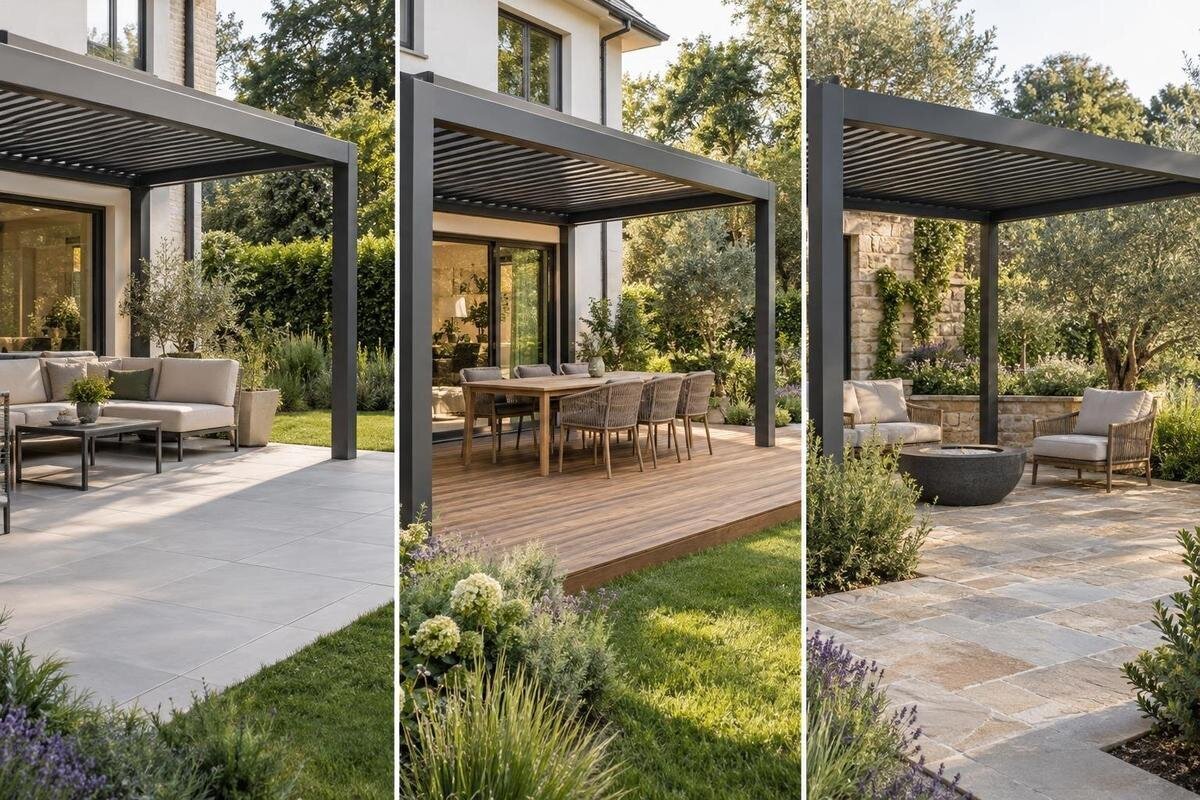
Pergola flooring
The floor beneath a pergola does more than complete its appearance. It affects how the area feels underfoot, how comfortable it is in changing sunshine and rain, and how much attention it needs after everyday use. Porcelain paving, timber decking and natural stone each offer a different combination of surface texture, warmth, variation and care. The practical choice depends on the way you use the terrace, the conditions at its exact position and how it meets the house or garden. This guide compares those choices without assuming that one material suits every pergola.

Choose flooring for the way you use the space
Begin with a typical day rather than a colour chart. A dining area used for meals needs firm support for chair legs and a surface that can be swept after crumbs; a lounge layout may put more emphasis on barefoot comfort and room to move seats. Include the route between the house and garden, doors opened outwards, and regular tasks such as carrying food outside. That route may get more foot traffic than the space directly beneath the pergola, so it deserves the same attention to finish and cleaning. If you want one continuous surface, decide how far it should extend before choosing a material. Think about where chair legs will cross joints, too.
Comfort is personal, so consider footwear, weather and furniture as well as colour. Porcelain and stone feel hard underfoot; timber often feels warmer to the touch, although the exact feel depends on the board, its profile and its condition. Textured stone or pronounced board grain can feel different from a smooth paving slab. Try substantial samples underfoot rather than judging tiny colour chips. For a lounge area, consider where bare feet will rest when people are seated and whether the texture feels comfortable there. For dining, try moving a chair across the sample surface: a pronounced texture can make repositioning furniture less easy. These everyday details are more useful than choosing solely for appearance.
Measure the whole terrace around the pergola
Treat the pergola footprint and the finished walking area as two separate measurements. Mark the posts, usable space beneath the roof, dining furniture, room for pulling chairs back and the route around the table. Extend the drawing to the back door, a gate, lawn or existing patio so the new surface connects naturally with the rest of the garden. If you are considering a wall-mounted structure, include the wall-mounted Bloomcabin Lean-To Pergola in the plan before setting the edge of the paving or decking. A scaled sketch can reveal dead corners or tight routes before anything is ordered; a product image cannot replace your measured layout.
Record existing paving, thresholds, door sills, steps and drains, noting where the finished surface will meet them. Also mark access covers or other points that need to remain reachable. These junctions may affect whether a border, a flush transition or a change in level is practical, and can determine where cuts or board ends appear. Place the dining table and seating on the plan before choosing tile format or board direction; otherwise, a tidy pattern can leave narrow strips at the edge or awkward joints beneath furniture. The installer should resolve finished levels and water management for the site. This comparison is about visible walking surfaces, not pergola supports, structural foundations or installation calculations.
Sunshine changes how flooring feels
Shade beneath a pergola is not necessarily constant across the day or across the whole terrace. The sun’s position, the house, nearby trees and the planned structure all affect which parts receive direct light; a roof or canopy does not guarantee one uniform surface temperature. Dark finishes generally absorb more solar energy than pale ones, but colour alone cannot predict how hot a particular sample will feel. Material, texture, length of exposure and local conditions all matter. If barefoot use is important, consider the most exposed route and the edge of the seating area as well as the shaded centre. A narrow strip in full sun can matter more than the average conditions across the whole floor.
Test physical samples where they are intended to go, looking at them at different times and after exposure to sunshine. A photograph or small colour chip cannot show the full texture or how a finish feels beneath your feet. Put the planned Bloomcabin Pergola on a measured site drawing and mark which parts of the surrounding floor receive direct sun during the hours you expect to use it. Include the approach from the house, not just the seating area. Pale surfaces are worth assessing for reflected brightness as well as warmth, particularly when viewed from a low lounge chair. Compare finishes in both open and shaded positions before deciding whether one colour works across the entire terrace.
Porcelain paving: a consistent finish with joints to consider
Porcelain is a manufactured paving option for buyers who want a controlled colour and pattern. Different formats can create a continuous-looking terrace or a contrasting border, while repeatable units are usually easier to coordinate than naturally varied stone. For a pergola area, confirm that the exact product is specified for outdoor paving and ask about its suitability for the conditions where it will be used. An indoor tile should not be assumed suitable simply because its colour looks right. Surface texture affects both appearance and cleaning: a rougher face can hold more dirt, while a very smooth finish may not be the best choice for a wet walking route. Compare samples and technical information together, including the appearance of edges and joints across a larger area.
Routine care can be straightforward: brush away leaves and grit, then wash the surface as its supplier recommends. Grout or jointing material can still collect dirt and organic matter, so a tile face that wipes clean does not make the whole patio maintenance-free. Ask which cleaners are suitable and whether any treatments are recommended; a product intended for a different surface could damage or mark the finish. Porcelain is hard, so a dropped glass may break and an individual edge can chip under impact. In a layout featuring the Bloomcabin Bioclimatic Aluminum Pergola, show the paving pattern alongside the structure and furniture. Check where cut pieces will appear and whether the chosen joint colour creates a prominent grid or a quieter overall finish.

Timber decking: grain, feel and upkeep
Timber decking brings visible grain and a board pattern that can make a pergola area read as an outdoor room. Many buyers like its warmer appearance and feel compared with mineral paving, but boards differ in species, colour, grain, treatment and surface profile. Board width and profile also affect the visual rhythm and how prominent gaps appear. Look at a physical sample in daylight and identify the precise board being quoted, rather than relying on the broad word timber. Ask whether it is intended for exterior decking and what care its supplier specifies. Neither a product name nor a showroom sample predicts exactly how a particular deck will age at your site.
Timber changes as it is exposed to weather and sunlight: its colour may mellow or fade, and dirt can gather between boards. Expect to sweep those gaps and follow product-specific care instructions instead of assuming an initial coating removes all later work. Board direction is another design choice: lines running along the house may visually lengthen a terrace, while crosswise boards can emphasise its width, although cuts and edges alter the effect. If the deck meets a wall, show the Bloomcabin Lean-To Pergola in the same terrace drawing as the board ends and boundary. Ask the installer to coordinate adjoining levels and junctions before materials are ordered, and check which cleaning methods the supplier recommends.
Natural stone: character and variation
Natural stone offers colour changes, veining and surface texture that do not repeat in the same way as manufactured paving. That variation can connect the pergola floor to a mature garden, brickwork or an existing patio, but a small sample may not show the full range in a delivered batch. Ask to see several pieces or a representative display and discuss the variation to expect. Slate, sandstone, limestone and granite are not interchangeable categories: the type of stone, its finish and its source affect both appearance and care. Some buyers welcome an irregular visual field; others prefer a more uniform look. Choose the actual stone and finish, not just the broad label natural stone.
Upkeep depends on the particular stone. Porosity, response to acids or staining, and suitability for a cleaning product vary, so request written care instructions before choosing a sealant or cleaner. Texture can create a tactile finish but make dirt harder to sweep away; a pronounced surface can also affect how furniture sits and how a route feels underfoot. If the regular Bloomcabin Pergola forms part of the design, compare a representative selection of stone pieces with the proposed frame and house finishes. Look at them wet as well as dry, since the visible colour can change. Ask the supplier how much variation to expect and whether the pieces should be mixed across the area during laying to avoid unintended patches of colour.
Maintenance depends on exposure as well as material
Do not judge upkeep from a sheltered showroom sample. A shaded edge may stay damp longer, while an open part can collect dust, leaves or rain splash; the actual pattern depends on the site and structure. A nearby tree or downpipe may also affect where debris gathers. Sweep matter from all three surfaces before it builds up, paying attention to joints, board gaps and textured areas where it can lodge. In places that remain damp, organic growth may need careful cleaning, but the suitable method and cleaning agent depend on the surface. Ask the supplier or installer what routine attention is expected for the exact product and setting, including any checks they recommend.
Compare maintenance as a routine rather than a single annual chore. Porcelain needs its joints kept tidy; timber calls for product-specific care and any recommended re-treatment; natural stone needs attention suited to its type and finish. None should be selected on an assumed maintenance-free promise. For a layout including a bioclimatic pergola from Bloomcabin, allow for cleaning access around furniture and the edges of the floor. A large dining table can make some joints difficult to reach, while pots may conceal debris or marks beneath them. Consider whether furniture can be moved conveniently and where cleaning equipment will be stored. The useful comparison is the work you are prepared to repeat, not just the first clean after installation.
Check wet grip, joints and changes of level
Under a pergola, a surface can still be wet from rain, cleaning or water carried in from the garden, so assess the selected finish in wet conditions as well as when dry. Ask the paving or decking supplier for outdoor-use information and, where relevant, wet-slip data for that exact finish; a polished appearance or generic material name is not a substitute. Highly textured surfaces can be harder to clean, while smoother finishes may be less forgiving when wet. A sample seen in a showroom cannot settle this trade-off, so ask which information applies to the precise product, not merely to the material category. The balance may differ between a sheltered dining spot and an exposed path.
Examine the transition from the floor to lawn, existing paving, steps and the house threshold. A crisp visual edge can still be awkward if the walking surface changes abruptly, so show finished levels and edge treatment in the drawing and ask an appropriate installer to resolve the detail. Board gaps, grout lines and stone joints should be considered with furniture feet, footwear and any wheeled items used regularly. In a plan for the wall-mounted Bloomcabin pergola, give particular attention to the route through the adjoining door: check door clearance, the threshold and the space needed to turn with a tray or trolley. Consider how changes in level will be visible in low light, especially where neighbouring materials have similar colours.

Compare the completed cost and appearance
Do not compare only a tile, board or stone price per square metre. A useful quotation should state the area, work included, cuts, edging, joints, waste and any finishing or aftercare products, because project details affect the completed price. Obtain comparable scopes for each material and ask what is excluded; if existing paving will remain, make sure the boundary and any transition are accounted for. Long-term effort matters too: the time spent sweeping, washing, refreshing a timber finish or following stone-specific care is part of the practical cost of owning the surface. No headline material price captures that routine.
Appearance matters across the whole layout. Set samples beside the house, garden wall and furniture, and imagine the complete area rather than one paving square; a strong grain, vein or joint grid can dominate a small terrace. When comparing the Bloomcabin Pergola listing with your flooring shortlist, keep separate records of the structure choice and the surface quotation so each cost remains clear. A border can connect new paving to an existing path, but it also introduces another material, extra cuts and more junctions. Ask for those details to be priced explicitly. Use a change of finish where it serves a purpose, rather than adding it simply to make the plan look more elaborate.
Ordering quantities and keeping spare materials
Once the layout and surface are agreed, ask the supplier and installer to establish the order quantity from the actual paving pattern or board layout. The measured floor area alone does not account for cuts, borders or pieces that cannot be reused elsewhere. Larger formats and diagonal patterns can produce different cutting requirements, so do not apply an arbitrary allowance to every option. Discuss whether spare pavers, stone pieces or boards would be useful for later repairs, and how they should be stored. Check arrangements for inspecting the delivery and reporting damage before work begins. For natural stone in particular, agree how the supplied range of colours and textures will be assessed against the representative samples.
Keep a record of the chosen product name, supplier, finish, colour, format and any batch references, together with the jointing or finishing products used. This makes a later repair or extension easier to discuss, although a matching replacement may not always be available. Save the maintenance instructions with these details rather than relying on a generic guide for the material. Confirm the ordering responsibilities in the quotation: who checks quantities, who orders additional pieces if needed, and what happens to unused materials. Keep any agreed samples until the completed surface has been reviewed. These records help preserve the original choice without turning routine upkeep into a search for unidentified products.
Frequently asked questions
Which pergola flooring stays coolest in sunshine?
There is no dependable ranking based on material name alone. Colour, texture, direct exposure and how long a surface has been in the sun all affect how it feels; darker finishes generally absorb more solar energy than pale ones. Compare exact samples at the site, especially on routes where people may walk barefoot.
Is porcelain paving slippery when wet?
It depends on the exact finish, not simply on porcelain as a category. Ask the supplier for outdoor-use information and any relevant wet-slip data for the paver you are considering. A polished appearance is not proof of good grip, while a very textured surface may take more effort to clean.
Does natural stone need sealing?
That depends on the stone, its finish and the supplier’s care guidance. Ask for written instructions before buying or choosing a sealant, and use only a treatment confirmed as suitable for that product. Natural stone is not one uniform material, so advice for one type should not be assumed to apply to another.
Does timber decking need more maintenance than paving?
Timber usually needs care specific to its product and may need attention to its finish as it weathers. Porcelain still needs cleaning and care for its joints, while natural stone varies by type and finish. Compare the written instructions for each option with the time and effort you are prepared to give it.
Can I use different flooring under and outside the pergola?
Yes. A change of material can distinguish a seating area or connect it to an existing patio. Plan where the surfaces meet, check that the transition is practical to walk across, and compare both finishes in the same light. Ask for the edge and joining details to be included in the project quotation.
There is no universal winner between porcelain, timber and natural stone. Porcelain suits a consistent paved look and a cleaning routine built around its finish and joints; timber appeals if you value grain and accept its changing appearance and care; stone is worth considering when natural variation is part of the attraction. Let real samples, the site’s exposure and your everyday use settle the decision. A well-chosen surface should look at home beneath the pergola and remain practical on the route to and from it.
