
Outdoor Furniture for a Pergola: Aluminium, Wood or Wicker?
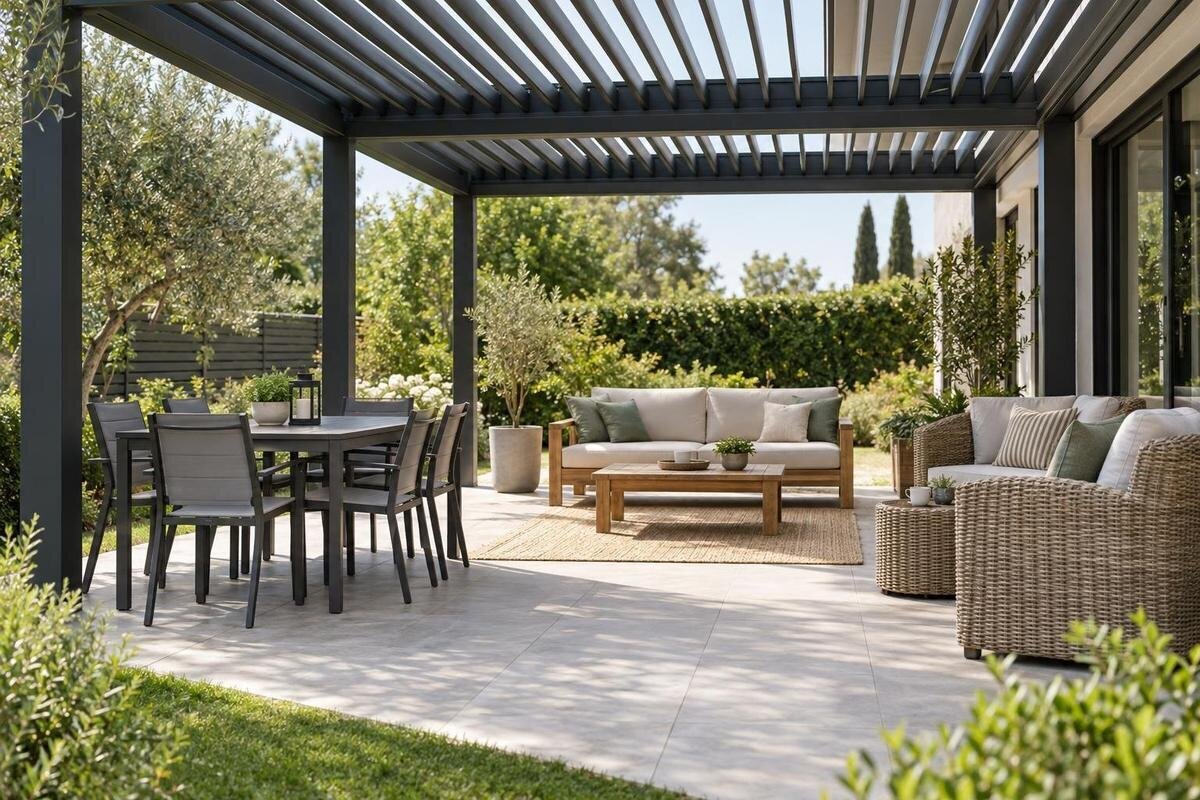
Pergola furniture
Furniture under a pergola still faces sun, damp and wind. Aluminium, wood and wicker suit different routines, but a material name alone does not tell you how a particular finish, weave or cushion will age. Compare the furniture’s position, cleaning and storage needs, and everyday comfort. The right choice depends on how you use the space and the upkeep you can manage, as well as how the set looks.

Before you choose 1
How much weather reaches furniture under a pergola?
Assess the exposure beneath the pergola rather than assuming it provides complete shelter. Depending on its design, orientation and sides, furniture can still receive strong sun, wind-driven rain and damp air. A table near a wall, a seat at the perimeter and an item under the central roof area may face different conditions. Notice where water reaches, where leaves collect and which parts are exposed when the wind changes. A nearby fence, planting or house wall may shield furniture from one direction but also restrict airflow and drying. Distinguish sheltered positions from exposed ones before choosing materials and cushions. Pay particular attention to the furniture’s feet and underside, which may remain damp even when the upper surfaces look dry.
Observe the space at times you will actually use it: breakfast sun may differ from evening shade, and seats can remain damp after rain. Note which furniture will stay outside overnight. If you are also selecting a pergola, the Bloomcabin Bioclimatic Aluminum Pergola listing is one option to compare with your site. Check the exact configuration rather than inferring shelter from the model name. Use those details and your observations to identify seating positions likely to need covers or more drying time.
Furniture for dining, lounging and occasional use
List the jobs the furniture must handle, not just the number of seats you want. For outdoor dining, a stable table and chairs that move easily matter more than deep upholstery. A lounge group supports a different posture and may involve several cushions to carry in after use. Occasional spare seats may need to stack or fold, while a frequently used table needs a surface you can clean without a lengthy routine. If you use the area for meals and relaxing, decide which activity takes priority. Think about who will move, clean and store each piece, and how often you host. These practical differences help you compare materials: the most attractive set may not be the most convenient one for the way you use the space.
Consider whether the arrangement will stay in place or change during the week. For chairs moved regularly, check weight, handholds and replaceable feet. A substantial sofa may be awkward to relocate, while spare folding chairs still need storage space. The Bloomcabin Pergola product page lists a 97–258 ft² range. Confirm the chosen configuration’s dimensions before planning separate dining and lounging areas: a total-area figure does not show the shape or usable space. Compare your preferred furniture with that plan, including space to move between the two groups.
Before you choose 2
Aluminium garden furniture: straightforward care and comfort trade-offs
Aluminium is often chosen for a neat appearance and relatively straightforward cleaning. Smooth frames are generally easy to wipe with a soft cloth and water, but the exact finish and care instructions still matter. Inspect joints, fixings and contact points as well as the visible surface: grit or residue trapped there can mark a finish, and a scratch or chipped coating may need specific attention. Exposed metal can feel warm after prolonged sun and cold on a chilly evening, so the seat surface, shade and cushions affect comfort. Before buying, check how the chair feels without padding and whether a removable cushion will sit securely.
Weight and stability are worth checking against the place you plan to use each piece. A lighter chair may be easy to move when you clear space for dining or cleaning, but gusts can shift light items in an exposed position. Compare the item’s stated weight and any care or storage guidance instead of assuming all aluminium furniture behaves alike. When considering the bioclimatic pergola product page, use the confirmed layout to decide where movable chairs will sit and where they could be stored when not in use. The furniture’s own specifications should establish its frame material and finish. Check the feet and connectors too, especially if you expect to move the furniture across paving frequently; ask whether worn protective feet can be replaced.
Wooden garden furniture: character and finish-specific care
Wood offers visible grain and a softer visual contrast with paving and greenery, but ‘wooden garden furniture’ is not one uniform care category. The species, joinery, surface finish and maker’s instructions affect cleaning and whether periodic treatment is appropriate. Some finishes are designed to weather; others are maintained to preserve their colour. Do not assume that oil or stain suits every piece, or that a particular species needs the same routine in every finish. Ask what the table or chair is made from and follow its own care directions. A gradual colour change may be expected; loose joints, rough patches or damage call for the supplier’s guidance rather than a generic treatment. Ask whether the finished item should be left untreated before applying anything yourself.
Position matters for wooden furniture. Standing water around feet, damp leaves and restricted airflow deserve attention when planning its care. Leave access for cleaning underneath and avoid trapping debris against a wall. If considering the Bloomcabin Lean-To Pergola listing for a wall-adjacent arrangement, check the selected configuration and assess exposure at the sides. Keep those details separate from the furniture’s treatment and storage instructions. Wood is a practical option when its recommended upkeep suits your routine, rather than an unexpected maintenance commitment.

Before you choose 3
Wicker furniture: check whether the weave is natural or synthetic
Wicker describes a woven form, not a precise material. Garden furniture sold in a wicker style may use natural fibre or synthetic strands, and the seat can combine a separate frame, fasteners and cushion fabric. Ask for the materials of each component instead of relying on labels such as ‘wicker’ or ‘all-weather’. Natural weave can need different moisture care from synthetic weave, but synthetic material still needs clear guidance for outdoor use, cleaning, sun and storage. Check that strands sit evenly and inspect corners and joints, where wear may be harder to spot. Dust and leaves can settle between the weave, so consider whether you can clean those gaps without damaging the surface.
Two chairs can look nearly identical and still have different instructions. Check whether the full item, including its frame, is intended for outdoor use, and whether the maker says to bring it inside or cover it in particular conditions. Look beneath the seat and around the edges as well as at the front: these are places where the weave joins the frame and where debris may gather. If a seller cannot confirm outdoor suitability for the exact construction, treat that as an unanswered point rather than assuming the pergola is enough protection. A material breakdown and care sheet make the choice clearer; choose an appearance whose cleaning and storage requirements fit your routine. A sample can help you judge colour, but it cannot replace outdoor-use information.
Choose cushions and seating for everyday comfort
Comfort depends on proportions and posture as much as on material. Sit in a chair if possible and check seat height, depth, back support, arm position and whether you can get in and out easily. For dining, a low lounge seat may make reaching the table awkward; for a long evening, a hard surface can call for padding. A sofa can fit a floor plan yet feel wrong if its depth or angle does not suit the people using it. Compare actual dimensions with a chair already comfortable at home, and consider who uses the seating rather than judging by a staged image alone. If you are choosing several seats, test how they work together around the table.
Cushions bring a separate set of decisions: fabric, filling, removable covers, drying time and storage all affect everyday use. Read instructions for the exact fabric and confirm whether it is intended to remain outdoors, how it should be cleaned and whether covers can be removed. Check how cushions attach to the seat and whether ties or fastenings are easy to reach. When assessing the bioclimatic pergola model page alongside your seating plan, account for the route used to carry cushions indoors, not just their position on the chairs. A bulky sofa cushion may be much less convenient to handle than several smaller seat pads. Identify a dry, ventilated storage place and measure it before buying, including the full cushion thickness rather than just the cover dimensions.
Before you choose 4
Rain, sun and storage affect furniture care
A workable care routine includes seams, feet and undersides, not just the tabletop. Check beneath cushions after rain and remove leaves or pollen from folds using the recommended method. Decide which items you will cover, move indoors or leave in place, and check that their instructions support that choice. Fitted covers also need somewhere to go during use. Follow their maker’s guidance on fitting and ventilation rather than wrapping them around damp cushions. Let furniture dry as directed before covering or storing it; an easy-to-reach storage place makes this routine more manageable.
Plan storage around the pieces you will actually move. Stacked chairs need height as well as floor space; folded furniture may still be too wide for a shed door. Heavy tables may remain outside while their cushions and smaller accessories go indoors. For an arrangement beside the house, compare the confirmed configuration on the wall-mounted pergola model page with the route to your proposed storage area. Avoid choosing a storage position that obstructs a doorway or makes every chair difficult to retrieve. Check each furniture maker’s winter-storage guidance, including whether items need to be dry before being put away. If a piece must remain outside, its stated suitability and care requirements need to match that exposure; a cover is not a substitute for those checks.
Measure usable floor area before choosing a set
Measure usable floor area as well as the overall footprint. Mark supports, door swings, steps, drains and permanent planters on the confirmed plan, then draw each furniture item at its actual size. Include chairs pulled back from the table, routes for carrying plates and any storage box or parasol base. Tape or simple templates on the paving can reveal collisions before ordering. Label any illustrative arrangement as a concept, and verify its dimensions against the exact furniture and pergola configuration.
Check the narrowest gaps in your arrangement, not just whether its outer edges fit. Support positions and terrace shape may limit where a table can sit. When comparing the Bloomcabin’s regular pergola listing with your plan, obtain the selected model’s footprint and support locations. Test the layout with movable markers, then walk through it with chairs in use. Check that opening a door or pulling out a chair does not block the route to the garden or another seating area.

Before you choose 5
Mix materials and keep care requirements manageable
Mixing materials can give a set more depth: a metal frame, wood tabletop or woven seat need not match exactly. It does, however, create more than one care routine. Check where materials meet, since dirt and moisture can collect around fittings, beneath cushions or in weave junctions; use only cleaners suitable for each finish. A simple palette with one dominant material and a repeated colour or shape can make a small area feel coherent, without buying a matching set. If combining pieces, compare seat heights and table scale as well as appearance so that the group works in use.
View colours in the actual outdoor light and, where possible, compare a sample with paving, brickwork or planting. Product photographs can suggest an overall style but may not show the exact finish you intend to buy. Look at texture as well as colour: a woven chair, a smooth metal frame and a strongly grained tabletop can create a busy combination even in similar shades. Consider how the group would look if you later replaced one piece rather than the whole set. Neutral upholstery or a repeated frame colour can make additions easier to coordinate. For mixed-material items, ask whether replacement cushions, feet or other removable components are available, without assuming that a matching part will remain on sale indefinitely.
Compare material, care and fit before buying
Build a shortlist by recording four facts for each piece: material, stated outdoor suitability, care instructions and dimensions. Then consider comfort, cushion storage and where it will sit on the plan. Smooth aluminium may suit someone who wants simple wiping and easy rearrangement; wood suits a buyer comfortable with its particular finish and recommended care; wicker is worth considering once the weave and frame are identified. These are broad comparisons, not promises that every item in a material category will perform in the same way. Compare the products’ own instructions rather than making a decision from the headline material alone. Be realistic about whether the recommended cleaning, drying or storage will fit your routine.
Resolve gaps in the information before ordering: an unspecified tabletop material, missing cushion-washing instructions or an unknown seat height can affect your choice. If selecting the structure too, compare the regular pergola model page with your layout while keeping its specifications separate from the furniture’s. Save the furniture care sheets and check any recommended treatments or replacement parts. Choose a set with clear requirements you can manage, rather than relying on a broad label such as ‘low maintenance’.
Frequently asked questions
Is aluminium furniture the best choice for a pergola?
It can suit you if you want furniture that is generally straightforward to wipe clean, but the answer depends on the particular design. Check the finish, weight, comfort and care instructions. A light chair may be easier to move, but can also shift in a gust; a metal seat may feel warm after sitting in the sun. The pergola does not determine the furniture’s outdoor suitability.
Can wooden garden furniture stay under a pergola all year?
There is no universal answer. The wood, finish, joinery, site exposure and maker’s instructions all affect its care. Wind-driven rain and sun may still reach furniture under a pergola. Check whether the specific item is intended for year-round outdoor use and whether its instructions recommend treatment, covering or seasonal storage.
Is wicker furniture suitable for wet weather?
Check the guidance for the exact weave and frame rather than relying on the word ‘wicker’. Wicker can use natural fibre or synthetic strands, and the two may have different care needs. Confirm the stated outdoor suitability and instructions for rain, sun, cleaning and storage. Treat cushions as a separate material with their own care guidance.
Can outdoor cushions be left under a pergola?
Do not assume they will stay dry. Rain can blow in from the sides, and fabrics differ in how they cope with damp and prolonged sun. Check whether the covers are removable, how the cushions should be cleaned and dried, and where they can be stored. A pergola is not a guarantee that cushions are weatherproof.
How can I tell whether a furniture set will fit?
Measure each item and draw it to scale, including chairs pulled out from the table. Mark doors, supports, steps and the routes people use, then test the arrangement with tape or templates on the ground. Check the exact furniture and pergola dimensions; a listed area alone does not show how much clear space your layout will have.
Aluminium, wood and wicker are not a simple ranking from best to worst. Smooth aluminium often allows quick cleaning; wood needs care suited to its species and finish; wicker requires a clear answer about the weave and frame. Exposure, cushion storage and room to move chairs can change the decision as much as appearance. The best fit is furniture that feels comfortable, works in your measured layout and has care requirements you can manage throughout the year.
