
Pergola Lighting Design for Dining, Reading and Ambient Light
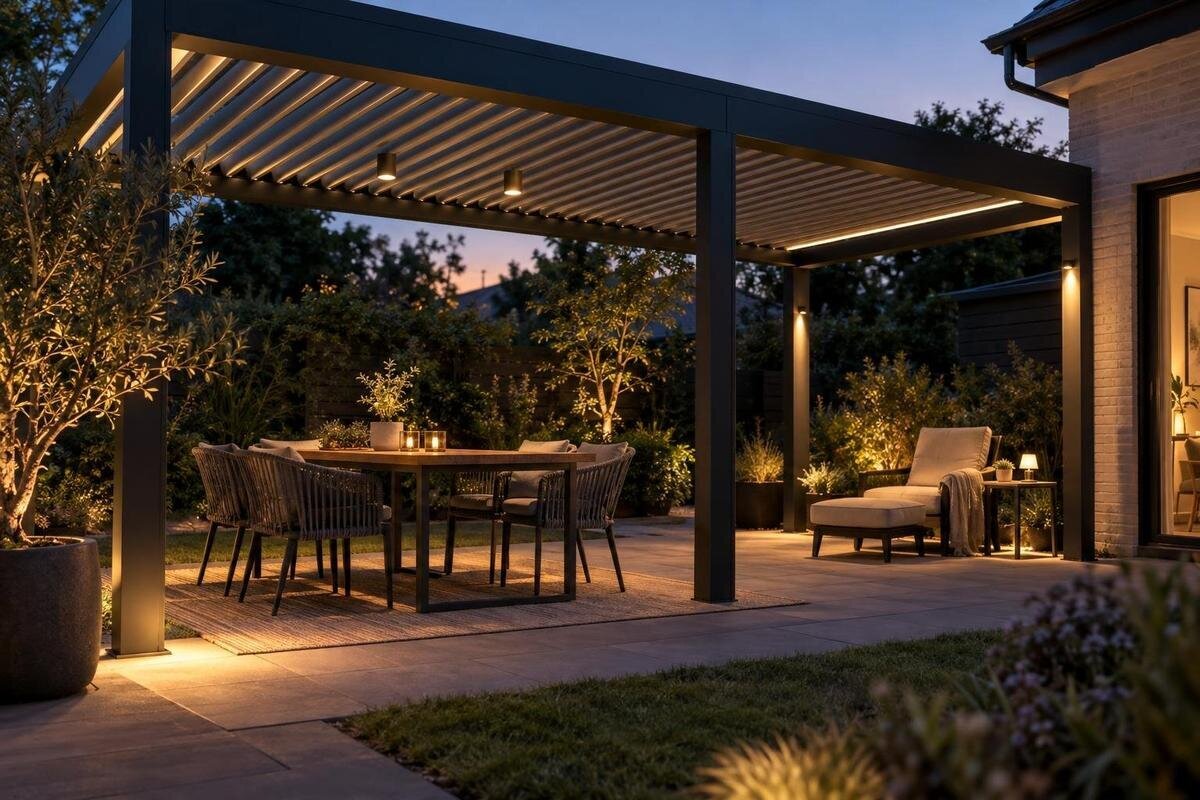
Pergola lighting
Pergola lighting is easier to plan when you begin with what people need to see, rather than a catalogue of fittings. A meal needs a usable view of the table and serving area; reading concentrates attention on one seat; ambient light makes the wider seating area visible without dominating it. Treat these as separate jobs, then decide whether any can share a light or control. A sketch of the furniture, intended light zones and seated sightlines will help you discuss suitable options without assuming every pergola accepts the same equipment.
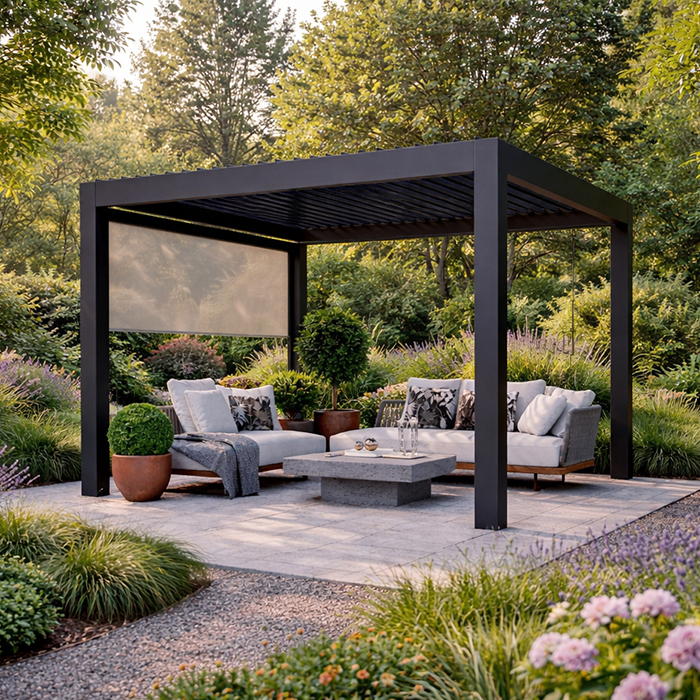
Activities and furniture beneath the pergola
List the activities that will take place after dark and who will use the space. Note whether the table is used for long meals, whether someone reads while others talk, and whether people need to cross between the house and garden. Record the usual furniture arrangement as well as occasional changes: an extended table or an extra chair can alter where light is needed. Dining, reading and moving around are different visual tasks. A table and page need focused light, while the wider seating area benefits from a gentler background. Build the plan around regular use rather than a target number of fittings.
Draw the pergola outline and mark its posts or adjoining wall, roof structure, doors, table, chairs and usual walking routes. Show chairs pulled out as well as tucked in, since this changes where people sit and pass. If the table extends or furniture is rearranged for guests, sketch both layouts. Mark a task area for the dining surface, a regular reading seat and any route that needs clearer orientation; do not guess the fitting type yet. Include views people value, such as the garden and the way back into the house. This gives a supplier or electrician a useful brief and shows where lighting zones may overlap.
Separate task, ambient and circulation light
Think in layers rather than treating every point as a separate fitting. Task light serves a defined activity, such as eating or reading; ambient light establishes a comfortable general level around the seating; circulation light helps people follow a route to a door or step. These are functions, not prescribed fixture styles, and one source can contribute to more than one layer. What matters is whether each activity still works when another layer is dimmed or switched off. If dining and reading happen at different times, independent control may matter more than making the whole pergola equally bright.
On the drawing, outline the dining and reading areas first, then show the background coverage and the route between them. Look for gaps around the table and avoid concentrating all the light in one central patch if seats are spread out. If you are considering the Bloomcabin bioclimatic pergola, take this marked-up layout to the configuration discussion. Explain which activities happen together: someone reading beside a dinner party needs a different combination of controls from someone reading alone after the table has been cleared. Label the light layers by function so that the proposed arrangement can be assessed against your needs.
Plan dining light around the whole table
Use the table in its usual position as the starting point, and include its extended size if it has one. The useful target is the working surface, not simply a point at the centre: people need to see plates, cutlery and serving dishes along the table. Mark where food is brought in, where serving boards sit and whether diners use the end seats. A plan based only on a small everyday setting can leave extra seats in a different area of light when guests arrive. Decide, too, whether the dining zone needs to work on its own or alongside the general background layer.
Assess the layout from the chairs, not only from a standing position underneath. With the chairs pulled out, notice whether someone’s head or arm casts a shadow across the table, whether a seated person looks directly towards a light source, or whether the tabletop reflects it. Repeat the check while someone serves and clears; movement can reveal a view or shadow that a static sketch misses. For an enquiry about the Bloomcabin Lean-To Pergola, include the table’s position relative to the house entrance. Show where dishes arrive and where diners sit, so the discussion covers serving as well as the meal itself.
Give the reading seat its own task light
A reading seat usually needs its own task zone, not simply a brighter version of the entire pergola. Choose the place where people actually settle with a book, then consider how they hold it and whether they shift posture. The light should let someone read without repeatedly leaning towards a brighter patch or turning the chair away from the conversation. Keep a softer background available as well: switching on a reading layer should not force everyone else to sit in the same brightness. Mark any side table, armchair or footstool that affects where the light needs to fall.
Try the proposed position with a real book from the usual seat. Check whether a hand or the reader’s posture throws a shadow over the page, whether the light is in direct view, and whether turning or reclining changes the result. Include the people who will use the seat, since they may hold a book at different heights or angles. If you are considering the Bloomcabin Pergola, describe the reading area in your enquiry, including its relationship to the other chairs. Explain whether one person needs to read while others chat, and whether the chair stays in place or moves with the furniture.
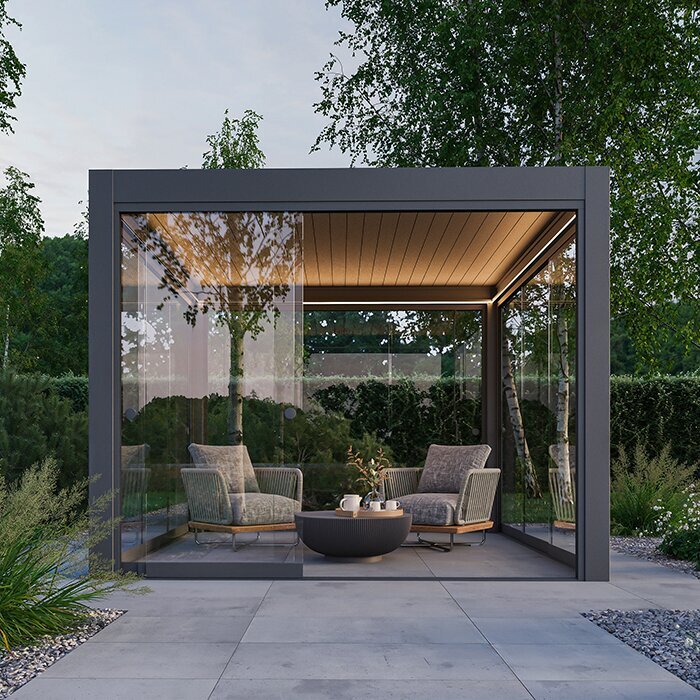
Ambient light around the seating area
Ambient light should make the wider seating area visible without competing with the table or page. Think about the outlines of chairs, the edges of the pergola and the route back to the house, rather than trying to illuminate every part of the garden. If the background layer is too dominant, it can make a deliberately focused dining or reading area feel less distinct. If it is too low for the way you use the space, the seating may be hard to navigate once the task light is switched off. Plan the background for the quieter moments when it will be used on its own.
Nearby surfaces affect how the lighting looks. Light falling on a wall, paving, planting or fabric may appear different from light directed at the table, while a glossy surface can create a distracting reflection. Consider the actual finishes around the pergola and test the general setting after dark rather than relying on a product image. When enquiring about the Bloomcabin bioclimatic model, include photographs of the surrounding terrace and describe the background effect you want. Distinguish a softly lit seating area from illuminated garden features: they are different parts of the brief, and you may want to control them separately.
Check glare from seated eye level
A light that seems unobtrusive while standing may be uncomfortable from a chair. Mark the usual seated positions on your drawing, then sit in each dining chair and the reading seat. Look towards the table, the garden and the house: note whether a bright source enters the normal view or reflects from the tabletop, glazing or another smooth surface. Also check the route between seats and doors, where someone may look up while moving. The aim is a practical view of how people will use the space, not a judgement made from one position beneath the fitting.
If a source appears directly in view or its reflection distracts, reconsider the proposed position, direction or suitable shielding with the supplier or installer. Test the arrangement at the light levels you expect to use, not only at full brightness, and repeat the view check after any change. In a layout discussion for the Bloomcabin lean-to model, mark the adjoining wall, doors and views from inside the house as well as the outdoor seats. A comfortable dining view should not come at the expense of someone looking out through a nearby window. Record the troublesome viewing position so the proposed solution addresses the actual problem.
Choose light colour and controls after the layout
Decide on the appearance of the light once you know what it needs to do. The colour of light can look different against timber, stone, painted walls and fabrics, and nearby house lighting may influence what feels consistent. Compare the dining and ambient settings after dark if possible, so you can judge them in the actual space. A warm or more neutral appearance is a preference to test, not a substitute for checking that the table and reading page remain usable. Avoid selecting a fitting on the strength of an online image alone; the setting and surrounding finishes can change how it looks.
Write down the settings you want, such as dining, reading and a quieter background, then decide which should be controlled separately. Dimming may be useful, but confirm that the chosen fittings and controls work together and can achieve the intended settings. Place controls where users can reach them without crossing the seating area or searching for an unfamiliar sequence. For an enquiry about the Bloomcabin bioclimatic pergola configuration, describe what each setting should do rather than simply requesting dimmable lighting. For example, you may want to lower the background light while leaving the reading area unchanged, or switch off the table lighting once dinner is over.
Confirm fittings, mounting and electrical provision
Do not assume that any fitting described as suitable for outdoor use can be mounted anywhere on a pergola. Check the exact product manual, its outdoor rating and the documented approval for the proposed mounting position. Confirm that the fitting is intended for the conditions at that location and that any control or dimmer is compatible. The pergola’s appearance in a photograph is not evidence of an approved fixing point, and a frame should not be treated as a mounting surface unless the relevant documentation supports it.
Bring in a qualified electrician to assess the proposed supply, cable route and controls, and to identify what is needed for the particular installation. Discuss the route before the structure is finished or access becomes difficult. It should not interfere with any moving parts, drainage or maintenance access, and the exact method needs professional confirmation rather than guesswork. If your plan involves the Bloomcabin Lean-To configuration, include both the pergola and adjoining wall in that discussion and ask the installer to confirm the route and fixings for the selected configuration.

Test the plan after dark
A simple trial can reveal problems that are hard to spot on a daytime plan. Put the furniture in its intended positions and mark proposed light locations without attaching anything to the structure. To test a light pool, use only a portable lamp whose instructions allow it to be used outdoors, following those instructions. Try the dining and reading activities, then move between the pergola and the house. Notice what remains visible when each layer is used on its own, as well as whether a light source or reflection enters a normal line of sight.
Repeat the trial with the chairs pulled out, the table extended if relevant, and people seated in their usual places. Make a note of shadows, dark gaps and any control setting that is too bright for a relaxed evening; a phone photograph alone may not show what the eye experiences. If the selected structure has adjustable parts, repeat the check in the positions you normally use. Keep the findings with your enquiry for the Bloomcabin Pergola model, separating successful light locations from those that need revision. A portable-lamp trial helps explain the effect you want, but it does not establish an approved position for a permanent fitting.
Plan for maintenance and everyday changes
Include maintenance in the lighting decision, not just the initial appearance. Ask how each fitting is cleaned, inspected and replaced, and what access that work would require. Check the manufacturer’s instructions for the selected equipment rather than assuming that all fittings have the same service needs. A position that looks tidy but is difficult to reach may be inconvenient later. Also consider whether the table or reading chair is likely to move; a lighting plan that depends on one exact furniture arrangement may be less useful if the pergola serves several purposes.
Before choosing, bring the plan together in a short written schedule: the activity, the area to be lit, the preferred control setting, the proposed mounting position, the relevant manual and who will confirm the electrical details. Add the seated glare check and any access needed for maintenance. Consider whether light spills beyond the seating area towards a neighbour’s window or a view you want to preserve, and whether the general layer can be switched off separately. These details make the final arrangement easier to assess than a list of fittings on its own.
Frequently asked questions
How many lights do I need over a pergola dining table?
There is no useful fixed number without knowing the table layout, the light distribution and the approved fitting positions. Plan for the whole surface, including end seats and any extended arrangement, then assess shadows and glare from seated positions. Ask a qualified electrician or supplier to confirm what the selected configuration can support.
Can one light work for both dining and reading?
It may, if its position makes both tasks comfortable and the light can be controlled as needed. Dining spreads attention across a table, while reading focuses it on one seat and page. Try both activities in the proposed positions before deciding that a shared light will be sufficient.
Does ambient light need to illuminate the whole garden?
No. Its role is to provide a useful background around the pergola seating area, not to light every part of the garden. Keeping it separate from dining or reading light lets you choose a quieter setting without losing the task light when you still need it.
Can any outdoor light be attached to a pergola?
Do not assume so. Check the exact fitting’s outdoor rating, manual and documented mounting approval, as well as compatibility with the chosen pergola configuration and controls. Have a qualified electrician assess the proposed electrical provision and installation.
What is a simple way to check for glare?
Sit in each dining chair and the reading seat at the times you expect to use them. Look towards the table, the garden and the house, and notice whether a light source or its reflection is distracting. Repeat the check with the planned light settings and usual furniture arrangement.
A useful pergola lighting plan is a clear map of what needs to be visible, when, and from which seat. Give the table and reading spot task light, keep the ambient layer independently adjustable where possible, and check sightlines before selecting equipment. Confirm mounting and electrical details for the exact configuration, and consider access for maintenance as well as the initial effect. With those practical decisions settled, the lighting can support meals, reading and quieter evenings without forcing every activity into the same setting.
