
How to Create a Reading Corner Under a Pergola
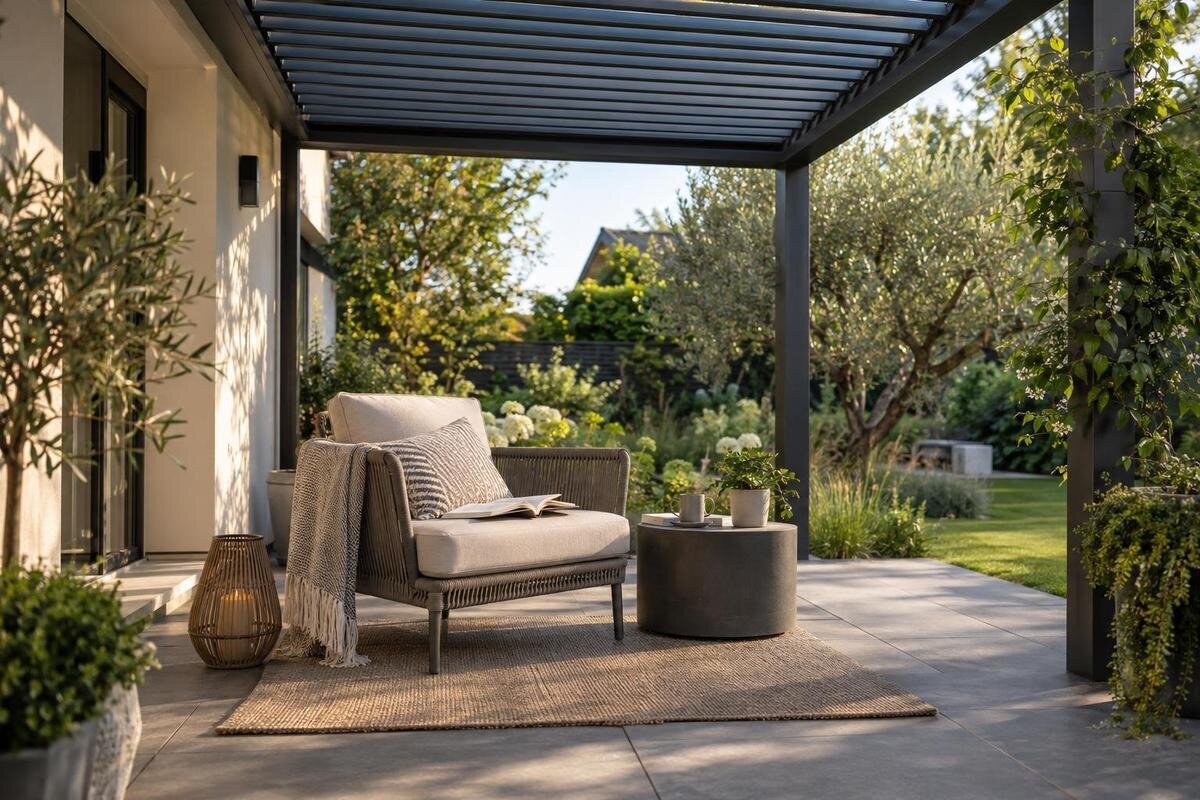
Pergola layout guide
A pergola reading corner works best when it is planned around the page, not just the furniture. The seat needs shade at the hours you use it, enough room to settle in and get up, useful light when daylight fades, and a realistic plan for keeping books dry. Measure the whole arrangement—including the chair's recline, table and route past it—before choosing a pergola. This guide helps shape a calm outdoor reading spot without assuming that a pergola is a fully enclosed or rainproof room.

Decide how you will use the reading corner
Before choosing a chair or a frame, decide how the corner will actually be used. A single reader who settles in with a paperback needs a different arrangement from two people who take turns, or someone who likes an armchair, footstool and a drink within reach. Note when you usually read, whether you prefer upright or reclined seating, and what you carry outside: a print book, e-reader, glasses, notebook or cup. These details determine how much floor area belongs to the seat and how much should remain clear. They also prevent attractive extras from turning a quiet nook into a cluttered patio.
Keep one main use as the priority; a reading corner does not need to double as a dining area or general storage zone. When comparing configurations of the Bloomcabin Pergola, use a written brief that distinguishes essentials from extras. Your chair and a clear approach might be essential, while a second seat or larger table could be optional. Draw a measured concept plan showing these items and label it as a concept, rather than a drawing of a particular pergola. This lets you compare options against your own requirements instead of trying to reproduce an arrangement from a product photograph.
Check where the sun falls when you read
Shade changes through the day, so a seat that feels comfortable in the morning may be bright in the late afternoon. Spend time at the intended spot during the hours you read, on more than one clear day if possible. Notice direct sun on your face or page, reflections from pale paving or a nearby window, and whether you have to turn your head to see comfortably. A pergola's shade depends on its particular arrangement, position and the sun's angle; the word pergola alone does not promise an even, fixed patch of shade. Record what you observe before deciding where the chair belongs.
Mark sunny and shaded areas on a simple site sketch, along with the proposed chair position and the direction you would face. Consider shadows from trees and buildings as well as the pergola, since these can change with the season. When considering the Bloomcabin Bioclimatic Aluminum Pergola, ask which documented features of the selected configuration could address the sunlight you have observed. Check how those features operate and whether you could reach any controls from your planned seat. Shifting the chair may solve glare more simply than changing the whole footprint. Aim for comfort during your usual reading hours rather than all-day shade.
Measure the seat, recline and route through the space
Measure the furniture in the position you use it, not just the chair's footprint when upright. Include room to recline, extend a footstool, place a side table and stand up without catching a leg on a post or planter. If a chair swivels or moves, mark the space it occupies as well. Use tape or chalk on the patio to show the outlines at full size, then sit down and check that the arrangement feels natural. Your plan should show usable space between the furniture and the route past it; a pergola's total area is not the same as a clear seating area.
Keep a straightforward way in and out, particularly if the seat is near a door or the route to the garden. Check that doors and gates can open fully and that someone can pass without asking the reader to move. For a wall-mounted option such as the Bloomcabin Lean-To Pergola, compare the exact product drawings with the wall, threshold and furniture positions on your plan. Include space to carry a tray or book basket through the doorway, not just to walk through empty-handed. A qualified installer can assess the wall and site requirements; your furniture plan should make the access requirements clear.
Choose a chair that suits your reading habits
Choose a chair for the way you hold a book and the length of a typical reading session. A supportive back, arms that leave room to turn pages and a seat angle that lets you look down comfortably may matter more than a dramatic silhouette. Try the chair with the kind of book or device you use and, if relevant, test it with a footstool. Check whether you can settle into it and get up again without moving the side table. Comfort is personal, so a display photograph or furniture description cannot substitute for trying the actual seat.
Think about the outdoor setting as well as the showroom feel. Loose cushions, a throw or a footstool may make the nook more inviting, but each item needs a place when the weather changes or the area is not in use. Choose finishes and fabrics for the exposure and care you are prepared to manage; do not assume that a sheltered-looking position stays dry. Try the chair with its cushions in place to see whether they slip when you change position or interfere with the armrests. Reading in the proposed chair for a while will reveal more than adding several pieces at once.

Keep a side table and essentials within easy reach
A small table can hold the book you are reading, glasses, a bookmark and a drink, but its position matters as much as its size. Sit in the chosen chair and check that you can reach the surface without leaning awkwardly or twisting away from the page. Leave enough space for the book to lie open and for a cup to sit without competing with it. Try the arrangement with your usual items rather than estimating from an empty tabletop. A table that is too far away becomes an inconvenience; one placed in the walking route makes the corner harder to use.
For extra books, decide whether you need a shelf or only a portable place for the next title. A basket or caddy can hold a short reading list during a dry spell and be carried indoors afterwards. If you want storage that stays outside, choose it for the exposure it will face, then measure its footprint and allow room to reach into it. Check how a lid or door opens and whether it would obstruct the chair or route. Keeping only the books you expect to use nearby leaves more floor space. Include storage in the layout rather than squeezing it in after the furniture is in place.
Plan reading light for overcast days and evenings
Daylight may be enough at some times, but a useful reading spot should also work when the sky is dull or the afternoon light fades. Check whether the page is evenly lit and whether the light source causes glare or a strong shadow from your hand. A movable task light can help you direct light towards the book; a softer surrounding light can make the corner easier to use when you look up. Test the arrangement from your normal seat with a real book or device. The right position depends on the chair, the page and the surrounding light, so there is no single placement that suits every pergola.
Use a light specifically intended for outdoor conditions and follow its instructions for use and placement. Keep controls easy to reach and cables out of the route between the seat and the house or garden. When reviewing the Bloomcabin bioclimatic model, include lighting in your questions about the selected configuration: what provision, if any, is documented, and what fittings are compatible? A portable light also needs a stable place to stand and somewhere suitable to store or charge it. Ask a qualified electrician to assess any permanent fitting or connection for the product and site.
Protect books from rain and damp
A pergola can provide shade, but it should not automatically be treated as a sealed book room. Wind-driven rain can reach a seating area, and damp conditions can affect paper even when a chair is under cover. If the chosen product has not been specified as providing the weather protection you need, bring the book indoors after reading. Make that easy by keeping the route back to the house clear; a small carry basket is more dependable than leaving a favourite edition on the table.
Keep spare books somewhere intended for the conditions they may encounter. A decorative basket is not automatically weatherproof, and a closed container may need to be opened and dried according to its instructions. Check the storage product's intended exposure, keep it away from splash-prone areas and leave room to lift books without bending their covers. If you are considering the wall-mounted Bloomcabin Lean-To Pergola, check the documented weather protection of the selected configuration alongside the position of your proposed storage. Decide which items can remain outside and which need to come indoors, so clearing the corner is a simple routine.
Consider noise, privacy and the view from the chair
A quiet corner depends on its position as well as its furnishings. Sit where you plan to read at the time you usually use the space and notice sounds from gates, doors, paths or nearby activity. Think about the view from the chair, too: a pleasant outlook may make the spot feel more settled, while a direct view of a busy route can be distracting. Before comparing configurations on the Bloomcabin Pergola product page, identify the chair position you would prefer for quiet and privacy. You can then assess whether each option leaves room for that orientation and for access behind or beside the seat.
Turning the chair away from a gate, kitchen door or busy path can reduce visual distraction, though it will not remove noise. A planter may soften a view if it fits the space, but it should not encroach on the route or make the seat difficult to reach. Avoid adding a screen or fabric panel on assumption alone: it can change airflow and must be suitable for the chosen pergola and site. Check the product information and ask the supplier or a qualified installer about any proposed attachment before including it in the layout.

Match the pergola footprint to the usable seating area
Compare the measured arrangement with the clear space available in the exact pergola configuration. Account for the chair, table, storage, movement and support positions shown in the relevant product information; do not assume the entire stated area is available for furniture. Include existing features such as doors, gates, windows and the route across the patio. If the corner is beside the house, check how the proposed position relates to the wall and thresholds as well as the space beyond the seat. A layout that works on paper should still leave the patio usable for its other everyday purposes.
The Lean-To Pergola listing gives an area range of 97–258 ft², but area alone does not tell you the shape or clear dimensions of a particular configuration. Two layouts with similar areas may accommodate the same chair and footstool quite differently. Compare the exact dimensions and support positions with your full-size furniture outline, noting where a narrow gap would make a table or storage lid difficult to use. If the drawings leave an important measurement unclear, ask the supplier for that specific dimension. Resolve the tightest part of the layout before choosing a larger option simply for its stated area.
Rehearse the layout before settling on a configuration
Before committing, set out the proposed arrangement with your existing chair or an outline made from tape, then try it at the time you usually read. Bring the book, drink, glasses and lamp you expect to use. Check that you can sit down, reach the table, turn pages and get up without shifting other items. Notice whether the page remains comfortable to read as the light changes and whether people can still pass. This full-size concept trial tests the real task, not just the appearance of furniture in a photograph.
Use the trial to record the seat position, clear route, useful shade periods, lighting plan and book-storage decision. Separate problems caused by furniture placement from questions about the pergola itself: moving a table may resolve an awkward reach, whereas a support position needs checking against the product drawing. If you are considering the Bloomcabin Bioclimatic Aluminum Pergola product page, use that record to compare the available configuration information and prepare focused questions for the supplier. Keep the dimensions that worked in the trial on your plan, so any later change of chair or table can be checked against them.
Frequently asked questions
Can I leave books under a pergola?
Only if the specific area and storage are suitable for the weather they may encounter. A pergola is not automatically a rainproof room: wind-driven rain and damp can reach books. The safer plan is to bring your current book indoors after reading and keep any outdoor storage for items it is designed to protect.
How can I avoid glare on a book or e-reader?
Try the planned seat at the times you expect to read. Notice whether direct sun lands on the page or screen, or whether light from nearby windows and paving causes reflections. Adjust the chair or its angle before settling on the pergola position; conditions can change with the time of day and season.
What lighting works for reading under a pergola?
Look for a suitable outdoor light that can put light on the page without shining into your eyes. Check the product instructions for its permitted use and placement. Keep cables out of the walking route, and ask a qualified electrician about permanent fittings or connections.
How much space does a reading chair need?
There is no single useful figure: it depends on the chair and how you use it. Measure the chair in its reading position, including any recline, footstool and side table, then allow room to get up and pass. Compare that outline with the clear space in the selected pergola configuration, not just its stated overall area.
Can a wall-mounted pergola work for a reading corner?
It may be an option, but the layout and suitability depend on the specific product and site. Check the chosen configuration's dimensions and installation information, and ask the supplier or a qualified installer about requirements for your wall. A wall-mounted design does not, by itself, guarantee shade, privacy or rain protection.
A comfortable reading corner comes from several small choices working together: a seat that suits the way you read, shade at the right time, a clear route, reachable essentials and light that falls on the page rather than in your eyes. A measured trial makes those choices easier to judge. Keep books and other belongings in storage suited to the weather, and base the pergola decision on the exact configuration and the space you have measured.
