
Planning Greenhouse Delivery: Access, Unloading and Checks

Greenhouse buyer’s guide
The practical answer
Successful greenhouse delivery planning starts with a route survey. Measure and walk the path from unloading point to garden, including gates, steps, corners and changes in surface. Clear it before delivery day, then select a level temporary storage area that is protected from standing water and unnecessary foot traffic.
When the consignment arrives, take a measured approach. Confirm that the visible packages match the delivery paperwork, inspect outer wrapping for obvious damage and record anything concerning before components are dispersed. Keep packages organised, dry and accessible until you are ready to begin the build.
01
Access first
Check the route as a whole, not just the garden gate. Vehicle stopping space, pedestrian clearance and awkward turns can matter equally.
02
Unloading space
Choose a clear, firm area where packages can be set down without obstructing the pavement, driveway, garage entrance or neighbour’s access.
03
Inspection routine
Photograph visible packaging concerns, retain paperwork and keep labelled packages together so any question can be traced calmly after delivery.
Plan greenhouse delivery before the lorry arrives
A greenhouse is often delivered as a collection of substantial, carefully packed components rather than one ready-built structure. Frames, glazing, fixings and roof parts need to move through the same gates, passages and corners that you use every day. Looking at that journey early helps you identify pinch points while there is still time to change the plan.
The best preparation is practical rather than complicated. Walk the intended route, note changes in level, clear hazards and choose a dry, sheltered holding area close to the build site. Think about who will be present, how items will be carried safely, and whether a delivery vehicle can stop without blocking access or creating an unsafe unloading situation.
This guide focuses on delivery readiness, not installation sequencing or the ideal time to place an order. Use it to prepare for access, unloading, package inspection and temporary storage. If your property has an unusual approach, shared drive or restricted street, discuss the circumstances with the delivery provider and check any local arrangements that may apply.
01 · Before delivery day
Map the complete access route
Begin at the point where the delivery vehicle is likely to stop and follow the route on foot to the proposed greenhouse location. Include the driveway, side passage, gate, lawn edge and any route through a garage or house. A pathway that feels generous when empty can become difficult when people are carrying long, rigid packs or delicate glazed components.
Look closely at thresholds, low branches, bins, outdoor furniture and sharp corners. Measure restrictive openings rather than relying on memory, and consider whether the ground becomes soft after rain. If access involves shared land, a narrow lane or a managed estate, plan respectfully around other users and raise relevant questions with those responsible before the day arrives.
Open and secure gates in advance; remove pots, hoses and temporary obstacles from the carrying route.
Mark low overhead features and slippery changes in level so everyone handling packages can see them.
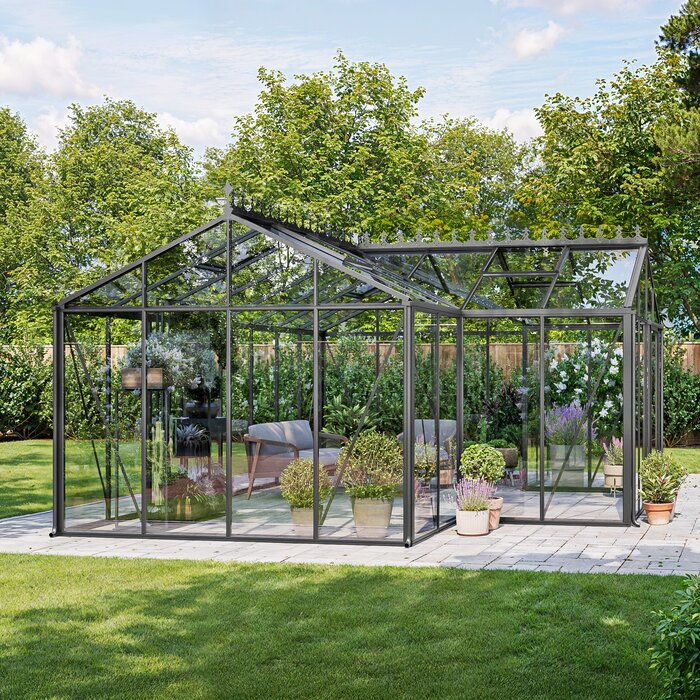
For a familiar freestanding format, explore a standard Classic greenhouse and compare its footprint with your available route.
02 · Vehicle approach
Create a sensible unloading point
The ideal unloading point is not always directly outside the garden. It is a place where the vehicle can stop safely and the packages can be transferred without forcing anyone into traffic, across a busy pavement or over unstable ground. Consider turning space, dropped kerbs, parked cars, overhead wires and the practical distance between the road and your chosen holding area.
Avoid assuming that a driver can use every driveway or private lane. Surface strength, slope, gates and neighbouring access may affect what is workable on the day. If there are restrictions or uncertainty, contact the delivery provider beforehand with clear, factual details. For street-side arrangements, check guidance from the relevant local authority rather than making assumptions about permissions.
Keep the unloading zone free of vehicles, wheelie bins and loose materials on the expected delivery date.
Tell household members where not to park and preserve a clear walking route from the unloading point.
If your design sits against a suitable existing wall, view a full-size regular Lean-To greenhouse while considering access along that elevation.
03 · Safe handling
Prepare people and equipment
Decide in advance who can be present to receive the consignment and help move items only where this is appropriate and safe. Delivery arrangements can vary, so do not presume handling services beyond what has been confirmed for your order. Comfortable gloves, closed footwear and a clutter-free route are sensible basics, but good judgement matters more than trying to rush heavy or unwieldy packs.
Make a simple plan for separating light, easily carried packages from longer or more awkward ones. Keep children and pets away from the unloading and storage area, particularly while packaging is being opened or moved. If a package appears beyond what you can handle safely, pause and seek suitable assistance rather than improvising with an unstable lift or an unsuitable trolley.
Assign one person to check paperwork while another keeps the transfer route clear and supervised.
Use only handling equipment you understand and that suits the surface, load and available turning space.
A standard Classic greenhouse layout can help you visualise which frame packages must travel through your garden.
04 · Receiving the consignment
Inspect packages methodically
Inspection is easiest before packages are scattered around the garden or taken indoors. Compare the number and labels of visible packs with the delivery paperwork, then examine outer cartons, wrapping and straps for obvious tears, crushing, wetness or impact marks. A damaged outer layer does not automatically mean the contents are affected, but it is worth recording promptly and clearly.
Take photographs in good light if anything looks unusual, capturing the package label and the affected area. Note concerns on the relevant delivery documentation where that process is available, and retain copies of all paperwork. Avoid dismantling packages during a rushed handover unless it is practical and safe; a careful external check and organised record are usually more useful.
Photograph package labels alongside visible damage so the record can be matched to the correct component.
Keep delivery notes, order details and photos together in one folder until the greenhouse is complete.
For wall-side projects, review the component needs of a full-size regular Lean-To greenhouse design before arranging storage near the build area.
05 · Temporary storage
Keep components dry and ordered
Choose storage that is level, reasonably dry and out of the main flow of household activity. A garage, covered carport or cleared shed can be helpful if it is clean and spacious enough, but avoid forcing long packages into a cramped room where corners can be damaged. If indoor storage is not possible, use a sheltered location with protection from ground moisture and pooled water.
Keep every package labelled and grouped in a way that makes later identification straightforward. Do not stack heavy items on glazing packs or balance components against unstable fences and walls. Retain protective wrapping until you are ready to work with the relevant part, and avoid leaving materials where wind, gardening activity, pets or routine parking can disturb them.
Raise packages slightly from damp ground using stable supports, without creating a precarious stack.
Store fixings and paperwork in a sealed, clearly labelled container close to the main packages.
Review the delivery footprint of a standard Classic greenhouse package set when choosing your temporary holding area.
06 · Protect the build area
Separate delivery from installation
It is tempting to unload directly onto the future base, but that can complicate the next stage. Installation needs a clear, stable workspace, so reserve room around the prepared site for tools, people and components. If the base is newly completed, treat it with care and avoid using it as a general dumping ground unless it is genuinely the safest, driest and least obstructive option.
Delivery readiness also benefits from a short pause between arrival and assembly. That pause allows you to organise packs, review instructions and make sure the site remains accessible. Do not unwrap everything at once simply to make it fit: loose parts become harder to identify, and packaging may still provide useful protection while weather, other trades or garden activity continue.
Keep an unobstructed perimeter around the build site rather than filling it with unopened packages.
Separate waste and reusable packaging from greenhouse components so parts cannot be discarded accidentally.
A full-size regular Lean-To greenhouse project especially benefits from keeping the wall-side work zone open and orderly.
07 · Property considerations
Plan around shared and awkward spaces
Terraced homes, sloping gardens and rural properties can introduce delivery questions that are not obvious from a product photograph. A side passage may be narrow, a rear garden may be reached only through the home, or a drive may be shared. Be realistic about each constraint and discuss access sensitively with neighbours or managing agents where it affects common areas.
If the greenhouse must pass through a property, protect vulnerable surfaces and remove internal obstacles before delivery day. For difficult levels, wet grass or a long carry, reconsider the storage location rather than assuming the shortest route is the safest. Check whether any local rules affect road use, temporary obstructions or access to shared land with the appropriate authority or owner.
Notify neighbours courteously if the planned delivery could briefly affect a shared drive or entrance.
Check forecast conditions near the date and adapt the route if wet ground would make carrying unsafe.
For gardens approached through tighter spaces, a standard Classic greenhouse option gives you a clear model to assess against your route.
08 · Final readiness
Use a calm delivery-day checklist
On the morning of delivery, reopen the route you surveyed rather than assuming it is unchanged. Move cars, unlock gates, secure pets and check that the unloading area has not collected bins, garden waste or parked visitors. Have your order details, phone and camera ready, but keep attention on safe movement and accurate package identification rather than trying to inspect every internal part immediately.
After the handover, take a few minutes to confirm that packages are stable, protected and still labelled. Record anything that needs follow-up while the details are fresh, then keep the area secure until installation starts. If circumstances change, such as unexpected weather or a blocked access route, communicate early with the delivery provider and use the safest practical alternative.
Keep a charged phone available for delivery communication and photographs, without distracting from safe handling.
Do a final walk-around after unloading to remove trip hazards and confirm gates and paths remain usable.
To plan a tidy wall-side arrival, consider a full-size regular Lean-To greenhouse configuration alongside your measured access route.
Delivery planning by property situation
Every address needs the same fundamentals—safe stopping, a clear route, careful inspection and protected storage—but the priorities shift with the approach to the garden. Use this comparison to spot the questions worth resolving before delivery is arranged.
Front-drive garden
Vehicle space and pedestrian clearance
Reserve driveway space; move cars and bins beforehand.
Rear garden via side passage
Gate width, corners and long carries
Measure restrictions; clear pots, hoses and overgrowth.
Shared driveway or lane
Neighbour access and stopping arrangements
Give notice where appropriate; keep shared routes open.
Sloping or soft garden
Stable footing while carrying packages
Choose a firmer route and sheltered holding position.
Wall-side greenhouse location
Keeping the work area usable
Store packs nearby but away from the wall and base.
A simple pre-delivery plan
Work through these steps several days ahead where possible. They turn a vague idea of access into a clear, practical plan that household members and any helpers can follow without last-minute confusion.
01
Walk the route
Start at the likely vehicle stopping point and walk every metre to the storage area. Note gates, corners, gradients, surface changes and overhead obstructions.
02
Measure constraints
Measure the narrowest gateway and tightest turn. Record useful dimensions and take photographs if you need to explain an unusual approach to the delivery provider.
03
Clear the space
Remove movable obstacles from the route and unloading zone. Secure gates open where suitable, trim only what is necessary and keep a safe pedestrian passage.
04
Set up storage
Prepare a dry, stable area close to the project, with packages protected from moisture, knocks and casual garden traffic while remaining identifiable.
05
Arrange the handover
Confirm who will be present, keep order details ready and agree how concerns will be photographed, noted and stored with the relevant paperwork.
Greenhouse delivery readiness checklist
Use this short checklist the evening before and again on the morning of delivery. It is designed to prevent the common, avoidable problems that make receiving a greenhouse more difficult than it needs to be.
01. The route from unloading point to storage area has been walked and cleared completely.
02. Gates, passages, corners and low branches have been checked for restrictive points.
03. Cars, bins, furniture, hoses and garden tools are removed from working areas.
04. A level, dry temporary storage position has been prepared close to the project.
05. Children, pets and non-essential visitors can be kept away during unloading.
06. Order details, delivery paperwork, phone and camera are ready for the handover.
07. A plan exists for photographing and recording any visible packaging concerns promptly.
08. The prepared build area remains clear enough for later installation work and safe access.
Frequently asked questions
Should I measure my garden gate before greenhouse delivery?
Yes. Measure the narrowest opening and consider the approach on both sides of it, including turns, hinges, steps and overhanging plants. A gate may be adequate in isolation but still sit within a route that is difficult for long packages. Record measurements before discussing an unusual access situation with the delivery provider.
Can greenhouse packages be stored outside temporarily?
A sheltered outdoor position may be workable when indoor space is unavailable, provided packages are protected from damp ground, pooled water, accidental impact and unnecessary handling. Keep them stable, labelled and covered appropriately without trapping moisture. Avoid locations exposed to routine parking, garden machinery, pets or heavy foot traffic.
What should I do if outer packaging appears damaged?
Stay calm and create a clear record. Photograph the affected area and any package label, compare the packs with delivery documentation, and note the concern through the available handover process. Keep paperwork and images together. Follow the delivery or order-support instructions for reporting concerns rather than assuming what the internal contents show.
Do I need helpers for unloading a greenhouse?
That depends on the confirmed delivery arrangement, the package sizes, the route and your own ability to handle items safely. Do not assume extra handling is included or attempt an awkward lift without suitable support. If the access route is demanding, ask the delivery provider in advance what information they need to assess it.
May packages be placed directly on the greenhouse base?
Sometimes that may be the least exposed location, but it can also restrict later assembly and create clutter around the working area. Consider whether the base is dry, stable and large enough without blocking access. In many gardens, a nearby protected storage area keeps the installation space clearer and easier to manage.
How early should I prepare for delivery?
Prepare as soon as you know delivery is approaching, allowing time to measure the route, move obstacles and resolve questions about shared access or vehicle stopping. Recheck the area shortly beforehand because parked cars, garden work and weather can change conditions. Early preparation gives you more options if the original plan is unsuitable.
Plan your greenhouse project
Make delivery day a controlled first step
A greenhouse begins its life in your garden before the first frame is assembled. By treating access, unloading, inspection and storage as one connected plan, you protect the project from avoidable confusion. The aim is not a perfect driveway or a large garden; it is a route and holding area that are clear, safe and thoughtfully prepared.
Use Bloomcabin product information alongside your own measurements, then raise any property-specific access questions before delivery day. With paperwork ready, packages organised and the future build area protected, you can receive your greenhouse with the attention and care that a long-term garden project deserves.
Explore greenhouse styles, then assess their position against your access route, storage space and prepared garden site.
