
Repair or Replace Windows? How to Decide by Condition
Window condition guide
A window replacement project is easiest to control when it starts with a condition survey, not a catalogue. Perhaps a bedroom casement catches on its frame, condensation has appeared inside one glazed unit, and a draught is noticeable beside the sofa. Those symptoms may have different causes and different remedies. Before treating every fault as a reason to replace, separate the moving parts, glass, frame and installation line around each opening. Then consider how any work will coordinate with decorating, external access, blinds, internal reveals and the use of the room. A well-scoped repair can restore an otherwise sound window; a replacement can be the better route where faults overlap, the opening no longer suits the room, or ongoing work would only defer a wider problem. This guide gives you a practical way to decide window by window.
Start with a room-by-room condition record
Walk through the home in daylight and assess each window rather than judging the house by its worst opening. Record the room, approximate size, opening direction and what happens during use. List resistance, rattling, draughts, water marks, damaged finishes and fogging between panes as separate symptoms. Take photographs from inside and, where safely accessible, outside. Add practical context: a window above a stairwell may be difficult to reach, while one behind a kitchen tap has restricted movement. This turns a general complaint into a useful brief for a surveyor or repair specialist.
Rank each finding by consequence as well as appearance. A loose handle on an otherwise square, dry and secure sash is not the same decision as a window that cannot close fully during bad weather. Identify which rooms are uncomfortable, which openings are difficult to use, and whether a defect is spreading or returning after earlier work. Do not make age the deciding factor. An older window can have a sound structure and one serviceable fault, while a newer installation can need investigation if it shows recurring water marks or misalignment. Keeping the record window-specific also makes phased work possible: urgent defects can be dealt with first while you gather information for later replacements.
Test operation before blaming the frame
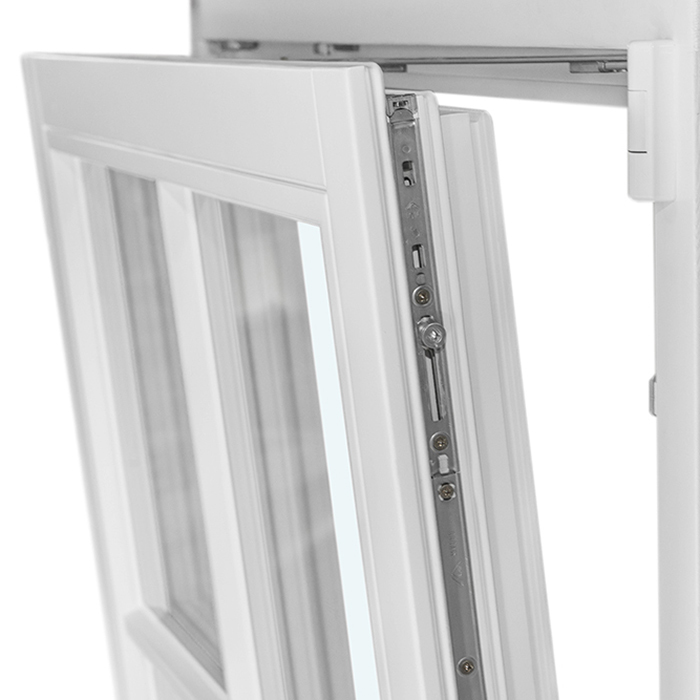
Test an opening window through its normal sequence: unlock it, move it gradually, open it as intended, close it and engage the locking points without forcing anything. Listen for scraping and pinpoint whether it occurs at a hinge, handle, sash edge, track or latch. Check whether the sash sits evenly in the frame when shut. A fault confined to hardware, an adjustment or a worn sealing element may be repairable if the sash and frame are otherwise stable. Do not apply extra force to make a reluctant window shut; that can damage components and conceal where the problem begins. Describe the exact stage at which it resists rather than simply saying that it sticks.
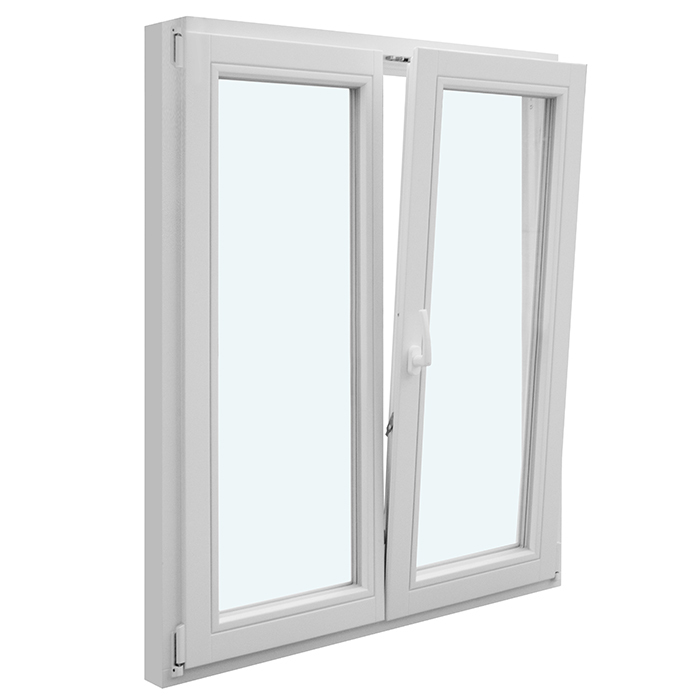
Patterns matter. One sash catching after wet weather calls for investigation of moisture, drainage and alignment; several hard-to-latch windows on one elevation justify a wider review. Replacement can instead be a deliberate change of function. Where interior clearance and cleaning access suit it, a single-sash inward-opening window offers a different arrangement. Do not choose it merely because an outward-opening sash needs adjustment: decide whether you are restoring operation or changing daily use.
Read the condition of frames and sashes
Inspect visible frame and sash surfaces for opened joints, finish loss, corrosion, deep splits, soft timber, staining, deformation and uneven perimeter gaps. A scratch or small failed sealant bead does not prove structural failure; ask whether the underlying material remains firm, stable and correctly shaped. Compare exposed sides. A defect at one corner may be local, while damage crossing the sash, frame junction and reveal needs broader investigation. Avoid aggressive probing; photograph suspicious areas for professional assessment.
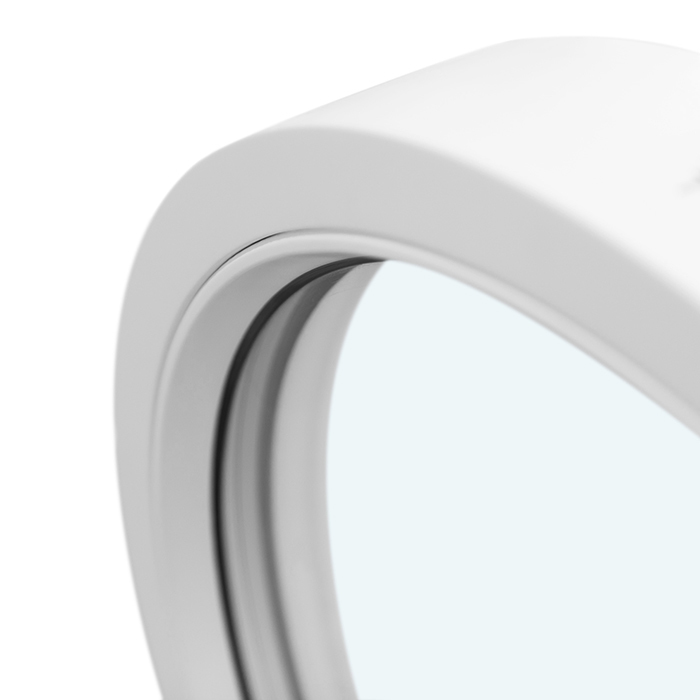
Every visible defect should lead to a cause question. Repainting over returning staining or filling an open joint without understanding the water route may produce a tidy short-term result but not a durable decision. Water can arrive from the window itself, the junction with the wall, a detail above it or an external feature nearby. Ask a specialist to distinguish surface maintenance from a repair to sound material and from replacement of the unit. For a non-standard opening such as a round fixed window, accurate assessment of the surrounding shape is particularly important. If replacement is proposed, request an explanation of how the opening will be examined and made good. The interface between the new frame, existing wall finish and external weathering detail deserves the same attention as the product.
Separate glass faults from whole-window faults
Look at glazing from several angles and in changing light. Condensation or a hazy appearance between panes points to a problem within the glazed unit, while condensation on the room-side surface can be influenced by indoor moisture, temperature and airflow. Cracked glass, damaged beads or movement within the glazing should be assessed promptly, but do not assume that the entire window must automatically be discarded. Depending on the construction and condition, a specialist may consider whether a glazed-unit repair or replacement is feasible. Ask what can be retained, whether surrounding components are sound and whether the proposed work will address the reason for any water or movement around the glass.
Replacement becomes more persuasive when glazing trouble sits alongside failing frames, unreliable operation and repeated draughts. It may also be the right occasion to reconsider the composition of the opening. A large area that never needs to open can be designed as a fixed window without an opening sash, while a separate opening light supplies ventilation where needed. That division can reduce unnecessary moving parts, but it changes cleaning access and the way the room is ventilated. Discuss sightlines, furniture position, daylight and exterior appearance before changing an arrangement. Treat fixed and opening elements as a coordinated design decision, not as a shortcut for an unrelated glass defect.
Trace draughts, water marks and failed seals carefully
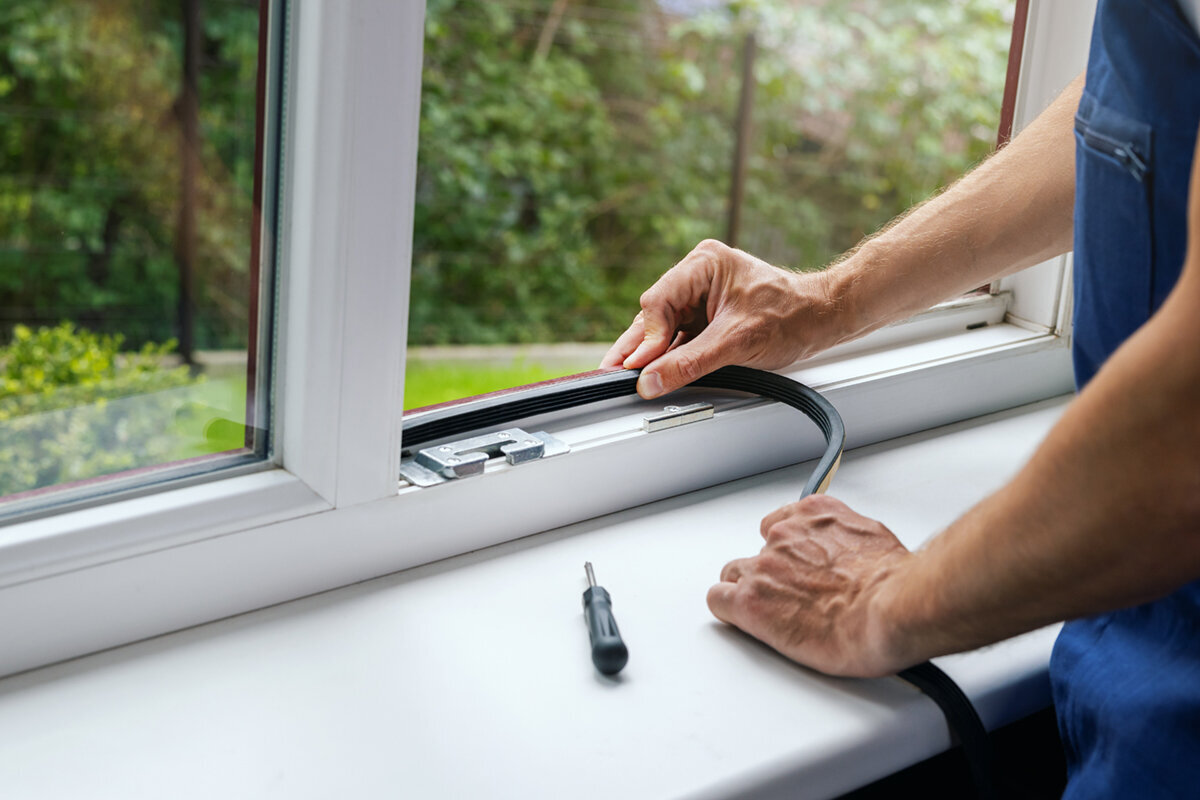
A draught felt near a window does not automatically identify the leaking component. On a still day, inspect seals for compression, tears, gaps and contamination; check whether the sash closes evenly and whether trims or finishes show an obvious gap. Water marks likewise need a calm investigation. Note their position, whether they appear after wind-driven rain, and whether they are old or fresh. Avoid filling every gap with sealant before an assessment, since that can make diagnosis harder or redirect water. The useful outcome is a clear statement of the path: through an opening sash, around glazing, at the frame-to-wall junction, or from another building element.
An isolated worn seal may support repair, provided the rest of the window closes properly. Recurrent dampness around several edges, movement at joints or distortion can make a more comprehensive solution sensible. Ask whoever inspects the window to define the proposed scope in plain language: which parts are being renewed, what defect it addresses, what remains in place and how the result will be checked. This is particularly important where internal plaster, tiles, wallpaper or external render could be disturbed. Coordinating remedial work with redecoration prevents a small repair becoming an unfinished room project, and gives you a realistic basis for comparing repair against replacement.
Decide when repeated repairs stop being economical
Repair is not a lesser choice when it resolves a distinct fault and preserves a working assembly. It becomes less convincing when separate call-outs keep addressing symptoms without stabilising the window’s overall condition. Review invoices, photographs and your condition record. Has the same sash gone out of alignment again? Are finish repairs followed by new staining? Does one improvement expose a different weakness? A repair proposal should explain its expected purpose, not simply list parts. If the cause cannot be identified, or essential components cannot be restored to reliable operation, replacement may offer a clearer project boundary. That conclusion should follow evidence, rather than a blanket rule based on a window’s age.
Compare options on scope and disruption, not an assumed price difference. A repair may involve limited access and local making good; replacement may allow a revised opening arrangement but involve decoration, trims and exterior finishing. If several similar windows have mixed conditions, a phased plan can be more manageable than replacing everything at once. Keep compatible visual decisions in view, including frame colour, glazing bars and opening direction, so later phases do not look accidental. If you are considering a higher-performing specification such as an outward-opening passive house window with super-low Uw, ask for project-specific advice on whether its configuration, dimensions and installation approach suit the existing opening. A product title alone does not settle that question.
Use replacement to solve a genuine use problem
Replacement is an opportunity to improve how a room works, but only if the new function is clearly defined. Think through opening direction, handle reach, furniture clearance, child or pet routines, cleaning and the route people take through the room. A sitting room window blocked by a desk may be difficult to operate even if it is technically repairable. An inward-opening arrangement may be convenient in one location yet conflict with blinds or shelving in another. Start with a sketch of the room and note radiators, curtains, cupboards and external obstructions. This makes the choice between retaining the existing format and changing it more concrete.
If direct garden access is the real objective, replacing a faulty window with another window may miss the brief. A Patio Life side-sliding patio door is an alternative opening type where the wall layout and design support it, not a repair for a sash. Review panel movement, threshold relationships, privacy and furniture space. Altering the opening requires appropriate professional design and project compliance review. Separate remedying a defect from changing how the building is used.
Protect proportions and character when changing windows
Before ordering replacements, stand back from the elevation and photograph it square-on where possible. Note sash divisions, transom positions, frame depth as perceived from outside, colour, decorative bars and the relationship of windows to doors. A replacement that performs its intended job can still feel out of place if its proportions ignore the rhythm of the facade. This is especially relevant where multiple windows are visible together. Measure the glass area and opening layout rather than relying only on nominal overall dimensions. Ask for drawings that show the proposed division of the window, opening direction and visible frame arrangement, then review them from both inside and outside.
For a period-inspired appearance, a historic-style kombi outward-opening side-hung window may be a relevant configuration to discuss where it matches the design objective. Confirm the actual layout, sightlines, glazing-bar treatment and operation in the quotation rather than inferring features beyond the named product configuration. Conversely, do not choose a historic-style solution solely to disguise a condition problem if its operating pattern does not suit the room. A careful replacement brief balances appearance with cleaning, ventilation and access. Keeping that balance on paper before manufacture is far easier than trying to adjust the result after installation.
Plan surveying, access and the installation sequence
A good replacement decision includes the work around the window. Ask how final measurements will be confirmed, which finishes may be removed, how internal reveals and external edges will be protected, and who is responsible for making good. Discuss access for upper-floor openings, room clearance, dust control and where removed units can be handled. If a window is near fitted furniture, shutters, alarms or radiators, flag it early. For a repair, ask whether access is needed from both sides and whether the work can be completed without disturbing adjacent finishes. The best scope is specific enough that you can prepare the room and compare proposals fairly.
Order timing should be based on confirmation of the final specification and site survey, not on an assumed installation date. Bloomcabin windows and doors have a 5-year warranty, and delivery is typically 4–6 weeks subject to order confirmation. Keep repairs that protect the building from worsening separate from elective redesign choices where necessary. If replacement involves an unusual shape, establish the opening dimensions, template process and tolerance for surrounding finishes before committing. A fixed triangular and angled window without an opening function can answer a particular architectural requirement, but its exact shape and fit must be verified for the project. Protecting access and sequencing early reduces avoidable surprises.
Ask for a decision-ready written scope
Request a written scope that lets you test the recommendation. For repair, ask what is defective, what caused it, which parts will be adjusted or renewed, and why the main frame and sash can remain. For replacement, confirm final dimensions, opening direction, removal, making good, glazing and hardware choices. Ask for drawings or unambiguous descriptions of non-standard openings. A phrase such as “replace window” is not detailed enough for a meaningful comparison.
Finish by matching every proposed action to the condition record. A window with isolated hardware trouble may stay on the repair list; a distorted, repeatedly damp and poorly operating unit may move to the replacement list; an opening that no longer serves the room may become a redesign project. Where ventilation at high level is part of the practical brief, an outward-opening top-hung window is a configuration to assess alongside access and cleaning needs. Confirm the final selection with qualified professionals responsible for the project and its compliance. A deliberate brief gives you a better chance of ordering the right remedy once, rather than buying a product that only addresses one visible symptom.
Common questions
Can a misted double-glazed window be repaired without replacing the frame?
Sometimes the issue may be confined to the glazed unit, but feasibility depends on the existing window construction and its condition. Have the glass, beads, sash, seals and surrounding frame assessed together. If the frame is stable and operation remains reliable, a focused solution may be possible. Avoid assuming from misting alone that whole-window replacement is required.
Should I replace all windows if only a few are difficult to open?
Not necessarily. First establish whether the difficult windows have isolated hardware or alignment faults, or whether they share a wider condition issue. A room-by-room record supports a phased plan where appropriate. Consider visual consistency, future access and whether later replacements would require matching design decisions, but do not replace sound windows solely because one has a repairable fault.
Is condensation on the inside of glass proof that a window has failed?
No. Condensation on the room-side surface can relate to indoor moisture and airflow as well as the temperature of the glass. Condensation or haze between panes is a different observation and suggests an issue within the glazed unit. Record exactly where moisture appears and when, then seek advice that considers both the window and room conditions.
What should a replacement-window survey cover?
It should confirm final opening measurements and examine the condition of the surrounding opening, reveals and external edges. Ask about opening direction, access, glazing layout, decoration, trims, making good and how the proposed product will be installed. Supply photographs, note obstructions such as blinds or fitted furniture, and ask for the agreed configuration to be recorded clearly.
Can I change an opening window to fixed glazing?
It can be a design option where the window no longer needs to open, but it changes ventilation, cleaning and everyday use. Consider whether another opening nearby serves the room adequately and whether access to both sides of the glass remains practical. Discuss the complete room arrangement and project requirements with the appropriate qualified professional before finalising the design.
Your next step
The repair-or-replace decision becomes clearer when you stop treating a window as one item. Test its operation, inspect frame and sash condition, distinguish glazing faults from junction problems, and trace recurring water or draught symptoms before commissioning work. Repair has real value when the fault is contained and its cause can be addressed. Replacement is more compelling when deterioration and malfunction overlap, or when a different window arrangement would solve a genuine use problem. Keep a written condition record, seek an equally detailed scope for each option and confirm final measurements before ordering. That process helps you invest in the work the opening actually needs, whether that is a precise repair, staged replacement or a considered redesign.
