
Calculating Whether a Restaurant Pergola Can Pay for Itself
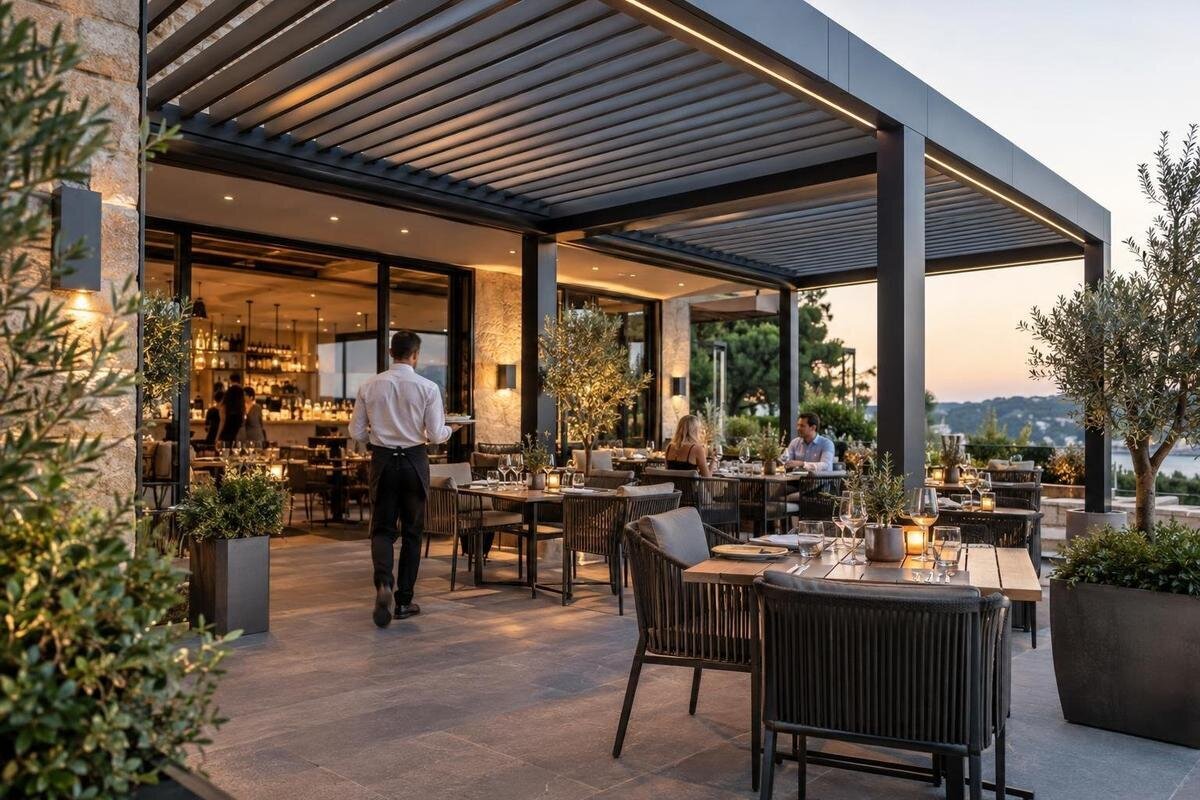
Restaurant terrace investment
Whether a restaurant pergola can pay for itself depends on more than the number of seats beneath it. A credible estimate counts service days the terrace can genuinely be used, covers that are additional to existing trade, and the contribution left after incremental costs. It then compares that annual figure with the full project cost. Treat the result as a planning model, not a promise of higher sales: make each assumption visible and test what happens if trade is lower or costs are higher.
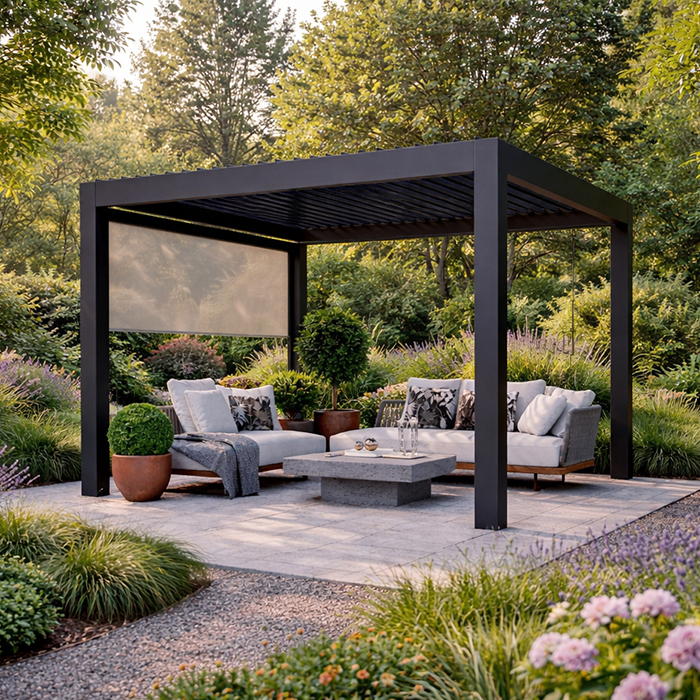
Decide what a payback calculation includes
A useful restaurant pergola payback test asks whether the additional operating contribution attributable to the project can recover the initial investment within a period the business finds acceptable. It is not enough for the terrace to look busy or for sales rung through the till outdoors to match the quote. Those sales may include diners who would otherwise have sat inside, and they bring food, drink and service costs. Compare a realistic with-project case against a no-project baseline, counting only the financial difference.
Choose the financial test before setting the inputs. Simple payback estimates how long cumulative annual net contribution would take to equal the upfront cost; it does not show whether cash arrives evenly or establish lifetime profit. It also leaves out factors such as financing, tax treatment and later replacement costs unless you model them separately. Decide the business's own acceptable recovery period first. If you need a fuller investment appraisal, add a cash-flow view with an accountant rather than treating simple payback as the whole answer.
Estimate usable service days from trading records
Set D as the number of days in a year when the proposed terrace could genuinely trade for the service you are modelling. It is not the number of days the structure is standing, or every day in the season. Use the restaurant's opening calendar and operating arrangements: a day when the venue is shut, the terrace is reserved for another use or staff cannot support outdoor service may add no covers. Do not assume the project automatically makes every poor-weather day usable; that depends on the confirmed design, site conditions and the operator's policy.
Build the estimate from comparable trading periods, using terrace opening and closure notes, booking information and point-of-sale reports. Note why the terrace was unused where you can: weather, staffing, a private booking or lack of demand are different constraints. Separate weekday and weekend trading, or lunch and evening service, if the patterns differ materially. Calculate each group's contribution separately and add the results before deducting annual operating costs. If you count lunch and dinner separately, label D as usable services rather than days and use additional covers per service for C; do not combine service counts with a daily cover average. Record when the proposed terrace would actually become available, too. A mid-season opening needs a first-year estimate distinct from a full trading year. If your records are thin, state that uncertainty and use cautious scenarios; a run of busy summer days is not evidence for a full-year calendar.
Count extra covers from a workable layout
Begin with a measured floor plan of the actual site, not a seating estimate taken from a product image. Mark existing and proposed tables, doors and other openings, service routes, customer circulation and space needed to use the area. Access arrangements and fire-safety considerations may affect the usable layout, so have the relevant project-specific checks carried out by competent professionals. A table that fits on paper may still obstruct staff or customer movement in daily service.
Translate the checked layout into covers the restaurant could realistically serve, allowing for how long people occupy tables, likely table turns, bookings, staff and kitchen capacity. Then compare that with current total covers, not just the terrace's proposed seat count. A diner moved from indoors is not an extra cover. However, if that move frees an indoor table which another customer actually uses, the second booking can represent additional trade. Recorded turnaways or refused bookings can help support the estimate, provided they relate to services when the proposed terrace could operate. Also check party sizes: spare individual seats do not necessarily accommodate a waiting group. If you are considering the Bloomcabin Lean-To Pergola, include the proposed table arrangement and service routes in your project enquiry so the quotation and financial model refer to the same layout.
Use contribution per cover rather than turnover
Let M represent the contribution from one genuinely additional cover: the sales attributable to that diner less the costs that rise because the diner is served. Use the restaurant's own menu and sales mix for the relevant service. A lunch cover, for example, may have a different mix of food and drinks from an evening cover, so one average across all trading can disguise the economics. Do not treat average spend as profit or apply a general industry figure when your own records can give a better basis.
Include variable costs such as ingredients, drinks and transaction charges where these apply, as well as labour that varies with each additional cover. If serving the terrace requires a fixed extra shift, count that shift in annual operating costs instead of deducting it per cover as well. Use sales and costs on a consistent VAT basis, with your accountant's advice where needed, rather than subtracting net purchase costs from VAT-inclusive customer receipts. When requesting a quote for the Bloomcabin Pergola, keep the investment budget separate from this menu-based contribution calculation. A more expensive proposal does not justify assuming a higher spend per diner; any change in sales mix needs its own evidence.
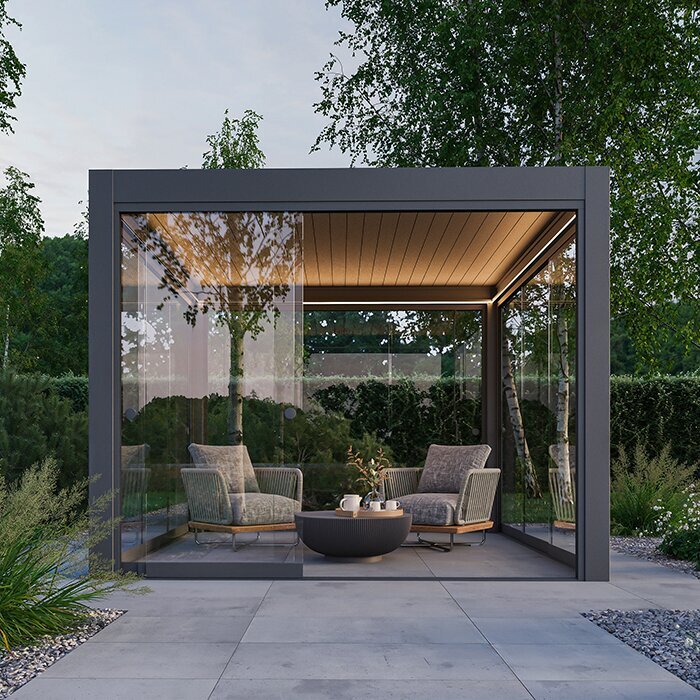
Calculate a break-even threshold
Use a small worksheet with clearly named inputs. Let I be the full one-off project investment, D the usable service days per year, C the average additional covers on each of those days, M the contribution per additional cover and O the added recurring annual operating costs. The annual net contribution is B = (D × C × M) − O. Where B is positive, simple payback is I ÷ B years, assuming that annual contribution remains stable. For illustration only, suppose I is £30,000, D is 120 days, C is 10 additional covers, M is £12 and O is £4,400. The covers generate £14,400 of contribution before annual costs, leaving B at £10,000 and simple payback at three years. These are invented worksheet inputs, not a product price or a prediction of restaurant trade. If B is zero or negative, this trading contribution does not pay back the investment in the model as written.
You can also work backwards from a recovery period T, expressed in years. With M greater than zero and D above zero, the required additional covers per usable day are (I ÷ T + O) ÷ (D × M). That is a hurdle to compare with a measured layout and plausible demand, not a forecast of bookings. In the illustrative example, a two-year target would require about 13.5 additional covers per usable day on average, rather than 10. Give each quoted configuration its own worksheet line, including a proposal for the Bloomcabin Bioclimatic Aluminum Pergola if you request one, so you can compare the required covers against each proposal's assessed layout.
Include the full cost of the project
I should cover the whole one-off project, not just the headline price of the proposed structure. Ask what the quote includes for design or surveys, supply, delivery, installation, groundwork, drainage and making good, where relevant. Add any separately quoted professional review, permission-related work or optional equipment only if it forms part of the actual proposal. Site-specific needs can alter the scope, so obtain costs against the restaurant's measured plan rather than assuming every project has the same preparation work.
Compare quotes on an equivalent scope and record exclusions, assumptions, payment stages and the stated VAT treatment. Check whether the estimate includes work that could interrupt trading, and consider the contribution lost during any closure or reduced service, rather than treating all displaced turnover as a loss. Keep a contingency assumption visible rather than burying it in another line. For a proposal based on the Lean-To product page, ask for an itemised quotation that separates the structure, installation and site work. Record when deposits and final balances are payable: even a project with an acceptable payback period may need cash before it earns any additional contribution. Keep that funding requirement visible alongside the headline investment figure.
Add annual operating costs and downtime
O represents recurring annual costs introduced by the project. Depending on the confirmed scope, these may include staff time for opening, closing, cleaning or resetting the terrace, routine care, professional servicing where specified, additional utilities for equipment actually included, or a change in insurance cost confirmed by the insurer. For a proposal based on the regular pergola listing, request written maintenance and operating requirements as part of the quotation. Turn those requirements into cost lines using expected frequency, staff time and the relevant rate or supplier estimate. Distinguish tasks that can be absorbed into existing paid hours from those requiring extra expenditure; neither assume all staff time is free nor automatically charge every task as an additional shift.
Keep per-cover costs and annual costs distinct: a cost already deducted in M should not appear again in O. Conversely, if extra staffing is needed for every service regardless of the number of covers, do not omit it because the per-cover margin looks healthy. Consider whether maintenance, repairs or operating limits could make the terrace unavailable for some days, and reflect that in D rather than counting full availability alongside downtime. If financing is material, show its cash-flow effect separately from the simple operating payback.
Check the site before counting on the layout
Use the restaurant's actual floor plan and site conditions to establish what can be considered, including property boundaries, existing routes and any restrictions imposed by the building or site owner. Depending on the location and proposal, planning, access or fire-safety review and permission from a landlord or relevant authority may apply. Establish which checks are relevant with the people responsible for the site and suitably qualified professionals before relying on a particular footprint or operating arrangement.
A proposal that must change after review may have different costs, a smaller usable area or a different service pattern, so update I, C and D rather than leaving the original estimates untouched. A listing such as the bioclimatic pergola product page does not confirm dimensions, commercial suitability or approval for a specific restaurant. Ask for the proposed configuration and its scope to be assessed against the measured site and operator requirements; do not infer a project outcome from a model name or photograph.
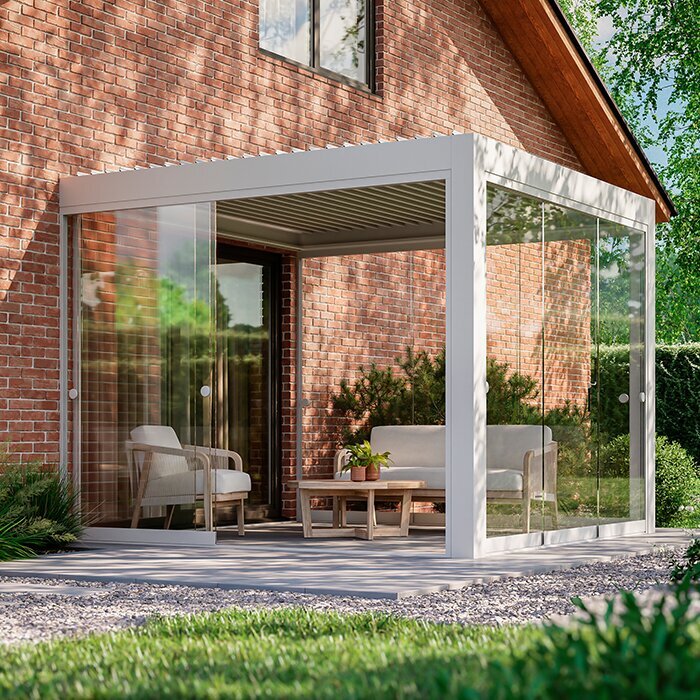
Test cautious and difficult trading scenarios
Prepare cautious, central and stronger cases using assumptions you can explain. Vary usable service days, additional covers, contribution per cover and recurring costs, and identify the evidence behind each choice. You might use historic closure patterns for D, a checked layout and recorded unmet demand for C, and menu-level costings for M. Make a combined downside case as well as changing one input at a time: fewer usable days alongside higher staffing or maintenance costs can have a different effect from any single change.
Compare each case with the business's chosen recovery period and the maximum plausible capacity of the service. If the calculation only works when the strongest assumptions all occur together, report that as a conditional result rather than a base expectation. In the illustrative example, reducing usable days from 120 to 90 while keeping the other inputs unchanged lowers annual net contribution to £6,400 and extends simple payback to about 4.7 years. This shows why the service calendar deserves scrutiny, even when contribution per cover looks healthy. Keep alternative quotes separate; a case based on the Lean-To model listing should use its own quoted cost and assessed layout, not figures borrowed from a different proposal. Benefits such as a more attractive customer experience may matter to the decision, but do not turn them into sales unless the restaurant has evidence to support that estimate.
Compare the forecast with actual trading
Before work begins, save a baseline for comparable periods: opening days, terrace use, total covers, service mix, closures and relevant staffing costs. If you proceed, record the same measures after opening and note the scope that was actually installed. Track total restaurant covers as well as terrace covers, so moving diners outdoors is not mistaken for growth. Booking records should distinguish completed visits from reservations, cancellations and no-shows; use diners actually served when measuring realised contribution. For a project purchased through the Bloomcabin Pergola product page, retain the final quotation and any agreed changes with the investment record. This gives the comparison a reliable cost baseline, including changes made during the project, rather than leaving the forecast tied to an early estimate.
Review comparable days and seasons, and keep actual results separate from future forecasts. Note other changes that might explain a rise or fall in covers, such as opening hours, menu changes, events or staffing. Recalculate annual net contribution using realised costs and use the updated evidence to revise the payback estimate. One unusually busy spell should not be treated as a full-year result, and a weaker period should be examined for its causes. A transparent record makes the investment decision more useful to the business, whether the final result is favourable or not.
Frequently asked questions
What is the simplest restaurant pergola payback formula?
Estimate annual net contribution as usable service days multiplied by genuinely additional covers per day and contribution per cover, minus added annual operating costs. Divide the initial project investment by a positive annual net contribution to get simple payback in years. It is a screening calculation, not a complete investment appraisal.
Should I use extra sales or contribution margin?
Use contribution per additional cover, not gross sales. Deduct the costs that rise with those covers, such as food, drink and any directly linked service costs. Include extra fixed shifts in annual operating costs instead, so you do not omit them or count them twice.
How can I estimate usable service days?
Start with the restaurant's opening calendar, terrace records, booking information and notes on closures or unused days. Separate services or seasons if they behave differently. Treat historic weather as context, not proof that a proposed design will make every poor-weather day suitable for trading.
Do all the seats under a pergola count as additional covers?
No. A cover is a diner served, not a seat or table. Count only diners the restaurant could not realistically serve without the project. If customers move from indoor tables to the terrace, the change in location alone does not create additional covers.
Does a short payback period prove the project is worthwhile?
No. Simple payback does not fully account for cash-flow timing, financing, tax treatment, later costs or site suitability. Check the assumptions against measured plans, actual trading records, an itemised quote and the relevant project-specific access, fire-safety and planning reviews.
A restaurant pergola payback estimate is only as strong as its service calendar, additional-cover assumption, contribution margin and full project cost. Work back from a realistic recovery target, then check whether the required covers fit the measured layout and the restaurant's actual demand and operating capacity. If the result changes sharply under cautious assumptions, show that uncertainty clearly. The most useful answer is not a guaranteed revenue increase, but a transparent range the business can compare with its own investment priorities.
