
Retrofitting Pergola Screens or Lighting: Key Checks
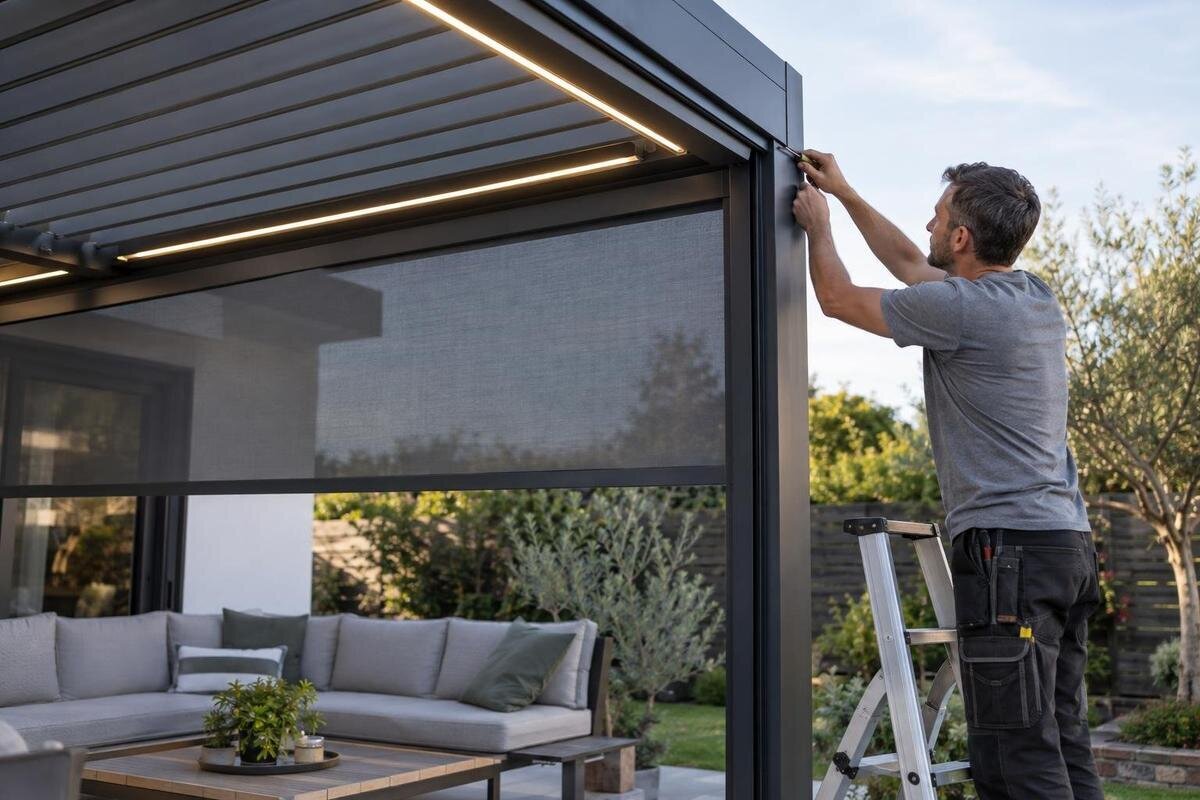
Pergola upgrades
Whether screens or lights can be added after installation depends on the exact pergola version, the accessories still available for it and any provision made when it was fitted. The checks differ: screens need suitable fixing points, adequate clearances and confirmation of structural suitability; lighting needs a compatible supply, cable route and controls. A similar-looking frame or accessory is no evidence of a match. This checklist helps you identify the installed configuration, ask the right questions and decide when a qualified installer or service team must assess the work.
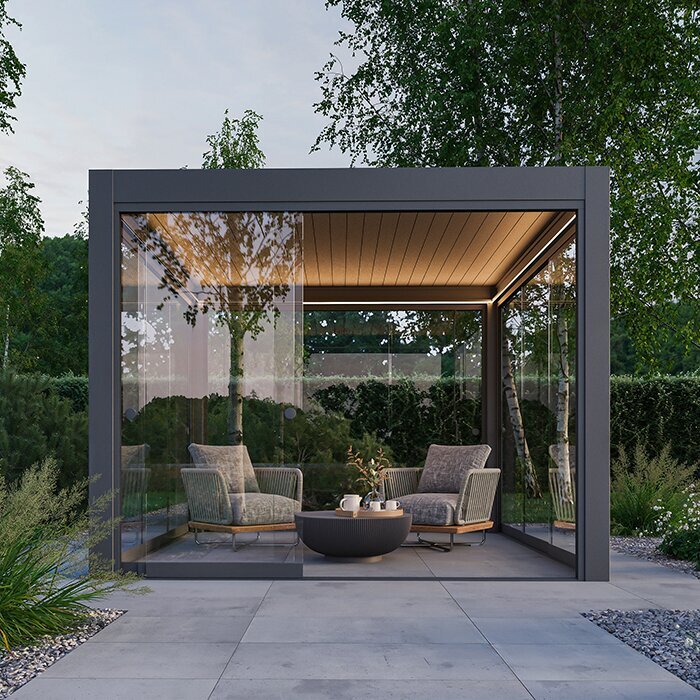
Can screens or lighting be added later?
Retrofitting is sometimes possible, but pergola ownership alone is not proof that a frame is 'screen-ready' or 'lighting-ready'. Compatibility depends on the exact model and version, the accessory designed for it, its fixing arrangements and what was provided at installation. A side screen can alter the forces transferred to posts and beams, particularly when wind acts on it; lighting introduces different questions about supply, cable route and control. Similar-looking frames may use different channels, brackets or electrical interfaces. Approval for one kind of accessory does not establish suitability for another.
Make two separate enquiries rather than asking whether the pergola can take 'accessories'. For a screen, ask whether a named screen system is compatible with the exact frame and how its mounting is approved. For lighting, ask which kit, supply, controls and route are intended. Request the manual or accessory instructions for the installed version, plus written confirmation if the fit is not explicit. A product photo, approximate span or claim that a component is universal is not enough. Keep the answers separate: confirmation that lights can be fitted does not resolve the screen enquiry. If support needs more information, ask which identification details or site photographs would allow a definite answer.
Identify the exact pergola and supplied configuration
Start with the records rather than a catalogue photograph. Find the model name and any variant or reference on the invoice, order confirmation, installation documents, manual or product label. Note the purchase and installation dates if known, the accessories fitted originally and any later changes or repairs. Write down what is stated verbatim; do not infer a version from its colour, overall shape or apparent age. If you cannot see a label without opening a cover or dismantling a part, leave it in place and ask support which identification details are safe to obtain.
Build an evidence pack: one wide image showing the whole pergola and its position, then clear close-ups of the relevant beam, post, joint, existing bracket, label and any visible cable route. Use current photographs of your actual structure, not supplier gallery shots, so support can see the installed details. State which side each image shows, and include the accessory you want to add or a sketch of its intended location. Keep the originals rather than cropping away context. Date the photographs and note whether any moving components are open or closed, so their positions are clear. The Bloomcabin Pergola page can help identify a named model; it cannot confirm the delivered version, generation or later additions.
Check structural provision before fitting a screen
Screen suitability is a structural question as well as a fit question. Its rails, brackets and moving parts need compatible attachment points; when a screen is exposed to wind, it can transfer additional forces into the frame and the pergola's fixings. A beam that looks wide enough, or a spare groove visible in a photograph, is not proof that it was designed for a screen. Nor does the apparent sturdiness of a post show what the installed base or fixing arrangement can accommodate. Screen size, how it moves and the intended conditions all belong in the assessment; do not judge by eye or try a load test. The proposed position matters too, because exposure can vary around the same structure.
Ask for documentation that names both the exact screen system and the pergola version, and shows the mounting arrangement and any conditions on its use. For an enquiry about the Bloomcabin Bioclimatic Aluminum Pergola, include the installation records so the answer relates to your structure rather than the current catalogue model. If the original paperwork says nothing about screens, ask the manufacturer or a suitably qualified installer to assess the frame, fixings and supporting surface. Make clear whether you want one screened side or several, as the assessment must cover the complete proposed arrangement. Do not add holes, clamps or wall fixings that are outside the confirmed mounting specification.
Allow for screen movement, clearances and everyday use
Check how the screen moves before deciding where it can go. A fixed panel, guided or sliding system and retractable screen may need different clearances and mounting positions; the screen's path matters as much as the opening width. Confirm which side it is fitted to, where it sits when open, how far its moving edge travels and how it is operated. Then look for interference from posts, walls, steps, paving, doors, furniture, planters or lighting. A system that matches the measured span can still be awkward to use if its track or operating space is blocked. Consider both the open and closed positions, including the route through the garden and access to controls.
Take measurements only as a preliminary record and follow the accessory maker's method before ordering; note where each figure was taken rather than relying on one width. Check that opening and closing the screen will not narrow a regular route or hide a control you need to reach. Ask what the product is specified to do and in which conditions, instead of assuming that every screen offers the same privacy or weather protection. When considering the Bloomcabin Lean-To Pergola, ask for the proposed screen layout alongside the pergola specification. Review how it would sit beside existing doors and windows, including access for cleaning, rather than judging the arrangement from the opening width alone.

Lighting power supplies and cable routes
Establish what kind of lighting you mean before tracing any route. A portable battery light, a plug-in fitting and a fixed or integrated system have different power, cable and control requirements; one may not be an acceptable substitute for another in the intended location. Ask whether a kit is specified for the exact pergola version and whether it depends on a particular supply, driver, transformer or control unit. Check the lighting maker's instructions for intended outdoor use and operating conditions. Include the number and placement of fittings, whether dimming matters and how a failed fitting could be reached or replaced. A photograph of a light attached to a similar frame cannot tell you whether it suits yours.
Plan the cable route with the supplier or qualified professional: identify the proposed supply point, the positions of fittings and any sections that need to remain accessible for inspection or repair. The route must account for moving parts, drainage features and possible abrasion or trapping, without relying on a hidden gap that has not been confirmed. Do not pull cables through the frame or modify wiring to test an idea. If you are considering Bloomcabin's regular pergola model as a replacement, request the lighting layout with the quotation. Ask which cables would be visible, where the associated equipment would sit and how it would be reached for servicing before accepting the proposed finish.
Confirm controls and electrical compatibility
Compatibility includes the controls, not simply whether a lamp switches on. Check the exact supply and component requirements in the relevant manual, including connector and control arrangements, and whether the proposed system uses a dedicated switch, remote, dimmer, app or controller. An existing control may be designed for a different function and may not accept another accessory. Two products that appear to share a plug or voltage are not automatically compatible, and low-voltage lighting still needs a correctly specified system. Ask for written confirmation that all components are compatible, not just the light fitting, since a kit may also depend on a driver or control unit. Do not guess from connector shape, colour or a general seller description.
Ask whether the lights operate independently or connect to an existing system, and whether a moving pergola component affects cable movement or service access. A suitably qualified electrician or the equipment's service professional should assess fixed wiring, the supply and any proposed alteration, following the manufacturer's requirements; this is not a DIY wiring guide. For an enquiry about the bioclimatic pergola model, request a complete list of the proposed lighting and control components, identifying anything supplied separately. If you want to retain an existing remote or controller, give its reference and ask specifically whether it can be retained. A quote for new lights should make any necessary control replacement clear.
Check whether matching components are still available
Older installations also raise a parts-availability question. Brackets, runners, end stops, fabric, connectors and control units can change between product generations, and an accessory may be discontinued even while a newer one looks nearly identical. Similar colour, profile or connector shape does not show that a replacement will fit, move correctly or work with the existing controls. Ask support to check the original component code against the full pergola reference and installation version, then confirm whether the matching kit or a documented successor is obtainable. Ask whether matching parts are sold individually or only as a set; do not assume that an item shown in a product list is the same revision as the one already fitted.
Make any parts enquiry specific: name the item you want to add, give its part or accessory code if known, describe what is already installed and attach photographs showing the relevant connection. If the pergola was supplied under the name shown on the Lean-To model page, include that name alongside your original order reference. Ask support to distinguish an exact replacement from a successor requiring a complete new set. For a successor, request the matching component list and instructions, including whether existing brackets or controls can remain. Record the new references for future orders. If no documented match is available, do not trim or adapt a near-match merely because its measurements seem close.
Protect service access and check the product terms
Check your purchase documents and current product terms before changing the frame, fixings or wiring. The effect of an alteration on support or any applicable warranty depends on the terms that apply to your product; do not assume that an accessory is covered or that a modification automatically cancels cover. Ask the supplier or manufacturer to explain the position in writing, especially where the work uses non-original components, new holes or an installer not named in the product guidance. Keep the reply with your invoice and manual so there is a record of what was agreed before work began.
Plan for inspection and maintenance as well as the initial installation. A screen should not hide areas that the manual says to check, and a lighting route should not block access to joints, drainage features or other service points. Where the pergola has moving elements, confirm that the accessory and cable arrangement cannot interfere with their travel. Ask who will maintain the added equipment, which components can be replaced individually and whether removal will be needed for access. Retain access to any drainage outlet or routine inspection point identified in the model's instructions. A neat finish is of little practical value if later cleaning or repairs require damage to the frame.

Compare a retrofit with replacing the pergola
Compare a retrofit with replacement only after support has confirmed whether a compatible accessory exists. Consider the whole scope: the screen or light kit, related brackets and controls, professional assessment, access for installation, future servicing and any obsolete component that must be removed. Ask for an itemised quote that separates confirmed parts and work from proposed adaptations. This shows whether retaining the old structure depends on an unverified fixing or improvised wiring, and prevents a low accessory price from disguising a wider job. Include disruption, appearance and access to surrounding areas in the decision as well as cost.
For a new pergola, make future provision part of the written specification, not an informal promise. Record the exact screen and lighting options, mounting details, cable and control arrangements, installation requirements and manuals to be supplied. If you are comparing the Bioclimatic Aluminum Pergola, ask which accessories are included in the quoted configuration and which would be separate purchases. Distinguish provision for a later upgrade from the accessory itself: a planned route or mounting arrangement does not mean the full kit is included. Also ask how a later order would be matched to your version. Keep the specification, while recognising that future availability cannot be established by the model name alone.
Get a written compatibility decision before work begins
Before booking work, get an answer tied to your installed pergola, not merely to a product family or a picture of a similar accessory. Ask support to confirm the model and version, identify the exact compatible accessory and current part reference, supply the relevant manual and state what a qualified installer must assess. For a screen, request confirmation of the fixing arrangement and structural suitability. For lighting, ask for the specified supply, control components, cable route and service access. If any point cannot be verified from the records, find out whether a site assessment is needed before you accept an installation quote. Ask whether the installer's scope includes a handover of updated documents.
Before authorising work, check that the quote matches the confirmed parts list and identifies who is responsible for any outstanding site assessment. An approval subject to inspection is not yet confirmation that the proposed installation can proceed unchanged. If the listed Bloomcabin pergola model appears in your enquiry, make sure the response also identifies the installed or proposed version and accessories. At handover, retain the final parts references, photographs, instructions and installer details, including any changes from the original proposal. These records should show what was actually fitted, how it is operated and which components to identify when arranging service. Keep unresolved items out of the agreed installation scope until they have a documented answer.
Frequently asked questions
Can I add any side screen to my pergola?
No. A screen must be compatible with the exact frame, fixing arrangement and installation conditions. Similar dimensions or a generic clamp do not confirm that it will fit or that the structure can support it. Ask for a match against your pergola's model and version before ordering.
Can lighting be retrofitted without visible cables?
Possibly, but only if a suitable cable route and compatible components are confirmed for your pergola. A concealed route still needs to avoid moving parts and remain serviceable. Ask the supplier or a qualified professional to assess the proposed arrangement rather than hiding an unapproved cable run.
Can I install the screen or wiring myself?
Screen installation depends on the confirmed mounting arrangement and the manufacturer's instructions. Ask whether those instructions permit owner installation or require a suitably qualified installer; do not assume that a kit is suitable for DIY fitting. Structural suitability must be confirmed before work begins. Fixed wiring and electrical alterations should be assessed and carried out by a suitably qualified electrician or appropriate equipment service professional.
What should I send to customer support?
Provide the model and any version or reference shown on your documents, details of existing accessories or repairs, and clear photographs of the whole structure and relevant fittings. Include what you want to add and where. Do not open electrical enclosures to obtain photographs.
What if the original screen or controller is discontinued?
Ask support whether a documented successor or a compatible replacement set is available for your exact pergola version. A similar-looking part is not proof of a match. If compatibility cannot be confirmed, do not trim or adapt a substitute; consider a supported alternative or replacement.
Retrofitting works best as a compatibility decision based on records, not a guess based on appearance. Confirm the screen's structural provision and movement separately from the lighting supply and controls, then check that matching parts and future service are available. When any point remains unverified, pause the alteration and have the supplier or a qualified professional resolve it. That gives you a clearer choice between a supported upgrade and replacement.
