
Supply-Only vs Supply-and-Fit Windows: Which Suits You?

UK window buying guide
A window replacement can become difficult long before the first frame arrives. In a retrofit, the decision is rarely just which style suits the house: somebody must confirm final sizes, inspect the reveals, plan access, protect the opening when the old unit comes out and coordinate the repairs that follow. Supply-only puts those tasks with you and the installer or contractor you appoint. Supply-and-fit brings product supply and installation into one purchasing route, but it still needs a precise written scope. The practical choice depends on how settled the design is, who controls the site and how many trades touch each opening. Start with the condition of the openings and the handovers around them, rather than assuming one route is inherently better value.
Treat the route as a coordination decision
The same window can be bought through either route, yet the project experience can be very different. Supply-only means Bloomcabin provides the ordered products while you arrange installation, either directly with a window installer or through a main contractor. That can suit a wider refurbishment where one team is already managing plastering, insulation, cladding, electrics and decoration. Supply-and-fit combines the product and fitting service in one route, which may be simpler when replacement windows are the principal job. Neither label tells you everything. A supply-and-fit quotation may exclude interior finishes, external repairs or disposal; a supply-only installer may provide an excellent full installation package. Compare the actual responsibilities rather than the headline format.
Begin by naming the person with authority to stop an order if a site measurement, opening direction or structural detail is unresolved. That person needs the drawings, room-by-room schedule and enough time to inspect the building before production approval. In a straightforward replacement of a sound, accessible opening, the division may be uncomplicated. In an older property with uneven reveals, concealed damage or several linked trades, unclear ownership becomes more expensive in time and disruption than a neatly presented quotation suggests. Ask each prospective provider to describe the journey from initial dimensions to final adjustment. Their answer should identify decision points, not simply state that installation is included or excluded.
Map every opening before comparing quotations
Create an opening schedule before asking anyone to price the work. Give each window an identifier, room, approximate size, opening type, side of hinge, internal and external view, and notes on furniture, radiators, blinds and external obstructions. Include whether existing decorative bars are to be retained visually, replaced as a design feature or omitted. A simple daylight opening may call for a fixed window without an opening sash, while another position needs ventilation and a clear operating arrangement. Separating those purposes prevents a quote from treating every aperture as the same technical and practical problem. Photographs of the inside, outside and surrounding wall help an installer assess access and likely finishing work.
The schedule should also record the current condition rather than assuming the visible frame tells the full story. Note cracking, damp staining, loose render, internal tiles, alarms, shutters, pipework and any feature that cannot be moved. A window set behind built-in kitchen units creates a different fitting sequence from one above a clear floor. Ask whether each quotation is based on estimated dimensions, a site survey or final verified measurements. If supply-only is selected, make sure your appointed installer receives the final approved schedule, not an early sales drawing. If supply-and-fit is selected, request the same schedule as a record of what has been agreed. It becomes the common reference when several similar units arrive on site.
The whole opening, not just the frame
Choose supply-only when your project team is genuinely ready
Supply-only is often a sensible route when windows form one package in a planned renovation and a competent contractor already coordinates the whole site. The contractor may have sequenced roof work, external finishes, internal repairs and decorating, and may prefer to receive the frames at a particular stage. It can also suit a self-managed project with an established installer who has inspected the openings and accepts responsibility for the measurements used to order. The advantage is control over the choice of trade, programme and surrounding works. It is not a shortcut around preparation: someone still needs to check the ordered configuration against each physical opening before the order is released.
Supply-only requires a particularly clear receiving plan. Decide who will be present for delivery, where units can be stored dry and secure, how they will be moved without blocking other work, and who records any visible issue on arrival. Confirm whether the installer expects frames, glass and ancillary items to be checked before fitting begins. Ask what information they require about the product configuration, including opening direction and glazing layout. A single-sash outward-opening side-hung window must be ordered and positioned to match the agreed use of the room and exterior space; it is not merely a rectangle of a stated size. Give the installer the approved details early enough to raise questions before delivery, not while an opening is exposed.
Use supply-and-fit to reduce avoidable handovers
Supply-and-fit can be appealing where you want a more direct connection between the party supplying the windows and the party installing them. It is especially worth exploring for a defined replacement project in which you do not have a main contractor coordinating site decisions. A survey-and-fit process can make it easier to keep measurement, product confirmation and installation planning in the same conversation. That does not mean every issue disappears. You still need to establish who handles removal, protection against weather during works, waste, trims, sealing, internal making-good and any discovery that the surrounding construction needs separate attention. Request these answers in writing before treating two offers as comparable.
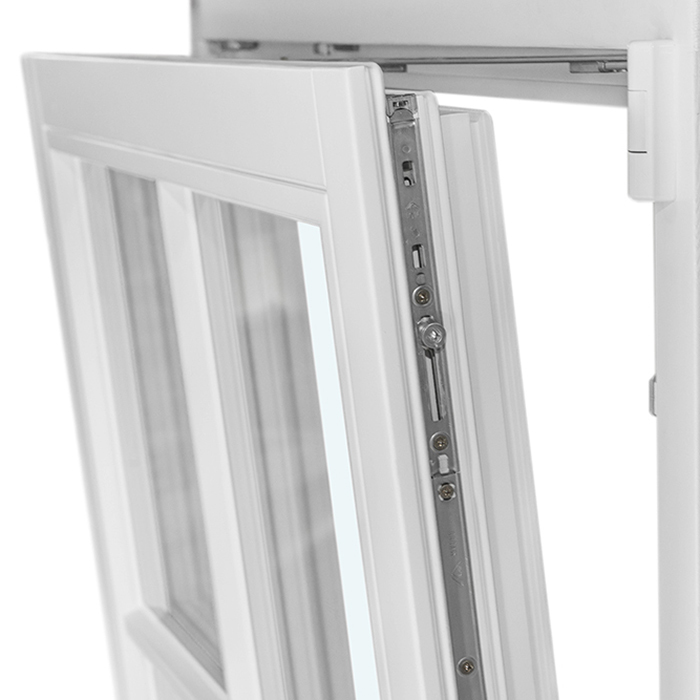
Walk through every room during the survey and check working space, furniture and access. For a single-sash inward-opening window, test the swing against curtains, desks, shelving and cleaning routines. Ask the surveyor to record the agreed operation and final size on the specification you approve. Supply-and-fit reduces handovers only when those details are captured clearly rather than left to fitting day.
Make site readiness part of the purchasing choice
A fitting date only works if the surrounding site is ready. Before removal starts, agree who clears internal sills, protects floors, moves fragile items and provides safe access to every opening. Outside, consider gates, paths, planting, parked vehicles and spaces needed for equipment or temporary storage. In occupied homes, plan room-by-room working order, pets, children, dust containment and the practical need to close and secure the property at the end of each day. These are not minor housekeeping details: restricted access can alter labour time, expose finished surfaces to damage and force last-minute changes to the programme. A supplier cannot solve access constraints that were never disclosed.
Site readiness also includes the condition of the opening once the old window is removed. Rot, loose masonry, damaged lintels, failing render or internal finishes may need assessment and work outside a standard installation scope. Do not ask an installer to assume that hidden conditions will be harmless. Instead, ask what the quotation includes if a reveal needs local repair, and what procedure applies if a larger issue is found. For a new opening, altered façade or significant building work, consult the appropriate qualified project professional about the design and project compliance. The right purchasing route is the one that gives that professional, installer and supplier a workable sequence for decisions, rather than leaving discoveries to be negotiated on the fitting day.
Check operation, access and the room layout together
Window operation should be chosen for daily life before anyone measures for production. An outward-opening sash needs clear exterior space and consideration of paths, bins, planting and places people stand. An inward-opening sash uses room space and can conflict with furnishings. A top-hung format changes the opening arc again and may be considered where its external projection suits the setting; an outward-opening top-hung window is one named configuration to assess with your installer. Fixed panes bring light and view without opening hardware, but another ventilation strategy may be needed for the room. Do not let the purchasing route distract from these basic design choices.
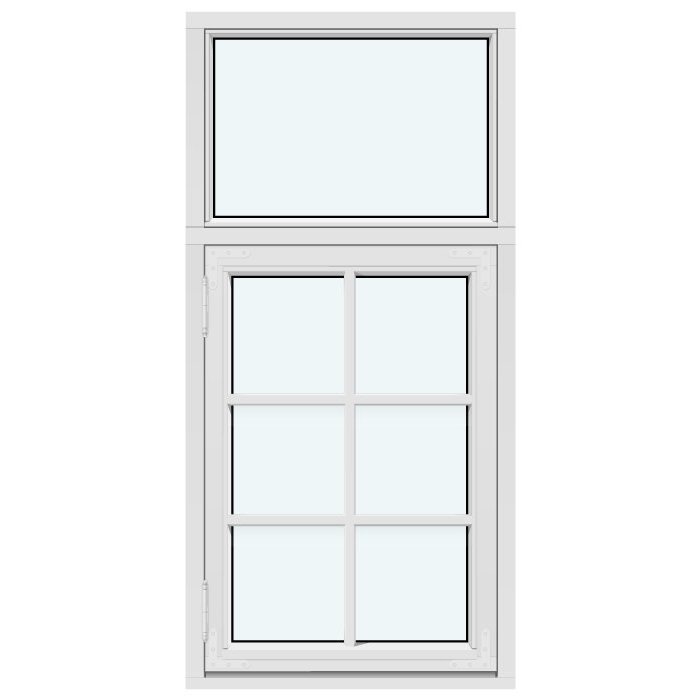
For a Kombi combination window, record the intended operation and relationship between adjacent elements rather than relying on a general elevation. Mark hinge sides and handles on an internal view, state whether directions are viewed from inside or outside, and use that convention throughout. Ask who confirms handing at final survey and ensure it appears on the order acknowledgement. This removes an avoidable source of disagreement before manufacture.
The whole opening, not just the frame
Separate product selection from installation scope
It is useful to compare a product specification and an installation scope as two connected documents. The product document should identify each item, dimensions, opening configuration, glazing arrangement, colour, visible design choices and relevant accessories. The installation document should say what happens before, during and after fitting. It may cover survey, removal of existing units, preparation, placement, adjustment, sealing, trims, disposal and cleaning, but never assume these are all included without confirmation. If a phrase such as “complete installation” appears, ask for its practical meaning at a typical window and at a patio opening. A lower initial figure can simply move a necessary task into an unstated later cost.
This separation is important when the project includes doors as well as windows. A side-sliding patio door affects thresholds, internal floor finishes, external levels, furniture circulation and delivery handling in ways that a small window may not. Confirm whether the fitter’s responsibility begins with an opening prepared by others or includes coordination with the trades creating that opening. Ask who checks the finished aperture before delivery and who decides whether it is ready. Keep product changes controlled: a late switch in configuration can affect surrounding finishes and programme. Whether you buy supply-only or supply-and-fit, a single approved revision list avoids an installer arriving with an outdated drawing or an owner remembering a change that was never recorded.
Plan delivery, storage and programme with realistic buffers
Bloomcabin windows and doors have a 5-year warranty. Delivery is typically 4–6 weeks, subject to order confirmation. Treat that timing as part of the programme rather than a fitting appointment in itself. Do not schedule removal of existing windows simply because an indicative delivery period has passed; wait for the confirmed order and coordinate with the party doing the installation. Supply-only buyers need their installer to confirm availability around the expected arrival and to make arrangements if the site is not ready. Supply-and-fit buyers should still ask how survey approval, production confirmation, delivery and fitting are linked, particularly if other trades have booked work around the replacement.
On arrival, check the consignment against the approved schedule while labels and packaging can still be matched to the rooms. Keep a record of what was received, avoid removing protective materials prematurely, and raise questions through the agreed contact rather than asking a fitter to improvise. A larger item such as outward-opening bifold doors deserves advance planning for access from the delivery point to its final position, temporary storage and when it can safely be installed. The relevant route is not defined by who unloads the vehicle alone; it is defined by who manages the chain from confirmed order to a ready opening. A written programme should show those handovers plainly.
Price the risk of omissions, not just the visible total
To compare proposals fairly, build a checklist of inclusions and exclusions and send the same list to each provider. Ask who is responsible for final measurement, old-frame removal, disposal, access equipment, local opening repairs, external sealing, internal trims, plaster repairs, redecorating, curtain or blind removal and reinstatement, and protection of finishes. Not every provider needs to offer every task. A specialist installer may deliberately stop at a well-defined point while your contractor completes the finishes; that can work very well when the interfaces are agreed. The concern is not an exclusion itself but an exclusion discovered after the work has begun.
Consider the consequence of a mismatch as well. If the physical opening differs from the approved dimensions, who examines it first, who proposes a remedy and who authorises any related work? If a product configuration differs from the signed schedule, who pauses installation while it is checked? These questions are particularly important with feature shapes such as fixed triangular and angled windows, where surrounding linings and external details may need careful coordination. Do not compare offers by assuming both sides have made the same allowances. Ask for a site-specific explanation of the assumptions behind each scope, then decide whether you prefer separate specialist contracts or a more consolidated route.
Use a decision meeting before production approval
Hold a short decision meeting once the survey information and quotation are available, even if the project appears simple. The homeowner, installer or contractor, and anyone responsible for design decisions should review one opening at a time. Confirm size, configuration, handing, finish, glazing-bar treatment, cill or trim expectations, access restrictions and room sequence. Then identify any item still dependent on another trade. This meeting is particularly valuable for combinations of replacement and new work, where an existing opening may provide clues but a new aperture is governed by the construction around it. Record decisions and circulate the resulting schedule so that silence is not mistaken for approval.
Choose supply-only if this process leaves a capable project lead owning all the site interfaces and your installer is comfortable with the approved products and details. Choose supply-and-fit if a unified survey, supply and installation process gives you a clearer accountable route for the actual scope. Neither choice removes the need for the homeowner to read the paperwork before production. Ask for the final order acknowledgement, check every room reference and retain photographs of each opening. If a decision remains uncertain, resolve it before authorising manufacture. That is the point at which careful coordination has the greatest value, and it is more useful than trying to correct a preventable disagreement during fitting.
Frequently asked questions
Is supply-only always cheaper than supply-and-fit?
Not necessarily. The routes allocate work differently, so a lower product-only figure may exclude survey, fitting, trims, disposal, access or making-good that another proposal includes. Compare the same list of responsibilities and allowances. The better-value route is the one whose scope matches the people and work already organised for your project.
Who should take the final measurements for supply-only windows?
Agree this before ordering. In many supply-only projects, the installer or contractor who accepts responsibility for fitting should inspect the openings and approve the dimensions used for the order. Put that responsibility in writing. Do not rely on early homeowner measurements as final production information where site conditions still need checking.
Can I use my own installer with Bloomcabin windows?
Supply-only purchasing allows you to arrange installation separately. Before order approval, give your installer the product schedule and ask them to confirm the dimensions, configurations, access needs and fitting assumptions. They should also understand the delivery plan and the division of responsibility for any surrounding repairs or finishing work.
What does making-good mean in a window project?
Making-good describes restoring surfaces affected by removal and installation. It can involve local plaster, paint, render, tiles, trims or external finishes, but the exact tasks vary by opening and quotation. Ask each provider to state which finishes are included, what existing condition is assumed and which repairs remain with another trade.
When should I book the installer?
Coordinate booking after the final survey and order confirmation, using confirmed delivery information rather than an assumption. Bloomcabin delivery is typically 4–6 weeks, subject to order confirmation. Supply-only projects should allow the installer time to inspect delivered items and prepare the site; avoid arranging removal before the products are available.
What to do next
Supply-only and supply-and-fit windows solve different management problems. Supply-only offers flexibility where a trusted contractor already controls measurement, delivery, installation and finishes. Supply-and-fit can simplify a contained replacement project by reducing handovers between product and fitting. Start with an accurate opening schedule, test each configuration against real room use and access, and insist on written ownership of every step. Before production approval, compare exclusions as carefully as inclusions, confirm the final dimensions and keep one shared record of the agreed design. A well-defined route is more valuable than a superficially simple quotation.
