
Solar-Powered Pergola Lights: What to Expect
Pergola lighting guide
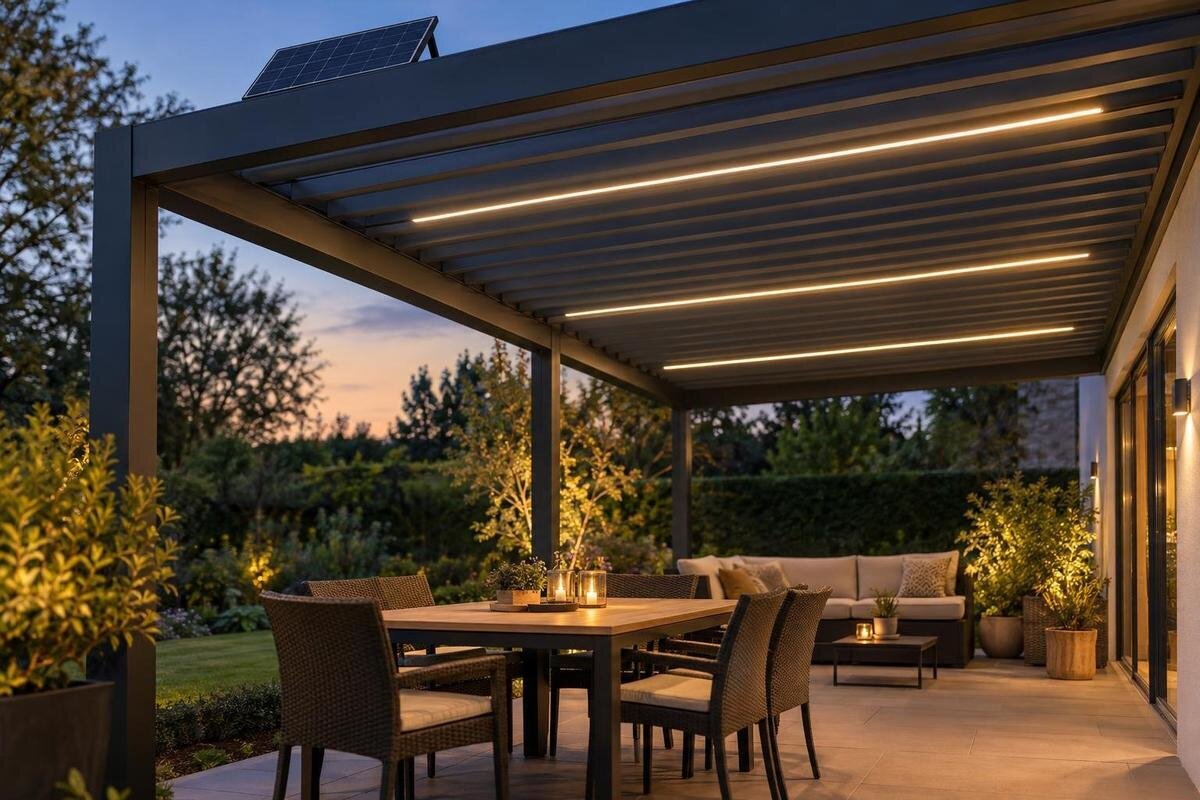
Solar-powered pergola lights can add atmosphere and modest local illumination, but what they provide depends on the energy collected by the panel and the task you have in mind. In the UK, charging conditions can differ sharply between a long, bright summer day and a short, cloudy winter one. Compare the light you need, the hours it must run and the season of use; a headline run time on its own cannot answer those questions.

What solar-powered pergola lights can realistically do
Solar-powered lights store energy gathered during daylight and use it after dark. For a pergola, that can be a convenient way to give a seating corner a gentle glow, distinguish the outline of a space or add a small pool of light where people gather. These are realistic aims when treated as local, modest lighting rather than a promise to illuminate every part of a large terrace. The actual result depends on the particular panel, battery and lamp, together with its exposure to daylight; the category name alone does not tell you how bright it will look or how long it will last.
A useful first distinction is between creating an inviting scene and providing dependable task light. Solar lighting may suit you when a little light is enough and occasional variation is acceptable. It is a less certain sole source when you expect broad, bright coverage for a long evening, especially in darker months. That is not a judgement about every unit: a larger panel, a different battery or another operating mode may change what a model can do. It means you need to check the exact light and season rather than assume performance from the word solar.
The lighting task sets the right expectation
List what people actually do beneath the pergola after dusk: eat, clear the table, read, talk or walk between the house and garden. Each job asks for something different. A decorative string can create a visible line and soften the setting, while a focused lamp above the table may put more light on plates; neither result is guaranteed without checking the product’s beam and intended position. If you want a backdrop for conversation, a low-level glow may be enough. If you expect to read menus or serve food, the lit surface matters more than the brightness of the lamp when viewed directly.
Treat walking routes and changes in level separately from ambience. A small marker can help identify an edge or doorway, but decorative points of light should not be your only provision where clear visibility matters. Mark the places that need light on a sketch: the centre of the table, the serving end, a doorway, steps or a path. Then ask whether one fixture could cover those points without leaving dark gaps. This task list prevents a pleasant-looking product photograph from becoming a substitute for checking what the light actually reaches.
Seasonal daylight changes the charge
Solar output varies with daylight. In the UK, winter days are shorter and the sun remains lower in the sky than in summer; persistent cloud and nearby shade can reduce the energy reaching the panel further. Many panels can still collect some diffuse daylight, but a grey winter day is not equivalent to unobstructed sun. The energy stored is what the light can draw on later, so the same unit can run for different lengths of time across the year. No single summer result establishes a winter run time.
Choose the season in which you actually intend to use the pergola. For mainly summer evenings, a light that charges well in the site’s normal summer conditions may meet a modest need; regular autumn or winter use calls for a more conservative expectation and a plan for dull spells. Observe the proposed panel position at different times of day, and consider how trees or buildings may alter the shade as seasons change. A Bloomcabin Bioclimatic Aluminum Pergola is listed in sizes from 97–258 ft², but its footprint does not predict how much daylight a panel will receive in a particular garden.
Solar panel position and pergola shade
The panel’s position can be as important as the lamp’s. Some solar lights have a panel attached to the fitting; others use a separate panel connected by a lead. With an attached panel, the fitting needs a location that receives the light its instructions call for. A separate panel offers more choice only if that exact model permits it and its lead can reach the chosen site. It is not enough to find a convenient spot for the lamp if the panel there sits in shade for much of the day.
Check where shade falls at the points you could actually use, not just whether the pergola feels sunny overall. A roof or louvres may cast changing bands of shade, while a house wall, fence, tree or neighbouring building can block low-angle light. On a wall-mounted arrangement such as the Bloomcabin Lean-To Pergola, check how the wall and nearby buildings affect the panel’s exposure over the day. Do not assume the roof or frame is an approved panel position; follow the light’s placement instructions and confirm any fixing point with the relevant manufacturer or installer.

What a quoted run time actually means
Read run-time figures as results under stated conditions, not as a promise that every evening will be the same. Check whether the figure refers to a fully charged battery, which brightness setting was used, and whether the light was on continuously or controlled by a sensor, if that mode is offered. Ask what output remained at the end of that period: an estimate of hours without a corresponding light level can be misleading. If the packaging or listing gives only a best-case maximum, expect less when charging conditions are poor.
Battery age, temperature, charge history and the chosen mode can also affect day-to-day behaviour, although the extent and operating limits are specific to the unit. Read the maker’s instructions for battery care and suitable conditions rather than applying a rule from another lamp. Check whether the battery is replaceable, whether a replacement is available and how the manufacturer says to store the light during periods of non-use. These details matter if you want to keep using the fitting over several seasons. A Bloomcabin Lean-To Pergola listing cannot establish a separate light’s operating hours; those need to be supported by the exact solar fitting’s documentation. If the light gradually dims rather than switching off, distinguish total operating time from the shorter period during which it provides enough light for your task.
Brightness depends on where the beam lands
Brightness has two parts: how much light the source emits and how much reaches the surface you need to see. A lumen figure describes the lamp’s total output; beam shape, mounting height, distance and nearby surfaces affect the light at the table or path. A narrow beam can look bright where it lands but leave the rest of the seating area dim, while a broad beam spreads light more widely and may feel less intense at any one point. Check diagrams and the maker’s description of beam direction where they are available.
Plan with the actual footprint and use points in view. The Bloomcabin Pergola listing identifies the structure, not an illumination area for any lamp. A larger or differently arranged seating space may call for a different distribution of fittings. If the light manufacturer supplies an illuminance figure in lux, check the distance and measurement position: it describes light reaching a surface, rather than the lamp’s total output. Figures measured at different distances are not directly comparable. Where several fittings share a panel or battery, extra lights increase demand on that system; separate units have their own charging limits. Map the table, chairs and route first, then compare the lamp’s stated output and beam against those locations. A sample viewed at the intended height can help reveal dark patches that a product photograph conceals.
Outdoor suitability and mounting approval
Outdoor use needs to be confirmed for every part of a solar set-up, not inferred from the word solar. Check the exact lamp, panel, connectors and any lead against the maker’s stated outdoor exposure and care instructions, including whether they are intended for the position you have in mind. A sheltered spot under a pergola can still be reached by wind-driven rain or splash. If a fitting will be exposed, look for documentation that explicitly supports that environment; a product photograph does not establish its outdoor rating.
Also separate fitting the light from approving a fixing point. A clamp, adhesive pad or screw may be supplied for one surface, but that does not establish that every pergola member can carry it or accept it. For the Bioclimatic Aluminum Pergola, use documented mounting approval for the exact fixture and location; ask the manufacturer or installer if anything is unclear. Avoid drilling, clamping or suspending a fitting from the structure until the permitted method is confirmed. If a mains connection is involved, seek qualified electrical input rather than treating solar-light guidance as wiring advice.
Solar lights and mains lighting serve different plans
A standalone solar light and a planned mains lighting installation solve different problems. Solar avoids the need for a mains lighting connection at the fitting, but its energy supply is limited by what the panel can collect and store. A hard-wired circuit can be designed around a chosen lighting load, but that requires the exact equipment and qualified electrical input; this guide cannot establish the suitability of a particular installation. If regular, bright or long-duration lighting is essential, compare solar with a professionally assessed alternative rather than assuming a battery-backed light will behave like mains lighting.
Keep the pergola specification and lighting specification separate in the buying conversation. A regular Bloomcabin Pergola model is a structure choice; do not infer from the model name alone that a solar lamp, electrical feed or approved mounting point is included. Ask which exact fitting, if any, is available with the chosen configuration, what its manual says, and whether its panel and bracket are approved for that structure. If you plan to buy a separate solar lamp, check it against its own outdoor rating and instructions rather than assuming any accessory will fit.

Light placement, glare and controls
Light placement affects comfort as well as coverage. A lamp that looks attractive from the garden may shine directly into the eyes of someone seated beneath it. Check the view from each chair, including lower lounge seating, rather than judging only from standing height. A visible row of bright points can be distracting even when the tabletop remains dim. Where the fixture allows it, a shaded or directed beam may keep light on the intended surface; confirm the permitted orientation in its instructions. Also consider the view from nearby windows and neighbouring gardens. Lighting the table does not require sending light beyond the seating area. Include clearance from moving roof elements, where present, and keep any connecting lead out of ordinary walking routes.
Controls should suit the way you spend the evening. If a light switches on automatically at dusk, it may use part of its stored charge before you sit outside; check whether manual control is available if that matters to you. A motion-triggered mode may suit brief visits but can be frustrating if it switches off while people sit still. Look at the sensor coverage and the documented behaviour rather than assuming every mode works for dining. When considering the Lean-To Pergola product page, include the position of the house door and windows in your lighting sketch, so you can judge unwanted glare and access to switches. A remote control, if supplied with the light, may be convenient, but check how the fitting is operated if the remote is unavailable.
How to test a lighting plan before buying
If a demonstration, borrowed sample or trial is available, assess the light against a specific evening routine. Record the panel position, the day’s weather, the setting used and when the light becomes too dim for the task. Try it with the table and chairs in place, rather than in an empty space, and judge plates, faces and the route back to the house separately. Keep any trial mounting within the manufacturer’s permitted methods. A single clear day followed by a successful evening shows what happened under those conditions, not what to expect throughout winter. If possible, compare several evenings, including one after dull weather. Decide in advance what would count as adequate: for example, enough light for your usual meal and clearing up, rather than simply a lamp that remains visibly on.
If you shortlist the Bioclimatic Aluminum Pergola configuration, keep the structure purchase separate from the solar-light assessment. Ask whether lighting is actually offered and obtain the exact accessory model and permitted mounting position before treating it as part of the package. Compare any shortlisted lights using the same required setting and evening duration, and note where a seller gives no charging conditions for its claim. Include practical ownership details in that comparison: access for panel cleaning, battery replacement where supported, and whether the controls remain convenient once the furniture is in place. If you cannot test a light, uncertainty about winter performance should remain part of the buying decision. Choose it for a role that can tolerate that variation, or reserve essential illumination for a separately assessed lighting system.
Frequently asked questions
Will solar pergola lights work in winter?
They may work after charging, but shorter days, low sun, cloud and shade can leave less energy in the battery. Expect more variation than in summer, and check the exact light’s instructions and stated run time if you need it for regular winter use.
How many hours should a solar pergola light last?
There is no universal figure. Run time depends on the specific light, its charge, battery condition and chosen setting. Compare the claimed hours with the brightness level and test conditions; a best-case maximum alone is not a reliable forecast for every evening.
Can solar lights illuminate a dining table?
A suitable light may provide enough illumination for your table, but check its output and beam at the surface you need to see. A decorative glow is not necessarily task lighting. If possible, assess a sample in a similar position before relying on it for regular dining.
Will a pergola roof stop a solar panel from charging?
It depends on where the panel sits and how much daylight reaches it. A panel attached to a fitting beneath a roof may be shaded; a separate panel can be placed elsewhere only if the system allows it. Follow the light’s placement guidance and check the proposed position at different times of day.
Can I attach any solar light to a pergola?
No. Check that the light and its components are intended for the exposure, and confirm that the fitting and panel have an approved mounting position for the exact structure. Do not assume that a bracket, clamp or adhesive is suitable for every surface.
Solar lighting earns its place when the expectation is specific: a little atmosphere, a defined point of light or a modest task on suitable evenings. Its limits appear when the panel is shaded, the season is dark or the light is asked to stay bright for a long time. Match the light to the job, judge charging at the real panel position and read run time alongside output and test conditions. If that comparison shows that solar cannot reliably meet the task, treat it as supplementary lighting and plan the main provision separately rather than relying on a summer impression.
