
When Does a Greenhouse Pay for Itself?
Greenhouse buying guide
When does a greenhouse pay for itself? Build the answer around what you grow, use and save.
A greenhouse can earn its place in the garden in more than one way. The meaningful question is not simply its purchase cost, but whether its harvests, flexibility and everyday use justify the outlay over the years you expect to grow.
For keen British gardeners, a greenhouse changes the rhythm of the year. It offers a protected place to raise plants before beds are ready, nurture warmth-loving crops and keep productive work going when the weather becomes unreliable. Those benefits have a value, but the value is personal: it depends on what succeeds in your garden and how consistently you use the space.
A sensible greenhouse payback calculation separates cash from lifestyle value. Cash includes the initial purchase, base, installation, water, electricity and replacements, then compares them with crops you would otherwise buy. Lifestyle value includes the pleasure of growing, stronger plants for the garden and a practical reason to spend more time outdoors. Both matter, but only the first creates a financial payback figure.
Start with modest, evidenced assumptions rather than an optimistic harvest. Keep a seasonal note of what you sow, pick, preserve and give away, and record the costs you genuinely avoid. After a year or two, your own garden diary will reveal whether a greenhouse is moving towards payback, where running costs are creeping in and which crops deserve more space.
01 · Start with your baseline
Define what payback means in your garden
Before adding figures, decide what you want the greenhouse to do. A salad-and-herb grower may value frequent small harvests, while a vegetable gardener may prioritise tomato plants, peppers and vigorous seedlings. Someone designing a decorative garden may prize reliable propagation. These are different routes to value, so one generic payback period cannot be meaningful.
Make two columns in your notes: direct financial return and personal return. Direct return is produce or plants that replace a planned purchase. Personal return covers learning, calm, family projects and the satisfaction of a well-used garden building. Keeping them separate prevents a pleasurable hobby being forced into an artificial financial case, while still allowing you to judge the investment honestly.
- Choose three main crops or tasks that will occupy the greenhouse during its busiest months.
- Decide whether your target is financial recovery, better gardening capability, or a balanced combination of both.
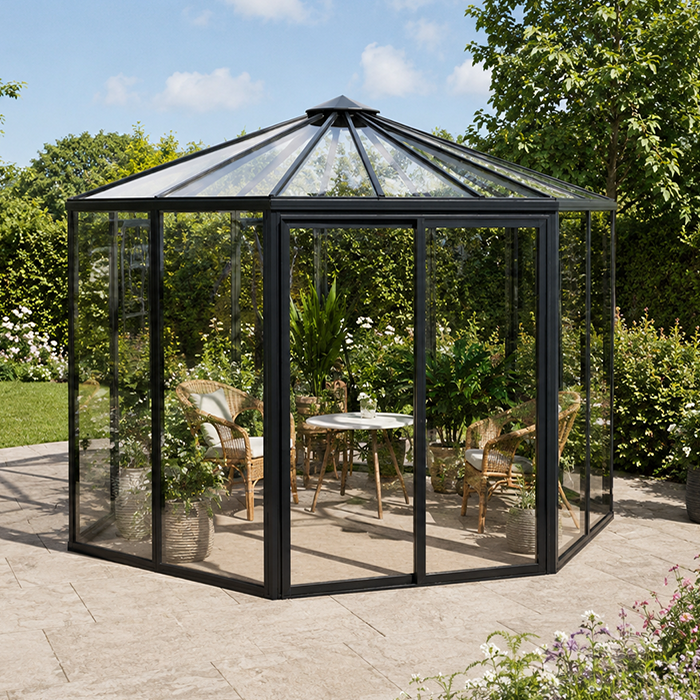
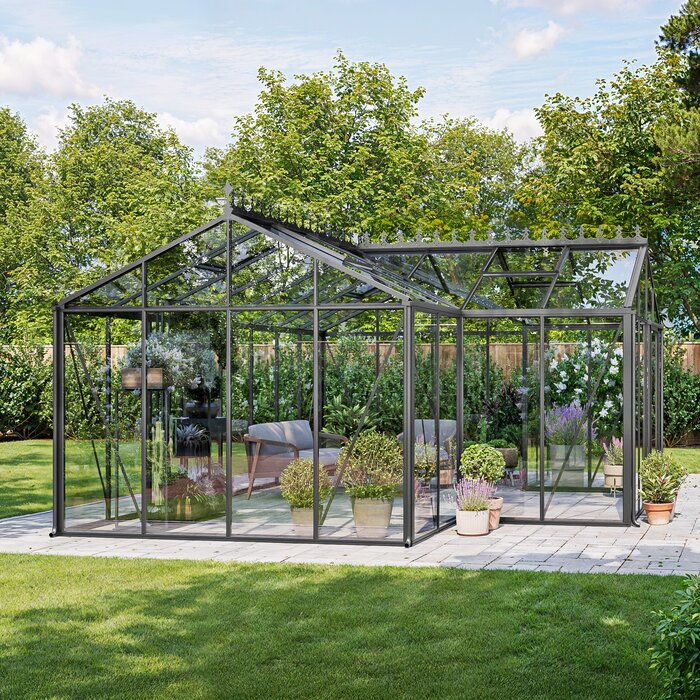
For a freestanding growing space with a clear seasonal role, explore a standard Classic greenhouse and map its benches and paths around your intended crops.
02 · Initial outlay
Include set-up costs, not only the structure
The purchase is only one part of the first-year total. A greenhouse needs a prepared, level site and may need groundwork appropriate to its location and chosen model. Think too about access for assembly, internal staging, shelving, pots, propagation equipment and the basic tools that turn an empty structure into a working growing room.
Avoid assuming every improvement must happen at once. Begin with the essentials needed to grow safely and comfortably, then add organisation as your routines develop. A well-planned water source, a place for compost and a sensible route from kitchen to greenhouse can make a modest set-up far more productive than an elaborate but inconvenient one. Request a current quotation for the configuration you are considering.
- Record one-off site preparation separately, so it does not disappear inside the greenhouse purchase figure.
- Price practical accessories only after sketching your growing layout and measuring the available circulation space.
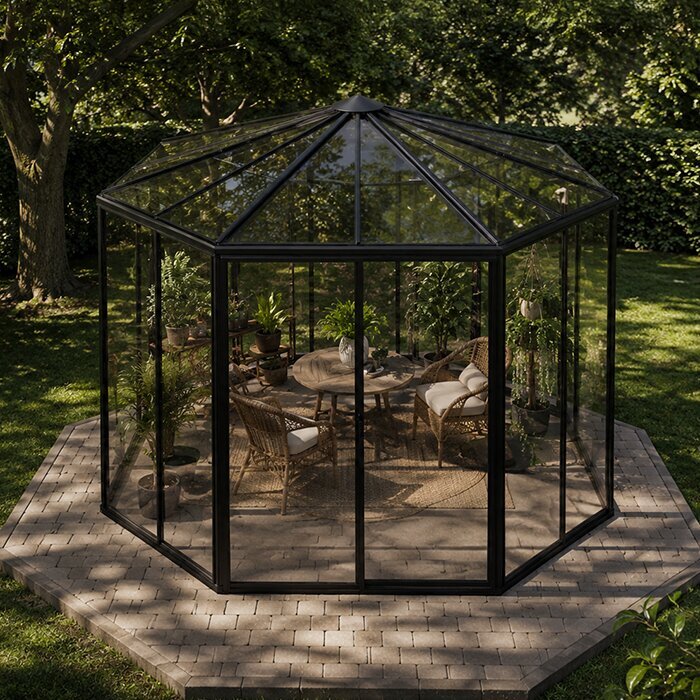
Where garden space meets the house, consider a full-size regular Lean-To greenhouse as part of a carefully costed wall-side growing area.
03 · Harvest value
Put a realistic value on crops and plants
Crop value should reflect your normal shopping, rather than a theoretical maximum. If you regularly buy fresh herbs, tender leaves, tomatoes or chillies, log the equivalent amount you harvest and use. For seedlings, value only the plants that replace purchases you would genuinely have made. Home-grown abundance is rewarding, but surplus that nobody eats should not inflate the calculation.
Quality can be a fair part of the judgement. A ripe crop picked moments before dinner may offer freshness or flavour you cannot replicate through a supermarket comparison, yet it is wiser to describe that as a personal benefit than invent a premium cash price. The strongest records list quantities, likely replacements and the portion that was actually used, frozen or preserved.
- Weigh or count regular harvests, then note the comparable item you normally place in your shopping basket.
- Separate seedlings planted in your own garden from extras given away, sold or left unused.
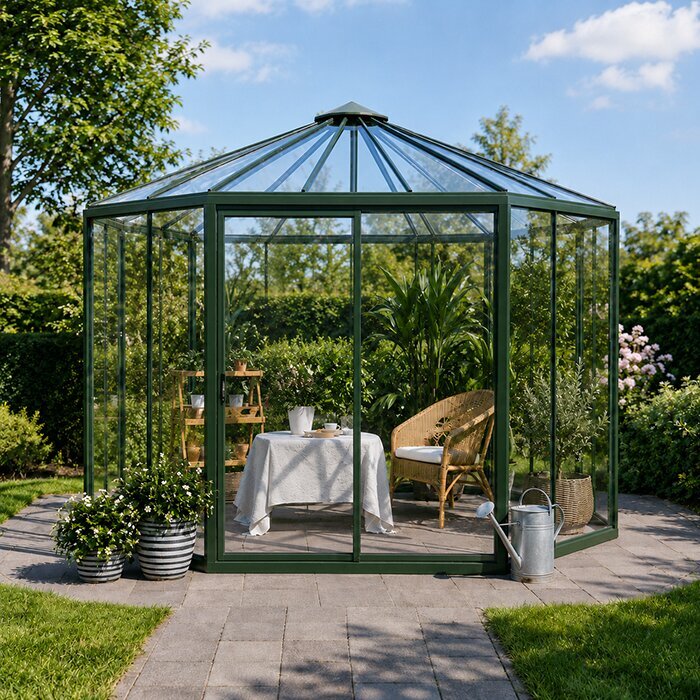
A productive crop plan can begin with a standard Classic greenhouse for seasonal harvests that gives sowing and picking a dedicated place.
04 · Longer seasons
Value season extension without overclaiming it
One of a greenhouse’s most useful contributions is timing. It can give young plants an earlier start and provide a more sheltered setting later in the year, helping you make better use of the gardening calendar. That does not make every crop certain to succeed: ventilation, watering, shade, planting dates and your local conditions still shape the outcome.
Translate extra weeks into value only where they change your household behaviour. An earlier sowing is valuable if it creates plants you need or harvests that replace food you would buy. A later crop matters if you continue to pick and use it. Keeping a seasonal diary makes these distinctions clearer than a broad claim that a longer season automatically equals savings.
- Record the first sowing, first harvest and final harvest dates for your key crops each season.
- Note weather-related setbacks alongside successes, so next year’s plan remains grounded in your own conditions.
For close-to-home tending through changing weather, a full-size regular Lean-To greenhouse for season extension can make daily checks easier to build into your routine.
05 · Running costs
Control the costs that recur every season
A truthful payback figure includes recurring inputs. Seeds, compost, feed, pots, labels and water may be small individually but add up over a full season. If you choose to heat, light or use powered equipment, track those costs separately instead of treating them as invisible. The aim is not to avoid every expense; it is to understand which spending genuinely improves the crops you value.
Good routines often protect both plants and the budget. Sow to a plan, reuse sound pots, clean equipment and avoid raising far more plants than you can accommodate. Watering at the right time, using suitable compost quantities and composting appropriate garden material can also reduce waste. Do not cut back on essentials such as care and hygiene simply to make a spreadsheet look better.
- Keep receipts or a simple monthly total for consumables, water-related equipment and any energy used for growing.
- Compare each added input with the crop or plant outcome it improves before making it a regular habit.
A deliberately organised standard Classic greenhouse for efficient growing can help you see exactly where supplies and crops belong.
06 · Design and use
Choose a size you will genuinely use
A greenhouse’s value is closely tied to frequency of use. A size that supports your crop plan, allows comfortable movement and leaves room for routine tasks is more likely to become part of daily garden life. Conversely, a building that overwhelms the plot, is difficult to reach or lacks a clear purpose may offer less return, however attractive it looked on paper.
Sketch the year, not just a summer weekend. Include trays in spring, taller plants in summer, harvesting space and autumn clearing. Consider how you carry seedlings, water and produce between house, beds and greenhouse. The most suitable arrangement is the one that works during busy weeks, when a quick check before work or a short evening task is all the time available.
- Mark doors, paths, staging and likely plant heights on a scaled garden sketch before choosing dimensions.
- Plan enough clear floor area for watering, tying in and harvesting without constantly moving containers.
A compact garden may benefit from a full-size regular Lean-To greenhouse near the kitchen when convenience is central to regular use.
07 · Maintenance and lifespan
Plan for care beyond the first harvest
A greenhouse is not a one-season purchase. Cleaning glazing, checking fittings, keeping drainage clear and renewing tired growing materials are ordinary ownership tasks that support its usefulness. Set aside a modest maintenance allowance in your long-term worksheet, even if no work is immediately needed. It is more realistic than assuming years of gardening will bring no upkeep at all.
Build maintenance into seasonal habits rather than waiting for a problem. A clear-out before new sowings helps you inspect the space, remove old plant matter and organise what will be needed next. Read the product guidance for care and installation requirements, and address issues promptly. This protects the quality of your growing environment and makes future costs easier to anticipate.
- Schedule a spring inspection and an autumn clean, recording any parts, tools or work needed.
- Keep a simple maintenance log beside your crop notes, so ownership costs remain visible over time.
For growers who want a separate garden room to maintain season by season, see a standard Classic greenhouse for long-term gardening and match the care plan to your routine.
08 · Decision point
Review payback with a clear, flexible method
At the end of each season, total your recorded costs and the realistic value of what you used. Then compare the cumulative benefit with the cumulative outlay. The answer may be a number, but it should also explain why: perhaps your greenhouse is becoming more productive as your skills improve, or perhaps a particular crop consumes time and resources without returning much value.
Use the review to adjust rather than judge yourself. Concentrate on crops that thrive and are appreciated at home, simplify those that are unreliable, and refine your layout for the next season. If planning questions arise around placement, size or garden context, check with the relevant local authority before committing. For cover or damage questions, ask your insurer how your policy applies.
- Review the calculation annually using the same assumptions, so year-to-year changes remain comparable.
- Keep a separate note of non-financial gains, rather than forcing them into a cash total.
If a house-side layout suits your next growing phase, browse a full-size regular Lean-To greenhouse for everyday use and assess it against your actual garden routine.
Comparison
What should go into a greenhouse payback calculation?
Use a simple framework that distinguishes upfront spending from annual costs and from benefits you can evidence. The point is not false precision; it is a consistent record that shows which choices make the greenhouse more useful to your household.
| Category | What to record | How to treat it |
|---|---|---|
| Initial set-up | Greenhouse, base, assembly and essential equipment | Count once in your starting total. |
| Annual inputs | Seeds, compost, feed, water and energy | Add each season as a recurring cost. |
| Food harvested | Amounts genuinely eaten, stored or cooked | Use your normal replacement shopping value. |
| Plants raised | Plants retained that replace planned purchases | Exclude plants that were never needed. |
| Season extension | Earlier or later harvests actually used | Value only avoided purchases or practical benefit. |
Build your personal payback worksheet
A notebook, spreadsheet or phone note is enough. Start before buying where possible, then keep the same categories through each season so that your conclusion is based on use rather than memory.
01
Set the purpose
Write down the crops, propagation tasks and seasonal moments the greenhouse should support. Limit the list to priorities you can realistically tend.
02
Create the starting total
List the structure, site preparation, installation decisions and essential equipment. Keep optional decorative additions in a separate line.
03
Track recurring inputs
Record consumables and utilities as they occur. A monthly estimate is usually easier to maintain than reconstructing costs at year end.
04
Log useful output
Note harvest quantities, seedlings kept and produce preserved. Add a brief note showing how each item was used at home.
05
Review and refine
Compare accumulated benefits with accumulated costs after the season. Alter crop choices, layout or routines where the records show poor value.
Before you decide a greenhouse has paid back
Run through this list at the end of the growing season. It keeps the calculation useful, modest and connected to the way your household actually gardens.
01. I included site work, equipment and installation decisions, not just the greenhouse itself.
02. I recorded seeds, compost, water and any energy costs throughout the season.
03. I valued only produce that was eaten, stored or replaced a normal purchase.
04. I counted home-raised plants only where they avoided buying plants I needed.
05. I separated financial return from enjoyment, learning and garden satisfaction.
06. I noted whether earlier or later crops genuinely changed household food use.
07. I identified crops that justified their space, time and recurring inputs.
08. I will check local authority guidance and insurer terms where placement or cover matters.
Greenhouse payback questions
How quickly can a greenhouse pay for itself?
There is no dependable timetable. Payback depends on initial outlay, annual inputs, how often you grow, what you would otherwise buy and how much of the harvest is used. A gardener who raises many useful plants and grows valued crops may see stronger returns than someone using the space occasionally. Track your own seasons before drawing conclusions.
Should I count my time as a greenhouse cost?
That depends on the purpose of your calculation. If gardening is leisure, time may be a benefit rather than a financial cost. If you are comparing growing with buying food purely on labour, include a realistic time estimate. Whichever method you choose, apply it consistently rather than switching approaches to improve the result.
Which crops tend to make the strongest contribution?
Focus on crops your household buys often, enjoys and can use in quantity. Tender leaves, herbs, tomatoes, chillies and young plants are common candidates, but suitability varies by skill, climate, care and diet. Your records matter more than a universal crop list, because unused abundance has little practical value.
Does a longer growing season automatically save money?
No. A longer season becomes financially relevant only when it produces plants or harvests that replace something you would otherwise purchase and use. It can still be valuable for enjoyment, confidence and garden momentum. Record actual sowing and harvest dates, then connect them to household use rather than assuming every extra week has cash value.
Can I include the greenhouse’s effect on my home value?
It is safer not to include a presumed property-value increase in a personal growing payback calculation. Buyer preferences, condition, location and presentation vary widely. Treat the greenhouse primarily as a garden investment. If property value is important to a future decision, seek advice appropriate to your circumstances rather than relying on a general assumption.
Do planning or insurance questions affect the calculation?
They can affect your choices and potential costs, especially where siting, size or proximity to boundaries are relevant. Requirements and policy cover depend on the property and provider. Check current guidance with the relevant local authority and ask your insurer about your own policy before relying on assumptions in a budget or site plan.
Explore greenhouse styles
Measure value over seasons, not promises
When does a greenhouse pay for itself? The most reliable answer comes from a record of genuine use. Begin with a realistic starting total, add recurring costs, and value only the food and plants your household truly uses. Over time, the picture becomes far more informative than a headline claim about savings.
A good greenhouse can also return something a spreadsheet cannot capture: a longer, more connected gardening year and the confidence to grow more of what you love. Choose a format that suits the way you live, plan its role carefully and let a season-by-season record guide your next decision.
Find a greenhouse layout that supports your crop plan, garden space and everyday growing routine.
