
Window and Door Grants, Subsidies and Tax Benefits in the UK

UK window and door funding guide
A window or patio-door replacement can become entangled with several other decisions: an installer needs final sizes, access may need coordinating with roofing or render work, and the household is still deciding whether to improve one room or the whole building envelope. A grant search can clarify that plan, but it can also create a misleading budget if possible support is treated as confirmed money. There is no single UK discount automatically attached to a new window or door. Routes and processes differ between England, Wales, Scotland and Northern Ireland, while an administering body may assess the home and agree a package rather than fund a product selected privately. Start with a workable opening specification, installation scope and self-funded budget. Investigate assistance before ordering, paying a deposit or assuming that a preferred configuration qualifies.
Begin with the opening, not the possible award
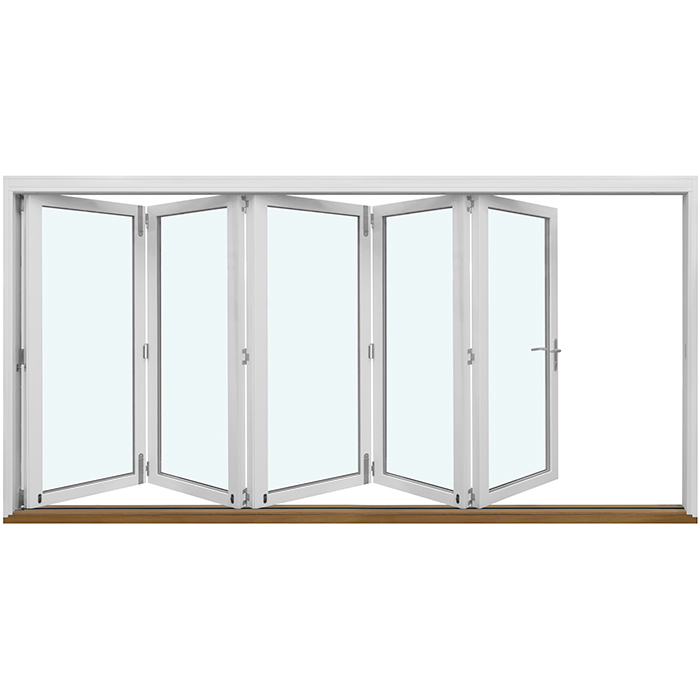
Write a room-by-room opening schedule before trying to match the project to funding. Record the current opening, its approximate dimensions, intended use, required operation, movement direction, nearby furniture, external clearance and related repair work. A kitchen window may need controllable ventilation, while a dining-room opening may primarily provide garden access. For a broad opening where panels are intended to stack outside, an outward-opening bifold door configuration is one possible design route. It remains a product choice, however, not evidence that a programme will pay for it. Keeping those two questions separate prevents a funding search from distorting the practical brief.
Mark every item as essential, desirable or optional. Essential work might address an opening that no longer serves the room properly; a desirable change could improve circulation; optional work might alter decorative bars or colour while the surrounding room remains unchanged. This classification helps if a survey recommends a different package or support is unavailable. It also gives suppliers and installers a stable basis for quotation. Do not finalise bespoke details merely to make an early enquiry, but do define enough of the project to explain what is being replaced, why it matters and what associated work is likely. A vague request for “new windows throughout” is difficult to assess or budget accurately.
Identify what kind of financial help is being offered
Grant, subsidy, loan, tax treatment and supplier discount are not interchangeable terms. A grant normally operates through a defined eligibility and approval process. A subsidy may reduce part of an approved package. A loan must be repaid. Tax treatment is a separate question requiring current official guidance or appropriately qualified advice. A retailer’s promotion is a commercial offer, not public assistance. For each lead, note the administrator, geographical scope, applicant conditions, application route, approval stage, evidence required and any repayment obligation. Discard summaries that do not identify who runs the scheme or where its official terms can be checked.
Establish how the route works before comparing its possible value with a quotation. Does the administrator commission approved work, pay a contractor, reimburse an applicant or provide advice only? Must assessment and approval precede any contract? What happens if the survey recommends another measure or funds are unavailable? These questions matter when comparing conventional replacements with a specialist option such as an outward-opening Passive House window with super-low Uw. The named configuration may suit a particular brief, but its title does not demonstrate scheme eligibility, whole-project performance or entitlement to a tax benefit. Compare products on their documented project suitability and treat funding as a separate approval process.
Plan the complete opening
Use the England route within its stated boundaries
For England, the official Warm Homes: Local Grant page says that eligibility can include privately owned homes with an EPC rating from D to G and household-income, benefit or postcode conditions. It also says that the council must have funding, survey the home and agree improvements before organising work. Warm Homes: Local Grant guidance These are screening and process points, not a promise that a replacement window, entrance door or chosen supplier will be included. The page does not establish a payment amount for an individual project. Use the official application route to identify the relevant council and ask what is currently considered for the specific address.
Sequence is critical. Do not interpret a possible match on income, benefits, postcode or EPC band as permission to purchase first and claim later. Ask whether the application must precede the survey, who chooses any contractor, whether the household may nominate a supplier and what written decision will identify the agreed measures. Retain the response in the project file. If the assessment proposes work other than the original window or door plan, consider whether the resulting package still meets the household’s priorities and budget. The England route is assessment-led and must not be presented as an automatic entitlement to free replacement windows or doors.
Research each UK nation independently
A search result labelled “UK grant” may conceal an England-only scheme or an expired local offer. For a property in Scotland, Wales or Northern Ireland, begin with the current official national or local channel for that nation; do not transfer the Warm Homes: Local Grant conditions from England. For an English property, confirm the responsible council’s live process and funding position. Names, eligible households, qualifying measures and application timing may differ even where the proposed physical work looks similar. An installer, adviser or neighbour can suggest a lead, but only the administering body can verify whether a route is operating and how the address will be assessed.
Keep a dated research log containing the property address, nation, tenure, applicant’s relationship to the property, source checked, contact details and answer received. Where a website describes a scheme without confirming current applications or window and door eligibility, ask the official body directly rather than filling the gap with assumptions. Apply the same discipline to possible tax advantages: request advice for the actual transaction and applicant instead of relying on a generic statement that energy improvements receive favourable treatment. No supplied evidence establishes a universal UK window subsidy or automatic tax benefit, so neither should appear as a deduction in the working budget.
Coordinate products with the complete retrofit scope
Windows and doors meet internal finishes, external walls, insulation, thresholds and access routes. Replacing them while roofing, render, a kitchen refit or other envelope work is planned may avoid repeated disturbance, but only if responsibilities and sequencing are clear. Identify who removes the old unit, prepares the opening, deals with surrounding defects, reinstates finishes and coordinates scaffolding or other access. A fixed non-opening window may suit a location intended for daylight or a view, while another opening handles ventilation. That division of roles should come from the room plan, not from an assumption that a non-opening unit will be easier to fund.
Issue the same itemised brief to everyone quoting. Separate product supply, removal, installation, internal trim, external making good, disposal, decoration, threshold work, access and investigation of hidden conditions. Ask what is excluded and who authorises additional work found after removal. If a programme survey later takes place, its recommendation can then be compared with a coherent project rather than a broad request to upgrade the house. Coordination does not establish eligibility, but it exposes costs that may remain with the owner even if a measure is supported. It also reduces the risk of approving one element while leaving essential finishing or access unbudgeted.
Test operation, clearance and everyday access
Draw the full movement of each sash or door on the plan. Check curtains, radiators, cupboards, taps, paths, planting and furniture, then consider where a person stands while operating or cleaning it. An inward-opening window uses internal clearance; an outward-opening design affects the area beyond the wall. Neither direction is universally preferable. At a patio opening, test panel movement against dining chairs and the route between kitchen and garden. Funding cannot rescue a configuration that obstructs the room, so verify everyday use before requesting final dimensions or accepting substitutions proposed solely to reduce the quoted price.
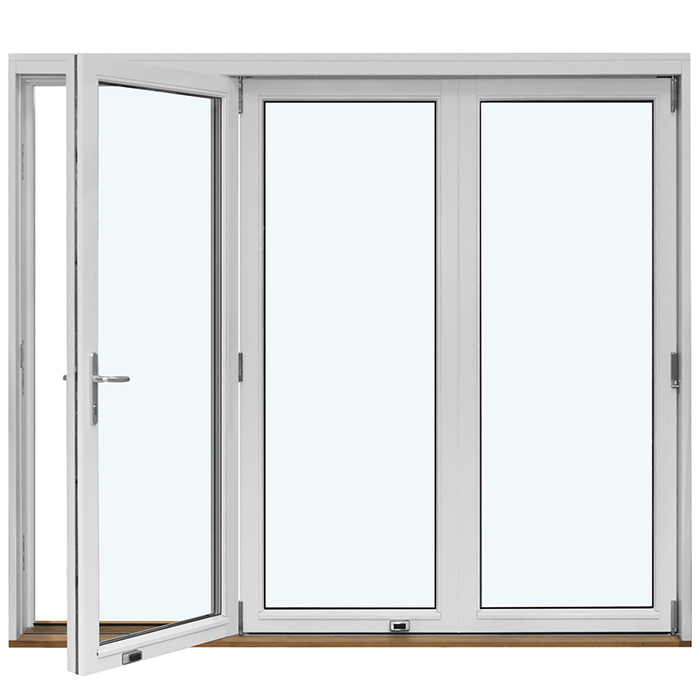
Where the brief calls for two operable parts opening into the room, a two-sash inward-opening window describes that arrangement clearly in the schedule. The exact order still requires project measurements, selected options and installation planning. Ask the supplier for documentation relating to the ordered configuration, and ask the installer or an appropriate qualified professional to assess the complete installation and relevant project requirements. Do not infer energy, safety or regulatory characteristics from a product name. Separate indispensable functional choices from visual options, such as decorative bars or a particular colour, so affordability discussions do not accidentally remove the feature that made the opening usable.
Plan the complete opening
Match documents to the question being asked
A scheme may request information about the dwelling, occupancy, household circumstances, energy status or proposed measures. A supplier quotation describes products and commercial scope. An installer’s survey addresses openings and site work. None automatically replaces the others. Create a controlled project folder containing contact details, relevant tenure information, existing energy documents, dated photographs, opening schedules, drawings or measurements, quotations, correspondence and survey reports. Give revisions clear dates and retain superseded copies. If the recommended package changes, the document trail should show what changed, who requested it and how the revised scope affects the budget.
Describe products precisely without unsupported shorthand. An outward-opening panelled entrance door can be listed by configuration, location, direction of opening and associated work; it should not simply be called an “approved energy door” unless the responsible body has confirmed that status for the project. Ask the administrator which evidence it needs before commissioning bespoke reports, then ask the supplier what information is available for the exact proposed order. This avoids paying for irrelevant paperwork and prevents a brochure from being mistaken for proof of eligibility. Where a document contains several options, identify the one actually priced rather than sending an unmarked catalogue page.
Make the budget viable without assistance
Prepare three figures. The first is the whole project cost without assistance, including products, surveys or design work, installation, access, making good, disposal and a sensible allowance for uncertain repairs. The second uses only support formally confirmed in writing. The third is the household’s stop or phase point if support does not materialise. This structure prevents an online eligibility indication from becoming assumed deposit money. It also shows which optional changes can be deferred while protecting the functional essentials. Avoid hiding consequential work in a single contingency if quotations can identify it separately; visible assumptions are easier to challenge and update.
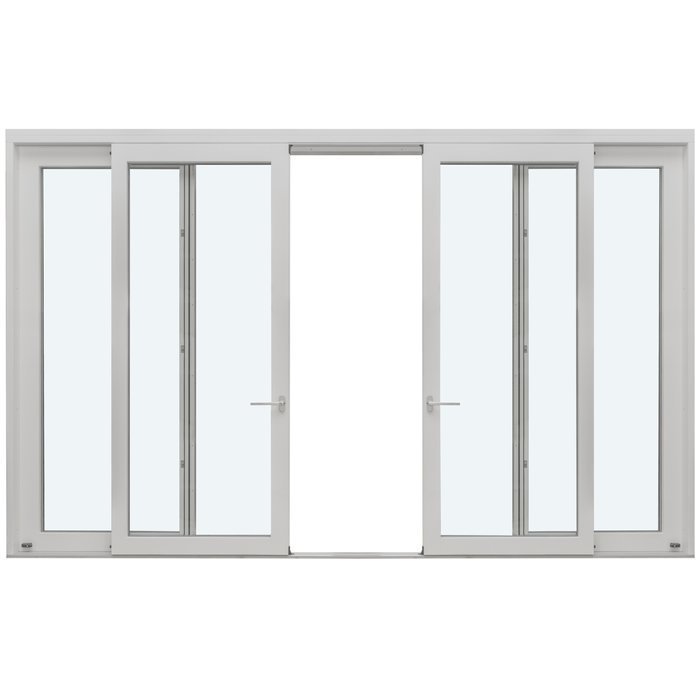
Phasing can help when one room has a fixed renovation date or one opening requires earlier attention, but repeated visits and separate finishing work may introduce extra complexity. Compare access, disruption, interfaces and exclusions rather than supply prices alone. For a garden elevation, a Patio Life side-sliding patio door design can be assessed against circulation, panel travel and furniture placement independently of funding. If an administrator later confirms an agreed measure, revise the budget using its written terms. Do not presume that support approved for one part of an energy package can be transferred to a different door, upgraded finish or additional opening.
Direct each question to the right party
Ask the supplier about the exact configuration, dimensions, opening direction, visible divisions, glazing and hardware choices, finish, price and supply inclusions. Ask the installer how measurement responsibility is allocated, what opening preparation is assumed, how the property will be protected, what making good is included and how variations are priced. Ask the scheme administrator about eligibility, application status, surveys, agreed measures, contractor arrangements and evidence. Ask a qualified tax adviser about transaction-specific tax questions where needed. Keeping these roles distinct makes contradictory answers easier to resolve and stops a sales estimate from being treated as an award decision.
Feature-shaped openings require their own entries. fixed triangular and angled non-opening windows are different from rectangular operable units, so combining both within an undivided “window allowance” conceals useful cost and scope information. Record geometry, approximate dimensions, non-opening operation, location and surrounding finish, then give every tenderer the same description. Request explicit exclusions and compare the resulting scope line by line. A lower total may omit access, templates, finishing or related building work. This disciplined comparison also makes it easier to remove an optional feature without losing track of the essential replacements if funding is declined or the overall budget changes.
Set a decision gate before the final order
Choose a clear point at which research becomes commitment. That gate may be a written scheme decision, confirmation that no relevant route is available, or a conscious decision to proceed privately. Before it, refine quotations and options without claiming that public funding is approved. After it, make the order match the final opening schedule: quantities, dimensions, operation, finishes, delivery address, responsibilities and commercial terms. Bloomcabin states a five-year warranty for windows and doors and delivery of four to six weeks subject to order confirmation. Confirm how those terms apply to the individual order; neither is a grant timetable or evidence of programme approval.
Keep a final decision record for every opening. An outward-opening pivot window might be selected because its movement suits a particular location, while the financial decision rests on the no-support budget. This distinction is useful if a survey changes the proposed package or if an invoice later needs reconciling with approved work. Check that quotations, order acknowledgements, invoices, delivery documents and installer records use consistent product descriptions and dates. Resolve discrepancies before manufacture or installation where possible. Good records cannot create eligibility, but they reduce ambiguity and help the household manage either an officially agreed route or a wholly self-funded project.
Frequently asked questions
Is there one UK-wide grant for replacement windows and doors?
Do not assume so. Funding and application routes differ between England, Wales, Scotland and Northern Ireland. England’s Warm Homes: Local Grant may be relevant to some properties and households, but it is not a universal window or door entitlement. Check the current official route for the nation and address before including support in a budget.
Can I order before applying for the Warm Homes: Local Grant?
The England guidance says the council must have funding, survey the home and agree improvements before organising work. Warm Homes: Local Grant guidance Ask the scheme contact to confirm the correct sequence before paying a deposit or ordering. Do not assume that a product bought privately will later be reimbursed.
Does an EPC rating guarantee funding for new windows?
No. The England source includes EPC D to G among possible conditions, alongside household-income, benefit or postcode tests. Warm Homes: Local Grant guidance That does not promise replacement windows or doors to every home in those EPC bands. Council funding, the property survey and the agreed package remain relevant.
Are grants, loans, subsidies and tax benefits equivalent?
No. A grant or subsidy operates under its own conditions, a loan must be repaid, and tax treatment is a separate issue governed by the rules applying to the transaction. Identify the administrator, approval point, required evidence and repayment terms. Obtain current, appropriately qualified advice before relying on a claimed tax benefit.
What should I prepare before making enquiries?
Prepare the address, nation, tenure information where relevant, available energy paperwork, dated photographs and a room-by-room opening schedule. Add an itemised outline of removal, installation, access and finishing work. Keep scheme, supplier and installer questions separate so that a product quotation is not mistaken for proof of funding eligibility.
Your next step
A reliable funding plan starts with a window and door project that works without speculative assistance. Define each opening’s job, coordinate the surrounding retrofit, compare complete installation scopes and preserve a realistic self-funded budget. Then check the live official route for the nation where the property is situated. For England’s Warm Homes: Local Grant, follow the council-led assessment and agreement process rather than treating screening conditions as an award. Warm Homes: Local Grant guidance For Wales, Scotland and Northern Ireland, verify the relevant route independently. Clear responsibilities, dated evidence and a deliberate pre-order decision gate leave the project manageable whether support is confirmed, unsuitable or unavailable.
Official source
Checked 9 September 2026 2026-09-09
- Apply for the Warm Homes: Local Grant — England only
