
Orangery Greenhouse Guide: What It Is, Sizes, Design & How to Choose | Bloomcabin USA
Why the term matters
An orangery greenhouse is not just a prettier name for a greenhouse.
Historically, orangeries were elegant garden buildings used to shelter citrus trees and other prized plants. They were associated with architecture, proportion and prestige, not only with utility. That heritage still shapes the way the term is understood today. When buyers in the United States search for an orangery greenhouse, they are typically looking for something with more presence than a purely practical growing structure.
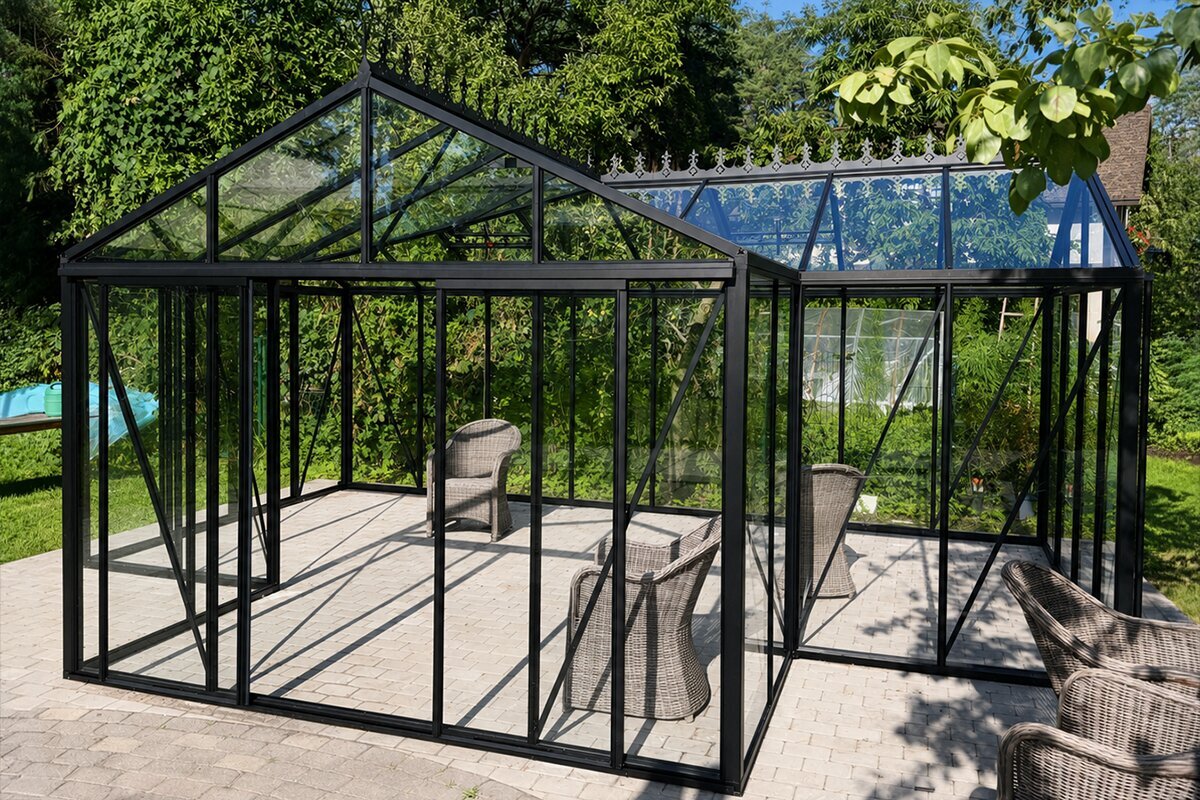
In modern residential use, an orangery greenhouse usually combines two ideas. First, it remains a greenhouse in the sense that it is transparent, light-filled and well suited for plants. Second, it carries a more architectural and lifestyle-oriented identity. The structure often has a stronger visual rhythm, taller glazing, a more formal shape, and a sense that it belongs in a designed backyard rather than hidden at the far edge of a vegetable garden.
This is why the term matters commercially. Someone searching for a standard greenhouse may be focused on pure function and minimum budget. Someone searching for an orangery greenhouse is often open to a more premium purchase because the building is expected to enrich the overall property, not only the growing season.
Simple definition
An orangery greenhouse is a garden structure that blends greenhouse functionality with the elegance and presence of an orangery.
In practice, that often means larger panes of glazing, refined proportions, strong aluminum framing, and a layout that can accommodate both plants and people.
At a glance
Primary identity
Elegant glass garden building
More architectural than a standard greenhouse, but still strongly connected to plants, light and year-round garden enjoyment.
Best for
Growing + lifestyle use
Ideal for homeowners who want a greenhouse experience, but also want the structure to feel like a destination within the backyard.
Typical layouts
Rectangular or T-shaped
The rectangular orangery is classic and efficient. A T-shaped orangery creates a dramatic central space and a more pavilion-like atmosphere.
Key material direction
Aluminum + glass
For long-term use and premium appearance, aluminum framing paired with glass glazing is usually the most compelling solution.
Clear comparison
Greenhouse vs conservatory vs orangery: where does each one sit?
01 / Greenhouse
Most plant-driven
A traditional greenhouse is primarily a growing structure. It is designed around light transmission, crop care, ventilation and practical access.
That does not mean it cannot be beautiful. Many premium models are very attractive. But the main design priority is usually plant performance first.
02 / Orangery greenhouse
Balanced and premium
An orangery greenhouse stands in the middle. It keeps the transparency and horticultural value of a greenhouse, but brings a more formal architectural expression.
It is often the right choice when you want the structure to support plant life and also serve as a refined place to spend time.
03 / Conservatory
Most room-oriented
A conservatory typically leans more toward an inhabited room. Plants may still be part of it, but the user experience often prioritizes seating, enjoyment and connection to the house.
For many Bloomcabin buyers, the appeal of an orangery greenhouse is exactly that it avoids being locked into only one side of that spectrum.
Why U.S. buyers are interested
In the U.S. market, an orangery greenhouse appeals because it solves both a practical and an emotional brief.
Many American homeowners no longer want every garden structure to disappear into the background. The greenhouse has become part of the identity of the property. People want it to function beautifully, but they also want it to look intentional from the patio, kitchen window or backyard seating area.
This helps explain the growing interest in structures like the Bloomcabin Orangerie and the Garden View T Greenhouse. Both express more than pure utility. They signal that the greenhouse is part of the experience of the backyard, not only a place to place seed trays.
That does not mean every buyer wants a lounge-like glass room. It means they want a structure with greater permanence, stronger design language and more versatility than a minimal entry-level greenhouse. In many cases, the orangery greenhouse becomes the answer because it feels cultivated rather than improvised.
Reason 1 It elevates the property The structure contributes to curb appeal and backyard character instead of reading as a purely functional add-on.
Reason 2 It supports multiple uses Plants, seating, display, seasonal dining and quiet backyard time can coexist if the layout is planned thoughtfully.
Reason 3 It feels more substantial Premium aluminum framing and glass give it a level of seriousness that many buyers want for long-term ownership.
Choosing the right size
Size should be decided by your intended rhythm of use, not by a single square-foot number.
Smaller formats
Focused growing
A smaller orangery greenhouse can be wonderful if the main objective is a visually refined growing environment for herbs, potted plants, seedlings and a select number of feature crops.
Mid-size formats
Balanced hybrid use
This is often the sweet spot. You can maintain growing benches and still preserve a central space that feels comfortable enough for a chair, a small table or seasonal display.
Larger formats
Pavilion character
A larger orangery greenhouse begins to behave almost like a true garden pavilion. This is where circulation, seating and a strong visual axis become major design assets.
The critical question is not simply “How big can I fit?” but “How do I want the interior to behave?” If you want only staging benches and plant care access, the plan can be denser. If you want the greenhouse to feel like a room that you also happen to grow in, circulation becomes the decisive factor. A pathway that looks acceptable on paper may feel too narrow once tall pots, watering cans and a second person are involved.
For many Bloomcabin customers, a rectangular orangery such as the Bloomcabin Orangerie offers the cleanest planning logic, while the T-model Garden View Greenhouse gives the central zone more drama and a clearer sense of arrival.
Layout choice
Rectangular or T-shaped?
The rectangular orangery is efficient and timeless. The T-shaped orangery is more theatrical and often feels more like a destination space.
Choose based on how much importance you place on symmetry, a central focal area and social use.
A rectangular orangery greenhouse is usually the most direct answer when you want maximum practical clarity. It creates straightforward bench planning, easy furniture placement and a strong, calm silhouette in the landscape. For many backyards, this is the right baseline because it wastes little space and remains very elegant when proportions are handled well.
A T-shaped orangery greenhouse, by contrast, is about experience as much as efficiency. The projecting center gives the structure presence from the outside and creates a beautiful internal moment when you stand within it. This extra dimensionality makes the greenhouse feel more ceremonial, which is why the format remains so attractive to buyers who want the building to be a focal point rather than only a piece of infrastructure.
If that is your direction, the Garden View T Greenhouse is one of the clearest expressions of the orangery idea in the Bloomcabin U.S. range. It communicates elegance immediately and naturally supports a more balanced plant-and-lifestyle layout.
If you love the T-shaped identity but need to work against an existing wall or boundary condition, the Wall Mounted T Model Orangery becomes especially interesting because it preserves much of the architectural character while adapting to a more constrained site condition.
Materials and comfort
Materials matter more in an orangery greenhouse because the structure is meant to be looked at closely.
In a purely functional greenhouse, buyers may focus first on growing capacity. In an orangery greenhouse, material choice affects both longevity and perception. The building needs to withstand weather, support large glazed areas, feel stable under use, and still look refined from the terrace or lawn.
This is one reason premium aluminum structures are so compelling. Aluminum allows crisp profiles, clean long-term performance and a visually precise architectural language. It suits the orangery idea because the frame can feel delicate in appearance without being flimsy in use.
Glass is equally important. Clear, high-quality glazing gives the greenhouse its openness and elegance. It also determines how the structure reads in different weather conditions — bright, reflective and transparent during sunny periods; luminous and atmospheric during cloudy or evening conditions.
Key specification themes
- Aluminum framingExcellent for precision, durability and a premium, contemporary-classic appearance.
- Tempered or toughened glassAppropriate when you want clarity, rigidity and a strong visual finish. It also supports the elegant feel buyers expect from an orangery greenhouse.
- Ventilation strategyA beautiful greenhouse still needs practical airflow. Warmth buildup, condensation and growing conditions must be managed intelligently.
- Strong base relationshipBecause an orangery greenhouse is so visible, the foundation and surrounding hardscape need to feel intentional and well integrated.
Can you really use it for both people and plants?
Yes — but only if you plan the interior honestly.
Plant-first layout
If gardening is the main goal, keep the circulation generous enough for daily maintenance but let benches and growing zones dominate. In this format, the orangery quality comes from the experience of the space rather than from furniture.
Balanced hybrid layout
This is often the most successful model. Plants are concentrated along the perimeter or in dedicated zones, while the center remains open enough for a chair, a small table or a display piece.
Room-first layout
When you want the greenhouse to behave more like a garden retreat, the number of plants must be edited carefully. The best room-like orangery greenhouses are never overcrowded.
A common mistake is believing that a greenhouse becomes more luxurious simply by adding a chair and a side table. In reality, the interior has to be composed. If every surface is full of pots, the seating becomes symbolic rather than usable. Conversely, if all of the growing function disappears, the building starts to drift toward conservatory territory and may no longer satisfy why you wanted a greenhouse in the first place.
The right answer depends on your routine. If you want morning coffee among herbs and citrus, you can design for that. If you want to propagate seedlings seriously, the plant load must be given priority. What the orangery greenhouse offers is permission to combine both — provided the square footage and layout genuinely support it.
Placement, foundation and orientation
A beautiful orangery greenhouse needs a beautiful relationship with the site.
Placement decisions shape the entire experience. If the greenhouse is meant to feel integrated with the backyard, it should not look like it was pushed to the only spare corner. Think about views from the house, the approach path, how the structure terminates sightlines and how it aligns with patios, garden beds or lawn geometry.
Orientation still matters horticulturally. Light, heat gain, seasonal exposure and local wind should all inform the final position. In warm climates, solar buildup may become a comfort issue surprisingly quickly, while in colder climates the greenhouse may benefit from a more protected siting.
The base deserves equal attention. A refined greenhouse placed on a weak or visually unresolved foundation will never look fully convincing. Many buyers therefore prefer to think about paving, steps, edging and adjacent planting beds as part of the same design decision rather than as later accessories.
If you are evaluating wall-related solutions rather than freestanding ones, it can also be helpful to compare the Aluminum Lean-To Greenhouse, the Aluminum Greenhouse on Wall and the Aluminum Mini Wall Greenhouse to understand how much greenhouse character, access and architectural presence you want relative to the footprint available.
Quick siting checklist
- Check the visual relationship to the house and patio.
- Review sun exposure during the parts of the year that matter most to you.
- Consider comfort in hot weather as well as growing light in cooler seasons.
- Plan the base and surrounding paving as part of the greenhouse project.
- Leave enough clearance to maintain glazing and surrounding planting beds.
- Confirm any local code, HOA or permit questions before ordering.
Where to start in the Bloomcabin USA range
If you are seriously comparing options, these are the U.S. product pages worth opening next.
Bloomcabin Orangerie
For buyers who want a classic rectangular orangery greenhouse with strong visual presence.
View productGarden View T Greenhouse
A T-shaped orangery greenhouse with a more ceremonial, pavilion-like spatial feel.
View productWall Mounted T Model Orangery
Best when you want the T-model character but need to work along a wall or tighter site line.
View productAluminum Classic Greenhouse
Useful as a comparison if you want a more traditional greenhouse profile rather than a full orangery expression.
View productBloomcabin Prestige Premium Greenhouse
A strong option if your taste leans toward premium greenhouse aesthetics but not necessarily a full orangery form.
View productAluminum Lean-To Greenhouse
A practical comparison point when you need to use the edge of the house or another wall intelligently.
View productFrequently asked questions
FAQ: common orangery greenhouse questions
Is an orangery greenhouse good for growing plants?
Yes. An orangery greenhouse still functions as a greenhouse. The key is to evaluate light, ventilation, layout and crop selection in the same disciplined way you would with any other greenhouse.
Is an orangery the same as a conservatory?
Not exactly. A conservatory tends to be more room-oriented, while an orangery greenhouse keeps a stronger connection to plant-growing and greenhouse performance.
Which layout is more luxurious, rectangular or T-shaped?
Luxury is less about labeling and more about proportion, placement and material quality. That said, a T-shaped layout often feels more expressive and ceremonious, while a rectangular orangery feels calm and timeless.
Can an orangery greenhouse be used as a seating space?
Absolutely, but only if the floor plan leaves meaningful space for people. A chair added to an overcrowded greenhouse does not create a true lifestyle space.
What glazing is usually most fitting for this type of structure?
For a premium orangery greenhouse, glass is often the most fitting aesthetic and experiential choice because it reinforces clarity, elegance and the sense of openness that defines the category.
How should I start narrowing Bloomcabin models?
Start by deciding whether you want a rectangular orangery, a T-shaped layout, or a wall-related solution. Then compare how much of the project is about dedicated growing and how much is about broader backyard lifestyle use.
