
Victorian Style Greenhouses | Design, History & Modern Garden Ideas
USA • Heritage Greenhouse Design • Bloomcabin Journal
Victorian Style Greenhouses
Timeless glasshouse architecture, reinterpreted for modern American gardens with aluminum, glass, masonry, climate control and contemporary living.
A greenhouse as architecture
Victorian greenhouses endure because they combine utility with ceremony.
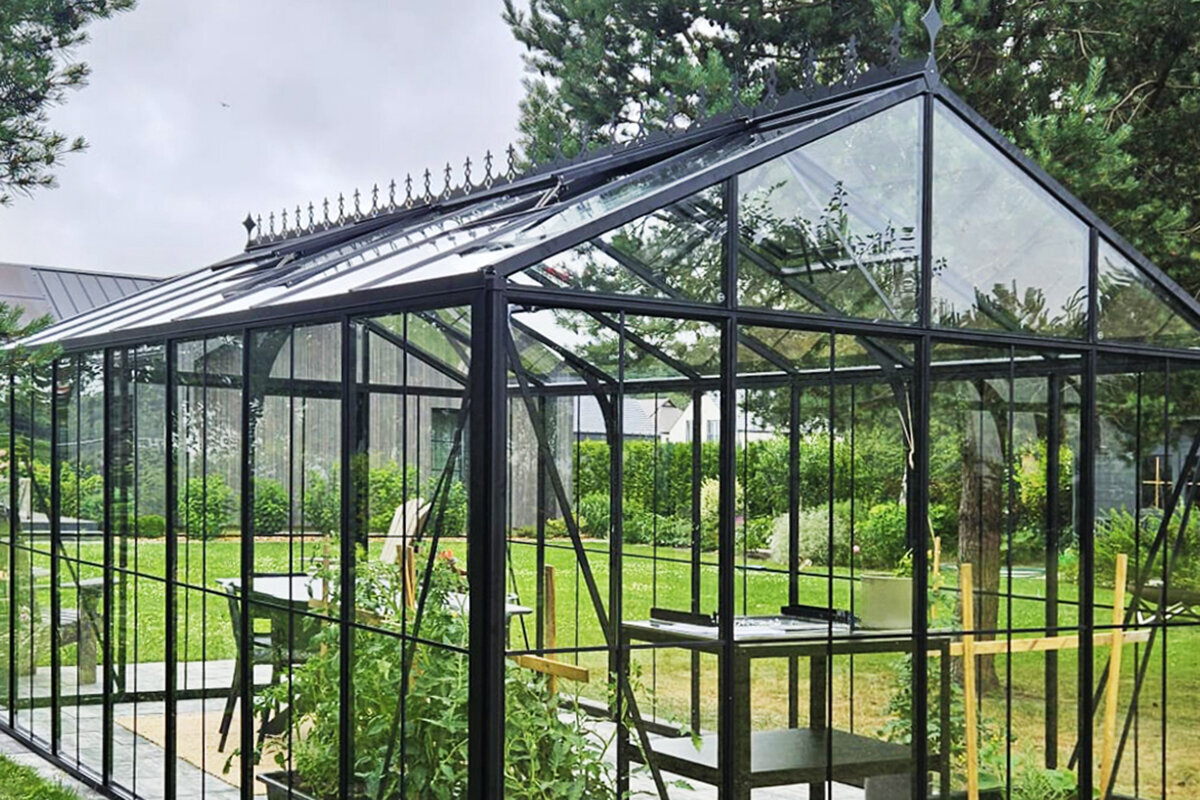
A Victorian-inspired greenhouse can be a serious growing environment, a garden room, a place for citrus and vines, or simply one of the most beautiful structures on a property. The appeal comes from proportion as much as decoration: tall glazed walls, a clear roof silhouette, repeated panes, an obvious entrance axis and a composition that looks deliberate from across the lawn.
In the United States, the phrase Victorian greenhouse is usually used stylistically rather than as a strict historical classification. A modern structure may use powder-coated aluminum, tempered safety glass, sliding doors, integrated gutters and automatic vents while borrowing the architectural character of nineteenth-century glasshouses.
That is exactly why the style works so well today: homeowners can achieve the visual discipline of traditional conservatory architecture without recreating nineteenth-century ironwork, fragile glass or historic heating systems.
If you are already comparing designs, start with the Bloomcabin U.S. greenhouse collection and the aluminum greenhouse range, which includes Classic, Modern, Master and Victorian design directions.
1848
01 • Origins
Why Victorian glasshouses still define the idea of a “grand greenhouse”
The nineteenth century transformed glasshouse architecture. Industrial advances made larger expanses of glass and lighter metal frameworks possible, while botanical collecting created demand for buildings capable of housing exotic and frost-tender plants. The result was a new type of architecture: transparent, highly engineered and increasingly monumental.
At Kew, the Palm House became one of the iconic expressions of this era. Kew describes its curving form as the product of then-advanced shipbuilding and glazing techniques. The later Temperate House is now recognized by Kew as the world’s largest surviving Victorian glasshouse, with a scale and repeated glass-and-metal rhythm that still influence what people imagine when they hear “Victorian greenhouse.”
The American story is different but equally relevant. Historic New England’s Lyman Estate in Waltham, Massachusetts, preserves one of the oldest surviving greenhouse complexes in the United States. Its grape house, camellia house and later structures show how protected growing became part of affluent American estates long before the modern hobby greenhouse market.
02 • Design language
10 features that make a greenhouse feel Victorian
01. Tall proportions
Vertical walls and generous ridge height give the structure presence and provide room for climbing plants, citrus and architectural interior planting.
02. Pronounced roofline
A clear pitched or pavilion roof makes the greenhouse read as a garden building rather than a transparent box.
03. Repeated glazing rhythm
Regular vertical mullions and repeated glass panes create the disciplined pattern associated with traditional conservatory architecture.
04. Symmetry
Central doors, balanced roof forms and clear axes make even a modest greenhouse feel formal and intentional.
05. Dark framework
Black, deep green, bronze and charcoal frames emphasize the geometry and visually connect the greenhouse to historic ironwork.
06. Ridge detailing
Finials, cresting or a decorative ridge line are among the quickest ways to make a greenhouse read as Victorian-inspired.
07. Masonry base
Brick or stone adds visual weight, creates a connection with the house and turns the greenhouse into an architectural object.
08. A ceremonial entrance
Wide or double doors positioned on an axis strengthen the pavilion character and make the building suitable for seating as well as growing.
09–10. Ornament + planting
Decorative metal details matter, but so do the plants: vines, citrus, pelargoniums, ferns and terracotta complete the Victorian atmosphere more effectively than ornament alone.
03 • Modern interpretation
Traditional style does not require nineteenth-century construction
Historic glasshouses relied on the materials and technologies available at the time. A modern Victorian-style greenhouse can preserve the visual language while using materials that are more practical for residential use: powder-coated aluminum instead of painted iron, tempered safety glass instead of fragile traditional panes, integrated gutters instead of add-on drainage and automatic roof vents instead of purely manual climate control.
Aluminum is particularly effective because it can produce slender, repeated profiles without the same maintenance burden as traditional painted metal or timber. The result can feel historically sympathetic while remaining precise, clean and structurally contemporary.
Bloomcabin’s Classic Aluminum Greenhouse is a natural starting point for this aesthetic, while the wider aluminum range also includes a dedicated Victorian design direction.
Historic expression, modern function
Historic idea: narrow repeated panes.
Modern solution: precision aluminum glazing bars.
Historic idea: formal glasshouse roof.
Modern solution: engineered roof vents and drainage.
Historic idea: dark ironwork.
Modern solution: durable powder-coated aluminum.
Historic idea: estate glasshouse.
Modern solution: a structure that can be both greenhouse and garden room.
04 • Masonry
Victorian greenhouse with a brick or stone base
A masonry base is not mandatory, but visually it may be the single strongest move if you want an estate-style greenhouse. Brick or stone gives the transparent upper structure a grounded base, reduces the feeling of a freestanding kit and creates a material connection with the main house.
For a U.S. home, the best masonry choice is usually the one already present on the property. Red brick with a black or dark green frame feels traditional. Pale limestone with charcoal aluminum is more restrained. Painted or rendered masonry can create an English conservatory character without competing with contemporary architecture.
A base wall also creates opportunities inside: raised beds can meet the wall cleanly, benches can be integrated, and the interior can feel more like a permanent garden room. For architectural inspiration, Bloomcabin’s Wall-Mounted T-Model Orangery shows how a greenhouse can become visually connected to existing architecture.
05 • Wall glasshouse
Victorian Lean-To Greenhouses
A wall-attached glasshouse is one of the most convincing ways to use Victorian language on a residence. The existing wall becomes part of the composition, making the greenhouse feel less like an object placed in the yard and more like an extension of the architecture.
On historic or traditional American homes, a lean-to greenhouse can sit beautifully beside brick, clapboard, stone or rendered walls. The key is proportion: the roof pitch, door height and glazing rhythm should relate to the building rather than look squeezed into leftover space.
Functionally, wall placement can also be valuable. It reduces exposure on one side, places the greenhouse closer to utilities and can create a natural route from house to garden. The wall itself may hold thermal mass, although orientation and local climate still determine how useful that effect becomes.
See the Bloomcabin Lean-To Greenhouse for a modern aluminum interpretation of the wall-glasshouse concept.
06 • Greenhouse or orangery?
Victorian greenhouse vs orangery: where the two ideas overlap
The words are often used interchangeably in modern garden design, but the visual emphasis is different. A greenhouse reads primarily as a glazed growing structure. An orangery usually feels more architectural and room-like, often with a stronger central axis, larger footprint and greater potential for seating or entertaining.
Victorian aesthetics work especially well with T-shaped and pavilion forms because those layouts create a central focus rather than a simple rectangular tunnel. The projection of a T-model naturally supports a table, specimen tree, double-door entrance or formal path alignment.
For that reason, Bloomcabin’s Garden View T-Model Greenhouse Orangery is particularly relevant for homeowners looking for Victorian orangery proportions rather than a purely production-oriented greenhouse.
Choose greenhouse if…
Growing space, staging and season extension are the dominant priorities.
Choose orangery proportions if…
You want the greenhouse to operate as a garden destination, with room for plants, furniture, entertaining or a central display.
07 • Scale
Small Victorian greenhouse or large garden pavilion?
Small garden
Keep the proportions tall
A compact Victorian-inspired greenhouse should not become visually squat. Height, clear roof geometry and narrow glazing divisions preserve elegance even when the footprint is limited.
A Classic Plus 385 is useful when you want more width and air volume while retaining a classic greenhouse language.
Medium garden
Add architectural presence
Once the footprint grows, use a stronger entrance axis, double doors, central path and larger specimen planting so the structure reads as intentional garden architecture.
The Prestige Premium Greenhouse suits this more architectural approach.
Large property
Think pavilion, not utility
A large Victorian greenhouse can anchor an entire garden composition. Align paths, seating, fruit trees or hedges with the entrance so the building participates in the landscape.
For this scale, see the Bloomcabin Orangerie.
08 • Color
The best colors for a Victorian-style greenhouse
Black
Crisp, dramatic and architectural. Especially strong against brick, pale stone and green planting.
Heritage green
The most botanical option. Blends with hedges and mature planting while keeping the frame visible.
Charcoal
A slightly more modern choice that works well with contemporary homes and grey stone.
Bronze / brown
Warm and understated beside red brick, timber and traditional paving.
Cream
Lighter, elegant and more conservatory-like; particularly suitable near painted architecture.
The safest design method is to take a color cue from the house: window frames, roof, brick, fencing, exterior metalwork or stone paving. The greenhouse should feel related to the property without disappearing into it.
09 • Interior
Victorian greenhouse interior ideas
The strongest Victorian interiors feel collected rather than decorated. Start with a central path in brick, stone or gravel. Add terracotta, natural timber, restrained metal staging and a few larger specimen plants rather than filling every surface with small pots.
Climbing vines are particularly effective because they make use of the height that defines the architecture. Grapevines, climbing ornamentals and trained citrus can turn the roof itself into part of the garden. Ferns, pelargoniums, orchids and tender foliage plants create a more botanical-collection feeling.
If the greenhouse will also function as a retreat, leave the best visual axis open. A small café table, bench or reading chair placed under the ridge can create a garden-room atmosphere without sacrificing productive growing space.
A simple interior palette
Brick or stone path
Terracotta and aged clay pots
Timber or black-metal staging
One or two large specimen plants
Climbing crop or ornamental vine
A modest piece of furniture—not a fully furnished living room
10 • Planting
What should you grow in a Victorian greenhouse?
Historically, the excitement of glasshouse culture came from growing plants that could not reliably survive the local outdoor climate. That same idea still makes sense. In cold U.S. regions, use the greenhouse to extend the season for warm crops and protect tender specimens. In hot southern climates, the emphasis shifts toward ventilation, shade and choosing seasons when the glasshouse climate is useful rather than excessive.
Productive choices include tomatoes, cucumbers, peppers, basil, strawberries and grapevines. More ornamental choices include citrus, pelargoniums, ferns, orchids and tender foliage plants. The most authentic-looking result often mixes food and ornament rather than treating the greenhouse as a row of identical vegetable beds.
Large historic glasshouses were built around plant collections, so consider height as growing space. A vine trained beneath the roof, a lemon tree beside the entrance or a tall fern at the end of the central path can make the architecture feel inhabited.
For a greenhouse that will carry both crops and seating, a spacious model such as the Bloomcabin Orangerie gives more flexibility for creating distinct growing and relaxation zones.
11 • Comparison
Victorian-style greenhouse vs minimalist modern greenhouse
| Feature | Victorian-inspired | Minimal modern |
|---|---|---|
| Character | Architectural, decorative, estate-like | Clean, restrained, technical |
| Roof expression | Pronounced and visually important | Simplified geometry |
| Glazing rhythm | Repeated vertical divisions | Larger uninterrupted planes |
| Color | Black, green, bronze, cream | Black, grey, silver, white |
| Masonry base | Highly compatible | Optional, less visually central |
| Aluminum suitable? | Yes — excellent for a modern interpretation | Yes — standard modern choice |
12 • Garden placement
Where should a Victorian-style greenhouse sit in the garden?
Because this style is visually strong, placement should be treated as landscape design. Instead of hiding the greenhouse behind the garage, consider whether it can terminate a path, sit on the axis of a patio, align with the kitchen windows or form the center of a kitchen garden. The more architectural the greenhouse, the more rewarding intentional siting becomes.
Design intent still has to respect horticulture. Oklahoma State University Extension recommends unobstructed winter light for a hobby greenhouse, while local wind, shade from trees, utilities and drainage also matter. A perfect Victorian composition that receives poor winter sun or stands under large falling branches is not a successful greenhouse.
On very large properties, a pavilion-scale structure such as the T-Model Orangery can be used as a visual destination at the end of a formal garden axis.
13 • Performance
Ventilation matters as much as Victorian detailing
A greenhouse can look historically elegant and still perform badly if it cannot release summer heat. University of Florida Extension notes that greenhouse ventilation controls high temperatures, helps manage relative humidity, supports uniform airflow and refreshes the greenhouse atmosphere. Natural systems work best when warm air can leave high in the structure while replacement air enters through lower openings.
That makes roof vents especially compatible with Victorian-inspired architecture: they preserve the roofline while serving a real environmental function. Doors, lower openings and circulation fans complete the system. Decorative ridge elements should never prevent practical ventilation.
Glazing matters too. Oklahoma State University Extension notes the high light transmission of glass; for a premium residential greenhouse, clear tempered glazing combines that visual clarity with modern safety expectations.
A greenhouse such as the Prestige Premium Greenhouse can therefore use contemporary ventilation and glazing while retaining a highly architectural garden presence.
14 • Choosing yours
How to choose a Victorian-style greenhouse for an American home
1. Start with the houseMatch scale, roof language, existing metalwork and masonry before choosing decorative greenhouse details.
2. Choose the functionGrowing-only, growing plus seating, or garden pavilion? This determines width, height, doors and interior layout.
3. Decide on masonryA brick or stone base adds strong Victorian character but also changes foundation, door and construction planning.
4. Prioritize ventilationDo not sacrifice usable roof vents and doors for decorative purity.
5. Think in garden viewsConsider what the greenhouse looks like from the house, patio and main garden approach—not only from inside it.
6. Compare proportionsA taller, more spacious greenhouse such as Classic Plus 385 will feel more architectural than the same style compressed into a very low volume.
15 • FAQ
Victorian greenhouse FAQ
What is a Victorian greenhouse?
Today the term usually describes a greenhouse inspired by nineteenth-century glasshouse architecture: tall proportions, repeated panes, strong rooflines, dark metalwork, symmetry and sometimes decorative ridge or masonry details.
Can a Victorian greenhouse be made from aluminum?
Yes. Aluminum is one of the most practical ways to create the repeated slender-frame appearance while gaining modern durability, precise fabrication and low maintenance.
Does it need a brick base?
No. A full-glass greenhouse can still look convincingly Victorian. Brick or stone simply increases the architectural weight and traditional estate character.
What color is most traditional?
Deep green is the most botanical choice, while black creates a sharper architectural look. Bronze, charcoal and cream can also work beautifully when coordinated with the house.
Can a Victorian greenhouse be attached to a house?
Absolutely. A Lean-To Greenhouse is one of the most natural modern interpretations of a traditional wall glasshouse.
Where should I start comparing Bloomcabin models?
Start with Classic for a traditional greenhouse shape, T-Model Orangery for a more formal pavilion composition, and Orangerie for a large garden-room scale.
Final perspective
The best Victorian greenhouse feels inherited — even when it is brand new
That effect comes from proportion, restraint and context rather than artificial aging. Choose a strong roofline, a frame color related to the property, enough height to feel architectural, clear glass, an intentional path or foundation, and details that reinforce the geometry rather than overwhelm it.
Modern aluminum means you can keep the architecture while gaining contemporary glazing, drainage, ventilation and low-maintenance performance. Victorian style becomes more convincing—not less—when the engineering is quietly competent.
Explore Bloomcabin GreenhousesSources & Further Reading
- Historic New England — Lyman Estate Greenhouses.
- Historic New England — Restoring the Lyman Estate Bark Pit Greenhouse.
- Historic New England — Lyman Estate Landscape & Greenhouse History.
- Royal Botanic Gardens, Kew — Palm House history and architecture.
- Royal Botanic Gardens, Kew — Temperate House, the largest surviving Victorian glasshouse.
- Oklahoma State University Extension — Greenhouse Structures and Coverings.
- Oklahoma State University Extension — The Hobby Greenhouse.
- University of Florida IFAS Extension — Greenhouse Ventilation.
This article uses “Victorian greenhouse” as a contemporary design category inspired by nineteenth-century glasshouse architecture. It does not imply that every modern design feature described here was standard in every Victorian-era greenhouse. Local zoning, permits, snow/wind loads, foundation requirements and energy performance should be checked separately for the specific U.S. installation.
