
Buying a Wood-Burning Sauna: Heater, Flue and Site Planning
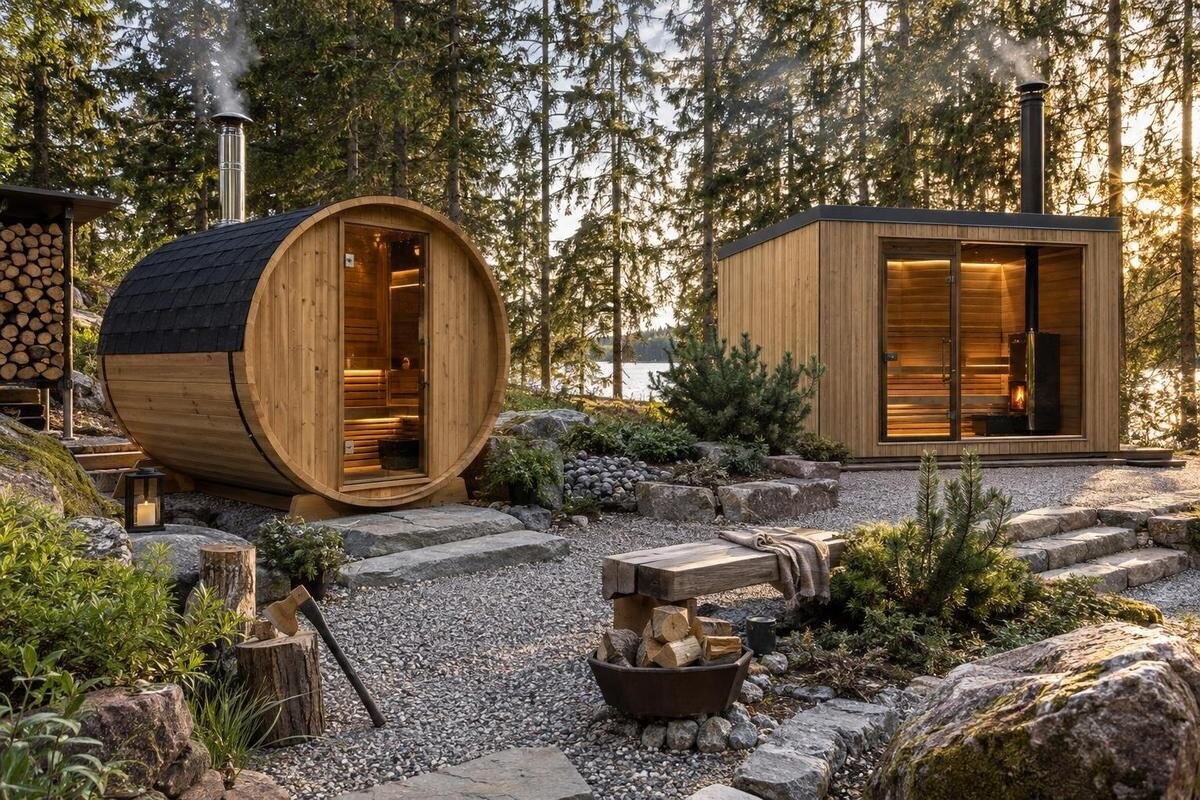
Sauna buying guide
Choosing a wood-burning sauna is a joined-up purchase: the cabin, heater, flue route, site and installation plan all need to fit together. Compare documented specifications rather than model names alone, confirm what each quotation includes, and have a qualified professional assess the proposed heater and flue arrangement before you commit.
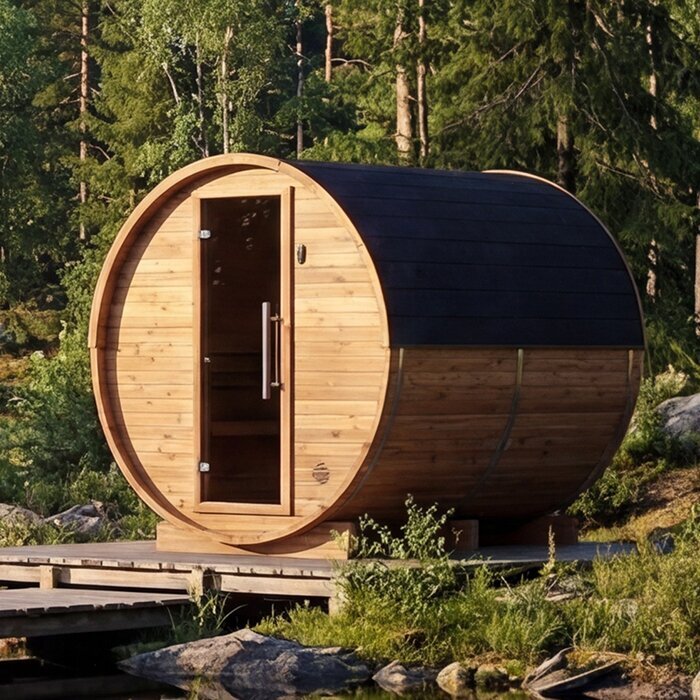
Buy the cabin, heater and flue as a coordinated setup
Buying a wood-burning sauna means choosing a cabin, heater, flue or chimney system and installation plan that work together. These may be sold as one package or as separate items, so do not assume that a cabin listing includes the heater or the parts needed to connect it. A product name such as Thermowood Barrel Sauna S 140 identifies a candidate, but says nothing by itself about heater inclusion, flue routing or compatibility. Read the information for the exact model and ask the supplier to confirm any missing detail before comparing prices or settling on a cabin.
Create a scope sheet for each option. List the cabin and supplied fittings, the exact heater model, the flue components and connection parts, and any stones or protective components specified for the selected heater. Mark each item as included, optional or requiring separate sourcing. Record delivery, unloading, assembly, base preparation and installation separately too. If different companies supply the sauna and heating equipment, ask who will confirm that the full combination is compatible and coordinate the work. A clear written scope is more useful than a general assurance that the parts should fit.
Choose the heater around the sauna and your routine
Think about who will use the sauna and how it will fit into ordinary routines before you focus on a heater. Note the usual number of people, whether you need a separate place to change, who will manage fuel and ash, and where wood could be stored. Consider the route between the house, sauna and any outdoor cooling area, as well as whether that route will be practical in the conditions on your property. These details help define the cabin layout and position. They do not determine heater size: the manufacturer’s sizing method and a compatibility check still matter.
When requesting recommendations, provide the cabin’s confirmed information and describe how you expect to use it. Ask the sauna supplier or heater manufacturer to confirm which wood-burning heater is suitable for that exact cabin, rather than matching products from general descriptions. A listing name such as Thermowood Barrel Sauna HC150 is an identifier, not evidence of internal volume, heater rating or package contents. If the heater is being sourced separately, have its manufacturer or supplier review the sauna details before you order. This helps prevent a shortlist based on appearance or model numbers alone.
Read the heater specifications before comparing models
Ask for the exact heater model and its manufacturer’s documentation, not just a description such as “suitable for a family sauna”. Look for the stated sauna range or sizing method, installation conditions, required clearances, permitted fuel and flue connection details. Check whether the manufacturer asks for particular cabin information, such as internal dimensions or glazing, when confirming a match. Do not estimate suitability from external measurements or infer performance from a product name. If the documents leave a point unclear, ask the supplier to identify what additional information is needed for a proper assessment.
For each sauna on your shortlist, keep the cabin and heater information together. The listing Thermowood Barrel Sauna HC 225 provides a model name to identify in your enquiry; that name alone does not establish a volume, rating or heater pairing. Ask for written confirmation against the exact sauna and heater models, and keep the relevant manuals with your order records. A qualified installer can then check the proposed setup against the manufacturers’ instructions. This is particularly useful when the cabin and heater are supplied by different businesses, because you can see who has actually confirmed the match.
Plan the flue route before fixing the sauna position
Discuss the flue route while deciding where the sauna will stand, not after the cabin has been ordered. The heater’s position and the flue system need to be considered together with the cabin and the surrounding site. A qualified installer should assess the possible route, the manufacturer’s clearances, the structure it would pass through or near, and the location of the flue outlet. They can also identify whether the intended route creates practical constraints for the cabin position or surrounding outdoor area. This is a planning conversation, not a do-it-yourself installation guide; do not choose a route based on a diagram for a different heater or cabin.
Ask for the proposed route and the components it requires to be described in the quotation. Confirm whether it includes the compatible flue system and any parts needed for the particular route, or whether those will be sourced and priced separately. A product listing such as Thermowood Barrel Sauna N 210 identifies a sauna option, but does not confirm where its flue can go. A nearby wall, roofed patio or carport does not by itself establish that the cabin position or flue route is suitable. Have the installer assess the actual site, including nearby openings and structures.
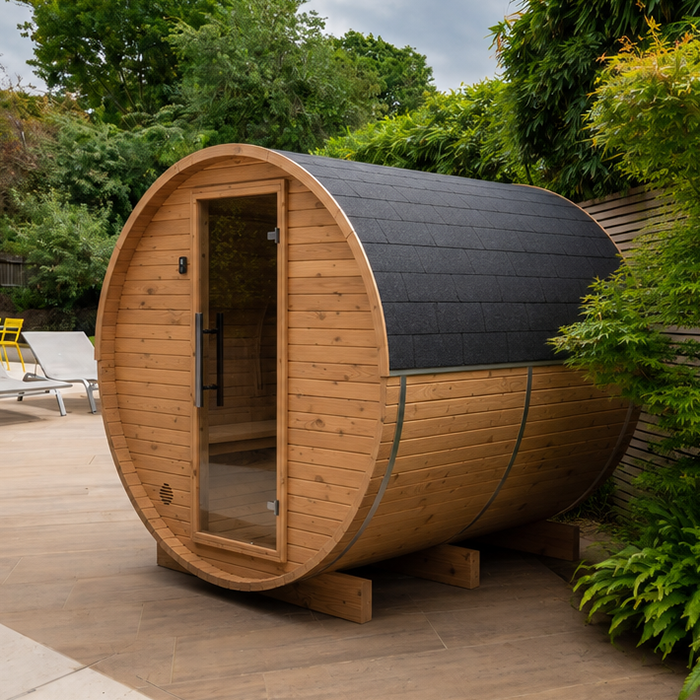
Check the proposed site and delivery access
Measure the proposed position and note the ground surface, slope, drainage and nearby trees or structures. Observe the site at different times if changing shade, standing water or access conditions could affect how the area is used. Think about where rainwater naturally runs after a heavy shower and whether routine access would remain comfortable when the ground is wet. Note fixed features that cannot be moved, such as boundary walls, service points, established trees or outdoor taps, because these can limit both the final position and the working space around it. Leave the question of exact clearances to the manufacturer’s instructions and a qualified installer rather than applying a general distance. The site also needs to allow access for routine cleaning and maintenance, so consider whether a fence, planting or another building could obstruct the areas that need to remain accessible. Take photographs from several angles and make a simple site sketch; both can help the supplier and installer spot questions that are not obvious from a product image.
Check the route for delivery as well as the space where the sauna will stand. Measure gates, paths, turns and overhead obstructions, then ask the supplier about the packaged dimensions, unloading arrangements and any access limits for the specific order. A listing such as Thermowood Barrel Sauna N 250 is only a candidate name; request confirmed dimensions and delivery information rather than reading them into the model number. Also verify the door position and the space needed around the entrance from the product documentation. These checks can affect which site is practical before you commit.
Agree on the base and installation responsibilities
Ask the manufacturer what type of support or base the sauna requires and whether there are site-preparation instructions for the model you are considering. Do not assume that every property needs the same foundation. If the proposed position is sloped, has uncertain ground conditions or is on a deck or other structure, ask a suitably qualified professional to assess whether it can support the planned installation. Avoid relying on an improvised calculation or advice intended for a different cabin; the supplier’s requirements and the conditions on your site both matter.
Write down who will prepare the base, assemble the cabin, supply and fit the heater, and install the flue. Confirm who checks the complete arrangement against the relevant manufacturer instructions, particularly if several contractors are involved. It is useful to establish the order of work as well: site preparation, delivery, assembly and heating installation can depend on one another. Ask who will inspect the site before work starts, who should be told if the actual conditions differ from the plan, and whether any work must wait for another contractor. For example, Thermowood Barrel Sauna LC 260 identifies a sauna listing, not the division of work or a confirmed installation plan. Ask the supplier and installer to name the person responsible for coordinating those details. If local approvals or property requirements may apply, ask a qualified local professional what needs to be considered before work begins.
Compare the layout with how you will use the sauna
Use a dimensioned plan to compare cabin layouts rather than relying on a product photograph. Check the internal arrangement, bench positions, entrance and the space required to open the door and move around it. Consider whether the space suits the number of people who will normally use it and whether there is room for the way you prefer to sit or change. Ask for confirmed internal and external measurements; a model name, image or description is not a substitute for a drawing. The layout also needs to work with the heater’s position and the manufacturer’s installation requirements.
Think through the practical route for loading wood, removing ash and accessing the equipment for cleaning or maintenance. The selected heater may have specific access and servicing needs, so ask the supplier and installer how those fit with the cabin layout. A name such as Thermowood Barrel Sauna HCF 300 does not tell you where a heater or its loading door can be positioned. Ask for the exact plan and confirm whether your preferred arrangement is supported. Include space for wood storage in your site plan, and have the installer advise on a suitable location rather than placing it wherever there happens to be room.
Compare the complete quotation, not just the cabin price
Request an itemised quotation so you can compare like with like. It should identify the sauna, heater and flue system being priced, then distinguish supply from delivery, unloading, assembly, base preparation and installation. Ask whether any site work or additional flue components are excluded, and whether the quoted arrangement depends on a site assessment. If one supplier offers a package and another prices the cabin and heater separately, compare what each option actually covers rather than assuming the package includes every part of the finished installation.
Keep the exact product and component names in the paperwork. The listing Thermowood Barrel Sauna LCF 300 can identify the sauna option being discussed, but it does not establish a price, heater inclusion or installation scope. Ask each supplier to state the exact items and services included, alongside anything you would need to arrange elsewhere. If the proposed flue route or site changes the work required, request an updated scope before making a commitment. A detailed quotation helps you see whether an apparently lower cabin price leaves significant parts of the plan unpriced.
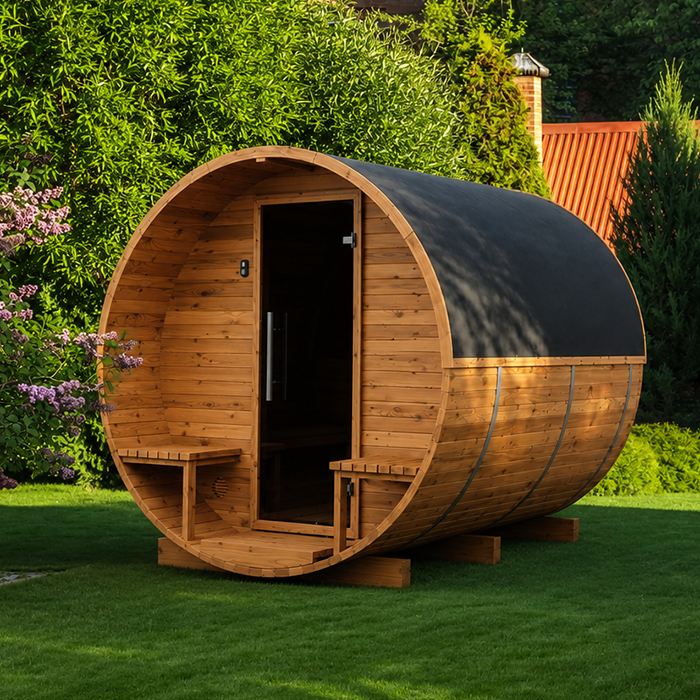
Confirm delivery, handover and maintenance details
Before ordering, confirm how and where delivery will take place, what access the delivery team needs and who is responsible for unloading. Ask whether the sauna and heating components arrive together or separately, and what to do if the site is not ready for all items at once. Agree on a contact person who can answer access questions on the day, and make sure gates, paths and the intended unloading area are available when required. Consider where components can be kept temporarily if assembly cannot begin immediately, without assuming that packaging is weatherproof or suitable for long-term storage. If packaging or component dimensions matter for getting through a gate or along a path, obtain the figures from the supplier. Do not assume that a delivery arrangement for another model or property will suit yours; match the details to your route and the exact order.
Ask what documentation and handover information will be provided for the selected heater and flue. Check that the documents identify the equipment actually supplied, rather than relying on generic brochures or information for a similar model. You should be able to find the manufacturer’s guidance on permitted fuel, operation, cleaning and maintenance, including any recommended inspection schedule for the flue. Confirm how to obtain replacement parts and what written warranty terms apply to the specific products and installation. Do not assume that separate equipment or independently arranged installation has the same terms as a package. Getting these answers before ordering helps you understand the ongoing responsibilities as well as the initial setup.
Get the complete specification in writing before ordering
Bring the decision together in one document: the exact sauna model, its confirmed dimensions and layout, the exact heater, the proposed flue system and route, and the supplier’s list of inclusions and exclusions. Add your site sketch, photographs, access measurements and any foundation information requested by the supplier or installer. Record the date of each confirmation and make sure later changes to the model, heater, position or route are reflected in the current version. This avoids treating an early estimate or verbal discussion as though it were the agreed arrangement. Ask them to confirm that the heater and flue are suitable for the selected cabin and proposed location. Keeping the responses with the quotation makes it easier to resolve differences between a product page, a sales discussion and an installation plan.
If the heater match, route, support requirements or division of work is still unclear, pause and have the relevant supplier or qualified professional address it before committing to the order. Ask a qualified local professional whether any local approvals or property-specific requirements need attention. Once the unresolved points are settled, compare the complete scopes and choose the option that fits your site and routine. A clear specification gives everyone involved the same basis for supplying and installing the wood-burning sauna.
Frequently asked questions
How do I choose a suitable wood-burning heater?
Use the heater manufacturer’s stated sauna range or sizing method, with the dimensions and design details it requests for the exact cabin. Ask the supplier to confirm the pairing in writing, then have a qualified installer assess the site. Do not rely on a model number, external dimensions alone or a guess based on another sauna.
Does a sauna listing always include the heater and flue?
No. A listing may describe the cabin only or a package with selected heating items; inclusions vary. Check the exact product information and quotation for the heater model, flue components, connections, delivery and installation. Ask for each item to be marked as included, optional or excluded.
Can I route a flue through any available roof?
Not automatically. The heater, flue, cabin and nearby roof or wall need to be assessed together, including the manufacturer’s clearance instructions and the route’s relationship to openings or other structures. Have a qualified installer assess the exact site; do not rely on a generic distance or assume a roofed area is suitable.
What should an installation quotation include?
Ask for separate, named line items for the sauna, heater, flue system and connection components, plus delivery, unloading, base preparation, assembly, professional installation and any site work. The quotation should state exclusions and who confirms compatibility, so you can compare complete scopes rather than cabin prices alone.
What information should I provide before ordering?
Share the exact cabin option, a site sketch, measurements and photos, the proposed position, foundation information and the delivery access route. Include heater details if you have selected one, and note any planned roof or wall penetrations. The supplier and installer can then identify missing information before confirming the order.
A wood-burning sauna purchase is settled when the cabin, heater, flue, site and responsibilities are documented as one workable plan. If a model appeals but its heater match or route is still unknown, keep that as an open question until the supplier and a qualified installer can confirm the arrangement for your location. Clear, complete details also make quotations easier to compare and help avoid unanswered installation questions after the order is placed.
