
Buying a Family Sauna: How to Choose the Right Seating Capacity
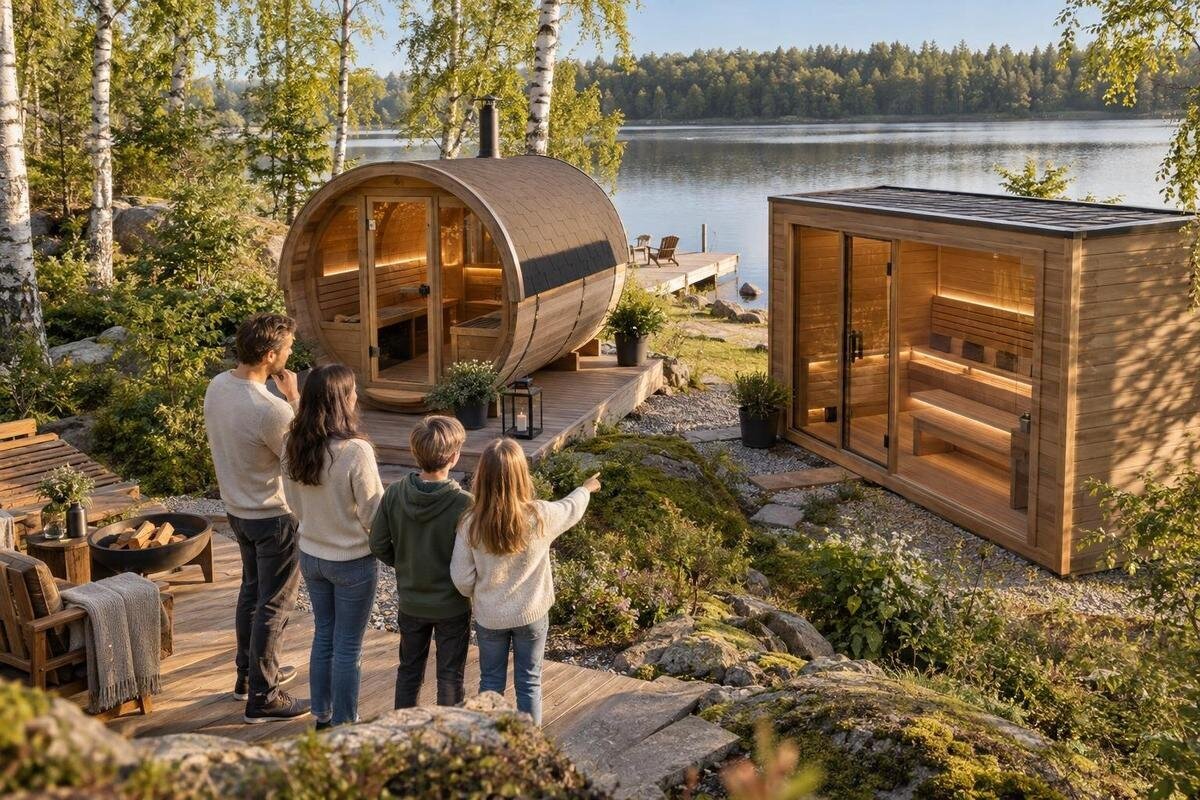
Sauna buying guide
Choosing a family sauna is less about counting everyone in your household than deciding how many people will use it together. A model that suits a quiet evening for two may feel too tight when the whole household joins, while sizing for a once-a-year gathering can use more of your available space than your routine warrants. Before you buy a family sauna, note the usual group, the largest group you realistically expect and the room available for the sauna itself. Then weigh any stated seating capacity against interior bench dimensions, the arrangement of the seats and the space needed to enter and sit down. This guide helps you compare those details without treating a model name or headline number as a comfort guarantee.
01
Count who will use the sauna at the same time
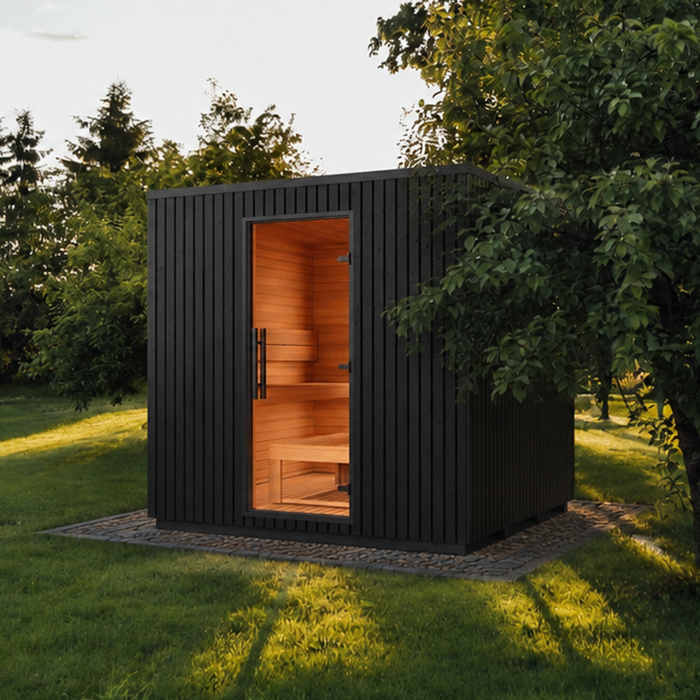
Begin with simultaneous use, not the number of people who live in the home. If a household of five usually uses the sauna in pairs, its everyday requirement differs from a household where all five prefer to sit together. Count each adult and child likely to occupy a seat at the same time; do not assume that a child takes no space or that everybody will always join. Use ordinary sessions as your baseline: how many people are likely to go in together on a typical evening or weekend? That practical number is more useful than the household total, because sauna seating capacity is about people sharing the interior at one time.
Write down the number you expect most often and a realistic maximum. Keep both figures beside the models you compare, so an occasional gathering does not quietly become your everyday requirement. On the Thermowood Barrel Sauna S 140 product page, look for any stated occupancy, seating layout and internal measurements; if a detail is not given, ask before comparing. The name itself does not identify how many people the sauna seats. If your household's routine changes from day to day, decide whether you are happy to take turns or want everyone to share one session. That distinction can change the capacity you need without making the choice depend on an unusually large gathering.
Separate regular use from occasional peak use
Your maximum group matters, but it should be a realistic peak rather than every person who might possibly visit in a year. Separate regular users from occasional guests and consider how often those guests would join a session. If visitors come frequently and usually use the sauna with you, include that pattern in your comparison. If a larger group is a rare holiday exception, decide whether you would rather have two rounds, take turns or make room for everyone at once. There is no universal rule that the highest capacity is best; the trade-off depends on how often you expect all the seats to be used and how much space you are prepared to set aside.
A useful comparison has two figures: the group you expect most often and the largest group you want to accommodate on a plausible occasion. When reviewing the Thermowood Barrel Sauna HC150 listing, compare any stated capacity with those figures rather than the model code. If a listing gives a range or uses wording that is unclear, ask what arrangement it assumes, including whether the count refers to seated users in the supplied layout. A clear answer for the exact configuration helps you decide whether a larger capacity is worth considering or whether occasional users can take turns.
02
Read the stated capacity with care
A stated number of seats is a starting point, not a complete description of comfort. It may indicate the intended occupancy, but does not by itself show how much bench space each person has, how the seats are arranged or whether everyone can sit in the way they prefer. Compare the capacity with an internal seating plan and its measurements. A long bench and a divided seating arrangement can feel different even if a headline number is the same. Do not calculate your own capacity by dividing a bench length into equal portions unless the manufacturer supports that interpretation. If the product information is unclear, ask for the usable bench measurements and the intended arrangement.
Distinguish the stated seating capacity from the number of people who might physically squeeze inside. Floor area that is not a bench does not automatically provide a comfortable seat, and the space beside an entrance may be needed for access. On the Thermowood Barrel Sauna HC 225 product page, check whether available information distinguishes interior from exterior dimensions and shows the seating arrangement. Do not infer either from the model name. For any stated capacity, consider whether the intended users can sit without blocking the entrance or taking another person's place. If the figure is unexplained, treat that as a question to resolve before purchase rather than assuming it will suit your group.
Consider who needs to sit comfortably
Think about the people who will use the sauna, not only their number. A family may include adults, children and teenagers with different heights, builds and preferred ways of sitting. The same nominal seat can feel generous to one group and close to another. Consider whether everyone is happy to sit upright, whether some people prefer room to shift position, and whether a parent expects to sit beside a child. If anyone likes to stretch their legs, that takes a different amount of bench space than sitting upright. These are household preferences, not universal dimensions, so there is no reliable capacity multiplier to apply. Compare specific needs with the model's actual bench drawing or ask the seller to clarify the usable area.
A paper plan can make the layout easier to picture: use the manufacturer's drawing and measurements to mark the benches and likely places to sit. Avoid sketching from the outside length alone, since it may not represent the usable interior. You can assess the Thermowood Barrel Sauna N 210 listing in the same way; its name does not state how many adults or children it seats. If two people would share a section of bench, make that a considered choice rather than counting them without checking the available space. The useful question is whether the intended group can sit as it prefers, not whether a theoretical headcount can be fitted into the cabin.
03
Compare the internal bench dimensions
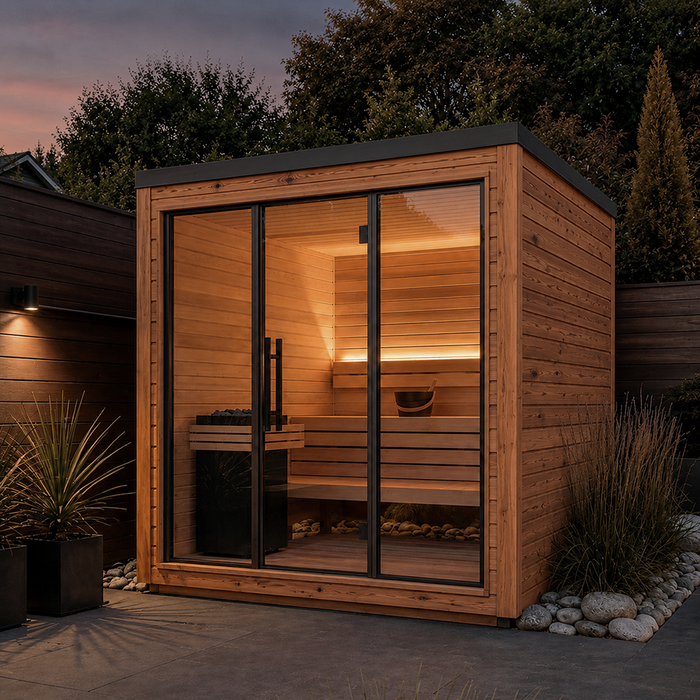
Use interior dimensions to judge seating and exterior dimensions to judge fit. Measurements for a whole cabin do not tell you how much of the interior becomes bench space: the shape of the cabin, walls and entrance can affect the usable layout. Look for a dimensioned plan that labels the internal area and benches, rather than relying on a single length or footprint figure. Bench length and depth help you compare the actual seating area. Where only outside measurements are available, do not assume that an equivalent amount of space is available inside. Ask the seller for internal measurements before deciding that two cabins with similar footprints offer similar seating.
Record the internal seating dimensions, bench positions and complete external measurements for each option. Compare them with the space you can genuinely set aside, including room to approach the entrance and get to the seats. On the Thermowood Barrel Sauna N 250 product page, check for published measurements and a plan; do not infer size or capacity from the model code. If a useful measurement is missing, ask for it before you make a shortlist. The aim is not to maximise every centimetre, but to ensure the seating capacity you are considering can be used within the interior the product actually provides.
Check how the seating layout uses the available space
Bench arrangements can put people in different positions and affect how easily they sit together. A single bench, stepped benches or seating that turns around a corner are possible layouts to compare, not features to assume about a particular model. Check whether the intended arrangement lets each user sit with enough room to settle and move into position, and whether one person must pass others to take a seat. Consider what your household would naturally prefer: sitting side by side, facing the same direction or having a little separation. A product photograph may show only one angle, so a plan with measurements is more useful for understanding the layout.
If a model has more than one bench level, confirm what the stated capacity refers to and whether the manufacturer counts each level as regular seating. Do not add possible occupants together without clear information about the intended arrangement. Check whether corners, gaps or backrests affect the usable bench area. The Thermowood Barrel Sauna LC 260 listing can be compared against its seating plan if one is available; do not assume a layout from its name. Also consider how people will get in and out without making others move each time. The most useful arrangement is one that works for your group, not necessarily the one with the greatest number of separate bench sections.
04
Match the sauna size to its heating specification
Do not choose a capacity without checking the heating specification for that particular sauna. Capacity describes the intended number of users; the heater requirement relates to the cabin and its configuration. A larger interior may have different heating requirements from a smaller one, so do not estimate suitability from a seat count, photograph or model code. Look for the heater type supplied or recommended and the compatible room volume stated by the manufacturer, if provided. If the information is missing, or if you plan to select a separate heater, ask the supplier or a qualified installer to confirm that it is suitable for the exact model before you buy.
Make this check part of a like-for-like comparison. Note the stated internal volume, if supplied, the heater specified for that configuration and whether it is included with the product. If the heater is an option, confirm that the selection matches the exact sauna and setup you are ordering; do not assume that a heater specified for a different cabin will be appropriate. The Thermowood Barrel Sauna HCF 300 product page should be assessed using its own documentation, if available; the model code does not reveal its volume or heating requirements. Leave installation and electrical decisions to the product instructions and an appropriately qualified professional.
Measure the site and the route to it
Once the capacity and internal layout look promising, check whether the complete sauna can be placed where you intend to use it. Compare its overall length, width and height with the available location, and include room to approach the entrance and use it comfortably. Measure the route from the delivery point to the installation position as well: gates, corners, steps or narrow passages can affect whether components can be brought through. Do not assume that a product will arrive in a particular form or fit along the route just because its assembled measurements appear suitable. Ask the seller what delivery and assembly arrangements apply to the order.
This check can prevent a mismatch between the seating you want and the space available for the whole unit. Use the Thermowood Barrel Sauna LCF 300 listing to check any confirmed dimensions and delivery details; do not infer them from the name. If the location involves a prepared base, electrical supply or other site work, confirm requirements for the exact sauna with the supplier and use qualified help where needed. This is a buying and siting check, not an installation plan: the product documentation and professionals involved should establish what the site needs.
05
Compare model details and order terms consistently
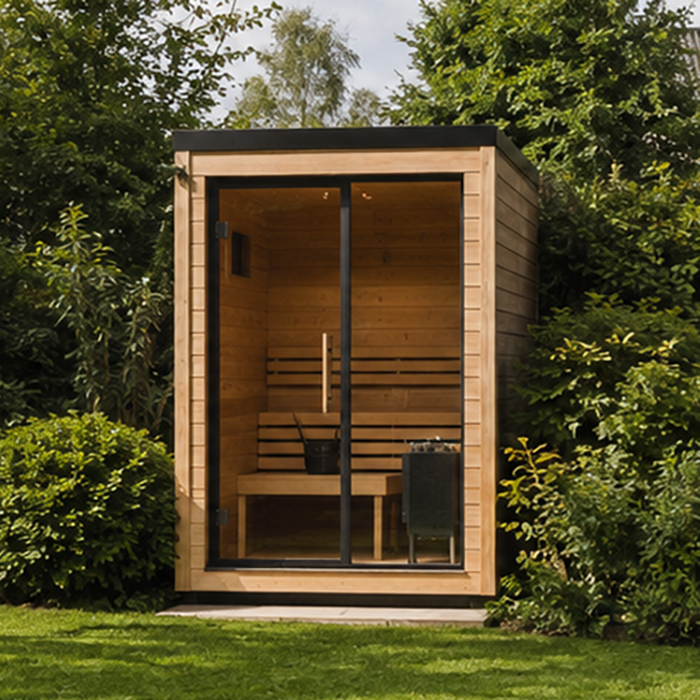
Keep a simple comparison record for each shortlisted model: stated occupancy, internal bench measurements, seating arrangement, exterior dimensions, heater details and included components. Write not stated when you cannot find a detail instead of estimating it from a photograph, product code or model family. That makes gaps visible when you contact the seller and prevents you from comparing one model's confirmed information with another model's assumptions. If a capacity is given without a plan, ask what the figure means in practice. If a plan is shown without an occupancy figure, ask whether the supplier recommends a maximum number for that configuration.
Before ordering, confirm that the model name, selected options and product documents refer to the same configuration. Check what is included, whether a heater or accessories must be selected separately, what delivery covers and what preparation or assembly the buyer needs to arrange. Review the current price and terms at the point of purchase; this guide cannot establish an offer or the contents of a particular order. Ask about details that would affect the seating plan, site preparation or total cost, and keep the answers with your order information. This helps ensure the product you buy matches the configuration you compared.
Choose capacity for the way your family will use it
A larger sauna can make shared sessions easier if the extra seats will be used often, but it may require more space and a heating setup specified for that model. A smaller option can suit a household that is happy to take turns, provided its actual seating plan supports the number of people using it together. Weigh the frequency of larger gatherings against the footprint and the practical compromises of having separate sessions. There is no single sauna size for families: the right choice depends on the people who will use it and the space you can provide. You can also consider likely household changes, while avoiding an oversized choice based only on a distant possibility.
Make the final decision by checking three things together: who is likely to sit inside at once, whether the usable benches suit those people, and whether the complete sauna fits the location and its specified heating arrangement. If any point is unresolved, pause before ordering rather than compensating with a bigger model or guessing from a photograph. Capacity is useful only when it translates into practical seating for your household. A deliberate balance between regular use, occasional demand and available space gives you a clearer basis for choosing than the household headcount alone.
Frequently asked questions
How should I choose seating capacity for a family sauna?
Base it on the number of people likely to use the sauna together during a typical session. Keep your realistic busiest group in mind as well, then compare both numbers with the stated capacity and usable bench layout.
Should sauna capacity equal the number of people in my household?
Not necessarily. Capacity is about how many people will sit inside at the same time. If family members usually use the sauna in pairs or take turns, the household headcount may be higher than the capacity you need for regular use.
Does a four-person capacity guarantee four adults will sit comfortably?
A capacity figure alone cannot show how much bench space each person has or how the seats are arranged. Check the product's internal dimensions and seating plan, and ask the seller what the stated figure means for the exact configuration.
Is a larger sauna always better for occasional guests?
No. Consider how often guests will join a session and whether taking turns is acceptable. A larger option may need more space and a different heating specification, so compare those requirements with how often you expect to use the extra seats.
What should I confirm before ordering a family sauna?
Confirm the capacity and what it means, the internal bench dimensions and layout, the complete unit's external measurements, and the heating specification for the exact model. Also check what is included, delivery arrangements and any site preparation or assembly requirements.
A family sauna's useful capacity is the capacity your household can use comfortably and often, not a number chosen from the total household count. Put simultaneous users, seat layout, interior dimensions and the product's stated heating and site requirements side by side. Keep the occasional maximum in view, but let regular use guide the final trade-off. If a detail is unclear, get it confirmed for the exact configuration before committing. A clear understanding of who fits, where the benches are and what the order includes is more reliable than relying on a family label or product code.
