
Buying a Sauna for Cold Winters: What to Ask About Heat-Up and Heat Loss
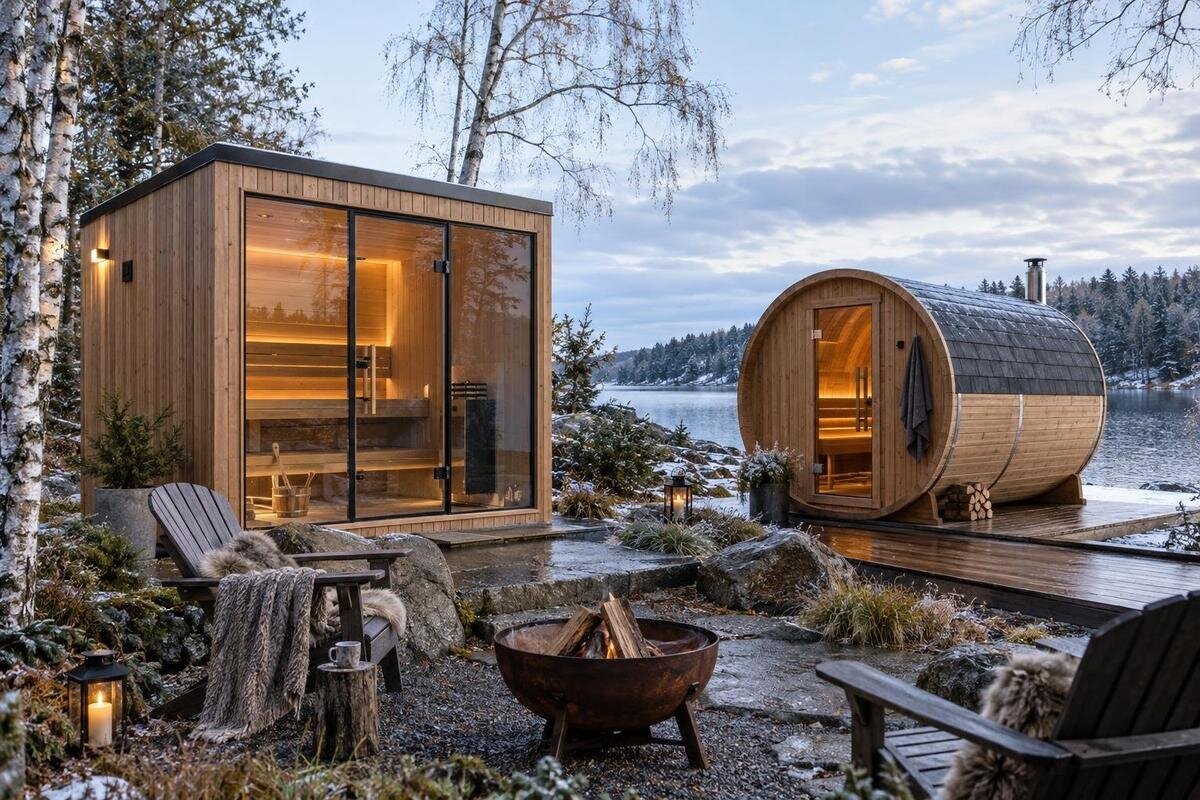
SAUNA BUYING GUIDE
Buying a sauna for cold winters means asking more than whether a listing gives a warm-up time. The figure is meaningful only when you know the starting conditions, target, sauna size and heater arrangement behind it. Heat loss also depends on the whole enclosure and how it is used, not just on a statement about wall insulation. This guide sets out what to ask, what to compare and what needs a written answer before you place an order. It focuses on outdoor cold-weather use without assuming that a particular model or construction will suit every site.
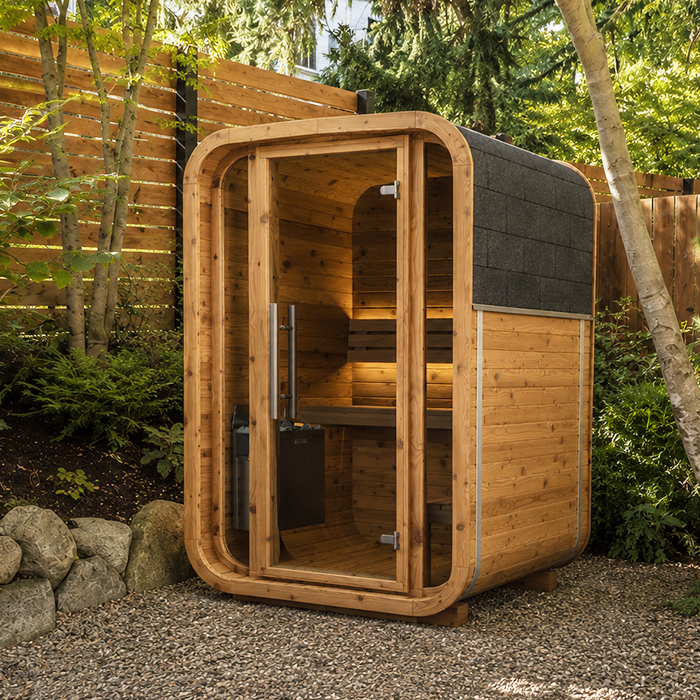
How winter conditions affect heat-up
Cold conditions change how a sauna behaves before anyone steps inside. If the cabin has been standing in low outdoor temperatures, the heater must bring the air and surrounding surfaces towards the intended operating condition; heat continues to pass through the enclosure at the same time. A larger difference between inside and outside temperatures can increase the heat that escapes, while wind and openings can add to the demand. A warmer starting point, a sheltered installation or a smaller heated volume may produce a different result from a cold, exposed start, even when the same headline warm-up time appears online. The time is not a fixed promise attached to a model name. Ask which conditions the seller used and whether the estimate reflects a winter cold start at your property.
Describe the location and use you are planning: whether the sauna will be indoors or outdoors, what cold conditions are realistic, how exposed it is to wind, and whether you expect to heat it from cold or start after it has already been used. These details help a supplier explain the estimate; they do not give you an exact calculation on their own. Keep the Thermowood barrel sauna S 140 page as one option to assess, not as evidence of winter performance. Its name does not establish insulation, heat-up time or heat retention, so those points need product-specific answers.
Ask how the stated heat-up time was measured
When a product page or sales adviser gives a sauna heat-up time, ask for the test conditions before comparing it. Find out whether the clock starts with the cabin at outdoor temperature, a sheltered ambient temperature or after a partial warm-up; ask what target condition is meant and how it was measured. Check whether the figure applies to the exact sauna size and heater being quoted, and whether it describes the air only or a cabin considered ready for use. Ask if normal ventilation is included and whether doors stay closed during the test. If these points are absent, treat the number as an estimate rather than a promise. A figure without a starting point and endpoint cannot tell you whether it matches your plans.
Ask the supplier to put the assumptions in writing, including the heater, internal dimensions or volume, ambient temperature, ventilation arrangement and any relevant glazing or other heat-losing surfaces. Clarify how much variation to expect in colder conditions and whether the estimate includes time for the sauna’s interior surfaces to warm, not just the air. The Thermowood barrel sauna HC150 listing is one page you can inspect using that checklist; the model label alone supplies none of these performance details. Ask whether openings during warm-up are excluded or treated as ordinary use. If comparable assumptions are not available for another option, record the missing information rather than filling the gap with a guess.
Compare sauna size and heat-up claims on equal terms
Comparing headline heat-up times only works if the saunas being warmed are similar in size and configuration. Ask for the internal measurements and the volume used for the heater recommendation, not only the overall footprint and seating capacity. Ceiling height, benches and any divided area affect the space to heat; glass, doors or other non-insulated surfaces may also alter demand. An advertised maximum occupant count is separate from interior volume and heater requirements. Two listings can show similar warm-up claims while referring to different rooms, heater configurations or starting conditions, so compare the actual supplied setup rather than assuming that the shorter published time belongs to the more efficient choice.
Ask whether each estimate is for the complete sauna with its specified heater, and whether the calculation accounts for glazing or other surfaces that differ from insulated panels. If a supplier recommends a heater, find out what room measurements and cold-weather conditions that advice assumes. Use the Thermowood barrel sauna HC 225 page as a prompt to locate dimensions and heater information, not as proof of either from the name. Where a supplier cannot provide a like-for-like estimate, note that limitation and compare confirmed data instead of ranking options by headline times. Check the interior space against the way you expect people to sit and move in and out.
Find out what is insulated and where heat escapes
Insulation can reduce heat transfer, but the word on its own is too broad to predict winter performance. Ask what is used in the walls, roof and floor, and whether the quoted description applies to the entire enclosure or only some parts. A material name or solid-looking outer wall does not establish how well joints, door seals, frames or glazing retain heat. If a seller provides a thermal rating, ask whether it applies to an individual material or the complete sauna, and what conditions were used to determine it. This makes it easier to distinguish a product-specific detail from a general claim about construction.
Ask how the sauna’s required ventilation is accounted for in any heat-up or heat-loss information; airflow is part of the design, not a gap to block in an attempt to keep heat in. Find out whether insulation and sealing details vary between configurations, and what the manufacturer recommends for checking or maintaining them. The Thermowood barrel sauna N 210 listing can be one item in your comparison, but its name does not confirm insulation or heat retention. If the product information describes only one component, ask what is known about the rest of the enclosure before treating the claim as a complete picture.
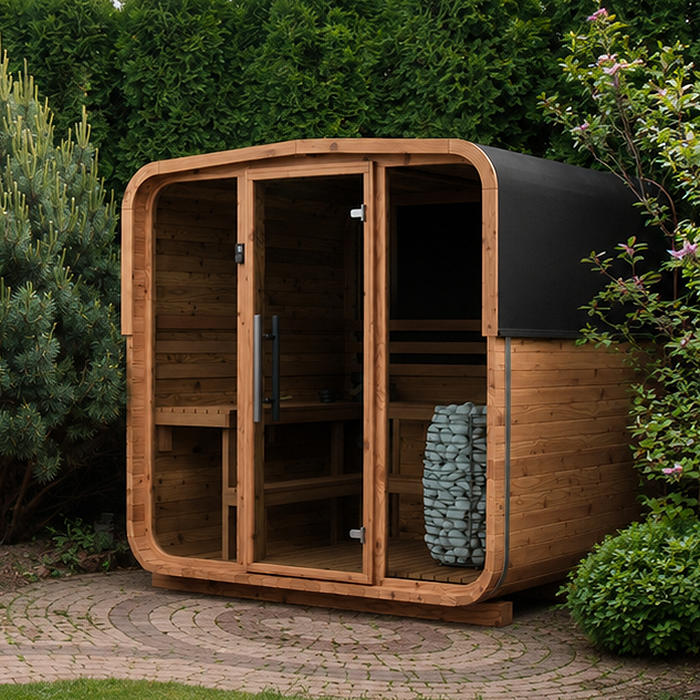
Check the proposed outdoor site
An outdoor sauna’s performance depends partly on conditions at its site. Record exposure to wind, the surface it will stand on, nearby shelter and the route people will use to enter it in winter. Wind can increase the effect of air leakage, while an unprepared or damp location may affect installation; neither point can be solved by assuming a listed heat-up time applies everywhere. Ask the maker or seller whether the exact model is intended for your proposed outdoor position and what site conditions it requires. Do not infer suitability for an exposed setting from a name or photograph.
Plan access for delivery and installation, space for doors to open, and any access needed to maintain the sauna; these can be awkward to arrange after the base is ready. A sheltered position may reduce exposure, but it does not replace the manufacturer’s guidance or make an unsuitable structure suitable. For a product page such as the Thermowood barrel sauna N 250 page, verify the intended location and requirements for that particular model in its documentation. Consider a clear approach in wet or icy weather as well. Ask which work is excluded from the order and who is responsible for site preparation.
Confirm the heater and electrical requirements
Heat-up time depends in part on whether the heater is suited to the sauna, not simply on its advertised output. Ask the manufacturer or supplier to identify the heater recommended for the actual internal volume, glazing and insulated surfaces, and the ambient conditions behind any performance estimate. Confirm whether the heater is included, which controls are part of the quoted configuration, and whether anything else is needed to complete it. Do not compare output numbers on their own: a higher rating is not automatically right for every cabin, and it does not resolve excess heat loss.
Before ordering, have a qualified electrician assess the supply and installation requirements for the exact heater and controls; a performance figure does not establish that the existing supply is suitable. If the sauna and heater are sold separately, get written confirmation of compatibility from the supplier or manufacturers before committing. The Thermowood barrel sauna LC 260 listing can serve as a page to check for a stated heater package and installation details, but the model name does not verify either. If dimensions or surfaces change after a quote, ask whether the heater recommendation needs to be revised, and clarify who is responsible for installation.
Consider how heat-up fits your planned use
How you expect to use the sauna affects how useful a quoted heat-up time will be. A cold start before a short planned visit is different from keeping a heated cabin ready for a longer period. Ask whether the figure describes the first warm-up only or includes time to recover after routine door openings; entry, exits and ventilation are part of real use, not flaws to be eliminated. If several people will use it together, compare the stated seating capacity with the actual interior dimensions and the way people will move in and out. This helps you judge whether the estimate matches the sequence you have in mind.
Ask how the stated time changes under normal use rather than trying to compensate for missing data by choosing a larger sauna or heater. Clarify whether the estimate assumes one person, several users or no openings at all; any claim should explain its assumptions. When using the Thermowood barrel sauna HCF 300 page in a comparison, check its exact configuration and stated capacity instead of reading details into the product code. Keep cold-start time separate from recovery after an opening, since they answer different questions. A realistic answer may be a range rather than one precise time; note the conditions behind it.
Compare the full purchase and running costs
The purchase price is only one part of preparing for winter use. Get an itemised quote showing what is included with the sauna and heater, and what is additional: delivery, assembly, base or ground work, electrical connection, controls and site preparation. Sellers may package these items differently, so compare complete written totals rather than matching headline prices. Confirm who supplies each component and who checks that the planned site is ready. Do not assume that a product photograph or short model description tells you which equipment or installation work comes with an order.
Ask for a running-cost estimate only if its assumptions are clear. You need the heater’s stated electrical input, likely heating period, pattern of use and applicable electricity tariff; a simple estimate based on a short warm-up may be misleading for repeated cold starts. The Thermowood barrel sauna LCF 300 listing is one option to check for a heater specification, but do not infer consumption from its code. Compare estimates using the same use pattern, and keep one-off installation costs separate from energy costs. Include any documented maintenance requirements in your ownership budget rather than guessing at future expenses.
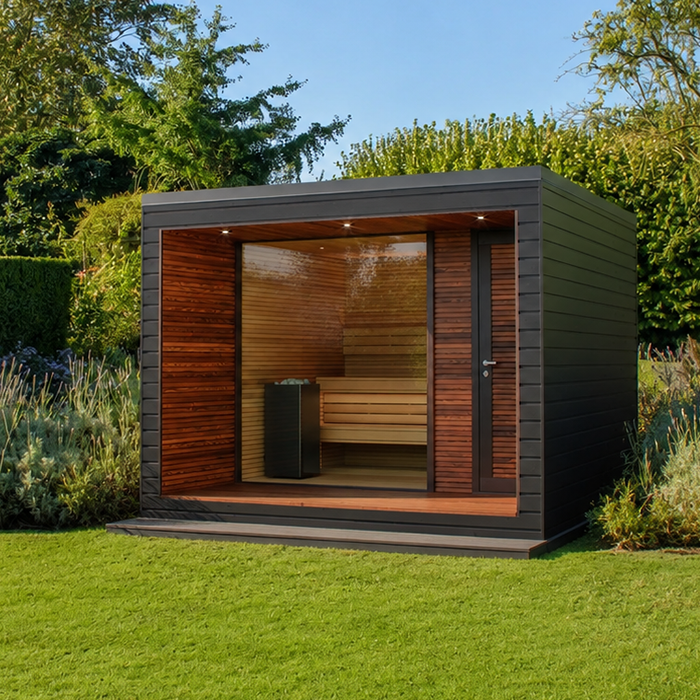
Get maintenance and warranty conditions in writing
Cold-weather buying also means checking how the sauna should be maintained in the setting you have chosen. Ask what routine care the manufacturer specifies for exterior surfaces, joints, seals, doors and any glazing, and whether the advice changes with exposure. Do not assume that a material name or a general description of weather resistance answers these questions; ask for written instructions that apply to the model and finish being quoted. Clear guidance helps you consider ownership effort as well as heat retention, since gaps or damaged seals can affect the enclosure over time. Avoid applying an unapproved coating or changing a seal simply to chase better warmth.
Read the product-specific warranty and its exclusions before ordering. Ask what it covers, which conditions must be met, and whether outdoor installation, site preparation, heater use or maintenance affect the terms. Do not assume that the same conditions apply to every component or configuration. It is also useful to know what after-sales support is available for technical questions and who handles them. Written answers let you compare the actual terms for each option without treating a verbal assurance as a substitute for the product documentation.
Make a side-by-side record before ordering
Make a comparison record with one line for each cold-start assumption, stated time and endpoint, internal volume, heater package, insulation by component, ventilation, site requirements, included work and energy-cost assumptions. Mark each item as documented, estimated or not supplied. That distinction stops a polished sales phrase from carrying the same weight as a measured specification. Ask for a revised written answer when two options use different conditions; if a detail cannot be confirmed, treat it as uncertainty in the purchase rather than quietly assuming the more favourable interpretation.
Apply the record to your own priorities: enough usable space, a cold-weather heat-up you can accept, a documented approach to heat loss, a site that meets the manufacturer’s requirements and a setup you can arrange. A shorter time may not be the better choice if it relies on different conditions, while an insulation claim does not settle heater suitability or installation. If an option lacks information that matters most to you, decide explicitly whether that gap is acceptable. Before ordering, verify the exact model and configuration on the quote and keep the answers with the order paperwork.
Frequently asked questions
Will a sauna always take longer to heat in winter?
A colder starting point can mean more heat is needed before the sauna reaches its intended condition, but there is no single heat-up time for every model or site. The heater, internal volume, insulation, ventilation and exposure all matter. Ask for an estimate based on conditions like yours.
What should a stated heat-up time include?
Ask what temperature the sauna starts at, what endpoint the estimate describes, and which model size and heater it applies to. Check whether normal ventilation and the time needed to warm the interior surfaces are included, and whether the figure assumes the doors remain closed.
Does a timber exterior mean the sauna is insulated?
No. A material name or description of the outer wall does not explain the insulation across the whole sauna. Ask what is used in the walls, roof and floor, how doors and glazing are treated, and how ventilation is accounted for.
Should I choose a more powerful heater for winter?
Not without model-specific advice. Ask the supplier to match the heater to the sauna’s internal volume, construction and heat-losing surfaces. Have a qualified electrician assess the supply and installation requirements for the exact heater and controls.
Can I work out running costs from the heat-up time?
Not from that figure alone. An estimate needs the heater’s electrical input, likely heating period, pattern of use and applicable electricity tariff. Ask the supplier to state the assumptions behind any running-cost estimate, and compare options using the same use pattern.
A winter-suitable choice is not necessarily the sauna with the boldest insulation claim or shortest heat-up time. It is the option whose dimensions, heater match, cold-start assumptions, construction and site requirements are explained well enough to judge against your actual conditions. If key product information is missing, leave it marked as unknown until you can decide whether the gap matters. That keeps a model label or best-case estimate from substituting for useful evidence when you weigh performance against setup and running costs.
