
Buying an Electric Outdoor Sauna: Check the Power Supply
Sauna buying guide
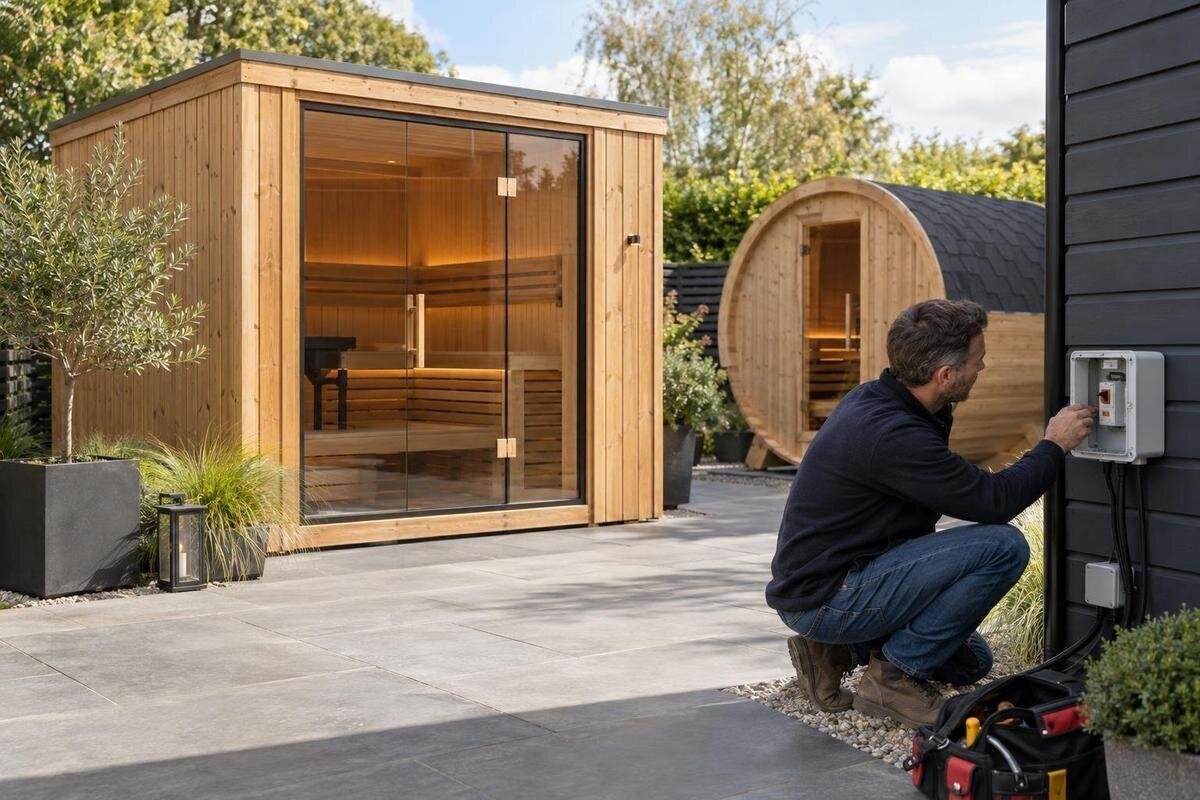
Buying an electric outdoor sauna means checking more than whether the cabin suits your garden. The heater's documented electrical requirements must be considered alongside the supply available at your property and the proposed location. The useful check is not a guess based on a model name or product photograph: it is a comparison of the exact heater configuration with your site, made with a qualified electrician. Start that conversation while shortlisting, not after ordering. This guide explains what information to gather, what to ask and how to keep the purchase decision tied to the setup you can actually support.
01
Why you should check the power supply before choosing an outdoor sauna
When buying an electric outdoor sauna, the cabin and heater cannot be treated as separate decisions. The heater's requirements, the property's electrical supply and the position you have in mind all need to align. A sauna that looks right in the garden may still call for a supply arrangement that has not been assessed. That does not make it unsuitable; it means the purchase should follow a technical check rather than an assumption. Begin with a proposed location and the exact product configuration you are considering, then ask a qualified electrician whether it is a viable option for your property.
An early check can prevent you from paying for a configuration before you know what the installation entails. The electrician may find that the existing setup could support it, that work or more information is needed, or that another documented heater option deserves consideration. The aim is to identify open questions while you still have a choice. General phrases such as 'standard domestic power' cannot substitute for the manufacturer's requirements or an assessment of the supply available at your site. A nearby socket is not proof that the heater can be connected there. The assessment is not about asking the electrician to choose your sauna; it is about checking a specific product and location. It also helps you compare candidates on practical evidence, rather than setting your heart on a cabin before knowing whether its proposed electrical configuration can be assessed for the property.
Get the heater's electrical requirements in writing
Ask the seller or manufacturer for electrical documents for the precise heater and control arrangement offered with the sauna. The information should identify the heater's exact model and state its supply requirements, such as rated input, voltage and supply type, together with any other requirements set out by the manufacturer. If the heater is optional, request documents for the option you are considering rather than a general brochure. Include any controls or related components specified for that package. The aim is to give the electrician model-specific information, not a verbal estimate or a figure copied from a different sauna.
Catalogue wording may identify a product without stating the details needed for an electrical assessment. For example, the Thermowood Barrel Sauna S 140 listing is a product identity, not proof of a heater's requirements or of what is included in a particular package. Ask for written confirmation of the sauna configuration, the heater make and model, and the relevant manufacturer documentation. If the information is unavailable, record that as an unresolved buying question. Do not fill gaps by assuming that similarly named models, photographs or cabin dimensions use the same heater. Keep copies of the documents and note which sauna option they relate to, especially if you are considering more than one version or asking for a quotation with optional equipment.
02
Have an electrician assess the property's available supply
A qualified electrician should assess the property, not just review a product label. Explain what you hope to buy, where it will stand and what other equipment is normally in use. The electrician needs to consider whether the property's existing arrangements can accommodate the proposed sauna alongside ordinary use, and what else may matter at that site. Provide the documents for the exact heater. A conversation before ordering can identify whether the proposal looks workable or whether a site visit, further assessment or additional manufacturer information is needed.
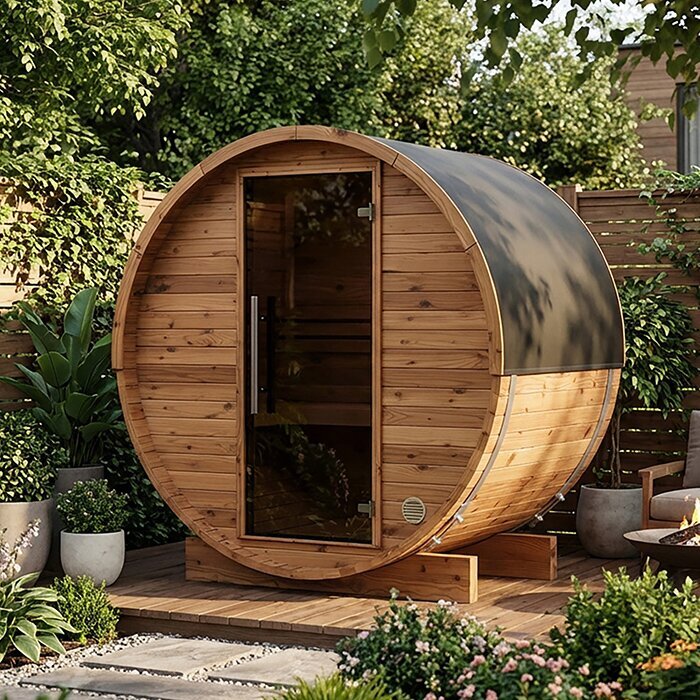
Share any information you have about the property's supply, but do not try to decide capacity yourself or make changes based on online advice. If the property also uses an inverter, battery, generator or other backup system, mention it and ask whether the proposed heater is intended to run from it; suitability depends on the equipment, not simply on the word 'backup'. A Thermowood Barrel Sauna HC150 product page can identify the candidate you mean, but it cannot replace an electrician's assessment of your supply and the heater specified for that configuration. Be clear about whether the sauna is intended for ordinary supply only or whether you expect it to be available during interruptions, as these are separate questions for the professional to consider.
Include the proposed outdoor location in the assessment
Tell the electrician where the sauna is intended to stand, how far it would be from the point where the supply could be taken, and whether the proposed route crosses areas likely to change during landscaping or other work. The location and route can affect the installation design and its scope; the electrician should determine the appropriate arrangement. A product photograph is not a site plan, and moving the sauna after an assessment can change what was reviewed. Marking the proposed position on a simple property plan, or showing it during a site visit, can make the discussion more precise.
Consider practical access for the person carrying out the work and for future inspection or servicing, while leaving the electrical design to the professional. When you compare a Thermowood Barrel Sauna HC 225 listing, pair the model identifier with the intended position and heater documents rather than assuming that any outdoor location presents the same requirements. Ask whether the site information is sufficient for the electrician's recommendation and what still needs clarification. This keeps siting and power questions connected without treating a catalogue image as an installation plan. If you are still deciding between two positions, identify both rather than presenting one as final; the electrician can explain whether either option requires further site information before a recommendation can be made.
03
Confirm what the sauna package includes
Check exactly what your order includes. A cabin listing and a complete electric-heater package may not be the same thing, so confirm whether a heater is supplied, whether controls or other components are part of the order, and whether the option you want is offered for that exact sauna. Ask for the heater's make and model in writing. Phrases such as 'heater-ready' or 'heater available' do not identify a configuration. If a component is selected separately, ask the seller or manufacturer to confirm compatibility before passing the details to the electrician.
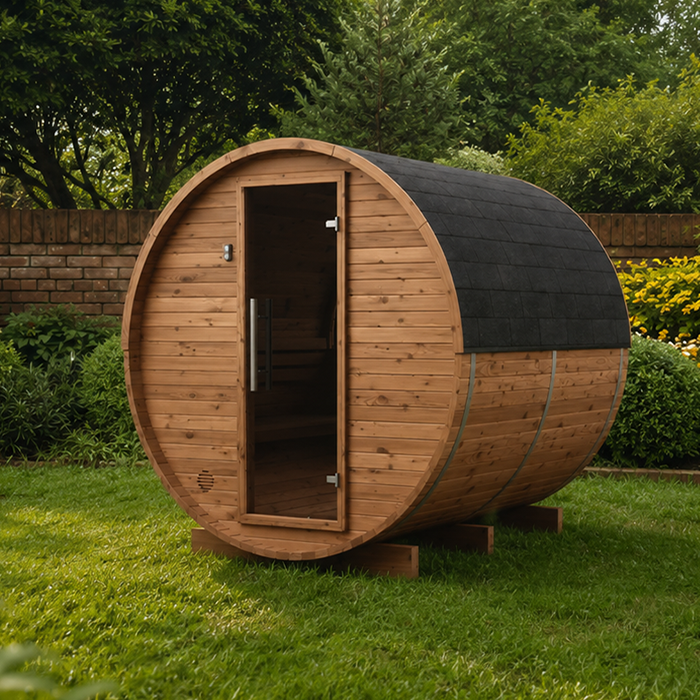
Ask which documents will accompany the package and whether the seller's description matches the current manufacturer information. If the Thermowood Barrel Sauna N 210 product page catches your eye, treat it as the starting point for those questions, not evidence that a heater is included. Clarify who supplies each component and whether the order includes any electrical work or only the sauna equipment. Clear scope helps avoid pricing one configuration while asking an electrician to assess another. The assessment is useful only when the model and options under review are stated accurately. This is particularly important where the heater or controls are selected after the cabin, because an order summary should make the final combination easy for both the seller and electrician to identify.
Compare candidates using the same electrical information
Use the same information for each candidate so the comparison stays fair. Note the exact sauna identifier, heater make and model, manufacturer-stated electrical requirements, package contents and the electrician's response for your site. Mark missing details instead of estimating them. This makes it easier to distinguish a documented difference from one that only appears in a model name or photograph. It also gives you a concise record to share with a seller if you need them to identify an option or provide a technical document.
For instance, include a Thermowood Barrel Sauna N 250 listing in the comparison only once you can identify the corresponding heater configuration; do not infer power requirements from a model code, visual size or general category label. Compare the electrician's findings as well as the product data: one candidate may look workable while another needs more information or a different assessment. Leave any incomplete option marked as unconfirmed. A consistent comparison is more useful than treating a low-detail page or informal estimate as a technical specification. Add the date and source of each document to your notes, since an old quotation or a document for another option may not describe the package you finally intend to order.
04
Allow for electrical work in your project budget
Ask the electrician to outline what work, if any, would be needed and whether their view is preliminary or based on a site assessment. Request a clear description of the scope and an estimate where appropriate. Ask what that estimate includes, and whether any assumptions or outstanding information could change it. No single installation cost can be assumed: the property, intended location and selected heater all affect what needs to be assessed. Keep the sauna price and electrical work visible as separate parts of the project until the scope is confirmed.
Do not treat an initial indication as final if the model, heater or location changes. When reviewing a Thermowood Barrel Sauna LC 260 page, ask whether the candidate's exact heater documents formed the basis of the electrician's view and what assumptions remain. That helps you understand the estimate before deciding. If the proposed work is outside your budget, pause and revisit the configuration with the seller and electrician. Do not omit work they consider necessary or substitute a heater without confirmation from the manufacturer and a fresh professional assessment. Keeping separate notes for the sauna, the electrical work and any unresolved site questions makes it easier to see which cost or decision belongs to which part of the project.
Coordinate the seller's information with the electrician's assessment
Give the seller or manufacturer and the electrician clear, complementary roles. Ask the seller to confirm what is included, identify the exact heater and provide its requirements. Ask the electrician to assess those requirements against your property's supply and proposed location. The electrician should not have to guess which product option you mean, and general reassurance from a seller cannot establish that the property's supply suits a specific heater. Share the same product details and documents with everyone involved, and keep their answers together. If a response refers to a different heater or assumed supply, ask for clarification.
A written record can be more useful than relying on a call alone. Note the exact product identifier, heater option, document version, proposed location and any conditions attached to the electrician's view. For a Thermowood Barrel Sauna HCF 300 listing, first confirm that the seller can identify the proposed electrical package; only then can the electrician assess that package. Model-specific answers reduce the chance that different people are discussing different configurations. They also make unanswered questions easier to spot without requiring you to make technical decisions yourself. When forwarding information, ask each party to flag any point that does not match their understanding, rather than assuming silence confirms the same specification.
05
Reconfirm the final specification before placing the order
Once the electrical assessment is complete, check that the final order matches it. Compare the sauna identifier, heater make and model, selected options, controls and stated electrical requirements with the documents the electrician reviewed. A change of heater, controls or package can alter the information on which the assessment was based, so do not assume that the original view automatically applies. If the seller proposes a substitute, request the new manufacturer's documentation and ask the electrician to review it before accepting the change.
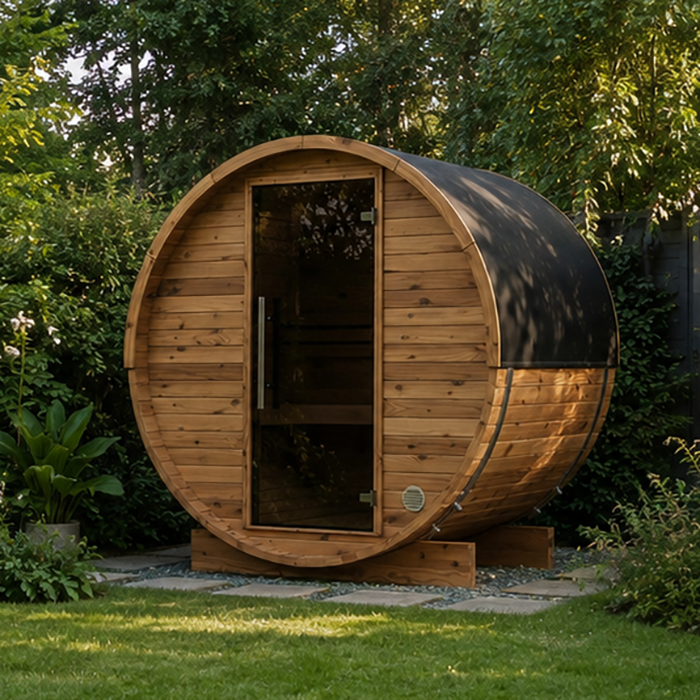
Keep the confirmed specification with your order details and installation planning, and clarify who is responsible for supplying any remaining information or arranging work. With the Thermowood Barrel Sauna LCF 300 product page, as with any model page, the name alone does not confirm the delivered configuration. Check that no unanswered item is being treated as settled simply because an order is being prepared. A final comparison can prevent a mismatch between the electrical package your electrician considered and the one you actually purchase. It is sensible to check the order acknowledgement as well as the quotation, because the document used to place the order should identify the same heater and selected options that were reviewed.
If the proposed setup cannot be supported
If the electrician says the available supply does not support the proposed configuration, pause before ordering or connecting the equipment. Ask what prevents a clear recommendation and whether more information, a different documented heater option, another proposed location or property work could change the assessment. Have the seller or manufacturer confirm any alternative configuration and provide its exact requirements for review. Do not assume that changing one detail resolves the issue; each material change should be considered on its own facts.
If no suitable arrangement can be confirmed, it may be better to delay the purchase or shortlist a candidate with documented requirements that the electrician can assess against your site. Do not try to bridge a mismatch with an improvised adaptor, extension lead or change to the heater. Leave any solution to the electrician and manufacturer. The practical buying decision is whether the complete sauna and heater configuration can be supported safely and clearly, not simply whether the cabin can be placed in the garden. A pause at this stage is useful information, not a failed purchase decision: it prevents an order being based on an arrangement that has not been confirmed for the property.
Frequently asked questions
Is a nearby outdoor socket enough to run a sauna heater?
Not necessarily. A socket's presence does not confirm that it can support the exact heater or that the connection suits the proposed installation. Give the heater's requirements and intended location to a qualified electrician and ask for a site-specific assessment before ordering.
What information should I give the electrician?
Share the exact sauna and heater identifiers, the manufacturer's electrical documents for that configuration, and the proposed position. Mention other equipment normally used at the property and any inverter, battery or generator system. The electrician can tell you whether more site or supply information is needed.
Can I rely on my backup power system for the sauna?
Do not assume that an inverter, battery or generator can run a proposed heater. The answer depends on the equipment and its documented requirements. Give the electrician details of the backup system and the exact heater, and ask them to assess the combination.
What if the product page does not name the heater?
Ask the seller or manufacturer to identify the heater and provide its current electrical documentation for the package you intend to buy. Until the configuration is clear, an electrician cannot assess the exact proposal. Keep it as an unresolved candidate rather than guessing from the sauna's name or appearance.
Can I order the sauna before arranging the electrical work?
It is wiser to get an initial assessment before committing, then confirm the final heater and options match what the electrician reviewed. If the model, heater or location changes, ask whether the new configuration needs another assessment. This helps prevent an order based on assumptions that later prove unsuitable.
A sound shortlist pairs each sauna candidate with an identified heater, current manufacturer documents and an electrician's view of the actual property and proposed location. Then you can compare the equipment and any required work without guessing from a name, photograph or general description. If a key detail is missing, the honest conclusion is that the configuration still needs checking, not that it will fit. That clarity makes the decision to order an electric outdoor sauna far more dependable.
