
Buying an Outdoor Sauna: A First-Time Buyer’s Guide
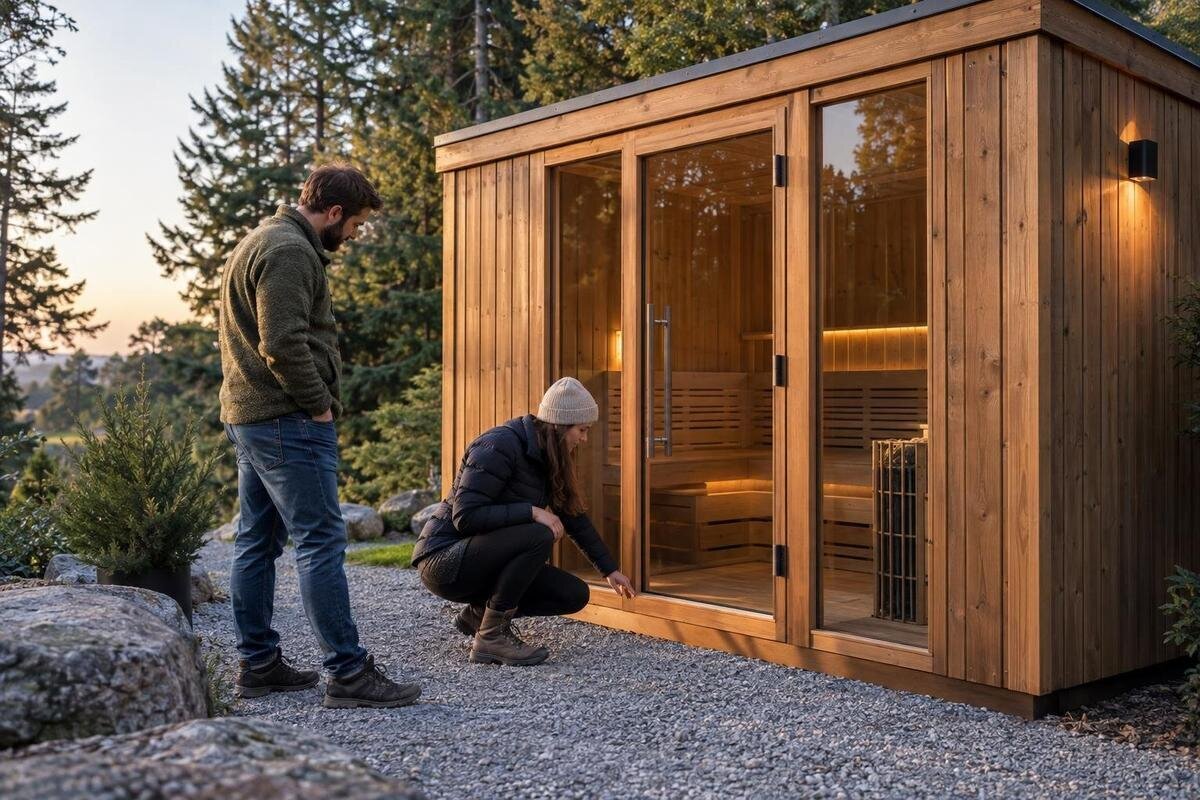
Outdoor sauna buying guide
Buying your first outdoor sauna is less about choosing an attractive shape than making several decisions work together: who will use it, how much usable room it offers, what will heat it, and what the garden site needs. This guide explains how to compare those points before you buy, including installation responsibilities and costs beyond the sauna itself. Product labels are only a starting point; documented specifications and a realistic site plan support a sound choice.
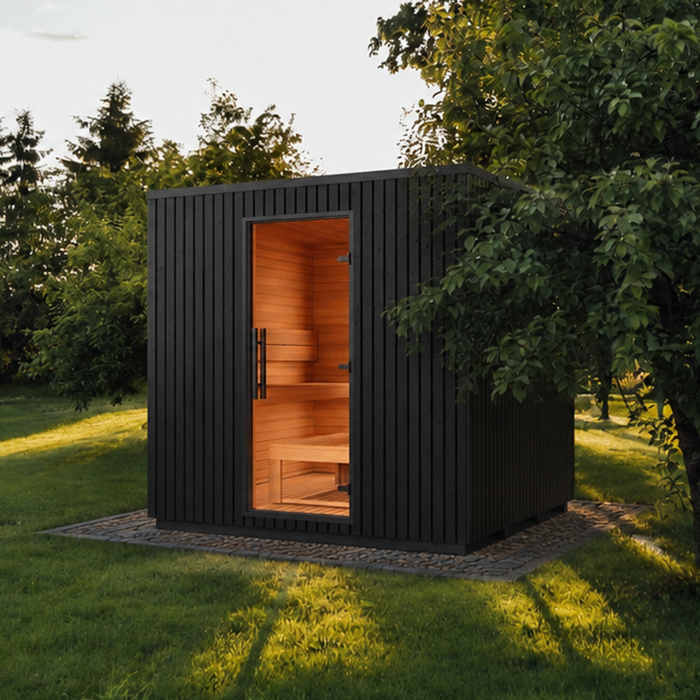
Decide how the sauna will be used
Picture an ordinary sauna session rather than an idealised weekend with every friend invited. Decide whether it will usually serve one or two people, a household or occasional groups, and how often you expect to use it. Note whether people want to sit together, stretch out or move between benches easily. Choose capacity around regular use; a very large room may add footprint and heating demand without improving most sessions. If guests are occasional, decide whether accommodating them is worth that trade-off. For a social routine, include changing or cooling-off space in the plan, not just the sauna room.
Write down the usual number of users, a realistic maximum and priorities such as longer benches or straightforward entry. Treat a stated capacity as a starting figure, not a guarantee that everyone will sit comfortably. Set a total budget that includes ground preparation, delivery, assembly, heater connections and routine care, then separate essentials from optional features. A listing such as Thermowood barrel sauna S 140 can be one comparison point; use confirmed specifications rather than its name to judge fit. Record what each quoted price includes, including any heater and installation work, so omitted costs do not appear after you have chosen. Leaving room in the budget for site work can also help prevent the purchase price from becoming the whole plan.
Compare stated capacity with usable interior space
Use internal dimensions to test comfort and external dimensions to test placement; they answer different questions. Compare the number you expect to use the sauna at once with the stated maximum, then check bench length, depth and arrangement if those details are available. A headcount can describe close seated use, not space to recline or maintain personal room. Check usable headroom and the entry area too. If users differ in height or mobility, ask how the particular entrance and seating work for them; a photograph cannot establish that. Think through how people will move when one person is seated and another is entering.
Sketch the published dimensions and bench plan on paper, including the door position. If internal measurements or a drawing are missing, ask for them rather than estimating from a photograph. The external footprint indicates whether the sauna may fit in the garden, while the interior measurements help you judge whether the layout suits its users. With Thermowood barrel sauna HC150, use any documented dimensions and capacity; the model name itself is not a size clue. Allow for the entrance to open and for a nearby place to change if that is part of your plan. If a particular measurement matters to you, get it confirmed before treating the layout as settled.
Compare barrel and cabin layouts
Barrel and cabin saunas have different outlines, but a silhouette alone tells little about comfort or fit. A curved shell can make usable space and headroom vary across its width, while a more rectangular plan may be easier to compare with straight garden boundaries. These are layout considerations, not a rule that one form is superior. Compare the interior dimensions with the bench positions, entry and the way you intend to sit. If a listing gives only the overall size, ask for a dimensioned plan showing the interior instead of trying to judge room from a photograph.
Use the garden as a second test: consider whether the entrance faces a useful path, whether the shape leaves everyday routes clear and how it will look from the house. Check the complete external outline, including overhangs or projections if stated, and note which way the door opens. A shape that looks compact from the front may still need space beside or behind it. Thermowood barrel sauna HC 225 is a named barrel-style model to compare using its verified dimensions; the name alone does not establish a particular interior layout. If windows or other openings are listed, confirm their position before settling on the orientation.
Choose a heater the site can support
Electric and wood-fired heaters bring different practical demands. An electric heater needs a supply and connection plan matched to its specific requirements, so ask a qualified electrician to assess the proposed location before buying, especially if the route from the house is long. A wood-fired option brings fuel storage, ash handling and a flue or chimney plan. Ask a suitable professional to check the flue arrangement and clearances against the heater maker’s instructions, and confirm any local constraints rather than assuming they are the same everywhere. Think about whether you are comfortable handling fuel and fire residues as part of regular use.
Do not decide from the words electric or wood-fired alone. Ask whether a heater is included, which heater is compatible, what power or fuel requirements apply and which controls or installation work are included. Heater selection should match the actual room volume, construction and any glazing or ventilation details; ask the supplier or installer to confirm compatibility rather than sizing it yourself. For Thermowood barrel sauna N 210, look for documented heater details where available. Its model name does not establish the type, output or inclusion of a heater.
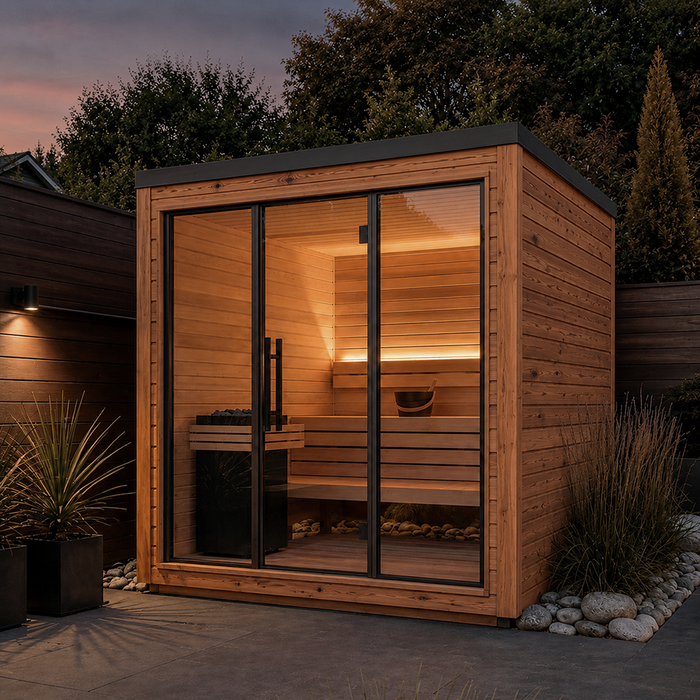
Choose and measure the garden location
Choose a ground-level spot by its complete footprint, not just a clear patch. Note the slope, surface, drainage, exposure to weather, shade, trees and routes people will use. Think about privacy from the house and neighbouring properties, as well as whether the sauna would obstruct an everyday path or garden activity. Runoff and ground conditions are site-specific, so ask a suitable professional how they should be handled rather than applying a one-size-fits-all solution. Consider the route between the house and sauna too, especially if a changing area or rinse point is part of your plan.
Mark out the verified external dimensions and door position, then allow for the approach space and access needed for cleaning or maintenance. The heater’s required safety clearances are a separate matter; follow the maker’s instructions and have them assessed by an appropriate professional. Before setting aside a location for Thermowood barrel sauna N 250, use its published footprint if available, not an assumption based on the name. Check with the relevant local authority or a qualified professional about constraints that may apply to your property. Include any separate changing space or outdoor shower in the plan rather than treating it as spare room.
Confirm the base and service requirements
Support requirements depend on the sauna design and the ground. Do not assume that every outdoor sauna needs a concrete slab or that any level-looking surface is adequate. Get the manufacturer’s stated base and support instructions before site work begins. A suitable groundworks or building professional can assess the slope, soil, existing paving and drainage at your particular location. Ask what must be in place before assembly and whether the instructions specify support points or level requirements. Avoid deciding on a foundation from a model name or a neighbour’s installation, since the ground and sauna may be different.
Plan services at the same time. If the heater uses electricity, give its exact specification and the proposed location to a qualified electrician to assess the supply, route and connection needs; a general product description is not an electrical plan. A wood-fired option still needs its documented flue arrangements checked by an appropriate specialist. Plumbing may be an optional addition rather than a built-in requirement: decide whether you want a shower or rinse point, then confirm water supply and drainage separately. With Thermowood barrel sauna LC 260, the listing name alone cannot tell you what the base or connections require; follow verified instructions for the particular model.
Check materials, ventilation and maintenance
Outdoor exposure makes materials and finish more than an appearance choice. Ask which timber species and treatment the specific model uses, whether its exterior finish is intended for the conditions at your site, and how the roof, joints and drainage are designed. Check what ventilation details are documented for the sauna and chosen heater, and whether a finish is already applied or needs separate treatment. Do not infer a timber species, weather protection or care schedule from a product label. The name Thermowood barrel sauna HCF 300 identifies a model, not a complete construction specification.
Ask for care guidance before comparing options: how to clean the interior, what exterior maintenance is needed, which cleaning or finishing products are suitable and what inspections the maker recommends. Instructions may differ between interior and exterior surfaces, so check that the guidance covers both. Consider access for routine cleaning and repairs when choosing the location, not only on installation day. Ask how replacement parts and after-sales support are handled, and read warranty terms for maintenance conditions or exclusions. This helps you budget upkeep without assuming that any timber finish is maintenance-free.
Estimate running and ownership costs
Running costs vary with heater type, stated power or fuel use, warm-up time, frequency of use, the local electricity tariff or fuel price, and conditions around the building. Ask the supplier or heater maker for an estimate based on the actual configuration, not a general figure for a different room or heater. For electric heating, the rating alone is not a reliable bill estimate: preheating and real operating patterns affect consumption. Wood also has purchase, storage and handling costs, even if you already have a place to store it. Use your own expected routine when comparing estimates.
Compare an upfront installed total with an ongoing budget. Include the sauna, delivery, base preparation, assembly, electrical or flue work, any separate finish, cleaning supplies, routine maintenance and likely repairs; note which items are included in the quote. For Thermowood barrel sauna LCF 300, look for documented heater and energy details if supplied; its name cannot establish consumption. If an estimate is unavailable, mark that cost as unknown instead of entering a guessed figure. Comparing like with like is more useful than choosing the lowest displayed purchase price.
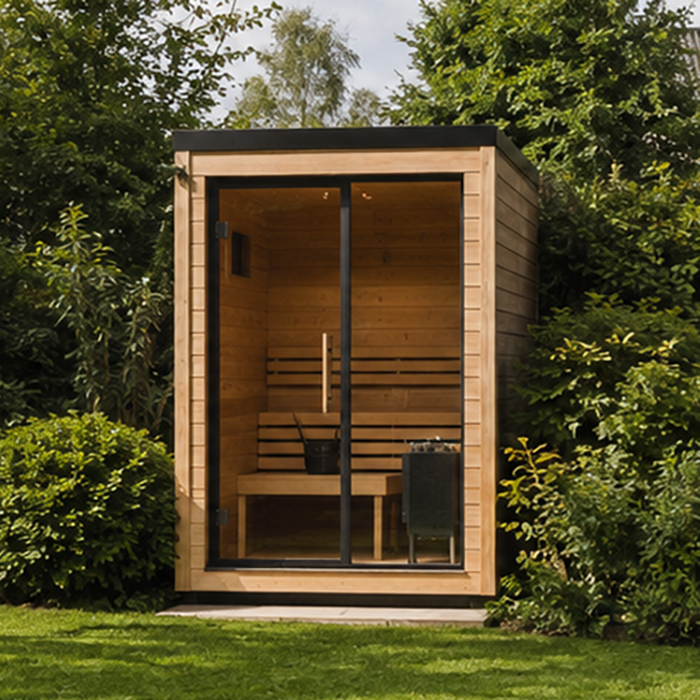
Confirm delivery and installation scope
Before arranging delivery, check the route from the vehicle to the prepared site. Measure gates, narrow paths, corners, steps, overhead restrictions and unloading space; ask which access dimensions and handling conditions the supplier needs. Product photographs cannot show whether components will pass through your route. Confirm what delivery includes, who unloads, whether assembly is included and whether an extra crew or lifting equipment is needed. Resolve access questions while comparing options, not after the ground is ready. Also check whether the route remains clear for the people who will use the sauna.
Get the installation scope in writing: supply only or assembly, base work, heater fitment, electrical or flue work, commissioning and packaging removal, with responsibility for each specialist made clear. The division of work varies, so do not assume the sauna purchase includes foundation preparation or a safe heater connection. Coordinate the order of work so the prepared site and services meet the maker’s requirements before assembly. Keep manuals, handover notes and purchase records together for later maintenance and support, and make sure you know who to contact if a technical question arises.
Compare the shortlist before committing
Build a side-by-side comparison with intended users, internal and external dimensions, heater compatibility, base requirements, maintenance, included items, delivery access, installation scope and estimated running costs. Mark each detail as documented, confirmed by a professional or still unanswered. Compare like with like: an entry price that excludes installation cannot be compared fairly with a price that includes it. Keep unknowns visible rather than treating missing information as proof that a requirement is met. Where two models appear similar, give more weight to confirmed details than to differences you cannot verify.
Before you pay, request an itemised quotation that identifies the chosen configuration, included services and exclusions. Review the product documents and warranty and aftercare terms; confirm that the stated heater, dimensions and installation plan relate to the model you will actually receive. If the usable layout, site fit, connection plan or installed total remains uncertain, pause and resolve that point. A sound choice is not necessarily the largest or least expensive; it is the one whose documented details and ongoing demands match your regular use. Keep the answers alongside the quotation so you can compare any final revisions accurately.
Frequently asked questions
How many people should an outdoor sauna accommodate?
Start with the number of people likely to use it in a normal session, then compare that with the interior measurements and bench layout. A stated maximum is useful as a guide, but does not show how comfortably everyone can sit. Allow for occasional guests only if the extra space makes sense for your site and budget.
Is an electric or wood-fired heater better?
Neither is automatically the better choice. An electric heater needs a suitable supply and a qualified electrician’s assessment. A wood-fired option brings fuel storage, ash handling and flue requirements. Compare the practical demands of both with your site, preferred routine and the heater guidance for the sauna you are considering.
Does an outdoor sauna need a concrete base?
Not necessarily; the required support depends on the sauna design and the ground. Get the manufacturer’s base instructions before starting site work, then have a suitable professional assess your location. Do not assume that a concrete slab is always required or that an existing surface is suitable simply because it looks level.
How can I estimate outdoor sauna running costs?
Ask for an estimate based on the actual heater and sauna configuration, then use your own expected frequency of use and current electricity tariff or fuel costs. Include warm-up and regular maintenance in your budget. If a reliable estimate is not available, record the cost as unknown rather than relying on a figure for a different model.
What should I confirm before buying?
Confirm the internal and external dimensions, heater requirements, base instructions, site access and installation scope. Check what the quotation includes and which costs are separate. If you need electrical, flue or groundworks advice, have the proposed site and specifications assessed by an appropriate professional before you commit.
A suitable outdoor sauna is one whose interior works for regular users, whose heater can be supported at the chosen site, and whose full cost remains acceptable after preparation, installation and upkeep. Measured plans, documented specifications and realistic running-cost estimates make the comparison more useful than appearance alone. If those details do not line up, pausing to resolve them is a better basis for a first purchase than relying on assumptions.
